

Traps and Blades: Different Lures, Same Retrieves
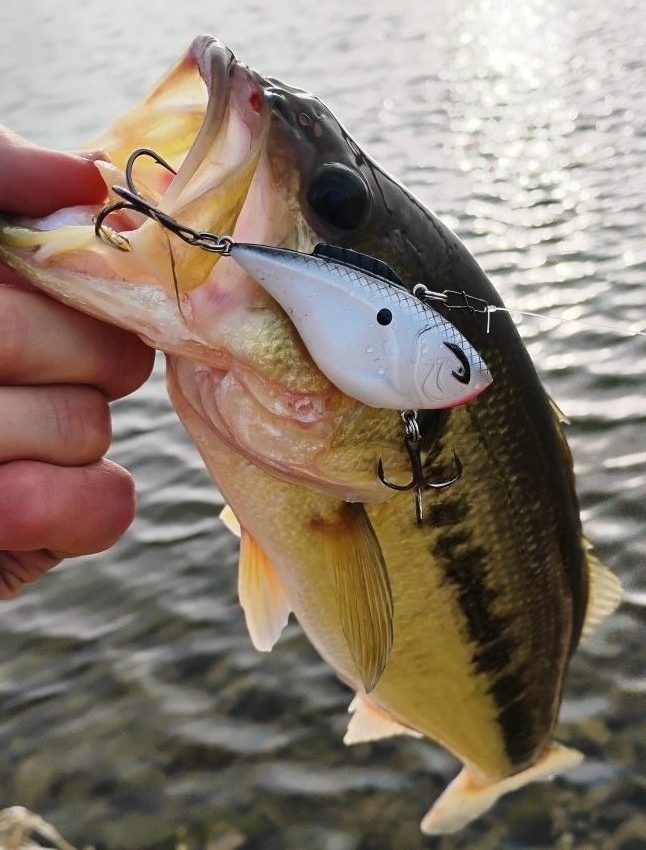
A bladebait and Rat-L-Trap are two lures having five things in common: good casting ability, sinking, vibration, a design that mimics baitfish, and essentially the same productive retrieves. On the dissimilar side, a Trap is made of plastic, is thicker, and has rattle chambers, while a blade is made with a front lead weight and thin metal body. This article is going to concentrate on productive retrieves and the best times to use them.
First and the easiest is a straight, constant retrieve. Both lures have a vibrating wiggle. The speed can be varied for whatever and wherever you need to fish, such as using a faster retrieve to clear the tops of weeds and brush, or a medium-to-slow retrieve along sandy or rocky areas. Strikes are normally very aggressive, which is perfect for when fishing for schooling fish.
A variation of the straight retrieve incorporates momentary pauses that allow the lure to drop slightly before going forward again. This retrieve is used along weed edges and sometimes above deeper weed beds. Strikes often come at the time of the pause. Normally this is used during the late spring and summer months.
A pump retrieve is very productive in about any temperature of water, with a little change for cold water. The lure is allowed to sink after casting, and then pumped with the rod coming upward at any speed of retrieve, which is slower than a straight retrieve.
Similar to the pump is a side sweep. Again, the lure is allowed to sink, and then the rod is swept to the side at about 2 to 4 o’clock, which permits the lure to drop as the slack is wound back. This retrieve is used when you want the lure to stay about the same depth as it is paused.
With both the pump and the side sweep, the strike often comes as the lure’s retrieve is restarted after the pause.
You can be among the first to get the latest info on where to go, what to use and how to use it!


The fall-and-lift retrieve is similar to the pump, but used on a much slower basis, with the lure allowed to sink all the way to the bottom before lifting, slow to fast, or jerking quickly upward. A variation hops the lure upward with about 2 to 3 quick jerks and then allows it to go back to the bottom. This retrieve is best in cold-water conditions. Strikes come on the fall, but sometimes just as the lure is moved upward, and with the jerks on about the second jerk. It seems, however, that however bass hit on a given day, that will be the general rule for all strikes. It is a somewhat unpredictable retrieve, so you have to be ready at any moment.
The last three retrieves work for both types of lures, but are especially good for the newer Hammer Trap. This lure was designed for pump-fall-and-lift types of retrieves, and is slightly different in design from the normal Rat-L-Trap. The much harder “hammering” action sounds off with a Tri-Tone sound chamber. On the fall, it has a fluttering action, which is why it is better to use for pump-type retrieves. It is available in three different weights (3/16-, 3/8- and 5/8-ounce) from Rat-L-Trap.
Pump and lift-and-fall retrieves are also best for blade-type lures, for which I use the Blitz Lures model. For some reason, I’ve found it to work better in cold water of 45 degrees and less. With the lift-and-fall, I’ll let it sit on the bottom a little longer before giving it a quick jerk of about 3 feet or so upward. It also works well with a slower side sweep retrieve if the fish are a little more active in cool to cold water.
Up until January 2026, the coldest water in which I had caught bass on any of these lures has been 35 to 36 degrees. However, in January, I caught a bass with all of its beautiful winter cold water colors on a Hammer Trap using a little faster, lift-and-fall retrieve in 34-degree water, with some skim ice still hanging close to shore, and frozen to the weeds from wave action.
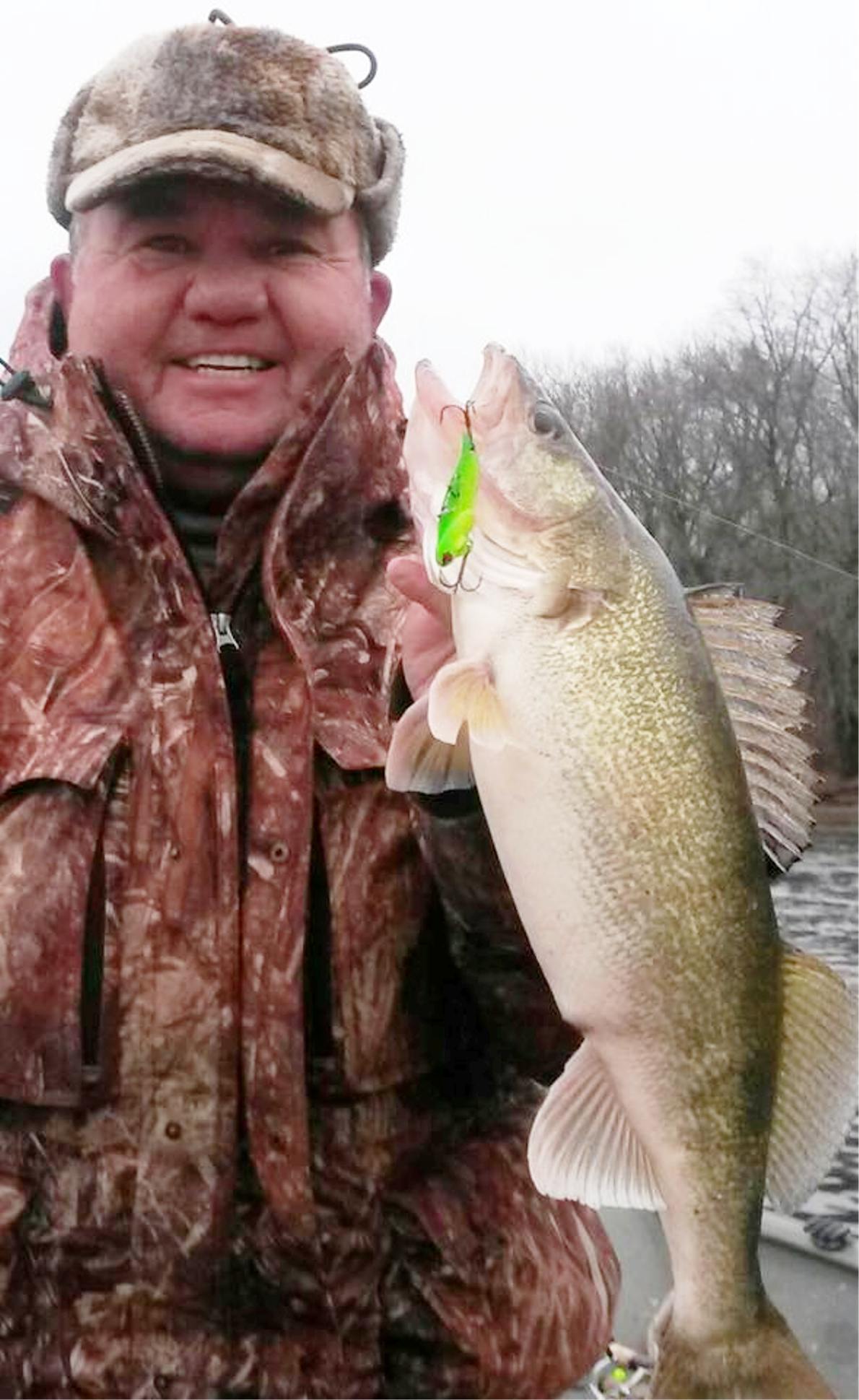
I mention bass, and that is mainly what I’m going for with these lures. But they also work for white bass, crappies and walleyes with the same retrieves. Joe Vance of Aledo, Ill. has caught a lot of species in an off-channel pocket area of the Mississippi River during open-water times in winter using the lift-and-fall with the Blitz Blade.
The lures may be different, and the retrieves the same, but as always, it is up to the fish as to which one they want.
Did you enjoy this post?
You can be among the first to get the latest info on where to go, what to use and how to use it!