
Dan’s Fish ‘N’ Tales by Dan Galusha
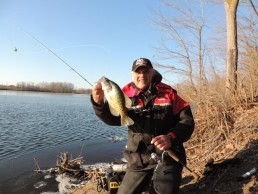
A time of the year that many ice anglers hate to see arrive takes place when the ice is leaving the shore. The timing of this has changed through the years, and has generally become earlier, or more frequent, during the winter season. It is a time when there is not enough open water to launch a boat, but the ice is too unsafe, unless you have a desire to have someone cashing in your life insurance policy. However, good fishing can still be found from shore.
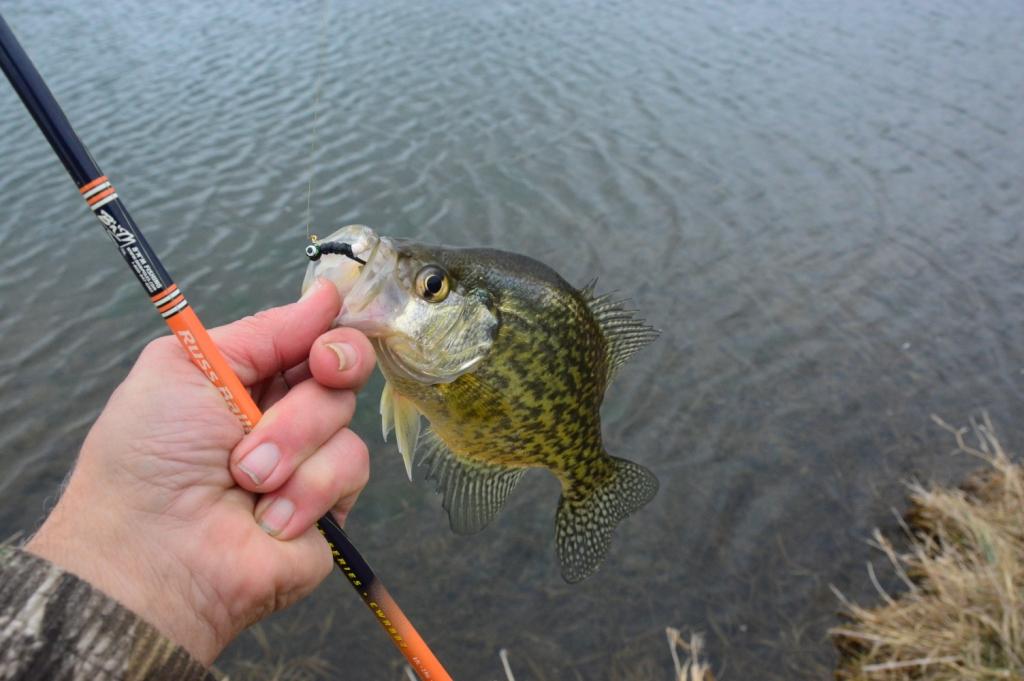
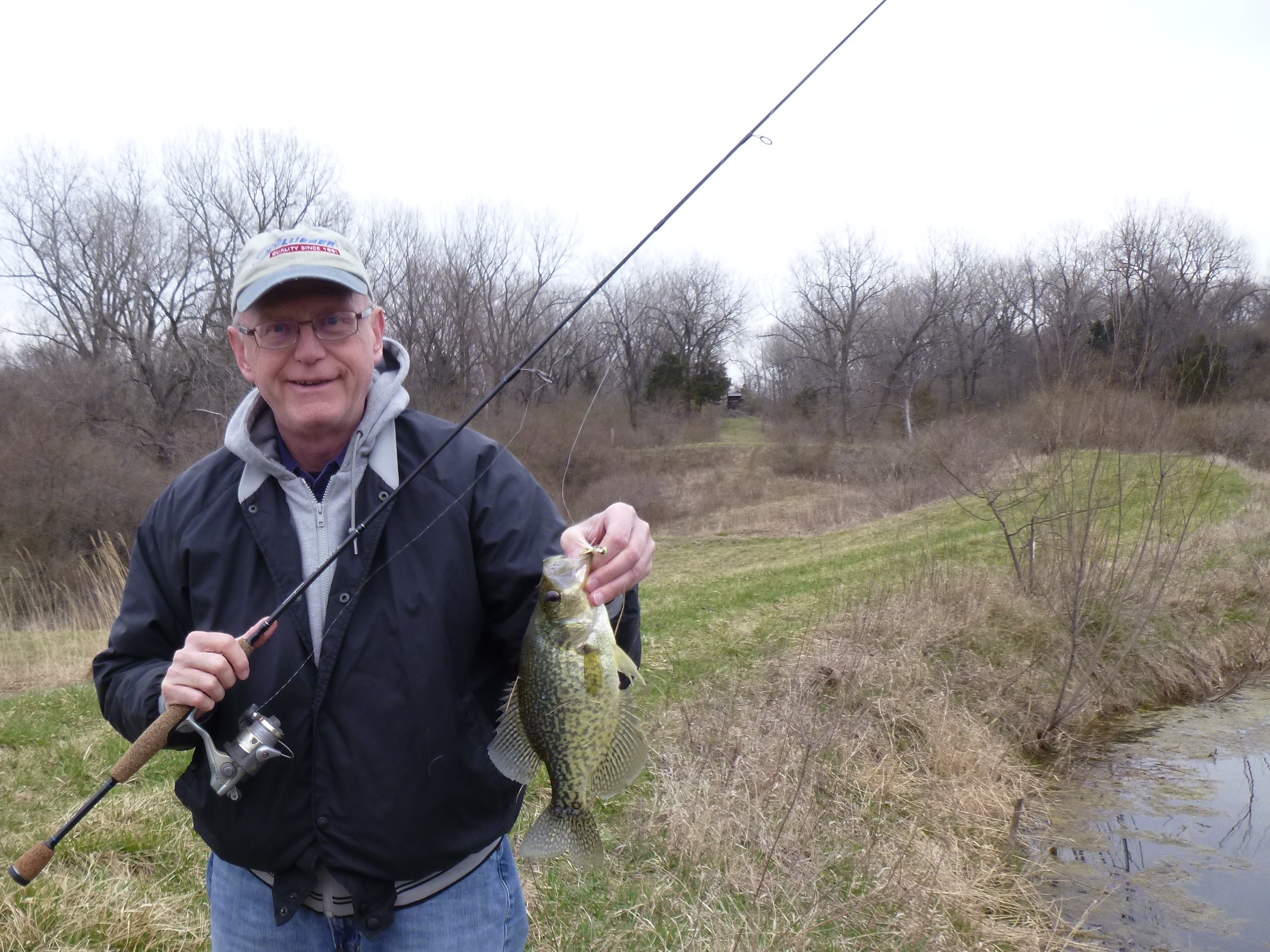
This is when I pull out the 8-foot-long B‘n’M Russ Bailey “The Difference” and 7.5-foot Godwin’s Crappie Cast spinning outfits. The reason for the 7.5 and 8, and not 10 feet or longer, is because there are times that I’m casting from a shore with trees and/or brush, and have to make a clear sidearm or short, overhead lob or pitch cast.
The lures and baits are still the same as used through the ice under a float, since when ice fishing, I normally fish “straight-line” without a float.
Usually, the northern areas of the lake start clearing out first. The northwest corner is the best. Because of air pockets and heat collected by rocks, riprap areas also clear fast. I prefer finding one of these riprap areas, especially if there is some brush out from it. In any case, target areas in which fish were being caught through the ice, as they will still be around those holding spots.
Fish generally hit very light. Using a sensitive float and balancing it to the most sensitive setting is very important. I use a Thill Shy Bite or Mini Stealth, and weight it with splitshot so that only the very tip of red is exposed above the surface. This allows the detection of the slightest lift or pull-down bites. Some bites, especially with crappies, may be only a slight sidewise movement.
When weighting the line, place most of the weight near the bottom of the float. This, of course, will be for fixed floats, and not slip styles. By placing the weight in this location, it permits the small jig to have a slower fall.
I will also use a Betts’ weighted float for when I want to make longer casts, or when there is wind.
You can be among the first to get the latest info on where to go, what to use and how to use it!
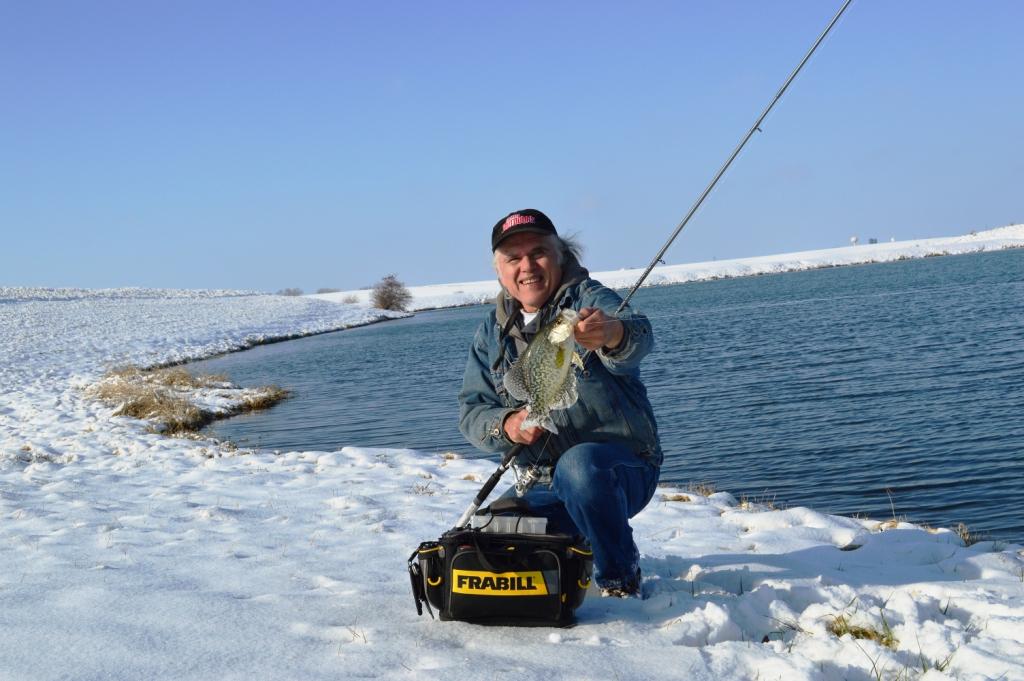
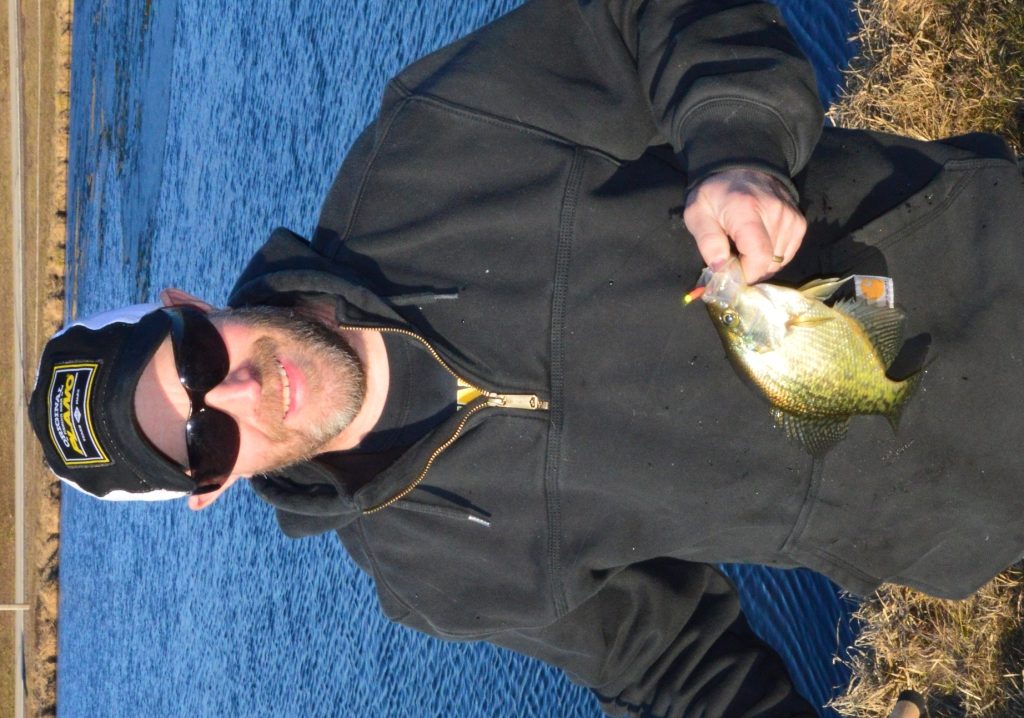
As mentioned earlier, this is still a time when ice fishing techniques work. Try keeping the bait in a small area and pick or rock the float up and down. The strike will often come on the fall back, which is the reason the aforementioned weighting technique is best.
The long rods are a vital part of the system. They reach outward to the edge of the ice, or the line can be pulled out to the full length of the rod, and then swung to a further spot. As the ice goes out further, you can also cast, which is the reason for the Betts’ weighted float or even the Thill float if there is not a lot of wind.
With more open water, the float can be drifted. If there is enough wind, wave action can do the jigging. At this time, the strike is often seen as a stop-and-hold, movement in a different direction, or a slow downward pull, which can sometimes be confused with a hangup.
For line, I use 10- to 15-pound test, green braid or Nanofil. The green color and thin diameter make the line less visible to the fish, while the strength allows the small jigs, with thin-wire hooks, to be pulled free from most snags.
Again, the baits and lures are the same used during the ice season, with the possibility of slightly stepping up the size. My favorites are the number 10 and 8 Custom Jigs & Spins Tungsten Wolfinkee and Tutso (black, lime glow and white), and Ice Road Runner (used for the lift-and-drop, or with more open water, a slow, constant retrieve with occasional pauses).
Use waxworms and Panfish/Crappie Nibbles for tipping these jigs. I also like adding an application of Kick’n Crappie. With the Ice Road Runner, I sometimes use this with only the Kick’n Crappie, or without anything.
This period of time can change from year to year, according to how the weather reacts, and can sometimes occur more than once in a season. However, no matter when the “ice leaves,” or how many times it does during the season, the methods remain the same.

Did you enjoy this post?
You can be among the first to get the latest info on where to go, what to use and how to use it!