Turkey Hunting Simplified
I borrowed a box call and was uttering sounds. I really had no clue if the noise I was making sounded like a turkey or a sick dog. Two hours into the morning hunt, I heard a gobble. Frantically, I grabbed the box call and started making noises.
A bird walked into my opening, looking at my pathetic-looking hen decoy. He gobbled, and I continued calling, and finally, the bird walked off. The next day was a near duplicate. I had planted my butt behind a few thick pines, stuck out what looked like a skinny, beat-up old hen, and started calling. And yes, a bird walked in, making loud gobbling-style noises.
This was my first season of turkey hunting. I was hunting between Ruby Creek and Baldwin. This was a very limited draw hunt in the late 1970s. After the second morning, my friend Cal and I stopped for a sandwich.
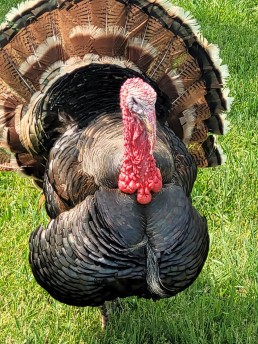
In a guy’s pick-up truck was a dead turkey. I pointed out to my friend that the guy shot a hen. He started laughing and said that this was a dandy tom. I asked where the beard was, and he pointed to the chest. Crap, two days in a row, I passed up on a bird that had this thick protrusion from its chest. I thought that a tom would have a beard under the chin. My buddy roared in laughter, and I did as well.
This was the beginning of my love affair with turkey hunting. When I started turkey hunting, it was in its early stages with limited tags and even less knowledge.
When I hunt public land, I search out roosting trees, dust bowls, and feeding areas. When I hunt farms, I look for tracks, fields that hold some food, and travel routes.
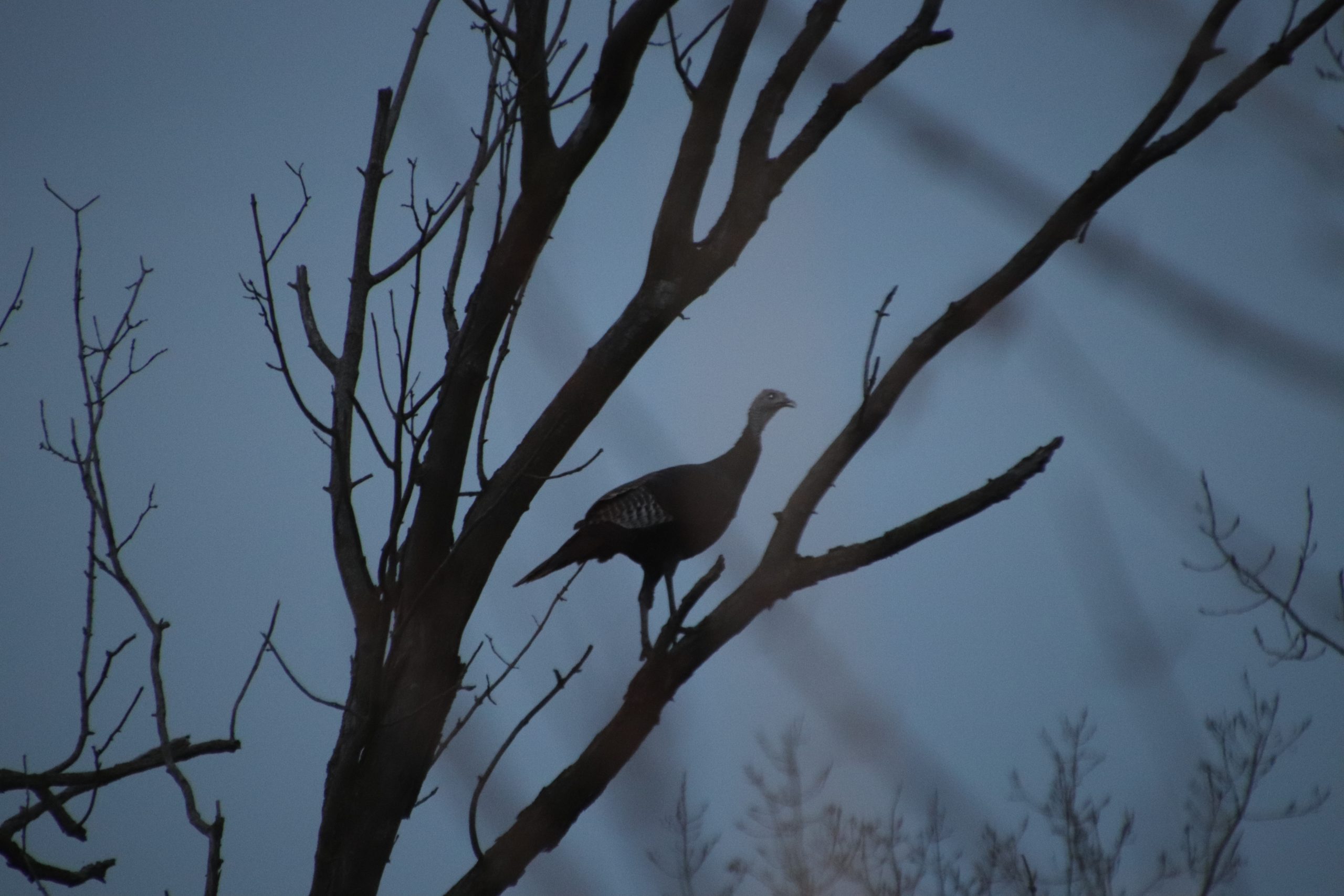
On state land, I set up 50 to 75 yards from roosts. On private land, I use glassing to estimate feeding times for birds.
All of my calling is done quietly. Nothing too aggressive, unless I have a hen with a tom and I am trying to tick her off into checking out the competition. My calling will not win any competition, but to get the job done.
A box call is used when trying to reach a bird a long way out or under windy conditions. Most of my calling is done with two different slates. One is an aluminum call, and the other is a traditional slate call. Both are calls that I made. The strikers are an assortment of walnut, hickory, and Purple Heart.
I use one call with a few purrs and wait. Maybe fifteen minutes later, I will use the other call. I will also rotate which striker I use. This is my crazy calling system. I tried using a mouth-call, with disastrous results. Either I would start gagging with a fear of choking, or the sound that came out would scare any turkey within a quarter mile.
Many hunters call too often and too loudly. Pay attention to the birds. Mimic what you hear. Birds can hear you a long way out.
When I am sitting, I set out three or four decoys. When I run and gun, two decoys go with me. When I run and gun, I try to cut the distance in half. Then I will set up and call once or twice.
I use the terrain available. In hilly country, I will run the sides of the hill, maybe ten yards from the peak, but low enough to keep hidden. When ditches are available, I run in water. Knee-high boots are a must.
You can be among the first to get the latest info on where to go, what to use and how to use it!
Ditches and creek bottoms are favorites of mine. I like hunting near water, and the water lets me travel unseen.
When hunting private property, patience must be learned. At times, I see plenty of birds; on other days, zip. Thus, the problem is when hunting in corn and bean fields. Clover or grass fields are more consistent.
When I hunt private property, I set up two straw bales in a V shape. With my turkey lounge chair, the bales are just about the perfect height for a rest. I place my binoculars and calls on top of the bales. I use straw bales when archery hunting deer with equal success.
In one particular area that I hunt, the birds leave a woods, walk through a picked field and then jump a county ditch. This ditch is six feet tall. I will stand in the water where I can just barely peek over the creek bed. With this system, I can quickly move fifty or a hundred yards without being seen or heard.
I love a morning hunt. Just hearing a tom gobbling off in the distance brings excitement and hope. A silent morning might bring some doubt, but I always feel that a bird could appear at any moment.
Some hunters love the run-and-gun method. In this method, the hunter either has spotted a tom or is walking along a field or a two-track. As they walk, the hunter will call. If they hear a return gobble, they try to cut the distance. Then they will start some soft calling. Sometimes the bird will hammer back; other times, not.
If nothing happens after about 15 minutes, they will move again, hoping for a response to a more subtle call.
I like setting up where I believe the birds are roosting and where a potential feeding area might be. I hope that I’m right, but often, the birds will show up fifty or a hundred yards from where I am.
I will call very softly and infrequently. If the birds show some interest, I will sit until proven wrong. Sometimes, this might be a few hours. If the birds move in a direction that I am not set for, I will move, if possible, without being seen. The next day, I will sit closer to this new spot.
I carry three very lightweight, realistic Montana decoys that pop out into full-body shapes. Two are hens in two different poses, and the other is a Jake. I set the decoys to 15 to 20 yards on my side and maybe 10 yards out front. Once again, this is a confidence thing that works for me.
Another tip is that I scout each day. After a morning hunt, I stay in full camo—covering my hands and face—and walk out of the woods or along field edges by taking a different route than I used when entering. For evening hunts, I scout and hunt my way to the stand, always keeping at least 50 yards from any potential roosting spots.
One gobble at daybreak, and that was perhaps 300 yards to the east. Three hours had passed without a sound or even the slightest hint of seeing a turkey. Finally, I heard, or believed I heard, a lone gobble maybe 500 yards to the west.
Another thirty minutes passed, and I spent the better part of it staring to the west. Finally, I spotted some movement. Slowly, I lifted my binoculars from the straw bale that I was using as a blind. It looked like two hens with a tom following another 100 yards back.
Either my decoy spread was wrong, or the lead hen showed no interest. She passed by at 80 yards. The second hen stopped and stared at my spread. The tom was hanging back another 80 yards.
I started calling as if I were the boss, and the hen started coming right into my spread. The tom had now moved within 60 yards of me. He was trying to decide which hen to follow.
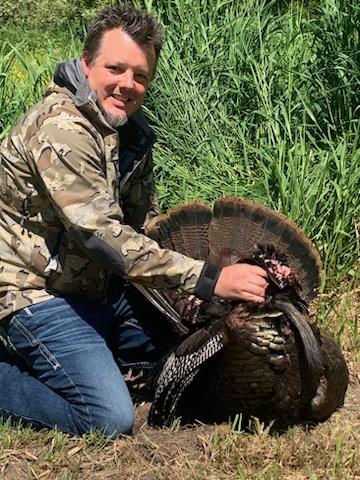
The hen walked right up and pecked at a decoy. Then she slowly started walking away. That was when I noticed that she had a six-inch-plus beard. No clean shot was offered as she walked away. The tom had maybe a 5-inch beard. I called once more, and the bearded hen turned and looked at me. Broadside, head stretched out, offering a nice 38-yard shot. Game over. The tom walked over to the dead bearded hen and then turned and went in the direction of the first hen.
I start scouting in January, scoping out the fields, walking the two tracks on the public land. Using On-X Maps, I mark each location where a turkey sign was found.
I love backtracking the turkey tracks, hoping to find their roosting locations. Yes, many times, where you find the birds in late winter is not where you will find them on opening day. It’s still fun, and at least you knew that there were birds in the area.
Enjoy turkey hunting, be patient, and keep learning.

Did you enjoy this post?
You can be among the first to get the latest info on where to go, what to use and how to use it!