
Darned Near as Good as The Good Old Days!
I certainly do miss the quail that used to arrange themselves into tight coveys among the woods, grasslands and fence rows of northwestern Ohio. Not only do I miss the hunting; I miss having the little birds in the vicinity. I just enjoyed being in the areas where quail lived.
Quail are picturesque birds, and their “Bob, Bob White” call rang through the woods and brought delight to my heart. It was a thrill to watch them running through the high grass, their heads erect and scurrying as though the devil himself was after them.
I often hunted alone, or with my brother-in-law Bill Calvert. The bird’s usual habitat was high grass near an old, abandoned homestead, or along a big ditch near an extensive forest.
We did not have a retrieving dog, so we slogged it out, attempting to put up a covey or two by ourselves. Sometimes this worked, and sometimes it did not. But still we persisted, and were occasionally rewarded with a bird or two in the hand.
Our armament was pretty fundamental: Bill used a bolt-action, 20-gauge shotgun, and I used a single-shot, also in 20-gauge. These were the only quail guns that we owned, so we made do.
With no mentor available—my dad hunted pheasants, but had little experience with quail—I pretty much taught myself. One basic discovery greatly changed my approach to hunting them.
My discovery was that the quail is a pretty nervous little bird, and always on the lookout for predators. Since one of their food staples is weed seed, I knew they could be found in the grass.
One of their survival habits also can, on a good day, lead to their demise. When they covey, a typical group will consist of about 10 to 18 birds, who form a circle with their heads facing outward and their butts inward.
The little circles of bird poop that I spotted told me that birds were near. So, I stopped with my gun at the ready and remained still. I knew the birds were near, and they knew that a big predator was looking for them.
Their nerves couldn’t stand it, and after about 5 minutes or so, they would go up (known as a flush) in all directions. The flush of a good-sized covey is something that must be experienced to be believed.
Their wings make a sound that can only be described as a loud w-h-i-r-r-r that can startle the faint of heart. Put yours truly in that category.
I would tell myself: “Now, get ready, because they are going to go up in a loud rush of wings, so don’t blow this shot.” No matter, they would go up, I would manage to get off a shot, and just as likely would miss. But not always.
Then, the little brown buzz bombs would pull their second trick on me. I knew from experience that not every bird in the covey would flush, and there was likely one or two more waiting to erupt.
I would give myself the same mental talking-to, another bird would erupt and startle me anyway, and I would pop off another shot, likely with the same results.
Then came the blizzards of 1978-79. The quail succumbed to the elements and were gone, perhaps forever. More’s the pity.
You can be among the first to get the latest info on where to go, what to use and how to use it!
I missed them deeply, and missed the days afield that I spent trying to bag one or two.
Recently, good friend Jim Schieltz invited me to join him and his friend Richard Wark on a quail hunt at a hunting preserve in southeastern Ohio. I jumped at the chance.
Mapleglen Farms is just that—a big farming operation owned and operated by Dow Ulrich—who also sets out birds for hunters and their dogs. Located near West Alexandria, it offers excellent hunting for quail, pheasants, Hungarian partridge and chukars. Dow can be contacted at 937-787-3949, or online at www.mapleglen pheasant hunting.com.
This is not a fancy place that offers customers a bed and breakfast, fancy meals with an extensive wine list, golf courses and spas for non-hunting spouses.
Nope, this is a laid-back hunting operation with fields and forests where the released birds can hide from the hunters.
For a moderate fee, we were offered some outstanding hunting.
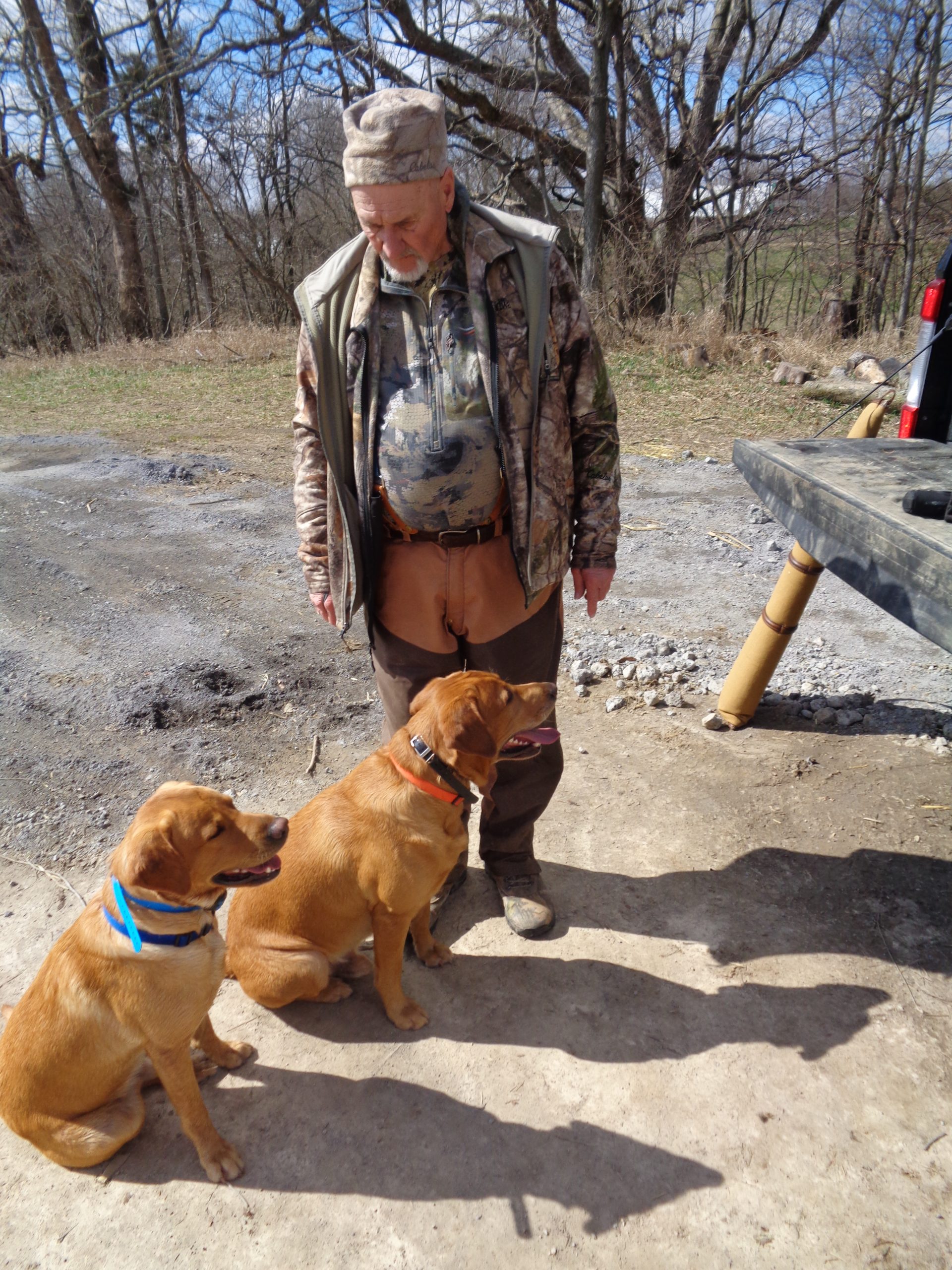
Richard owns two male Red Pointing Labrador dogs named Hoss and Slim, which he refers to as “his boys.” To say that they were eager for the hunt would be an understatement.
Hoss and Slim were very well trained, and would “quarter” back and forth across the field with their excellent noses in the air. When they found a bird, they pointed, the bird would go up, and one of us would take a shot.
How did we shoot? Well, we hit some and we missed some. However, as I write this, I am thinking about the delicious meal of quail breasts that I will be enjoying tonight.
Our armament was a bit more sophisticated than the halcyon days of my youth. Jim shot a Ruger 20-gauge over/under, Richard shot a beautiful, lightweight Franchi o/u in 28-gauge, and I was armed with an Ithaca/SKB 20-gauge o/u. All of us used #71/2 shot, which was more than adequate.
Our guns may have been shiny, but no matter, we still had to hit birds. Was it like the old days? Not quite, but it was close enough and we had a ball.
The dogs worked wonderfully, we told jokes and old hunting stories, laughed a lot, shot some birds and just plain had fun. After all, isn’t this what time spent outdoors among friends is supposed to be?
Would I go back? In a heartbeat.
Did you enjoy this post?
You can be among the first to get the latest info on where to go, what to use and how to use it!
