
As Spring Walleye Fishing Ends, Smallmouths and Other Species Add Options in May
At the 45th Ohio Sea Grant Charter Captains’ Conference, Ohio Division of Wildlife’s Sandusky Fisheries Research Unit Supervisor Eric Weimer summarized the 2025 fishing season for the 140 participants tuned into his presentation.
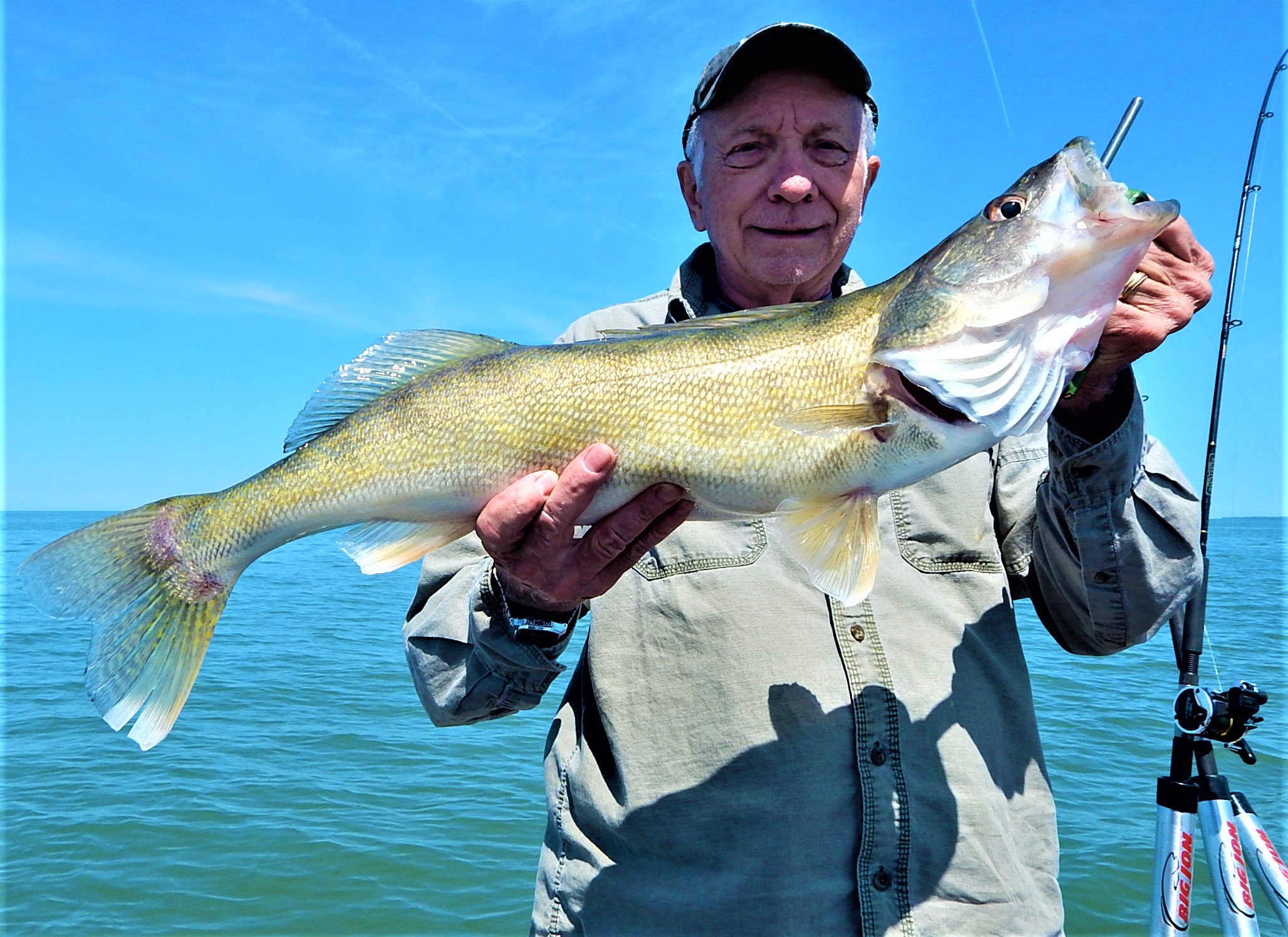
Based upon their seasonal creel surveys, he ranked last season’s walleye catch rate of 0.94/hour as the best in 45 years. Tens of millions of catchable size walleyes, two years and over, now populate the lake.
With some trips arranged for a specified amount of time, or until the daily bag limit is reached, I regularly hear of “six-pack” chartered trips returning to the dock within two hours of their departures, with 48 walleyes in their coolers, when the captain and first mate’s catches are also kept.
For trips that are based upon time, after the walleye limits are reached, there are a couple of options.
One is to continue to fish for walleyes until the allotted time is up, and to replace fish in the livewell to keep more fish of a preferred size. Some try to bring home the biggest possible bag, while others prefer to take home smaller “eaters.”
Another is to catch and quickly release fish as they come, without replacing any already in the cooler or livewell.
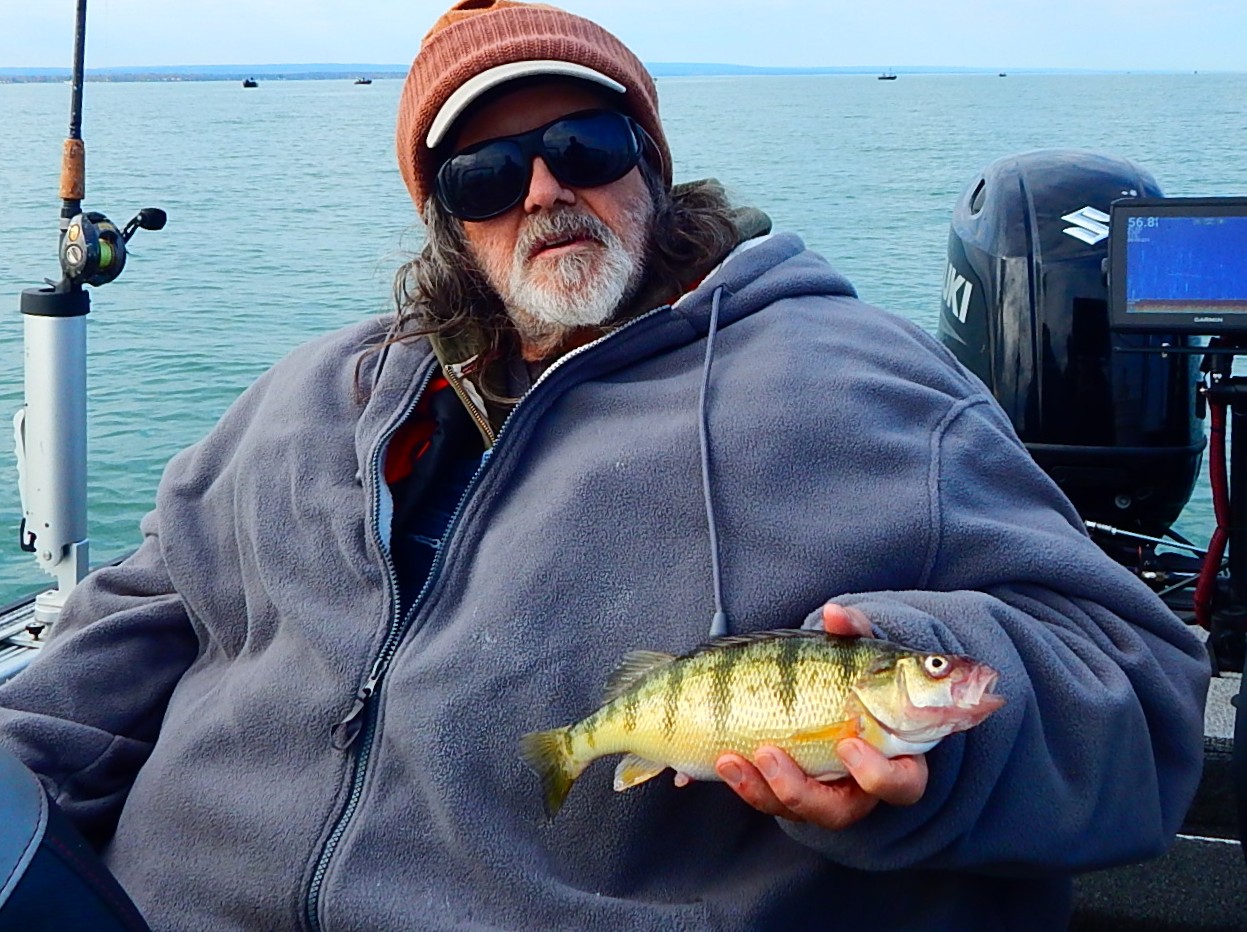
A third option is to switch to fishing for other species. Yellow perch are still near shore in large schools in May and June, depending upon location where they assembled to spawn.
Late April to early May is normally the case in the shallower Western Basin reefs and island shoals, and through May and into June further eastward, due to more slowly warming water temperatures.
Whether due to hunger, or on hair trigger due to spawning season territorial aggression, some of the fastest perch fishing action I have ever experienced occurred in May around the islands, when dense schools of ripe, male perch were located. They sprayed the boat—and us—with their abundant milt if not pointed in a safe direction when pulled from the water.
White bass are also schooling in the Western Basin islands this month ahead of their spawning season late in May. The entire west shore of South Bass Island is a favorite stretch to look for them busting the surface while chasing shiners as dive-bombing gulls give away their location.
I set a personal record for fishing efficiency when I caught 41 white bass on 14 casts late one day as sunset approached. I was using three, 1/8-ounce jigs dressed with 2-inch, white curly tails, and caught 13 triple-headers before the streak was broken; the rear fish broke the line from its tug-of-war with pair of hooked fish above it. I quit keeping track as I fished with the remaining two jigs until darkness ended the fun.
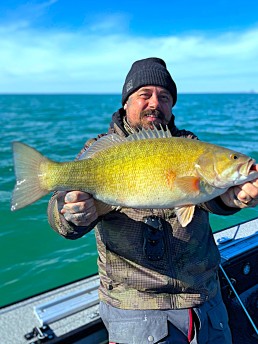
For some, smallmouth bass are the ultimate gamefish prize in May. They are abundant all across the lake, and May is the peak period when anglers seek the feisty targets while they are spawning on their nests.
When Captain Mark Cahlik targets bass in May, he likes calm, sunny days when he finds them all around the Bass Islands in 6 to 8 feet of water.
You can be among the first to get the latest info on where to go, what to use and how to use it!
In the Western Basin, North, Middle and South Bass Islands were named for the dominant presence of the species hundreds of years ago. They are still found in less overwhelming numbers at almost all of the island shoals, reefs, breakwalls, and harbors lakewide.
After round gobies decimated Lake Erie’s smallmouth bass population, Ohio created a closed season in 2004 for smallmouth (and largemouth) bass from May 1 through the last Friday in June.
The population is thriving due to the resounding practice of catch & release now observed by most anglers, compared to the times when anglers would keep stringers of bass daily. Non-resident anglers, in particular, would sometimes leave the islands with many dozens of fillets of the species that, while on the nest, can become vulnerable to overharvest.
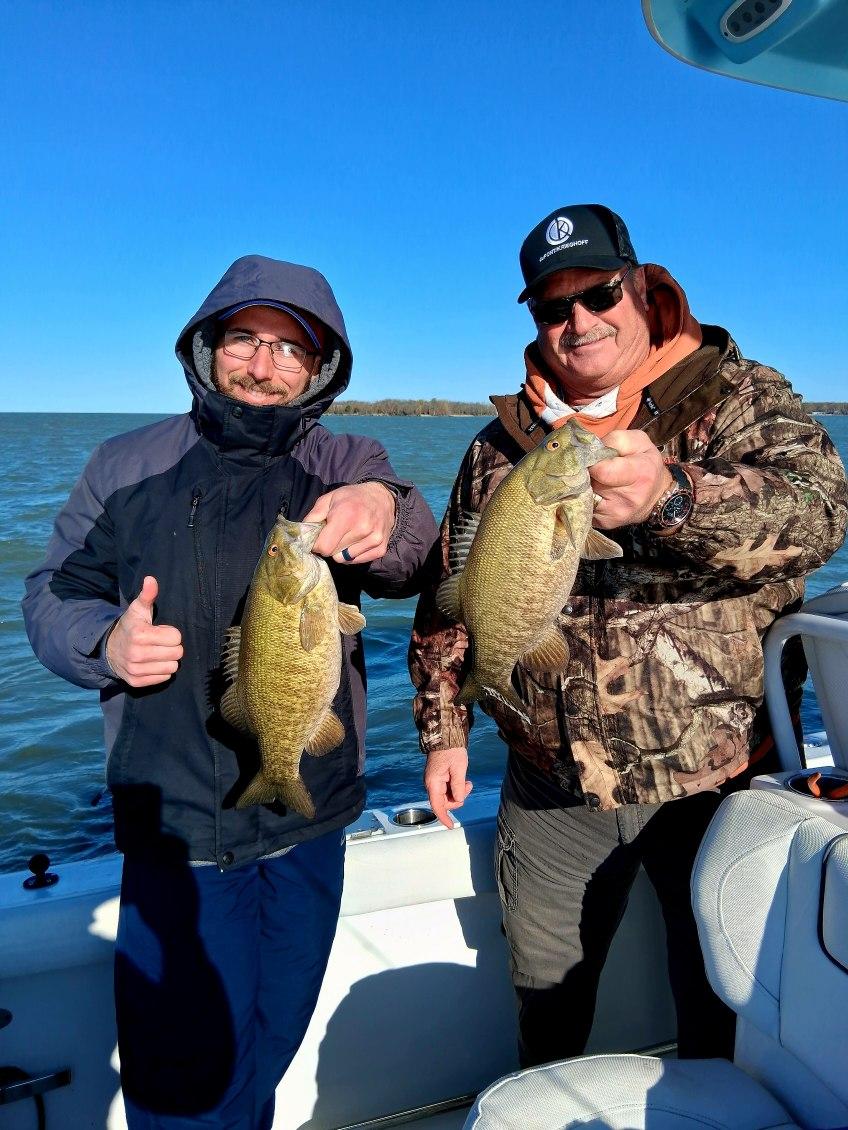
Compared to the 100,000 or so bass that were kept from Ohio’s waters of the lake decades ago, a 98 percent catch-and-release rate currently leads to annual harvests of 3,000 to 4,000, according to Fisheries Biologist Zak Slagle, Ohio Division of Wildlife’s bass specialist.
However, due to the chance for a trophy to be landed while practicing catch-and-release, Ohio Division of Wildlife changed the rules in 2019 to allow 1 bass over 18 inches to be kept. Ohio’s current state record, 9.5 pounds, was landed in 1993 during what would have fallen within the closed season.
In general, smallmouth bass run larger, further east in Ohio. Pennsylvania and New York also have closed seasons for keeping bass, with the exception of keeping one trophy fish over 20 inches.
During their respective closed seasons, Michigan allows catc-and-release-only for bass, and Ontario prohibits all targeted fishing for the species. Always check each respective current fishing regulation guide to ensure staying within the law.
New York charter captain Daryl Glasner of C.E.O. Guide Service summarizes Lake Erie smallmouth bass fishing waters in Lake Erie during the spring as mostly a vertical jigging exercise, with tubes and blade baits, over rocky shoals and grassy bays.
He targets 5 to 20 feet of water in Dunkirk’s Chadwick Bay, with deeper water from 20 to 30 feet often more productive from Sunset Bay to Buffalo.
He cites an abundance of manmade structures from there to the mouth of the Niagara River, such as breakwalls, wind turbine foundations and cargo ship loading docks as examples. On days when his clients land 40 bass, he reports that fully half of them will exceed 5 pounds.
Even though gobies are tough on smallmouth bass eggs and fry after hatching when left unguarded in the nest, the bass turn the tables on the uber-abundant invasive species by targeting them as their principal prey item and exhibiting great growth rates lakewide.


Did you enjoy this post?
You can be among the first to get the latest info on where to go, what to use and how to use it!