
Safe Drinking Water: The Basics
It seems like a lot of outdoor-oriented “Gen Z”-ers have discovered the Boy Scout Handbook. Many online posts offer “survival secret” tips that some of us were learning as Tenderfoot Scouts a half century ago! And then there are those who don’t seem to know what they don’t know—or at least don’t include some critical bits of info in their camping or survival “hacks” on Facebook and other social media outlets.
I’d like to think that I am always learning, either new info or updated details on established skills and processes. Much outdoor skill info is part lore, part myth, and partly limited by processes and practices of the times. Slowly, the most accurate and essential advice rises to the top or is filtered through all the misguided/misdirected bits of quasi-info blocking that leads us astray.
 A short while back, I began researching all the “current” info being posted on filtering and purifying water in the wild. The major star in 99 percent of that advice was the seemingly ubiquitous, clear plastic liter bottle that folks have access to no matter what their “survival” situation happens to be. Among those entries, too many made incomplete and pretty liberal assumptions. Yet, to their credit, more and more (especially newer entries) at least were starting to stress that filtered water (even rain) needed to be purified—usually suggesting boiling—as a required process before being safe for drinking.
So, while probably being guilty to some extent to those limitations cited above, here’s my take on updated information and newly learned info on processing naturally sourced water for drinking using only limited field sources.
Updates/background on current status of safe water in the backcountry
First, unequivocally pure, “no-need-to-treat” water in the wild probably no longer exists anywhere on our planet!
Ever heard of PFAS? That stands for per-and poly-fluoroalkyl substances. They are a completely man-made family of chemicals created around the time of World War II and are used in a wide variety of products. There are now estimates of up to 14,000 different PFAS compounds. Often referred to as “forever chemicals,” they persist in the environment for decades or longer in water, soil, and even living organisms.
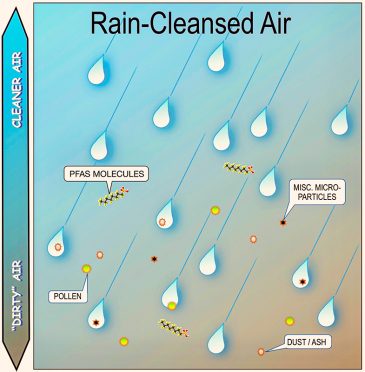
Boiling does not remove PFAS, and filters that do can become overloaded, resulting in decreased effectiveness. Even rainwater contains PFAS, picking up those chemicals suspended in the air. Spring water could even be suspect from PFAS seepage sources along its route to the surface.
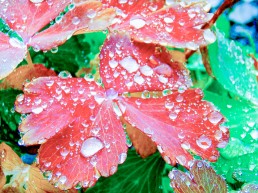
In fact, “pure” rainwater is usually not, since droplets tend to pick up particles suspended in the air and carry them to the ground—and into whatever collecting container you might be using. Snowflakes can do the same thing. If you are collecting your drinking water from “fresh” rain or snow, it’s better to let it fall a bit to rinse some of those airborne nasties away.
 Understand through all this that filtering water (removing debris, organisms, etc.) does not “purify” it. Likewise, boiling does not rid the water of some chemical contaminants. It’s often a combination of both processes using the right type of filtering units to clear the baddies from your water.
You can be among the first to get the latest info on where to go, what to use and how to use it!
Let’s get back to the basics of needing to produce safe-enough drinking water in the backcountry. At a minimum, you could filter raw water by pouring it through a bandana or even a clump of sphagnum moss to strain out visible chunks of debris (leaf flakes, insects, forest litter, etc.), and then pouring it (sometimes it make take a few flushings to clean it visually) into a clear bottle and exposing it to direct sunlight for at least 6 to 8 hours, so the UV rays from direct sunlight can kill any and all critters in that water. Unfortunately, this treatment will not affect any chemical toxins (PFAS, etc.) in the water.
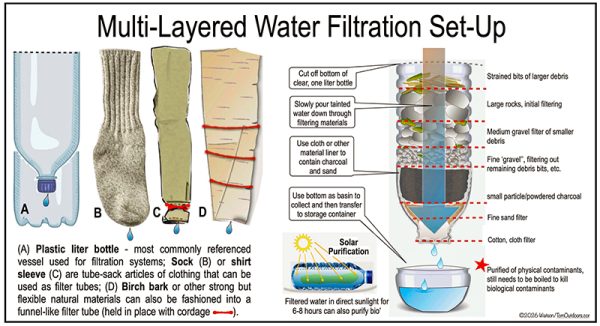
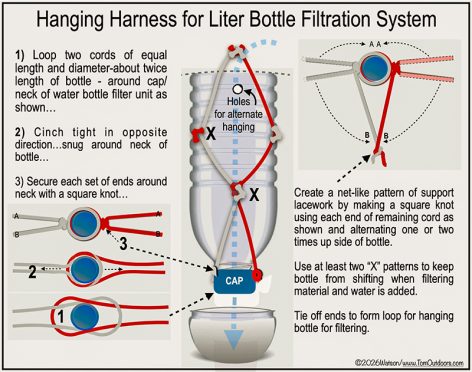
A tiered/multi-leveled cylinder filter (basically what the liter water bottle is) can be a useful filter and can be made with readily available materials found in most environments. The “bottle” cylinder can be created using a shirt sleeve, sock, or even a birch-bark vessel—anything that enables you to create several layers of filtering materials:
The critical need is to have layers of increasing fineness/smallness to catch smaller and smaller contaminants as the raw water flows down through the filtering layers. Layers of charcoal and fine sand need to be contained from washing down into your collecting container by stuffing cotton, cloth or similar materials down into the bottle neck and between fine-grain layers to keep those grains in place.
In lieu of a bottle, a similar tiered filtration system can be made with suspended layers or cloth “trays” filled with finer and finer layers of filtering materials. A simple tripod can be used to suspend layers below one another through which the filtering water will flow.
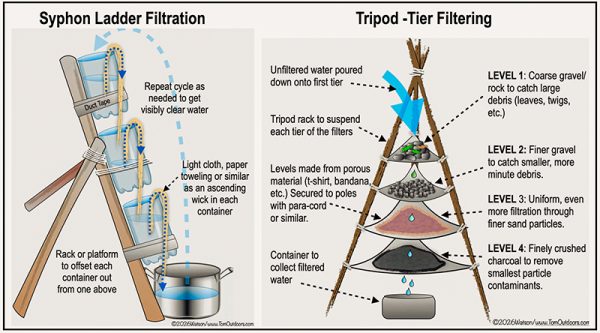 Another method of creating “filtered” water is a syphon system where the process of osmosis moves water down a series of “wicks” from the raw water, to ascending containers of cleaner and cleaner water, as it reaches the lowest level in this system. It, too, may require repeating the process several times to further clear up the water.
There are several filtration devices on the market, many of which require way more simplistic operations than filling water bottle filters or tripods or other DIY contraptions. I’ve used filtration straws, purification water bottle cap accessories, and the full-blown pump-suction units. All worked quite well and were easy to pack along on a hike or paddling trip.
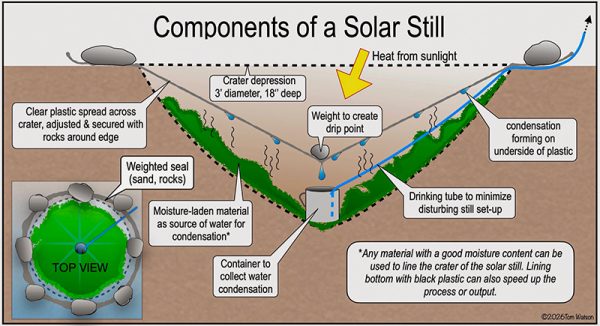 As a side note: There are mixed expressed experiences and opinions as to how effective a solar still actually is. I built one on a beach in Mexico using seaweed as the moisture source, and produced a half cup of water in a couple of hours. You can be the judge of that outcome.
I have also collected a full cup of water by simply wiping a bandana over dew-covered grass and wringing the soaked cloth out over a collection cup. (This water should be purified and perhaps even filtered first, but is a quick and easy way to collect descent volumes of water quickly.)
I encourage you to try these methods at home or at your leisure during a camping weekend so you can experience their effectiveness firsthand. Having these crude filtering processes among your arsenal of DIY field skills is another layer of self-reliance you will have in an emergency.


Did you enjoy this post?
You can be among the first to get the latest info on where to go, what to use and how to use it!