
When BFS Beats Spinning
Farewells are supposed to be quiet.
The cool air bites a little when the weather is a bit crisp. Everything seems a bit slower. Especially me. “One last trip to the river,” I tell myself. “Gotta make it count.”
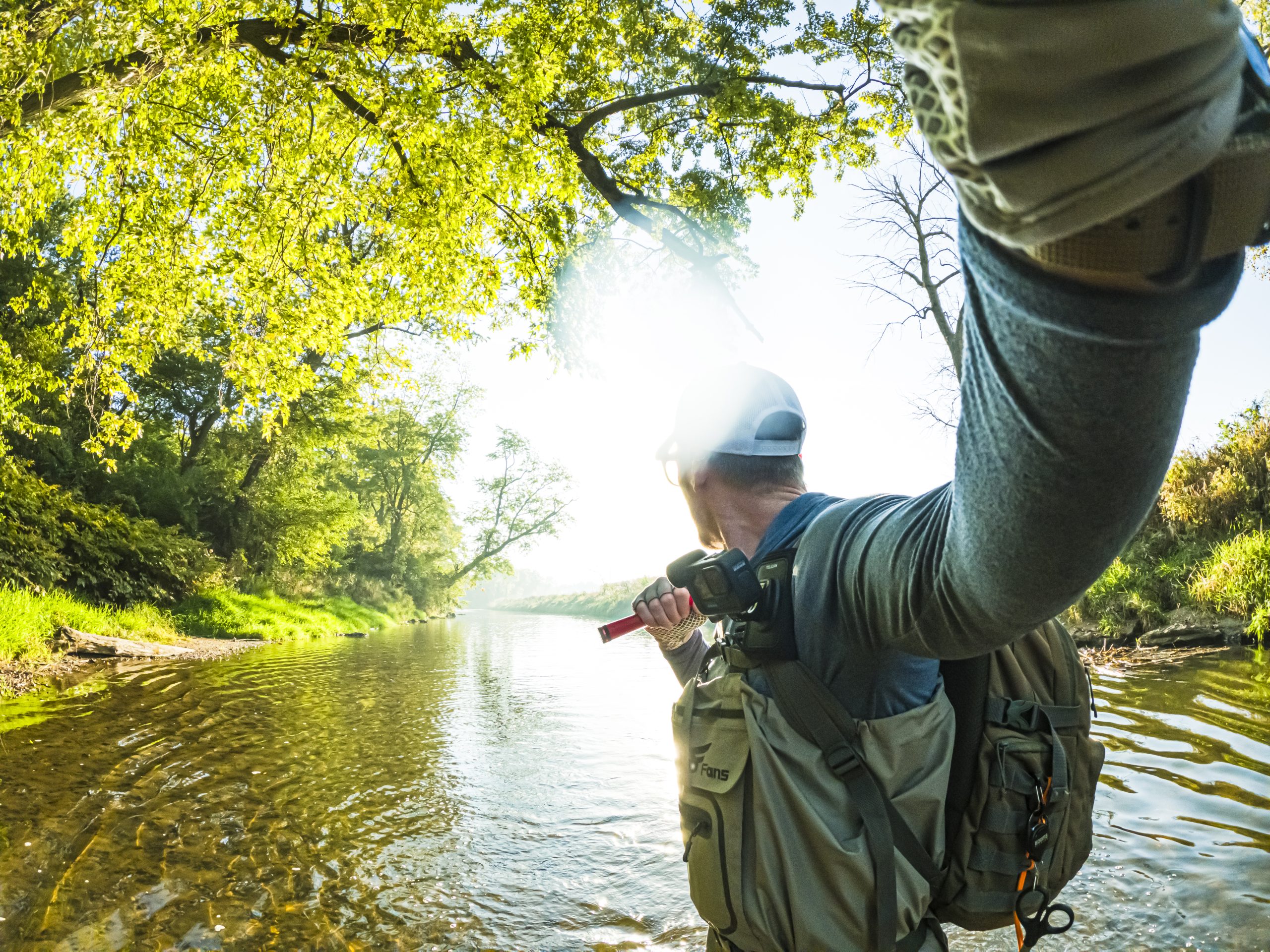
This simple, Midwest river is honest. No algae. No duckweed. No crowds. Just a slow current that winds and weaves against the twisting shoreline. It’s deep in spots, but for the most part, shallow enough to wade for miles and miles. In summer, the red wings will scold you from the trees as the squirrels rustle about.
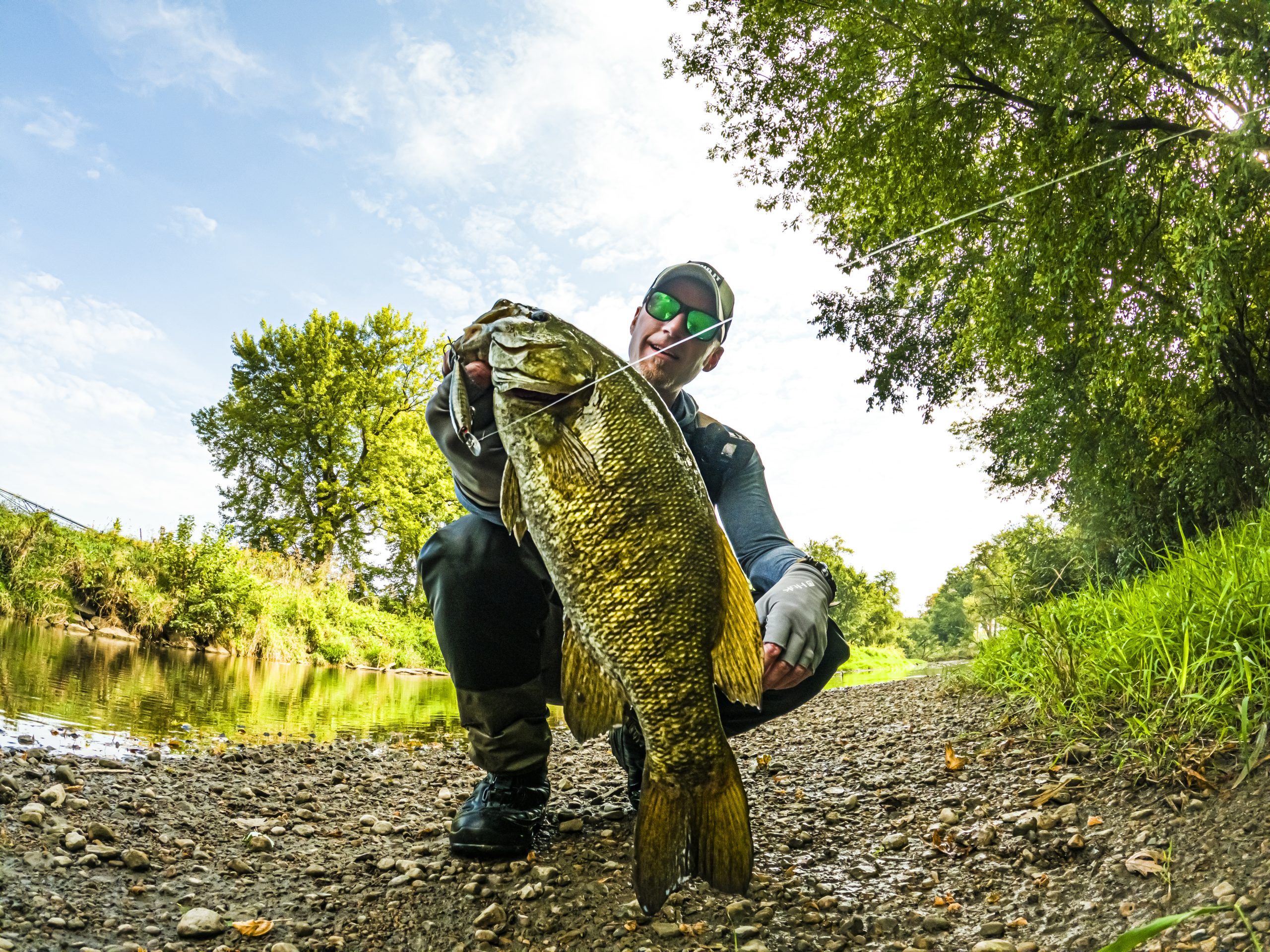
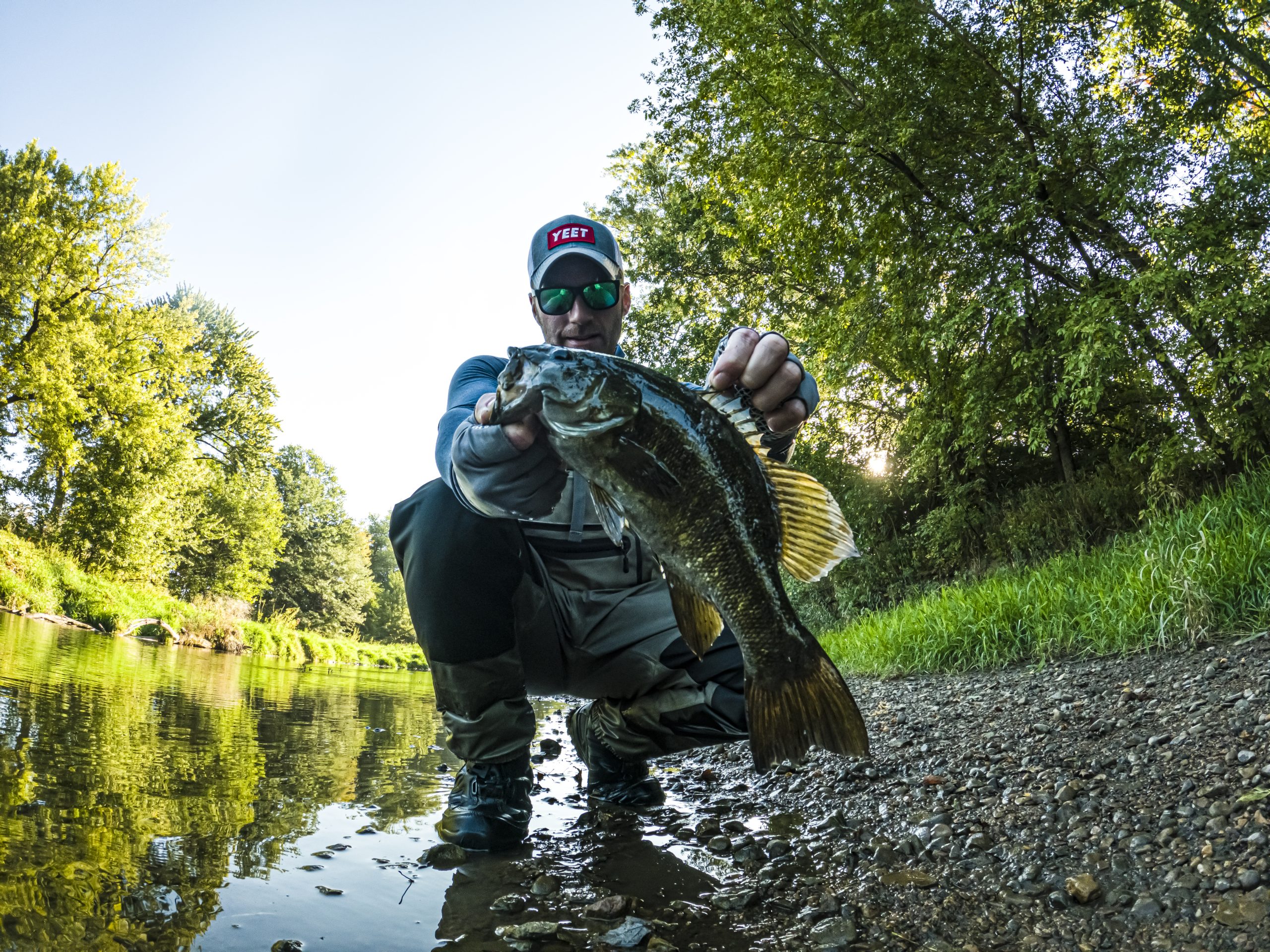
The fish? Oh… there are fish. Loads of them. Big, bronze smallmouth bass rule this river, but largemouths are present as well, along with pike. Pike! In a shallow Illinois river!
Today, I was looking for just one more good one before I had to leave. My family has been working on finding a home in Arkansas for over 4 years now, and we have. I don’t know how things will play out, but I know that next fall, I won’t be here.
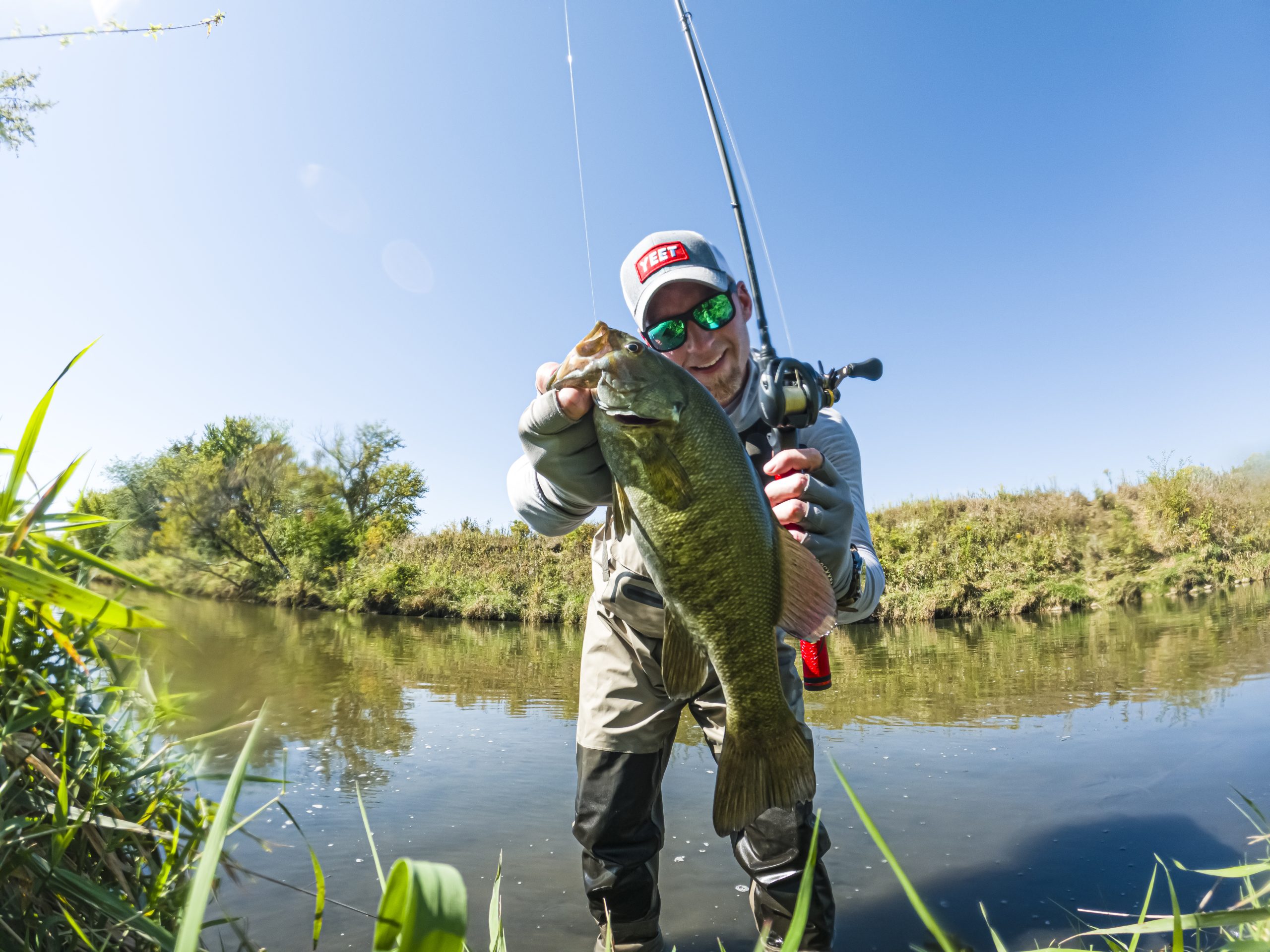
The morning bite had been good, albeit bittersweet. I started with a small popper in an off-white and yellow color that worked well in the slightly tannic river water. A few small pike exploded on it, then the smallmouths decided to join in. Some quality fish.
I was throwing the bait on a new BFS combo. Something I’d been playing with a bit this year. BFS (Bait Finesse System) gear has become hugely popular, and while I am slow to jump on new trends, this one has been around long enough to get my attention.
There are times when BFS beats spinning gear. One reason is that they allow you to place your bait on the water with pinpoint accuracy and minimal noise. Having precise control over the angle, sound, placement, entry… It’s not about picking teams; it’s about control.
Let me share what I’ve learned this year: When and where I like to throw BFS and why I pick it over spinning gear at times; how to set your BFS reel up in two minutes or less; and how to get the most out of this neat (and expensive) gear.
I popped a simple Ned Rig on and started the long wade back home, making cast after cast to the outside bends and deep holes cut beneath the bank.
Tap-tap-tap…
This farewell was anything but quiet…
Don’t be afraid to pick the scalpel
I love spinning gear. It’s great for long bombs and flinging light baits without fear of a backlash. But when the targets get small, you need something that is going to allow you incredible precision. When you can cast to (and nail) a target the size of a nickel and set your bait down so that it lands with a whisper—not a splash, not a plop, not a ripple—that’s fishing with a scalpel.
That’s BFS.
BFS combos allow you to shape the flight of your cast and control the entry of your bait with your thumb. Many of us are already comfortable using baitcasting gear, but this is definitely not just baitcasting gear. For example, BFS reels use a super-light, super-shallow spool. This requires much less “start-up” inertia. When properly tuned, you can truly throw 1/8-, 1/16-, even 1/32-ounce baits without a backlash.
Another benefit is accuracy. If you’ve ever tried to cast a bait that’s simply too light on a standard baitcaster, you quickly realize after a few sideways casts that accuracy was simply out of the question without some weight. With BFS, you’ll find that you’re placing, not lobbing. You’re not plopping down and spooking the locals; you’re silently positioning your presentation.
This quiet, accurate placement on the first shot alone is worth the price of admission.
Try it. See how many fish you start to catch from areas on the first toss. You’ll be amazed, and you’ll have fun doing it!
The two-minute BFS setup
It took me quite a while to figure out just how to get my BFS reel dialed in. Let me emphasize that it’s not just a baitcaster! We’ve all done the drop-test, where we press the button to release the spool, and watch the bait we plan to throw fall towards the floor. We then adjust the tension knob so that when the bait touches the ground, the spool quickly stops.
You can be among the first to get the latest info on where to go, what to use and how to use it!
But with BFS, you want that spool free-floating.
Sound intimidating? Only for a bit. Here’s how to set it up like a champ:
Start with your spool tension. Tighten it, and then back off until you can just barely move your spool side to side. Just barely hear a click. This is where you want to start: Without tension on the spool, because tension will choke start-up. This is precisely why the drop-test won’t work in this situation.
Next, tighten up your magnetic brakes. Make a cast with your favorite 1/8-ounce bait to start, and you’ll notice that it won’t go anywhere. Back the magnetic brakes off a bit. Repeat, again and again, until your spool and your magnetic brakes allow you to make crisp, clean casts without any overrun.
The cast itself? Think smooth, controlled chaos. I first work on getting the reel dialed in with the bait I’m using, with smooth, sidearm casts. Standard fare. However, I also like to employ little, whippy flick-casts on the water.
BFS rods are usually quite limber—nowhere near as stout as traditional spinning, and especially casting rods. Limber rods “load up” on a whippy, flick cast, and as long as you properly thumb the spool when you use a technique like this, you can fling ultralight baits with minimal effort or movement. Whether you prefer to stick with sidearm, or flick a bit, if you keep the trajectory low and feather the landing, you’ll have great luck—even in a bit of wind.
Finally, don’t overfill the spool. Leave a visible lip and use a light line. I prefer braided line from 4- to 10-pound test which is small, and also limber.
All of these elements together allow you to keep it clean, keep it minimalist, and win the day.
Target practice with the 3-pronged column
My approach to almost any body of water starts the same way: I attack the top, middle and bottom until the fish tell me what they want. As a minimalist fisherman, I make it a point to only take what I think I’ll need.
For a river like this? We’ll start on top with a tiny popper, placed with intention. No spray and pray; we’ll specifically target outside bends, riprap banks, work underneath overhanging trees, between laydown branches, or in lanes created by other types of cover. We’ll accurately toss our topwater and try to call the fish in.
If it works, we’ll stick with it, until it doesn’t.
When the topwater bite slows, we’ll look subsurface with another favorite: the jerkbait. But not just any jerkbait: A tiny, delicious-looking, bite-sized morsel with hooks so sticky they snag any fish that comes by to take a whiff. If the wind is calm, these jerks can be as light as a potato chip; but if the wind gets uppity, we want to upsize a bit. That weightless potato chip acts like a salty kite.
My analogies are getting weird today, so I’d better stop before the grand finale.
It’s TRD time.
No jokes, please. Just a simple, unassuming green pumpkin blob full of salt (and probably fiber by the looks of it) on a 1/16-ounce jig. Cast. Watch the line. If it gets heavy, set. This is a game of numbers… although sometimes… it isn’t.
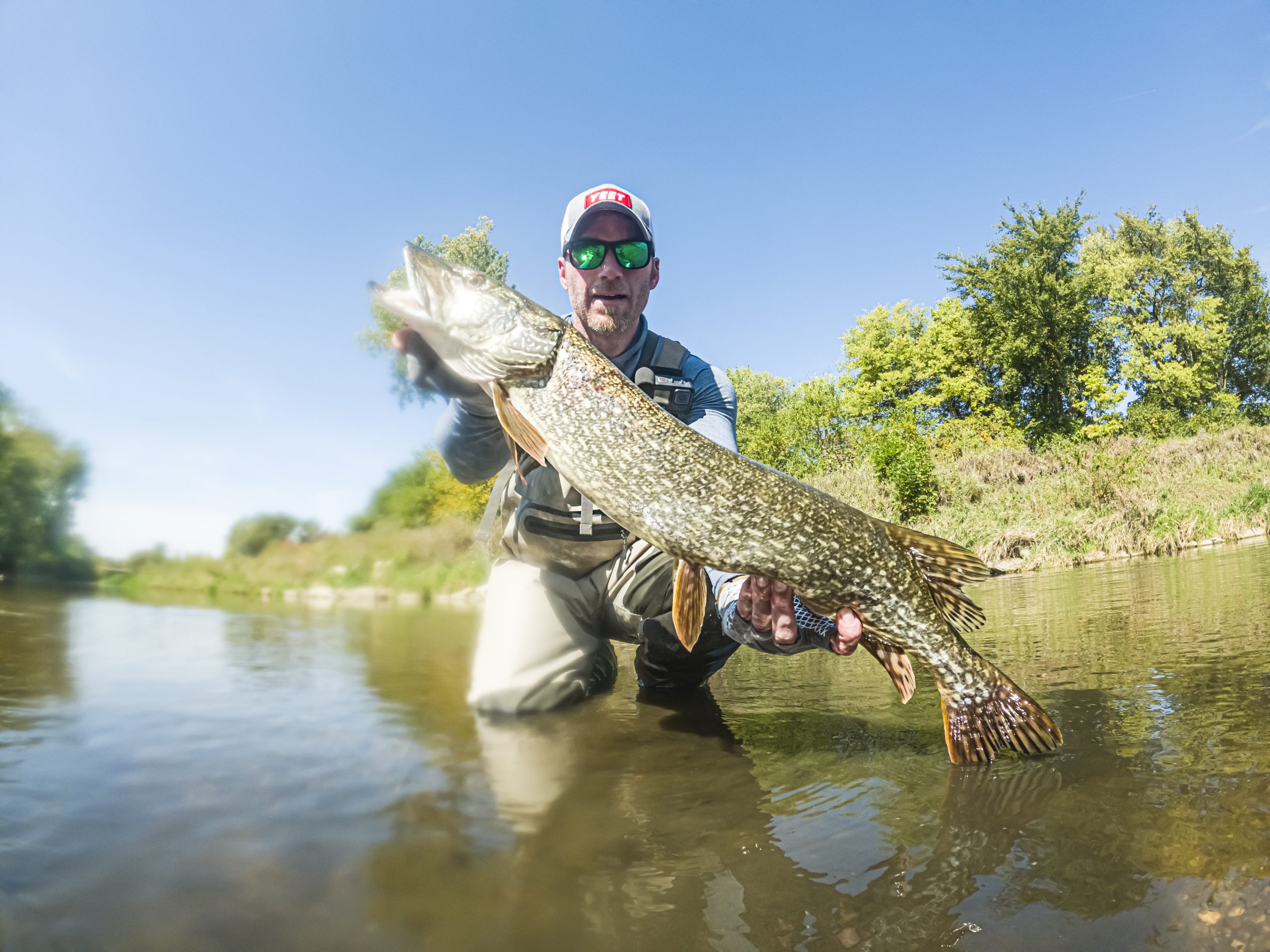
You remember that fish I mentioned earlier? The one that hit my Ned Rig tied to my small 10-pound braid and a light fluorocarbon leader as I was leaving the river for the last time?
Pike. Big pike. Tap-tap-tap…Whack! Fish on! My limber BFS rod completely doubled over as the fish made powerful run after powerful run with the current. The reel clicked loudly as line stripped, but the drag did what it was supposed to do, and after 10 minutes I was able to collar the largest pike I’d ever caught in this river. Thumb and forefinger behind the head, clear of the sawblades, what a specimen!
BFS isn’t about catching small. It’s about placing small, with intent. When the job is tight and accuracy is more important than distance, BFS ought to get the nod. I often harp on the fact that new gear doesn’t create more fishing time, but a cleaner system does. The trick is making sure your system includes the right tools for the job—and nothing else. I’m sure that it’s no surprise when I tell you that my arsenal has increased.
Farewells are supposed to be quiet… but thankfully, this one wasn’t.

Did you enjoy this post?
You can be among the first to get the latest info on where to go, what to use and how to use it!
