
Stocking a Tackle Box for the Beginner Bass Fisherman
Some fishermen start off their fishing journey fishing for bass. Others started fishing for panfish when they were kids. While some may have been a walleye angler, or pursued muskies, they now want to switch over and chase largemouths and smallmouths. Whatever the scenario, properly stocking a tackle box with the right lures for new bass fishermen is important. You want to make sure that your family member or friend who is getting into the sport of bass fishing has the right lures to help them catch bass.
I have gone through and identified seven bass fishing lures that should be in a beginner bass fisherman’s tackle box, as they will work across the country, on any lake or river with bass, from shore or in a boat.
Soft plastic stickbait
Lure: Senko (4- and 5-inch)
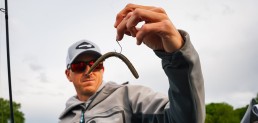
Details: The soft plastic stickbait, AKA Senko, is an extremely effective piece of soft plastic to put in front of bass and just have it sit there. You can rig a Senko in several ways: Wacky, Neko, or Texas style. The last, the Texas-rig, works well when fishing around vegetation, or when you want to keep your bait from getting hung up on the cover you are fishing. The other two rigging methods, wacky or Neko, are very similar.
I rig a number 2 Lazer TroKar Pro V Finesse hook through the center of the bait. This allows the Senko to sink to the bottom, with each end of the bait pulsating ever so slightly with the twitch of your rod tip.
The difference with a Neko rig is that I’ll insert a small, tungsten nail weight into one end of the bait, so this effective bait can get down to the depths where offshore bass live. These baits can be fished around any form of cover, and the slower you fish ‘em, the more bites you’ll get!
Jig
Lure: Arkie Style Jig (3/8- and 1/2-ounce)
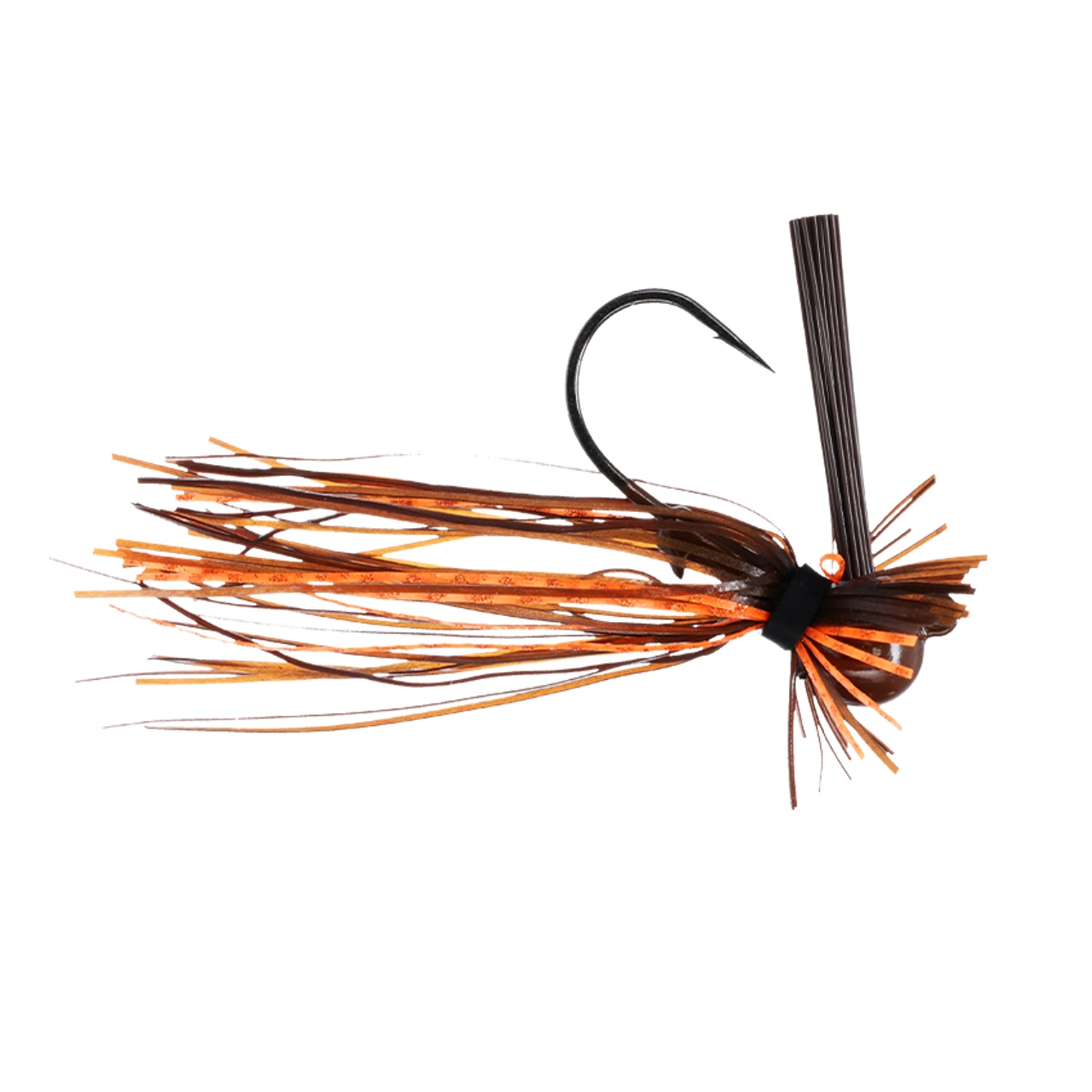
Details: No other lure that a bass eats is more versatile than a jig. Anytime of the year, on any lake or river, around any form of fish-holding cover, a rubber-skirted jig can be fished in a variety of ways to catch bass. You can flip or pitch a jig around stumps, laydowns, boat docks or around vegetation, as a jig allows you to put the bait tight to the cover where bass are positioned.
Carry an assortment of 3/8- and 1/2-ounce jigs that you can fish from shallow to deeper water. Different jig weights also allow you to show the bass a jig falling at different rates, which may be the difference in getting a bite or not. You can also cast a jig and drag it around offshore structure such as rock piles, brush piles, or offshore flats where bass are roaming.
Vibrating Jig
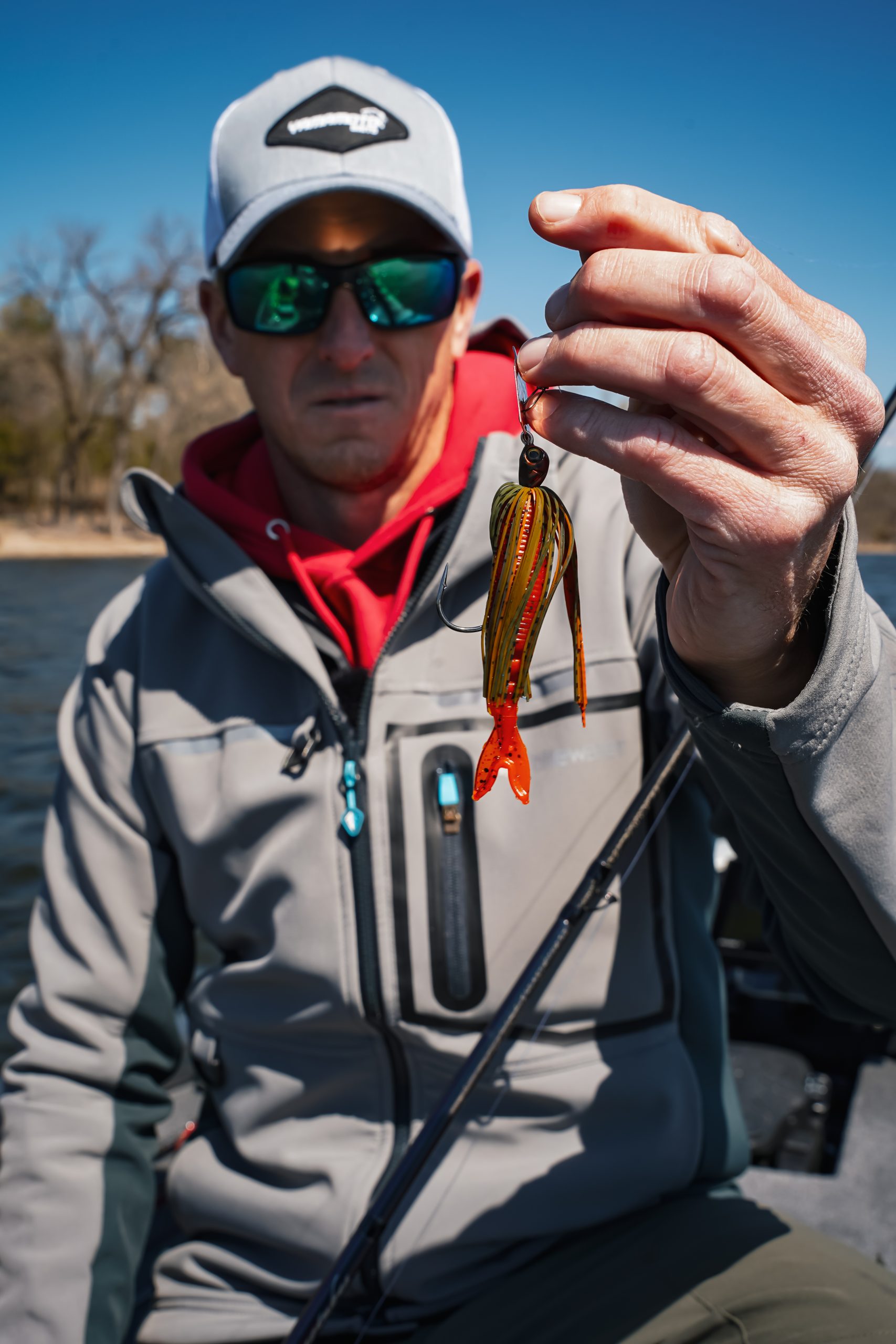
Lure: 3/8-ounce JackHammer or Tungsten ChatterBait Elite EVO with a Yamamoto Slim Zako trailer
Details: Since the early 2000s, the ChatterBait has become a staple for bass fisherman across the country, as it can be fished all season long. You can fish a vibrating jig in shallow water around all forms of cover, including vegetation, wood, rock and boat docks. It’s action and strong vibration gets the bass’s attention, and it can be brought through fish-holding cover and not instantly get hung up. The options for a soft plastic trailer are almost endless, but the important thing to remember is that you do not want action from your plastic trailer to overpower or counteract the already powerful action of the blade on a vibrating jig.
Spinnerbait
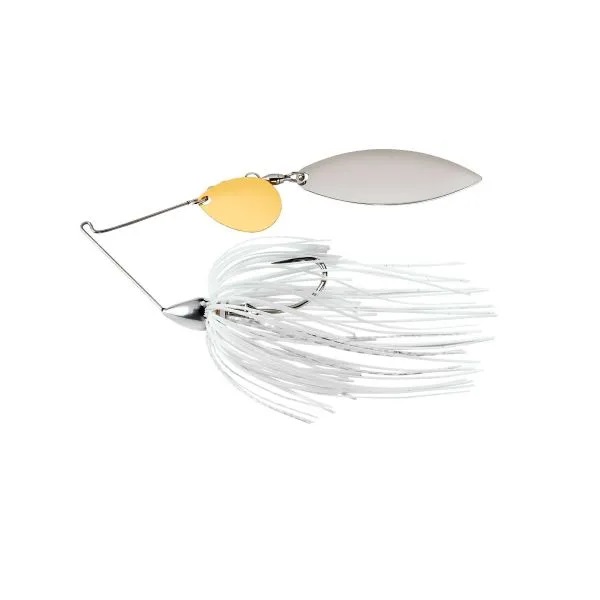
Lure: 3/8-ounce Tandem Willowleaf
Details: Long ago, spinnerbaits were staple items for any bass fisherman, and they still work today! The ability to cast out and reel in a spinnerbait makes it a great choice for beginning anglers. What makes spinnerbaits so effective is the ability to alter your retrieve based on the depth of water you are fishing and the activity level of the bass.
In spring, you can very slow (called slow rolling) using a single-Colorado-blade spinnerbait that puts out a lot of vibration and get a bass’ attention, even when the water is cold. When the water gets warmer and the bass feed on baitfish during summer or fall, it is more common to use a spinnerbait that has a double willowleaf blade setup, or a tandem willowleaf/Colorado blade arrangement, as these spinnerbait blade configurations emit more flash.
You can be among the first to get the latest info on where to go, what to use and how to use it!
Topwaters
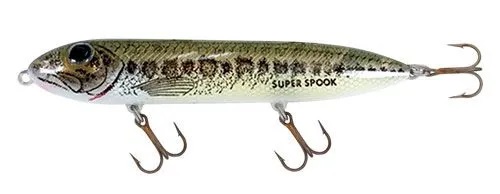
Lure: Heddon Super Spook and Rebel Pop-R
Details: As the year progresses and water temperatures creep close to and then rise above 60 degrees, bass are actively feeding, and I’ll always have a topwater rigged up and ready to go. Topwater baits work well around and adjacent to shallow water cover like emergent vegetation and laydowns, along with working the lure over offshore structure like weed lines and underwater points.
The soft, side-to-side cadence of the Spook is attractive to a bass, both when they are chasing bait and want something splashing over their heads, while also still being able to get their attention when they are not wanting to chase a fishing lure very far.
The Rebel Pop-R is a great topwater plug choice when you need to make pinpoint casts to a target. After popping the bait, let it sit motionless next to fish-holding cover.
Texas rig
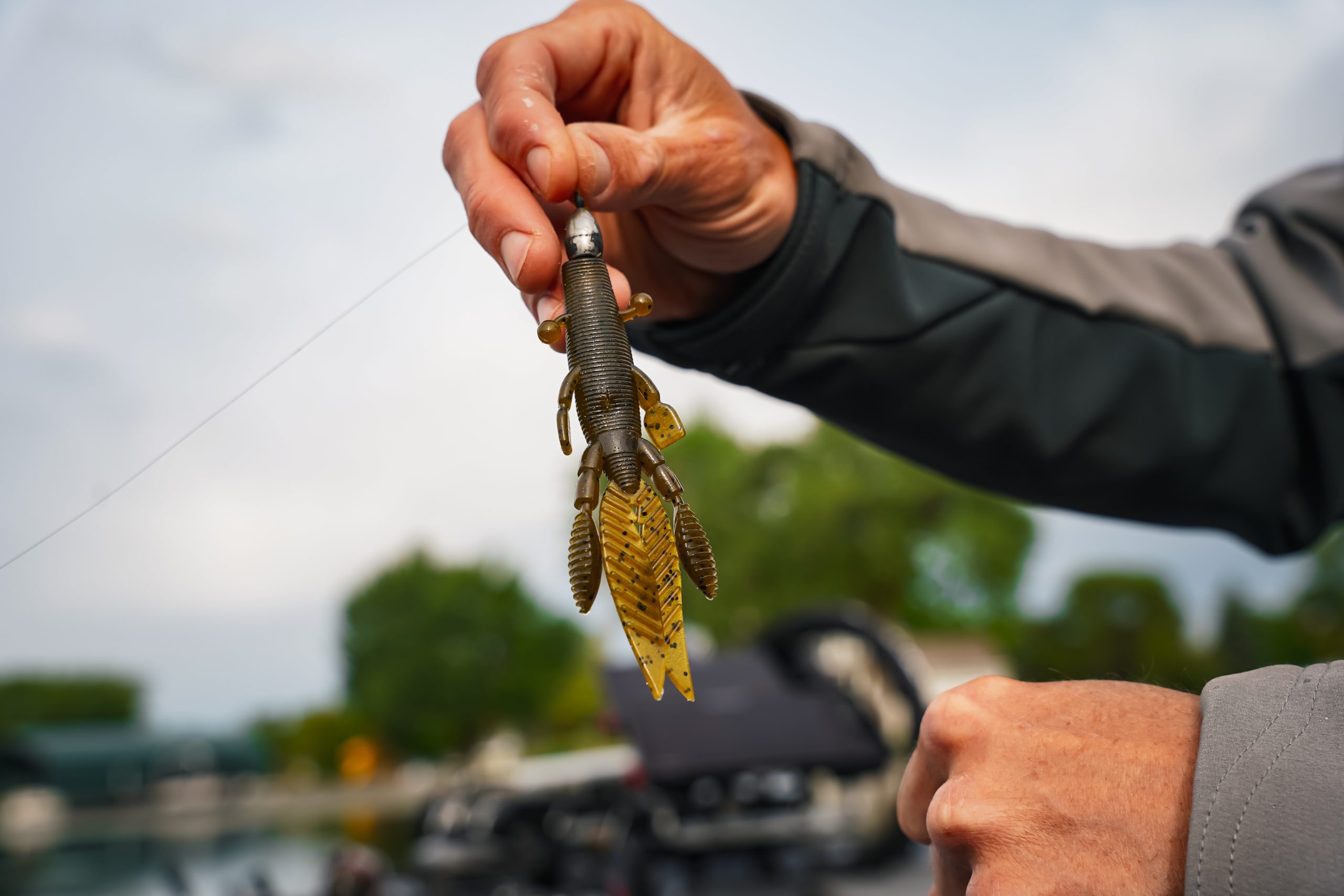
Lure: Yamamoto Flappin’ Hog or Big Bite Baits Craw Tube
Details: From flipping or pitching shallow-water cover, to casting and dragging a bait along an offshore weed line, a Texas-rigged soft plastic bait is versatile and effective for catching bass in and adjacent vegetation and brush.
Fishing a Texas rig allows you to slow down and catch sluggish bass and is a staple technique any time of the year. You’ll want to stock a tackle box with an assortment of tungsten weights, ranging in size from 1/8- all the way up to 1 ounce, but if I had to pick a few key sizes, I would suggest 1/4-, 3/8- and 1/2-ounce. It is important to always use the smallest size possible, as this will give your soft plastic bait the most natural action in the water.
The same goes for hooks; you want an assortment of hook styles, including some extra-wide-gaps, traditional worm hooks, and flippin’ hooks. Hook size depends on the size of the soft plastic you are using, so having 3/0, 4/0 and 5/0 hooks is important.
Topwater Frog
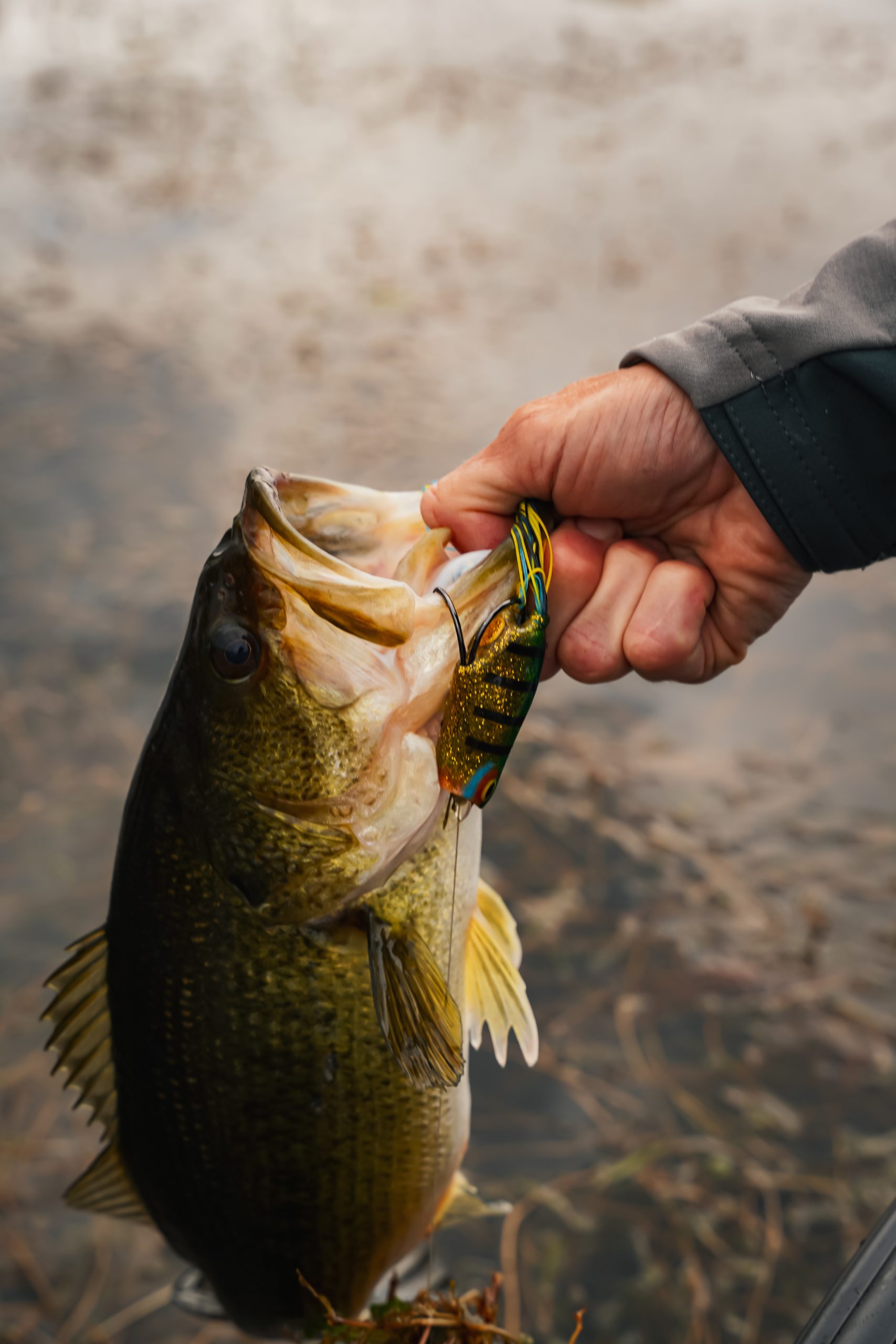
Lure: Northland Fishing Tackle Reed-Runner Frog
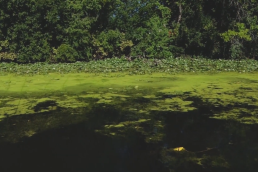
Details: Anytime there is vegetation in the water, chances are that at some point during the fishing season, it may become dense enough that you won’t be able to get a fishing lure through it. This is when a topwater frog is a great lure choice as you can work the bait on the surface that now has a canopy of vegetation that the bass will hide under. Some areas that I’ll use this technique are over and around lily pads or matted hydrilla, eel grass, or milfoil.
Now is a great time to look at getting someone who is interested in bass fishing there first assortment of bass fishing tackle. It will get them ready for their first fishing trip, and it will give you an excuse to look at and buy some fishing tackle.
Did you enjoy this post?
You can be among the first to get the latest info on where to go, what to use and how to use it!
