
A ‘Net-Worth’ Investment
March both brings an end to winter and ushers in the first days of spring. It’s also the time to wrap up any winter projects you’ve procrastinated on finishing.
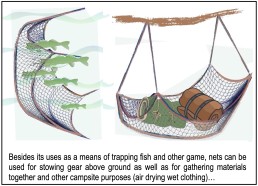
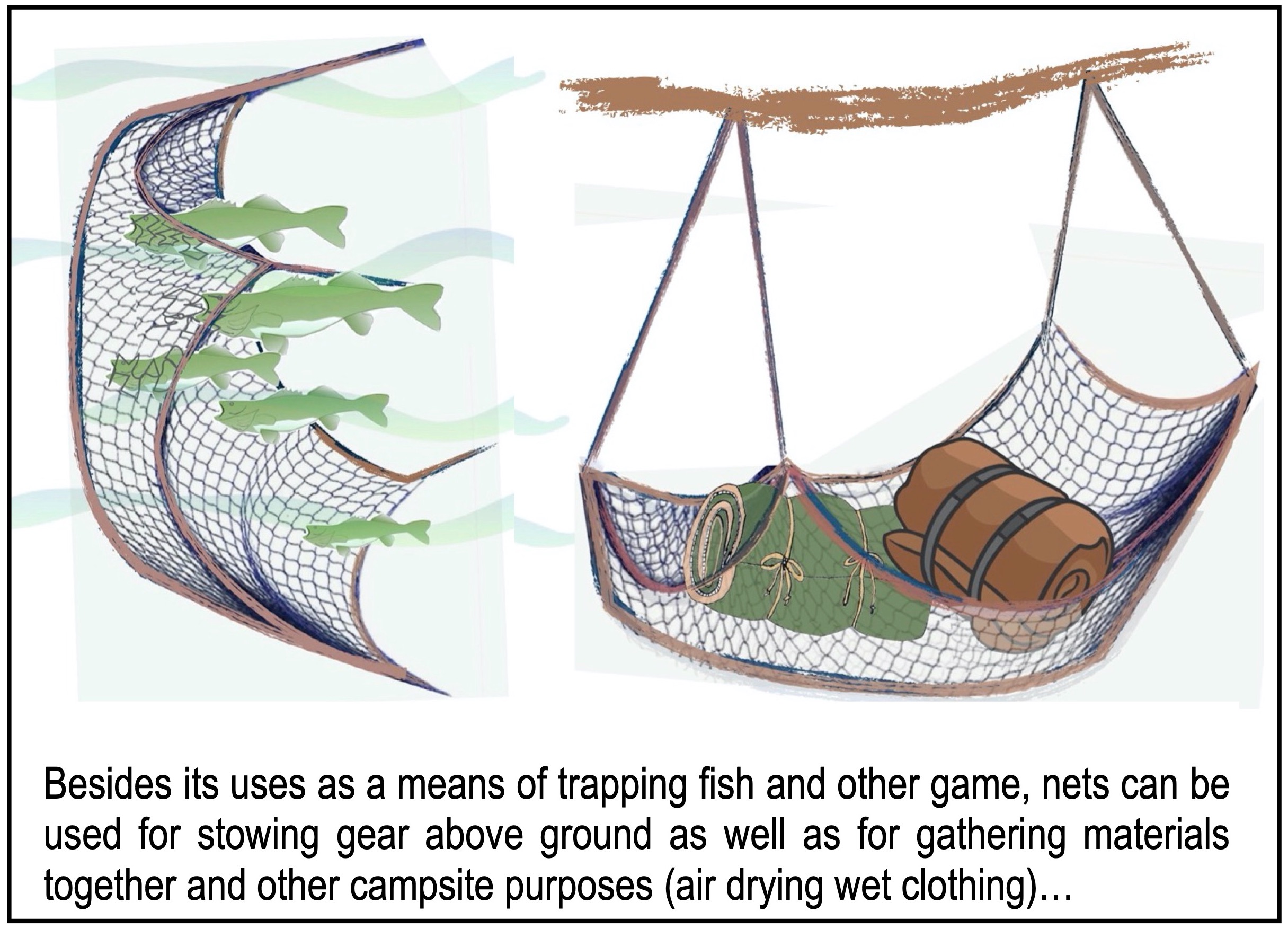
On such project to consider while winter holds you mostly house-bound is making your own net. From fine-filamented gill nets to husky, seine-type weaves, nets are a handy tool for around camp—either as a form of food gathering or as an easy-to-hang woven compartment to stow gear or to toss wet clothing (in lieu of a clothesline).
There are two basic approaches to constructing a DIY net: A full-blown use of tools and traditional mariner-type techniques, or the simpler, short-cut version where you pretty much just use your knot-tying skills (sans tools) and make a crude camp net to whatever size fits your intended needs. Naturally, in this column, I’m going with the latter.
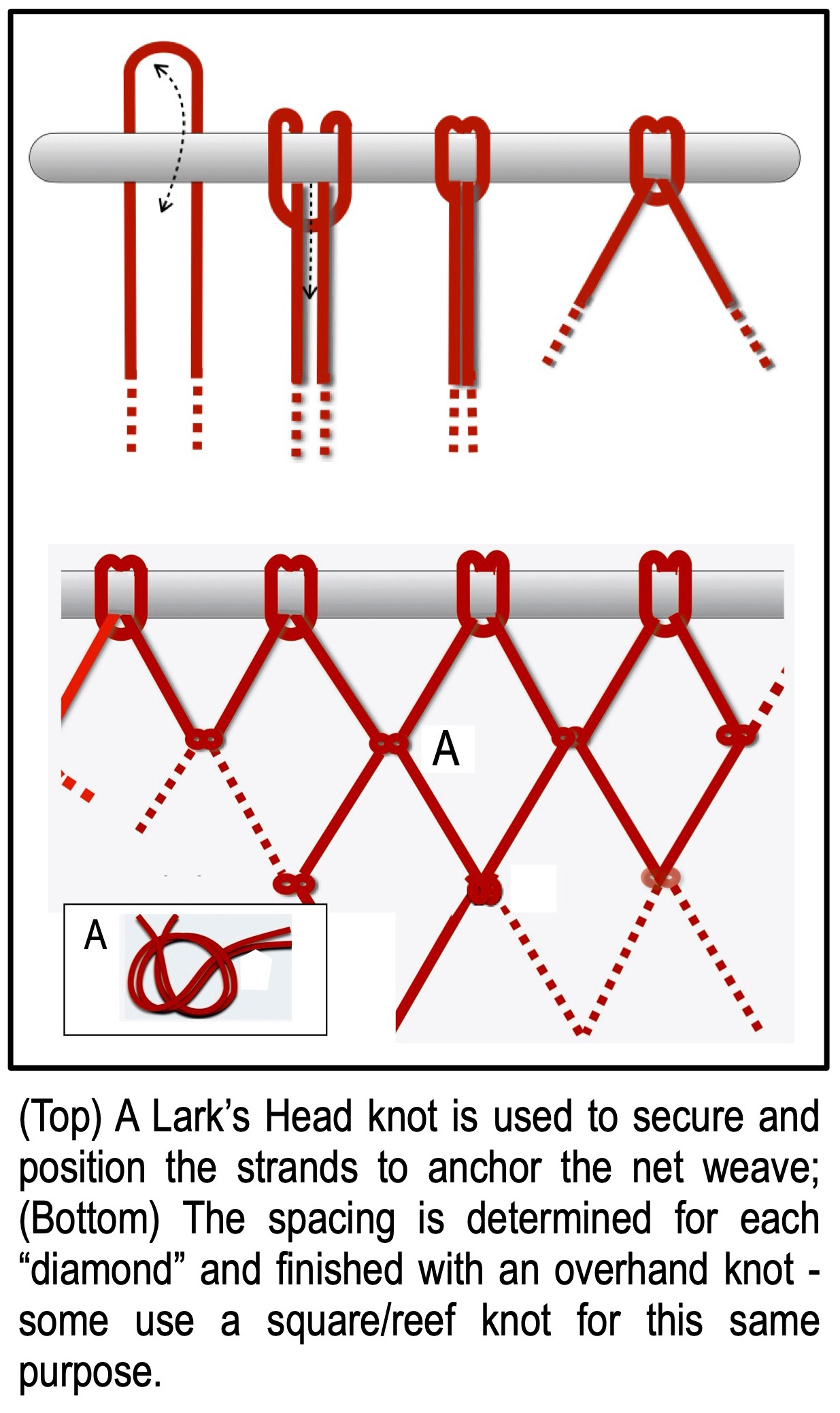
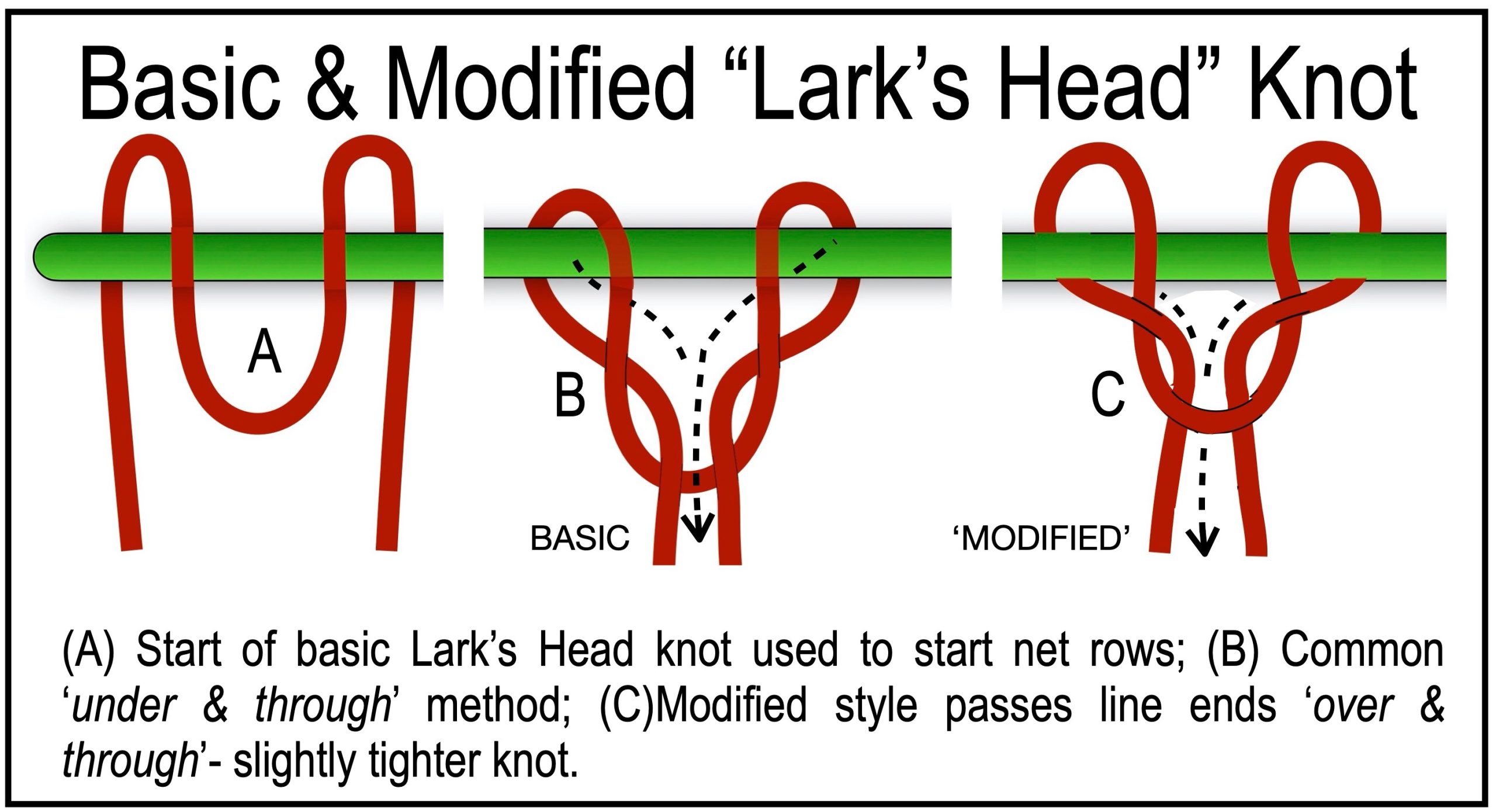
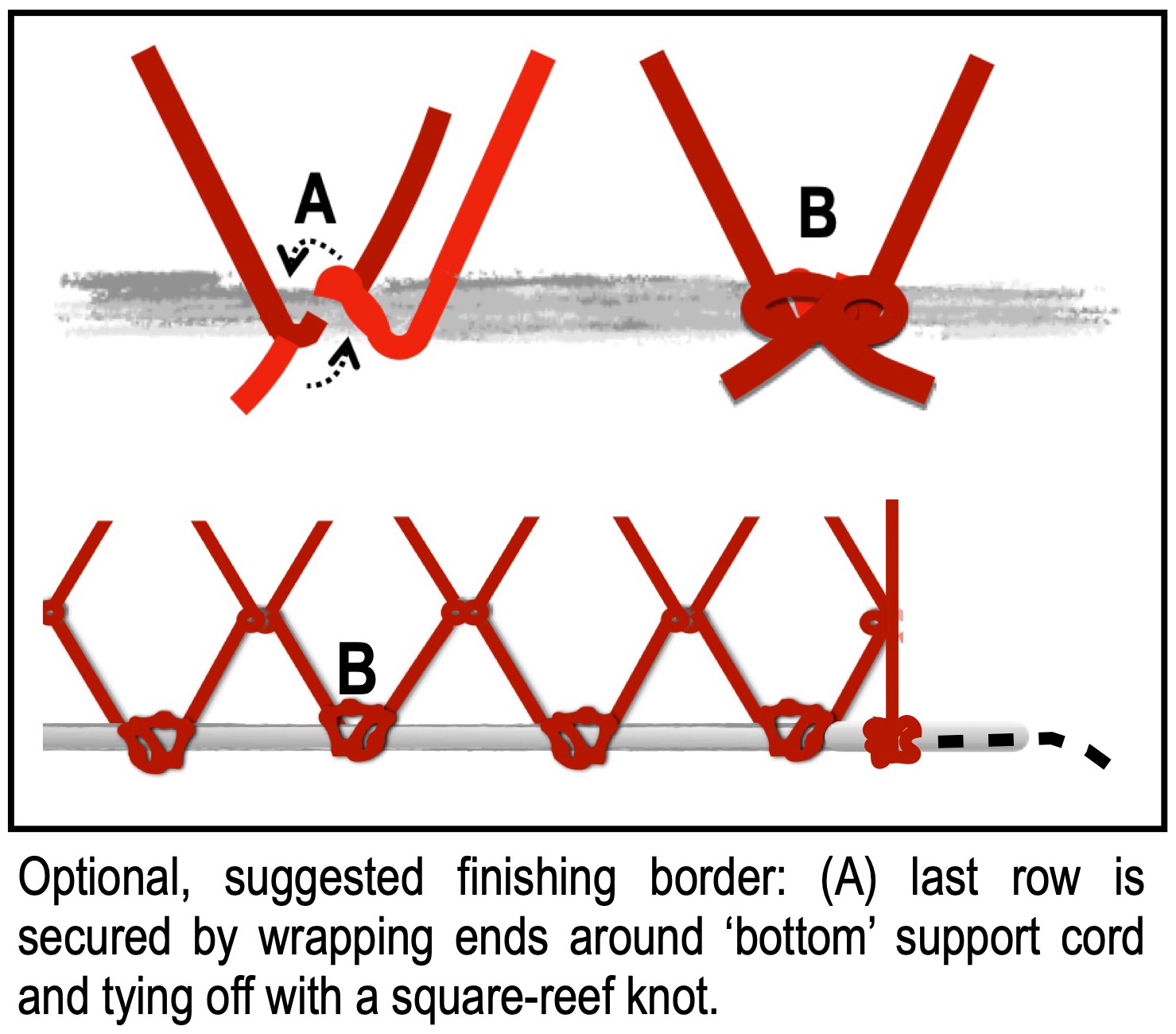
This simple version relies on a couple of basic knots (lark’s head, reef/square knot) in a series of repeated patterns of the net openings supported along a perimeter of base cordage that defines the ultimate dimensions of your net.
You can be among the first to get the latest info on where to go, what to use and how to use it!
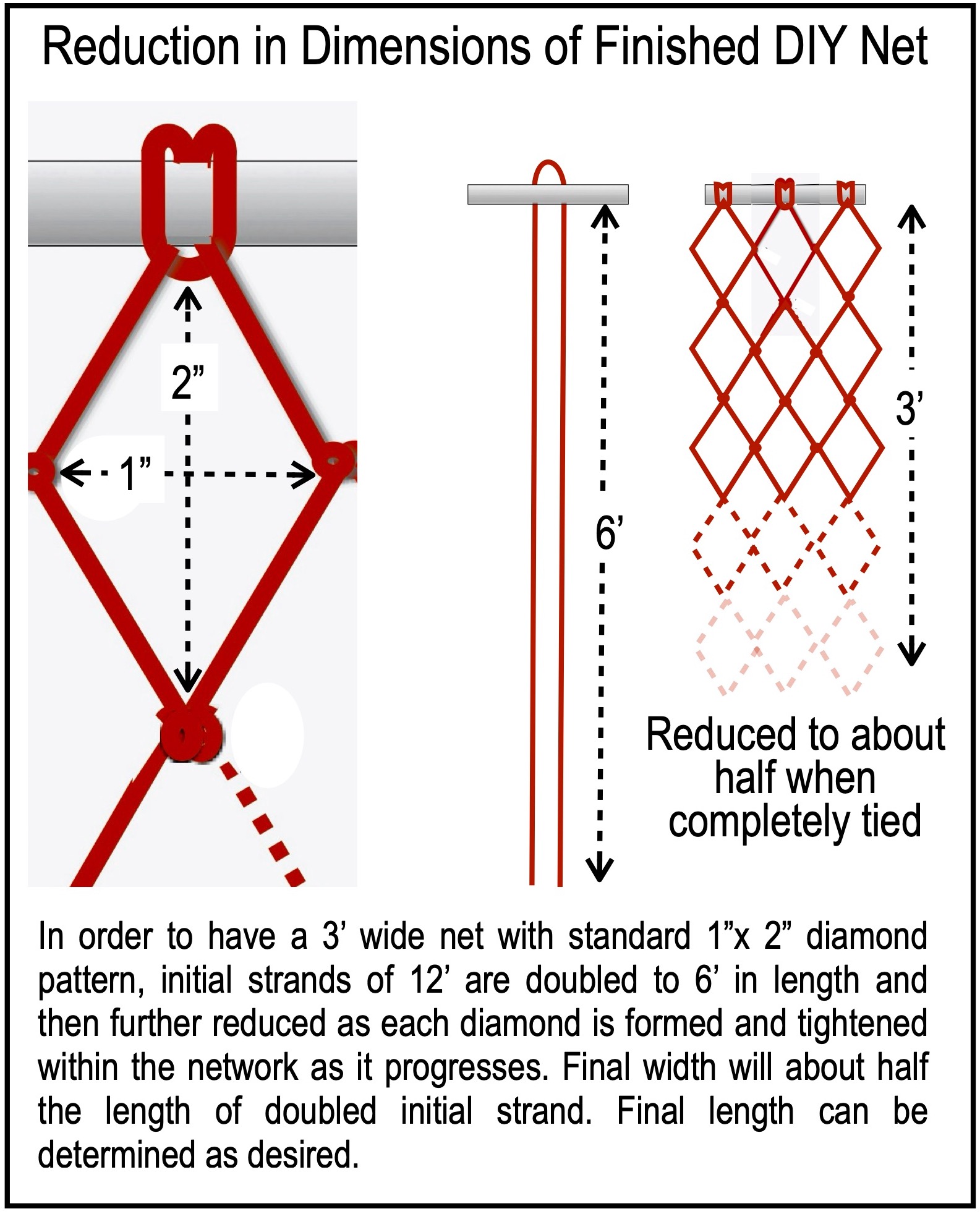
The intended final size of your net will require long, pre-measured netting weave material in strand lengths that, when shortened by knotting and contracting the netting area, result in the desired depth and length of net you want to have.
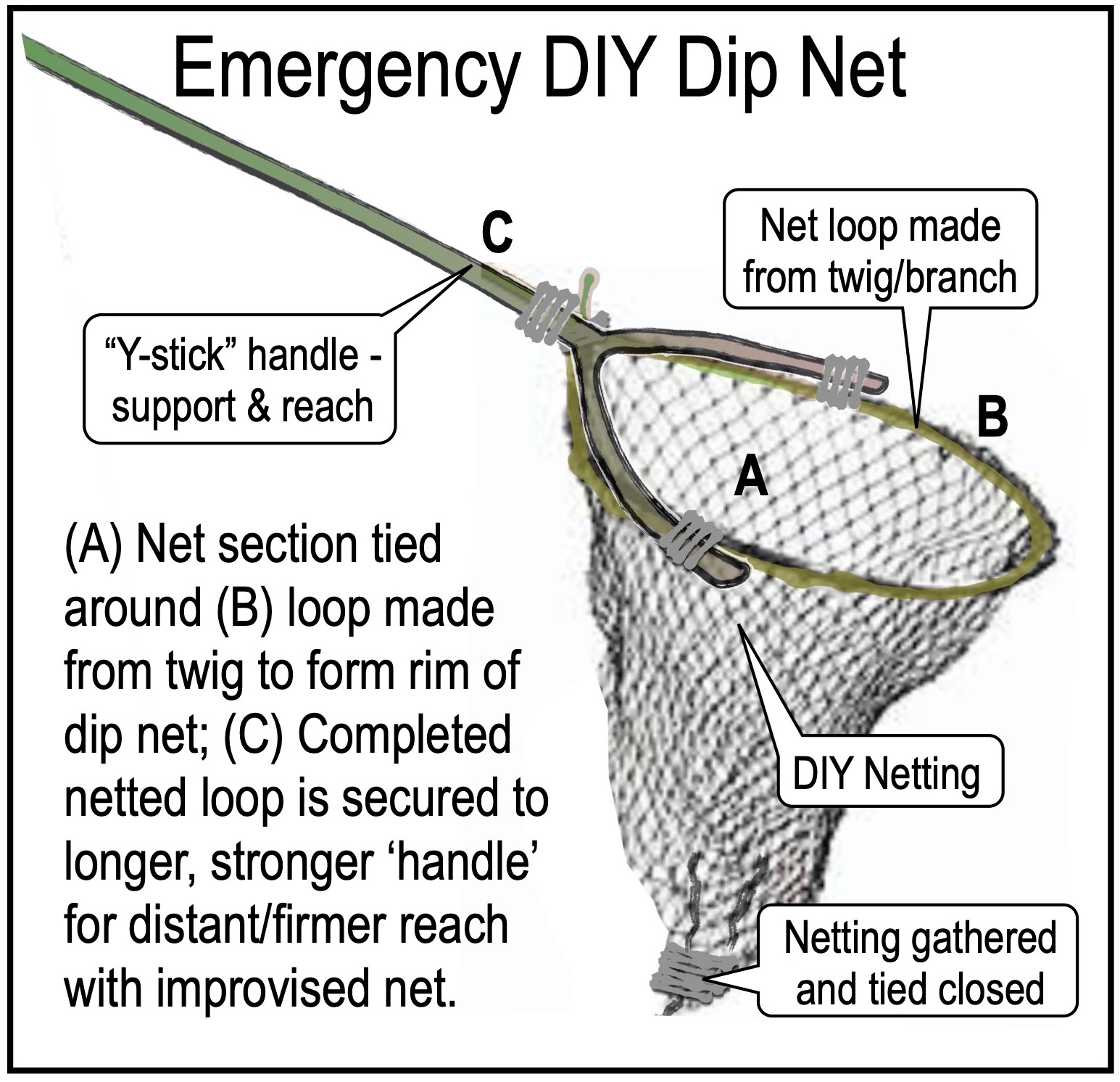
We are all familiar with the fine but strong mesh in the monofilament weave of a gill net, or the stout scoop weave of a landing net. A utility net might also be used as an entrapment mesh in conjunction with a land-use snare trap or game trail trap. It could also be used to cover the framework on a basket-funnel fish trap in a stream. Some have even suggested that a gill-net type of spread can be used to snare birds in flight when spread across a corridor used to drive birds in its direction. Even a small, woven net can be turned into a crude landing net using a small area net weave around a twig loop attached to a branch handle.
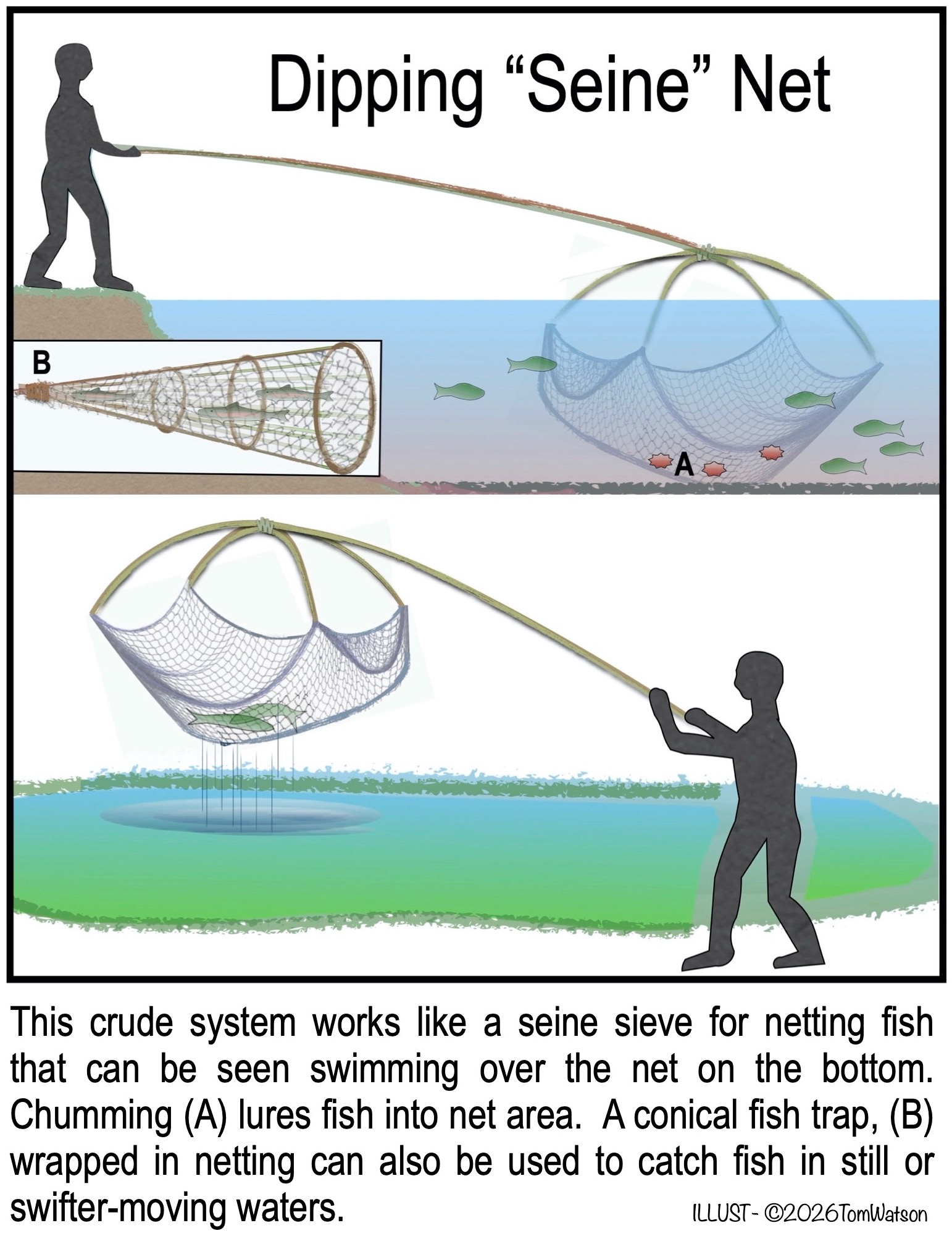
In some cultures (Southeast Asia, etc.) a huge net platform (like a gigantic landing net) is lowered into fish-rich waters and then carefully but swiftly raised, causing the netting to enclose around the fish caught within the confines of the net’s surface underwater.
Whether it’s a serious project that gives you yet another bushcraft type of skill/tool to add to your arsenal of outdoor gear, or simply an exercise in DIY dexterity, making your own net is one more way of expanding your self-reliance skill base.
Be smart, be safe, and have fun out there!
Did you enjoy this post?
You can be among the first to get the latest info on where to go, what to use and how to use it!