
Lining Up In-Line Spinners
With so many lure types to choose from, let’s tip our hats to the tackle industry for coming up with new ideas and innovations every year. It’s easy to get lost in the dizzying array of baits; and to forget about some timeless classics that are remain as productive, or maybe better, than beautiful new models.
One classics lure that often gets overlooked these days is the in-line spinner. Literally every species that swims can be caught on them in appropriate sizes and looks—and often multiple species with the same presentation. And they are super-efficient at covering water, allowing you to expose them to a lot of gamefish. Let’s examine the amazing in-line spinner lure, along with a few helpful considerations.
In-lines 101
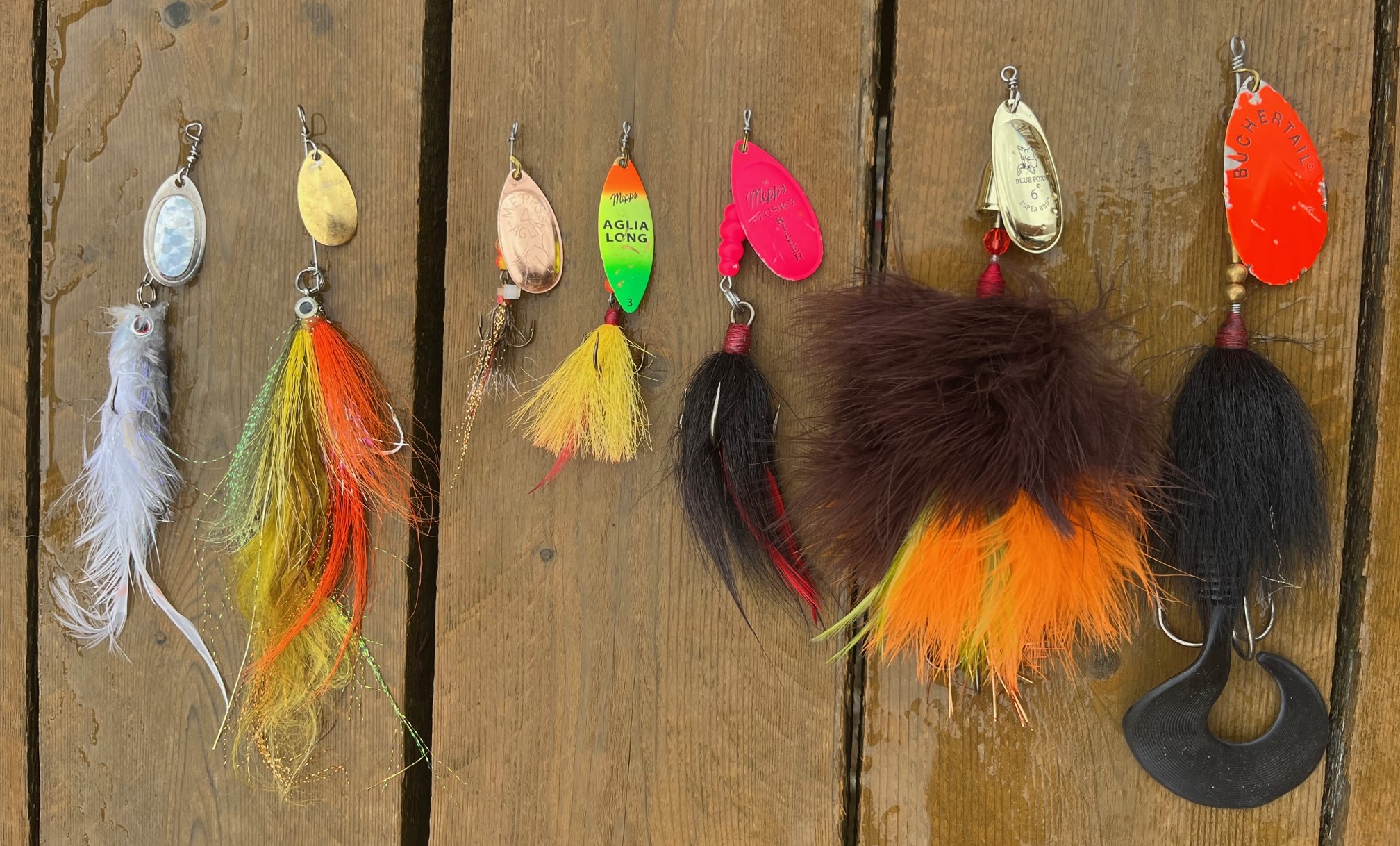
The basic in-line spinner consists of a wire shaft, usually with a blade on a clevis in front; beads or other spacing items before a weighted body; and a hook—be it plain or with some form of dressing—often a treble, but a single hook can be used instead. Blade styles vary, but commonly are what’s called a French blade with an oval shape. However, plenty have willow leaf, Colorado, or other blades. Some models employ multiple blades—typically two—each on their own clevis.
Lure sizes range from a “0” on the small end on up to massive “10” or more, indicating a logical increase in size. This is opposite of how standard hook sizes are classified, which get smaller as the number gets higher (which is very a. Typically, trout and panfish spinners range in sizes 0 thru 3, bass and pike in sizes 4 thru 6, and muskies or big pike sizes beyond that.
Innumerable colors span a wealth of blades, bodies, and dressings (primarily featuring bucktail hair, feathers, or plastic). Like other lure types, the selection ranges from natural hues like silver, gold, and brass in terms of blades and bodies, to painted varieties ranging from natural baitfish imitations like perch, to bold hues such as pink and orange for sharp, attention-getting contrast.
Innovating with in-lines
Tweaking in-line spinners offers many benefits. Consider switching to a bigger, wider-gap treble hook, or using a single hook instead of a treble. Try blade and body color changes using decals or permanent markers, and adding plastic trailers to the hook. With in-lines, you might also need to straighten the wire frame back into shape now and then, depending on wire thickness and fish abuse. With hair- and/or feather-dressed hooks, it can help to use a very small zip-tie over where they are secured past the hook eye; or at least maintain that area by adding a drop of super glue to the threads.
Try adding weight to the shaft, if space permits, to fish them deeper. Or possibly add some weight onto larger-hooked models with adequate space for that. Some “sticky weights” are available, although you can easily squeeze lead onto wire shafts—especially small weights that have a slot to pinch together; rubber core models also hold onto wire well.
Additionally, consider a line twist countermeasure if a spinner has enough wire space behind the eyelet to allow for it. Place a 45-degree bend in the shaft after the eyelet, but before the bead and spinner clevis. This can all but eliminate twist if not retrieved too fast. This is more useful with mono line; braids, not so much. They still twist, but don’t have the memory to create the mono mayhem. To their credit, Daredevle offers high-quality spinners already produced this way.
You can be among the first to get the latest info on where to go, what to use and how to use it!
A final, subtle tweak is simply switching how the hook eye is inserted into the split ring, if the spinner uses one to affix the hook. For example, rig a single hook can rigged to ride upward for fewer snags, or rig a treble with two tines pointing downward to help with hook-ups.
Some additional spin
Those are relatively modest in-line spinner considerations but two more significant points to address include an exception to the size range compared to most other lures, and an important in-line spinner variation that isn’t unheard of, but still doesn’t seem well known:
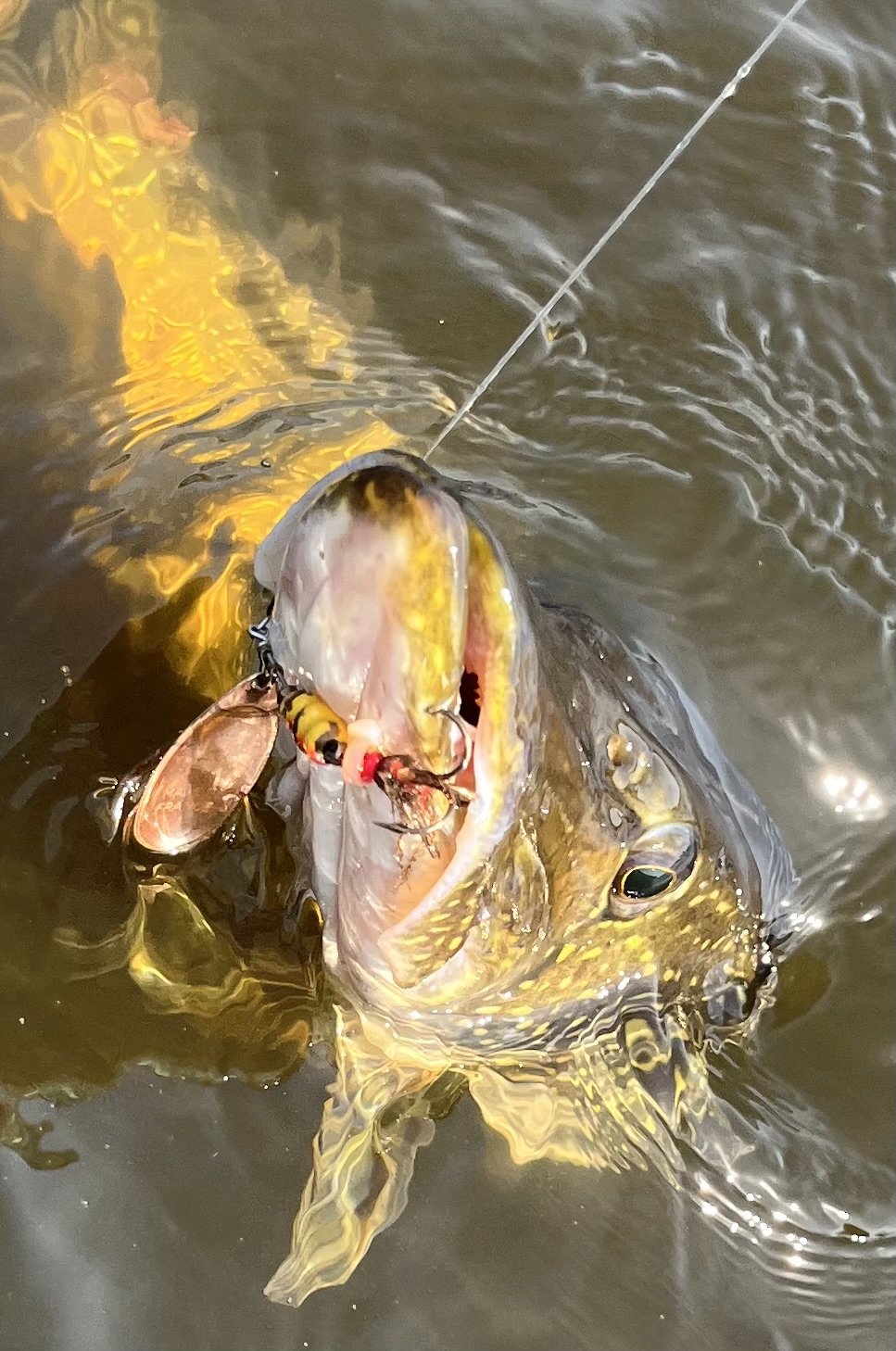
- In certain tough conditions such as cold fronts, even very small in-line spinners can trigger big predators, and more than just by rare accident as can happen with other small lures. For example, the bass or pike angler who usually uses at least a Size 4 spinner should also bring some Size 2-3 models for a tough bite. Your humble author has had multiple times where larger spinners and other lures were striking out, but the switch to small spinners saved the day with at least a couple decent fish.
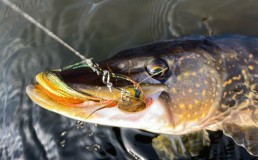
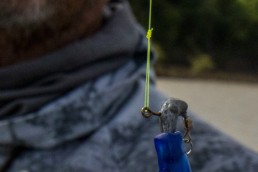
- The spin-fly, or spinner fly, is an overlooked in-line variation. As the term implies, it’s just a fly, or more commonly, a streamer—exactly what fly anglers use— rigged behind an in-line spinner, instead of the usual bucktail or other dressing. There are ready-to-go versions available, although most are on the smaller side, which still works. A smallish spinner section, typically without a weighted body segment, keeps the lure light in weight to resemble the slow-sinking, finesse appeal of fly fishing. The fly or streamer itself can still be pretty large, so they cast well enough when wet, and the final package ends up in a nice-sized profile.
It’s also easy to make these on your own, using an existing in-line spinner, or from scratch, using wire and other components. Hildebrandt’s in-line, quick-change-spinner front sections let you easily use a fly for the business end, too. With an existing spinner that wasn’t designed for an easy change, just replace the original hook with a fly, via the split ring. If there’s no split ring, cut through the hook eye if affixed to a wire loop, then use a split ring to attach the fly or streamer. A couple models even have a wire loop that you can reopen by pushing up the body part that protects it, similar to the Hildebrandt design.
It definitely helps to have some of these in your arsenal. With appropriate spinning gear, and even lighter casting gear, you get the finesse appeal of a fly or streamer, teamed with a flashy spinner attraction. They can turn some very nice fish, including those that are otherwise being a pain in the bass.
Lastly, a brief mention of popular, high-quality brands, probably led by Mepps, Vibrax, Panther Martin, and Worden’s; for larger models meant for big pike and muskies, manufacturers such as Musky Mayhem, Bucher, Hirsch’s, and Windel’s excel. There are also countless, cheap knockoffs out there, but as with everything else, these can end up costing you more—like their weak wire breaking on a great fish to then break your heart.
In conclusion, don’t forget in-line spinners this season. They should not be last in your line-up!
Did you enjoy this post?
You can be among the first to get the latest info on where to go, what to use and how to use it!
