
Evaluate Pockets to Determine Where Bass Are…and How to Catch ‘Em
system. Bass rely on these pockets throughout the year. This is especially true during the spring transition when bass are moving from their wintering areas, setting up in their spawning areas, as water temperatures increase during spring.
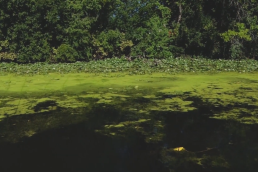
Pockets are important for angles because they often function as their own lake within a lake. A given pocket may have the depth of water for bass to winter in, along with points that they can transition along as the water warms up, moving up to feed. Once the cool months are finally over, bass can move up into the shallows in these pockets to spawn. Following spawn, some bass may transition out of these pockets and move to their summer haunts on the main lake or river channel; other bass may continue to inhabit that pocket, and the given structure or cover within it, all year long.
Knowing the intricacies of a pocket or cove is vital to pinpointing and patterning when, where, and how bass utilize them.
Examining the mouth or opening to the pocket is the first place the bass will position themselves as they transition from the main lake or river channel into that pocket. Also, many times the mouth or main point of that pocket has deep water adjacent to it, which allows the bass to slide into when it gets cold and then when a bass wants to feed, they can quickly pull up to the point and eat.
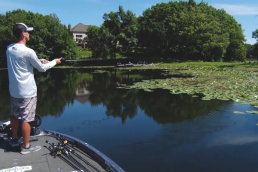
Fishing the points that are on each side of the pocket is what most anglers fish when they first come into a pocket, and it makes sense why, commonly the point runs from the shore and out into the middle of the opening and is littered with structure. That structure may be rocks, stumps or weed clumps, regardless a bass will hold here to feed up, either as they prepare to move further back into the pocket to spawn or they’ll stop and feed up here again as they make their way out of the pocket after spawning.
Before I even make my first cast to these underwater secondary points, I’ll idle along them and utilize the Side Imaging on my Humminbird Xplore unit and be looking for isolated and key pieces of structure such as a lone boulder, laydown or section of hard bottom that transitions to soft bottom. Finding that key, spot-on-the-spot is often the key to catching the biggest or most bass off a spot like this.
Fishing both the opening of a pocket, and the points at its mouth, with lures that allow you to cover water quickly, is important for locating active schools of bass. Some of my choices include 1/2- or 3/4-ounce Buckeye Lures Select Spinnerbaits, or Bill Lewis Knockin’ Hammer Traps. If I need to slow down and put my lure right around that key, spot-on-the-spot, I’ll drag a Northland Fishing Tackle Finesse Football Jig with a Yamamoto Baits Covert Craw as my trailer.
Once the bass have fed up, and the water temperatures and moon phase are right, bass will move up shallow in that pocket to spawn. Another time that bass will move to the shoreline cover, or to the back of pockets in spring, is if there is an influx of water to the lake or river. This triggers bass to feed on bluegills or crawfish in the flooded cover.
You can be among the first to get the latest info on where to go, what to use and how to use it!
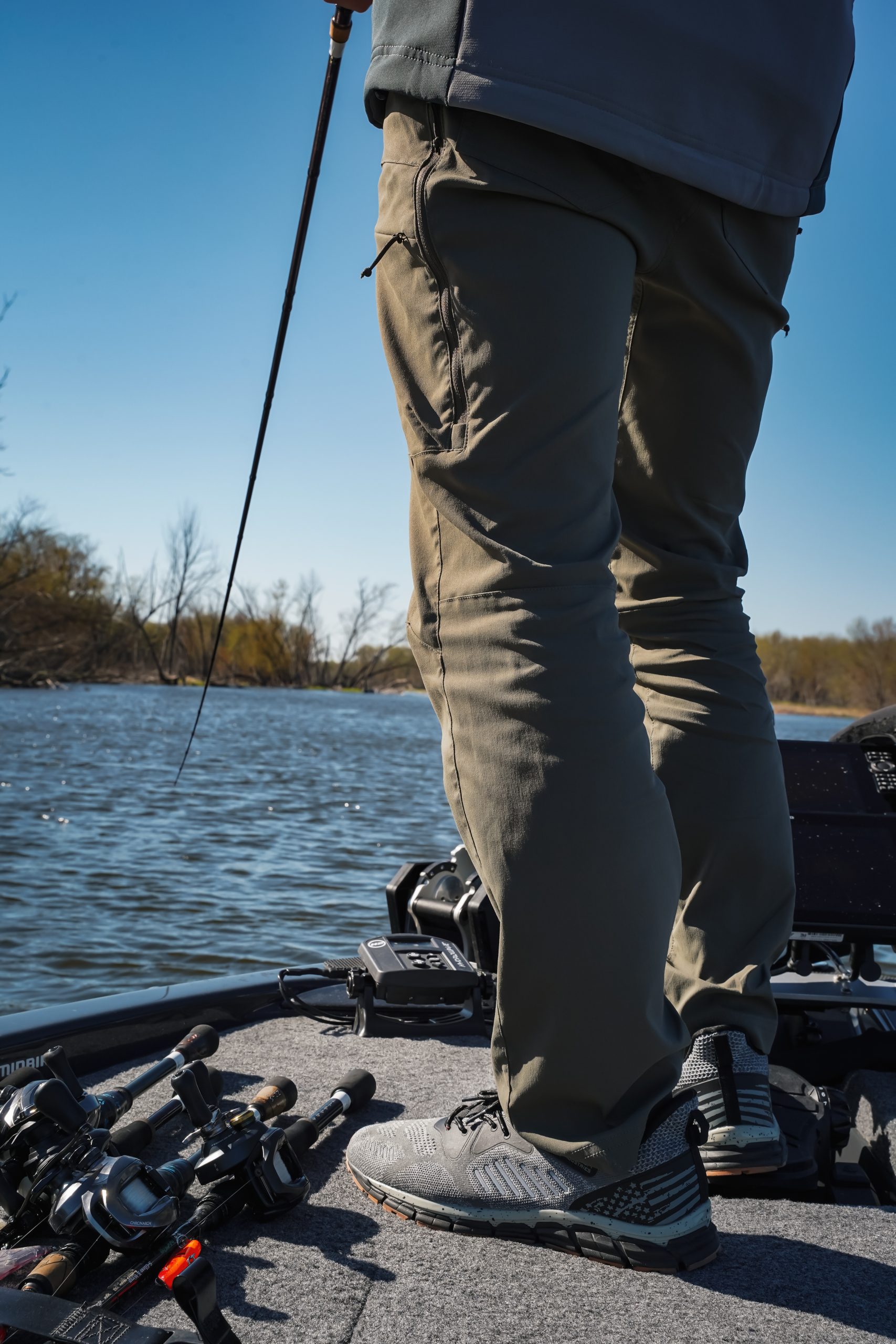
Regardless of why bass are up shallow along the shoreline or in the back of a pocket, do not overlook how shallow they may be. If there is food and cover up shallow, bass will be there! To cover water up shallow, I begin by fishing a shallow-running crankbait and run it parallel to rocky shorelines, making sure that the bait meets the chunk rock or laydowns lining the bank.
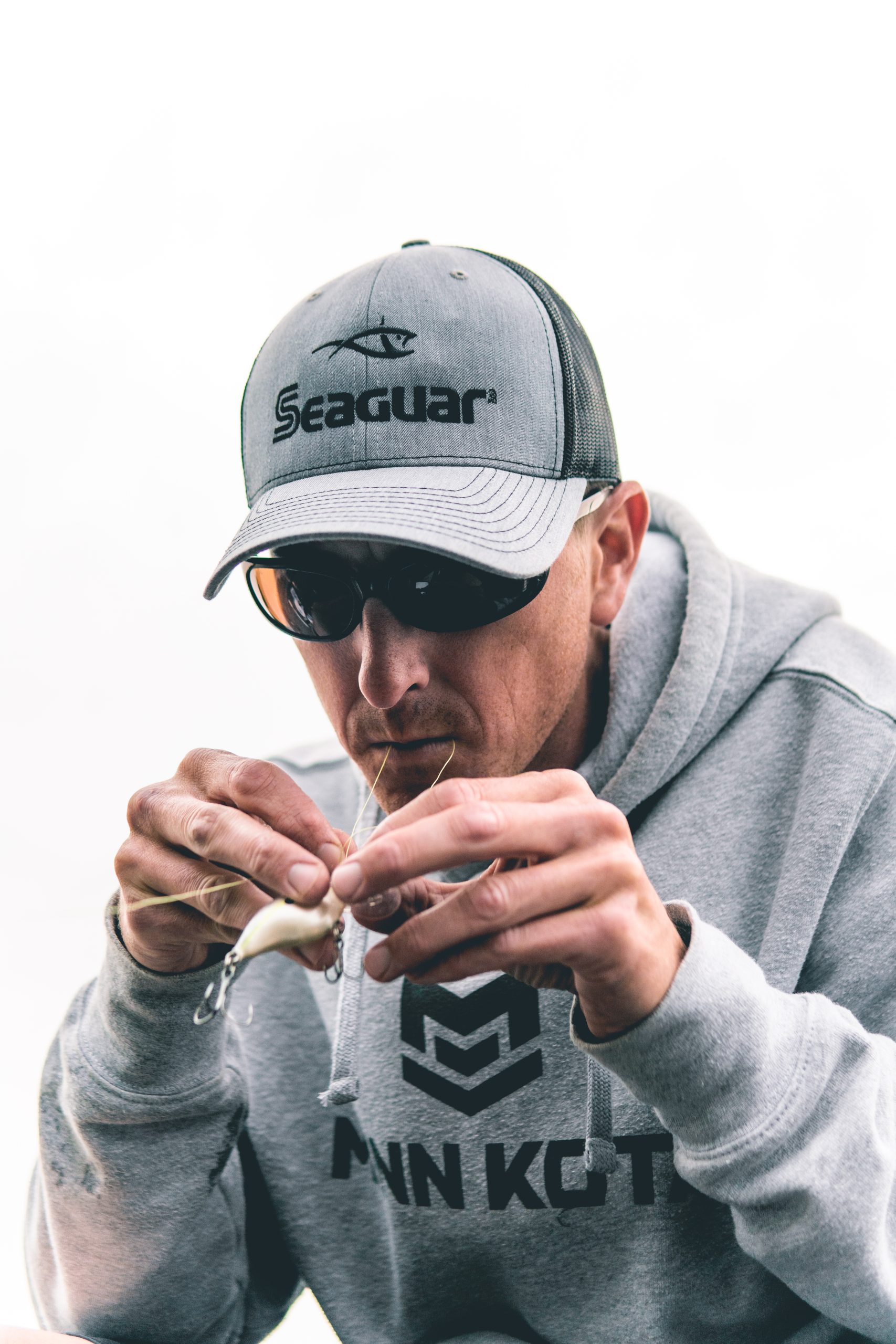
Banks sometimes seem endless, and may vary in depth. I will keep two rods on my deck rigged with the same or similar crankbait. The difference? The line the bait is tied to. One of the rod/reel combos will have 12-pound Seaguar Abraz X Fluorocarbon line spooled on it. I will pick up this setup when I want my bait to garner some additional depth, as fluorocarbon sinks, and the smaller-diameter line will aid the bait in running deeper. The other rod/reel set/up will still have Abraz X line, but I up the pound-test to 15- or even 17-pound. This keeps my shallow-running crankbait up higher in the water column, not allowing it to dive down and get hung in the cover.
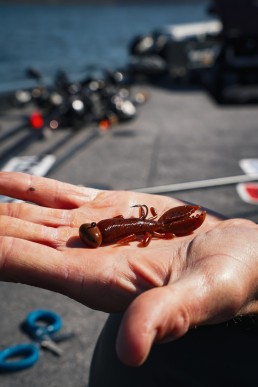
Once I locate hard targets to flip, I use a Texas-rigged soft plastic, like the new Yamamoto Baits Yama Bug or the Flappin’ Hog. My weight on the Texas-rig depends on how heavy the cover I’m flipping is; I’ll go as small as 5/16-, up to 1/2-ounce. In either instance, I use is a 5/0 Lazer TroKar (TK133) Pro V Bend Flippin Hook.
While fishing, or as you are idling in or out of a pocket, pay attention to your electronics; there may be some great bottom changes that hold fish. Anywhere you find a slightly deeper trench running up to shore, or a hard-bottom area in an otherwise mud bottom pocket, a school of bass can group up on in spring as they transition to different locations in that pocket.
Many times, pockets have little to no cover in them, besides what is on the shoreline. This usually makes the middle of the pocket void of bass. But if there is an isolated piece of cover offshore, then you can be darn sure that a large concentration of bass will relate to it. This isolated cover could be a brush pile, stump, rock pile or weed clump; regardless of what it is, it will hold bass. My favorite way to fish something like this is using a Neko rigged Senko, or the Fuzzy Senko, as the extra action from the skirt material coming out the sides of the bait adds great extra action for bass to key in on. I’ll rig either on a size 2 TroKar (TK137) Pro V Finesse Hook, with a nail weight based on the depth of water I’m fishing; this could range from 1/16- up to 7/32-ounce.
As you put time on the water, keep an open eye and mind to fishing pockets and coves on your lake or river. From there, spend the time to learn their details, as you may be able exploit bass in that area all spring.
Did you enjoy this post?
You can be among the first to get the latest info on where to go, what to use and how to use it!
