
Choosing the Right Line
Fishing is full of choices. Walk into any sporting goods store or bait shop, and you’ll find hundreds, to potentially thousands, of options for rods, reels, tackle and electronics. In some instances, purchase decision can seem like no-brainers, while other scenarios require a serious amount of deliberation. Regardless of your purchase decision, it’s important to evaluate the advantages and disadvantages for a given product.
Choosing the right fishing line is no different. With countless options on the market, it’s vital to understand the benefits and drawbacks for each major line category, as well as how they can help—or hurt—in specific scenarios. For the sake of simplicity, we will categorize these line types into three classes.
Monofilament line
Monofilament line, often referred to as “mono,” is the most common line category used across the fishing community. Amongst the major line types, it is arguably the most universal, being that it can be used for nearly every application and in every scenario. While it may not perform at the same levels as other options for certain techniques, it is still a very useful line category overall.
In terms of cost, monofilament is far and wide much cheaper than its fluorocarbon and braided counterparts, which is a factor in why so many anglers still use it. The line a relatively low-visibility option and is very receptive to a wide range of knot types.
Mono has a stretch factor much greater than other line categories, which can be a strength or weakness depending on the situation. Lines in this class also float, which has both positive and negative impacts, depending on the scenario.
In terms of major drawbacks, monofilament line is the least sensitive of the major categories. It also holds a great deal of line memory when not in use, which can be problematic. Furthermore, most mono lines are much thicker in diameter than their fluorocarbon and braided counterparts in the same pound-test class.
Fluorocarbon line
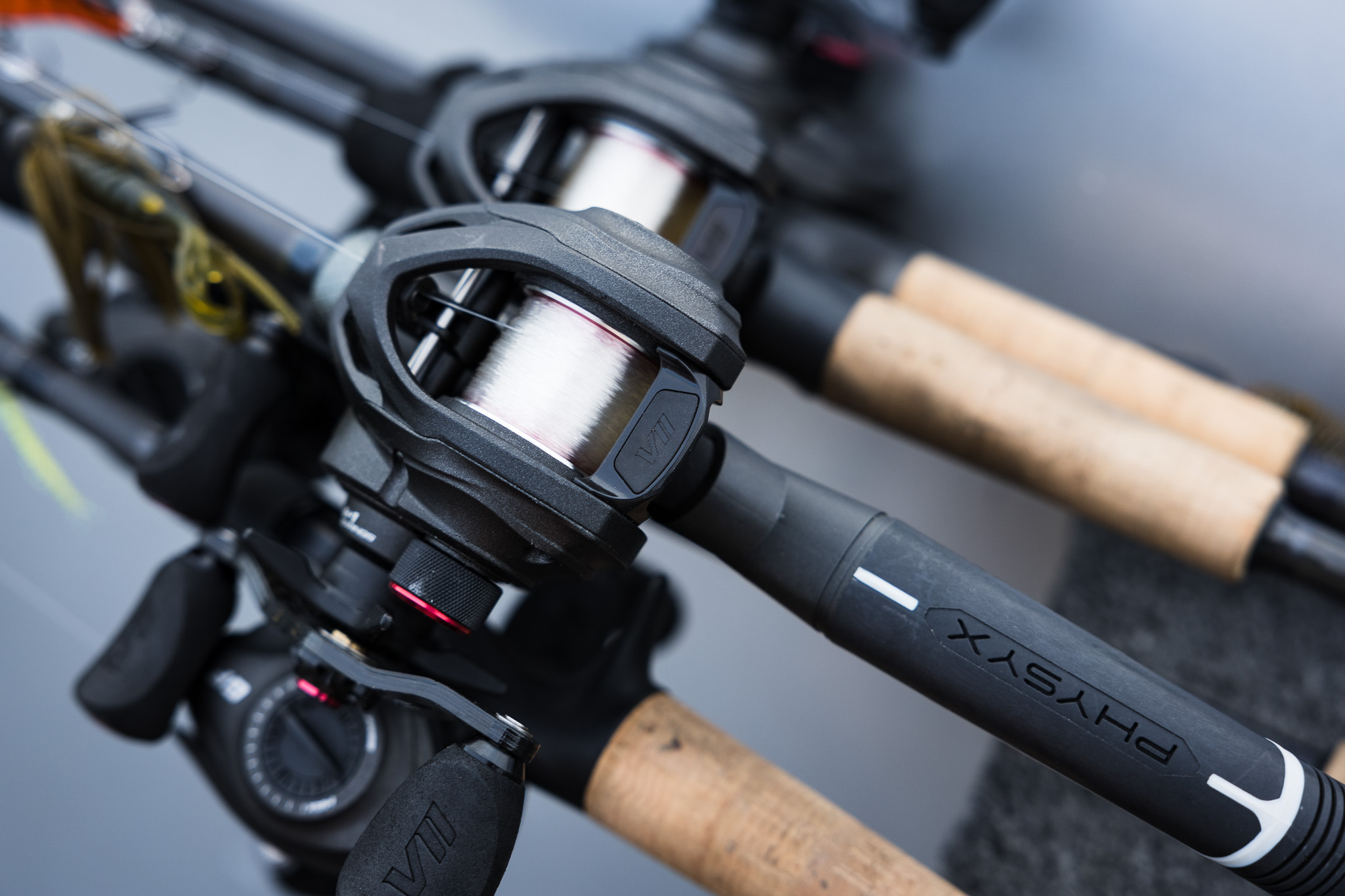
At first glance, monofilament and fluorocarbon (or “fluoro) lines appear to be very similar. While they bear a number of similarities, there are also some stark differences—the most apparent of which is the overall cost. On average, fluoro costs about two-to-three times as much as mono—but one could argue that it’s for good reason.
Amongst the major line categories, fluorocarbon is the most abrasion resistant, which can pay dividends in situations involving heavy cover. Furthermore, the line is nearly invisible in the water—a huge advantage in clear-water environments. In comparison with mono, fluorocarbon in the same line class is dramatically thinner in diameter.
You can be among the first to get the latest info on where to go, what to use and how to use it!
In terms of stretch, fluorocarbon lines find themselves somewhere between mono and braid, with the capability of some stretch, making it a good middle ground. Unlike mono and braid, fluorocarbon sinks, which can be a useful property in certain scenarios and a detrimental property in others.
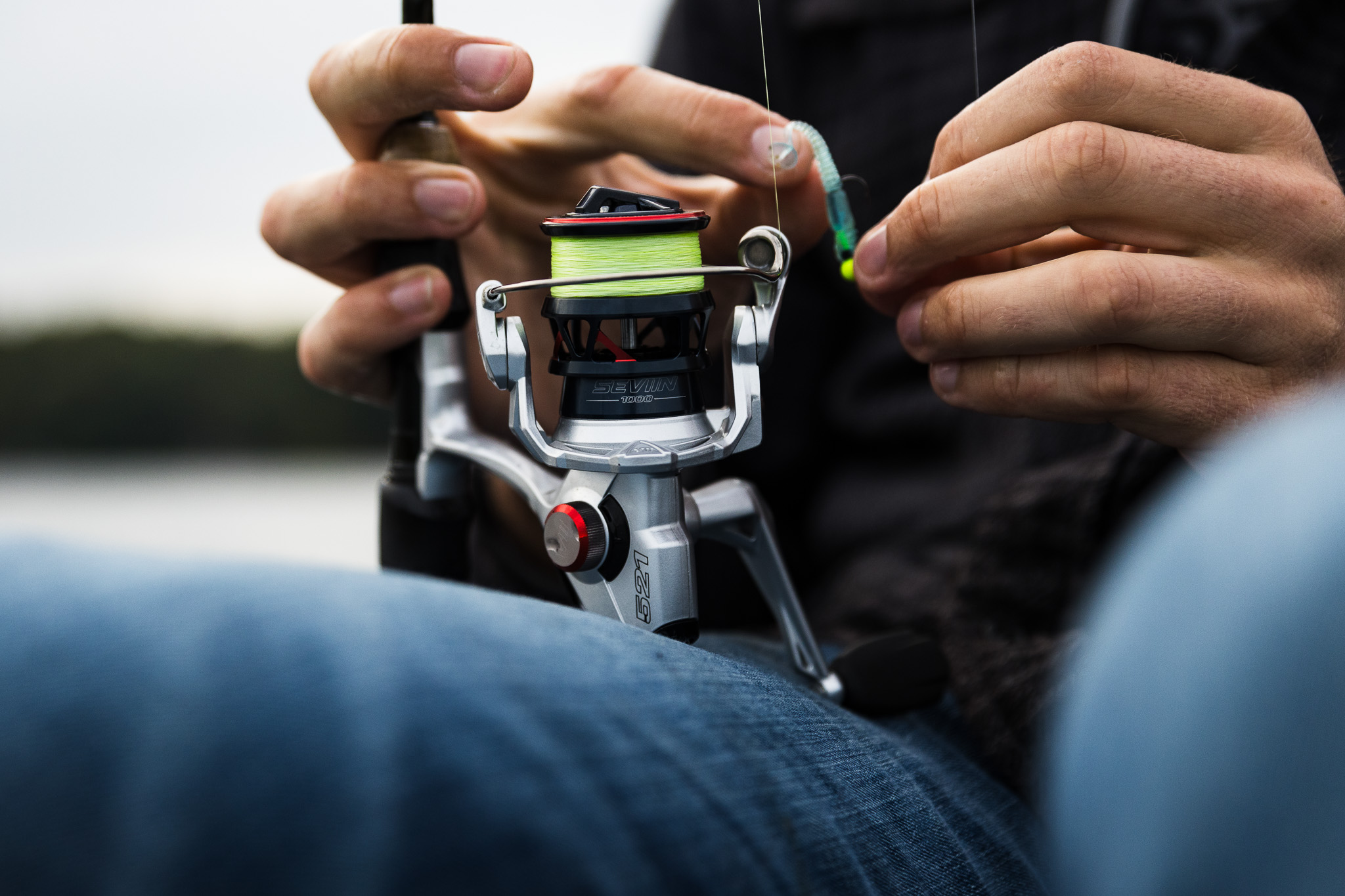
Similar to mono, line management with fluorocarbon can be a challenge. Fluoro’s characteristics cause it to hold a great deal of memory, which can cause issues especially when being used with a spinning reel. This line type works well with a variety of knots.
Braided line
Braided lines are unique options for anglers in many fishing situations. In terms of diversity, this line category has the widest range of qualities and variations. Regardless of these specifics, braids offer a wide range of advantages and disadvantages in comparison to other line categories.
While braided lines typically cost more up front, they are arguably a more economical choice for many anglers. Among the three major line categories, braid is the most resistant to UV light deterioration, which often allows it to be used for more than one season.
Because of its thin, flexible construction, casting distance with braid is far superior to fluorocarbon and monofilament. It also holds virtually no memory, which makes line management much less of concern than other line categories and allows ease of use with both spinning and casting reels. The one exception is extreme cold, where the icing up of braid can be problematic.
The stretch factor for braided lines is essentially non-existent, making them the best option for detecting bites. The major drawback, however, is that it can lead to lost fish without the using the appropriate rods and reels.
While braid is overall a tough option, it’s more susceptible to fraying and breakage when used in heavy-cover situations like rocks or wood, in comparison to fluorocarbon.
Truth be told, there is no perfect line option to cover every scenario. Each major category has specific nuances that can positively or negatively impact a fishing situation. To combat this, many anglers combine a braided mainline with a fluorocarbon or monofilament leader. This combination of materials allows anglers to achieve the benefits more than one type of line. Anglers should evaluate their fishing style, location, and target species before making a decision on their line choice. It’s important to remember that all line types have their time and place.

Did you enjoy this post?
You can be among the first to get the latest info on where to go, what to use and how to use it!
