
Catching Early-Season Stream Trout
As winter draws to a close, anglers are setting their sights on open water again. As with most spring periods, open-water opportunities tend to be limited. Many larger river systems offer some excellent fishing, but anglers are typically met with a plethora of other like-minded individuals.
Fortunately, for those who fish in Wisconsin, many of the state’s trout streams are open for catch-and-release angling. Trout fishing provides a perfect opportunity to get off the beaten path and explore a place of solitude, which is something that’s not always accessible to more traditional anglers.
In Wisconsin, the Department of Natural Resources and conservation groups put forth a great deal of time and resources to ensure that stream trout opportunities are in abundance. Countless dollars are placed into fisheries management, trout habitat, and stocking programs—all of which safeguard catchable populations of brook trout, rainbow trout and brown. Revenue generated from the required trout stamp is used to fund these activities.
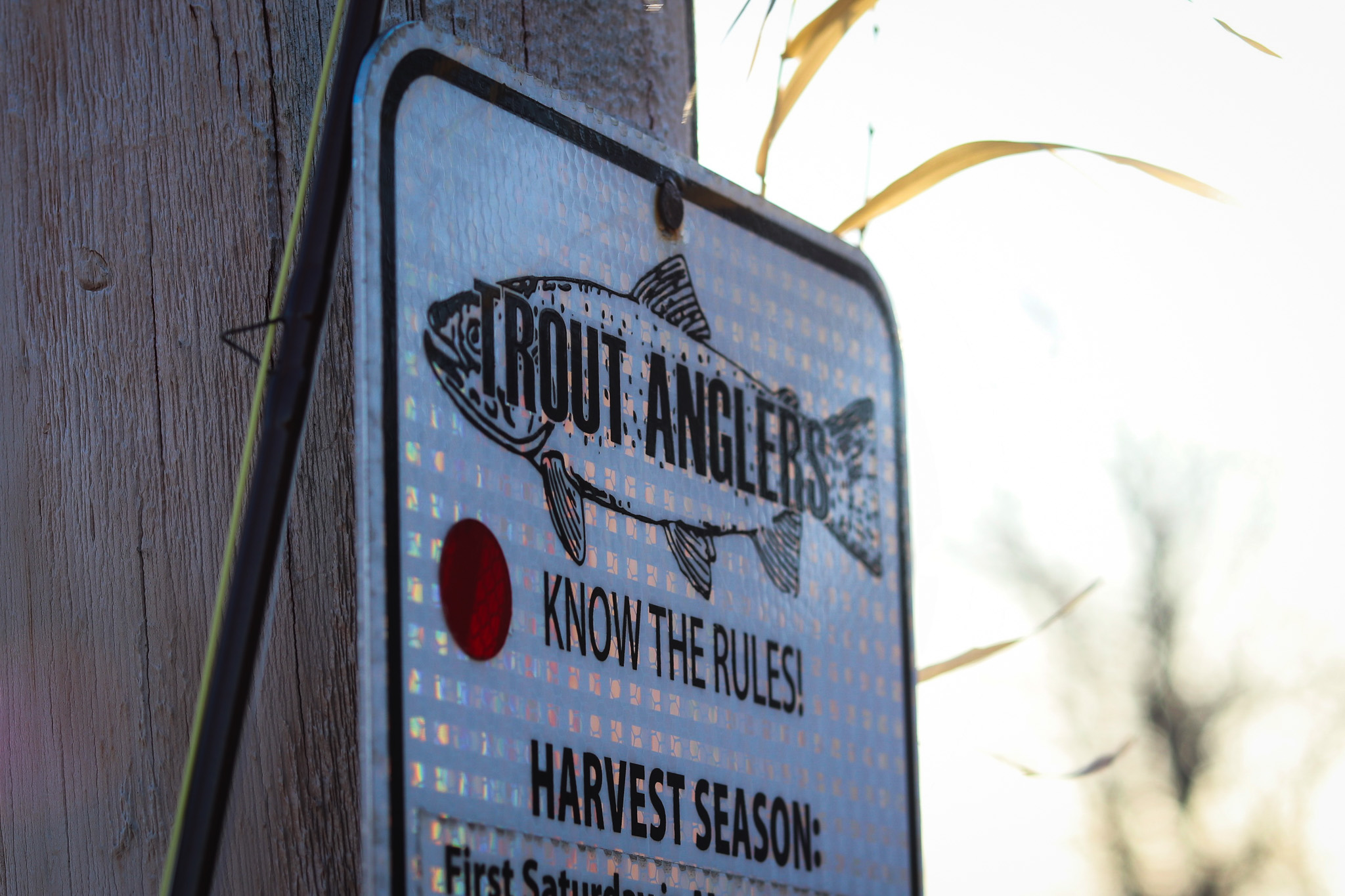
For the 2026 year, the catch-and-release season runs from January 3, 2026, to April 3, 2026. The general open season (where harvest is allowed) kicks off on April 4, 2026, this year—almost a full month earlier than normal.
Gear considerations
In comparison to other styles of fishing, gear requirements for stream trout are particularly minimal. Most trout fishing locations are best accessed via foot travel, so carrying all the gear on your person is required. As a result, a bag or vest is must. With so many options on the market, careful consideration is needed to determine which variety will complement your fishing style.
A high-quality net is another important tool, especially when it comes to landing and handling fish. Specialty trout nets make for easy transport and help to protect fish from harm.
When it comes to rods and reels, certain variables, like fishing location, fish size, and lure choice, impact which combinations are the most effective.
Spinning setup
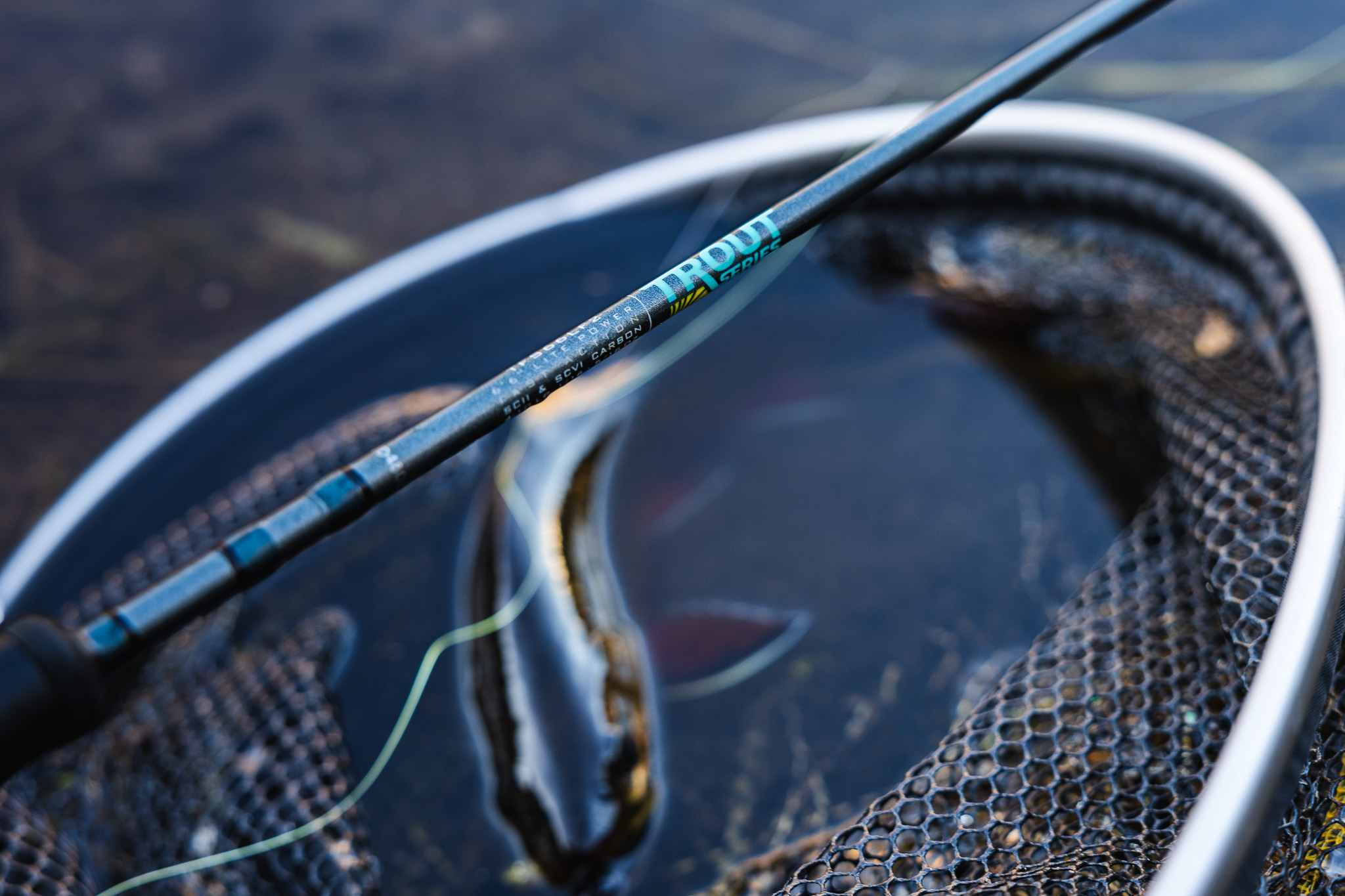
For conventional anglers, an ultralight to light rod in 5- to 7-foot range covers most inland trout fishing applications. Depending on the cover, anglers should opt for a shorter or longer rod. In heavy-cover situations, like thick brush, shorter rods will be more effective. St. Croix’s Trout Series and Trout Pack Series offer options from 4’10” to 7’3” with powers ranging from ultralight to medium. These rods are designed by trout anglers, for trout anglers—and will cover anything an angler would toss for a hungry trout. Another plus: These rods are available in one-, two-, and three-piece options.
You can be among the first to get the latest info on where to go, what to use and how to use it!
Rods should be paired with appropriately sized reels in the 750 to 2500 size categories, and spooled with light monofilament or fluorocarbon line. Generally speaking, fluorocarbon gets the nod from trout anglers as it’s more abrasion resistant and less visible than other line options.
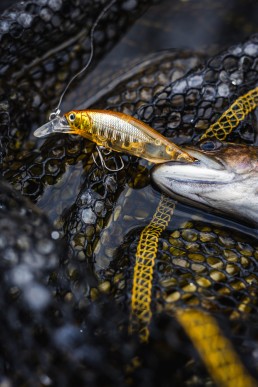
Tackle selection resembles what you might find in a panfish angler’s tackle box. Soft plastics, inline spinners, and small hardbaits are top choices for inland stream trout in most bodies of water. During the early season, small paddletails, like the Eurotackle B-Vibe, are a prime choice for trout. These baits can be worked at variable speeds and in all sections of the water column. Faster presentations, like small jerkbaits, are generally a great option for picking off larger and more aggressive fish.
Fly setup
For fly fisherman, an 8- to 9-foot, 4- to 5-wieght fly rod will cover most trout fishing one would encounter. Pair these with a series of 3X to 5X leaders and tippet material to cover most trout applications. Opt for heavier leaders for more aggressive techniques—like streamers—and lighter leaders for more finesse methods. The list of flies that will fool a trout is truly endless. During this early season period, small streamers, like wooly buggers and leech imitations, can be very effective.
Location-specific
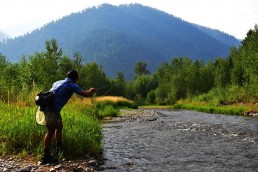
Trout hold in a variety of areas depending on the stream. That being said, areas like holes, current seams, and cover are commonly known to congregate trout.
Walking and wading quietly are vital to success regardless of where you target trout. As a fish species, they are extremely wary, and it doesn’t take much to push them out of a location. Challenge yourself to make long, precise casts to avoid spooking trout. Another important consideration: Watch your shadows.
The state of Wisconsin has over 13,000 miles of trout streams. With so much trout water to cover, mobility is extremely important for continued success. Don’t spend too long at one spot. A few casts per spot is generally all that is necessary. If limited success ensues, then move along.
Fish care
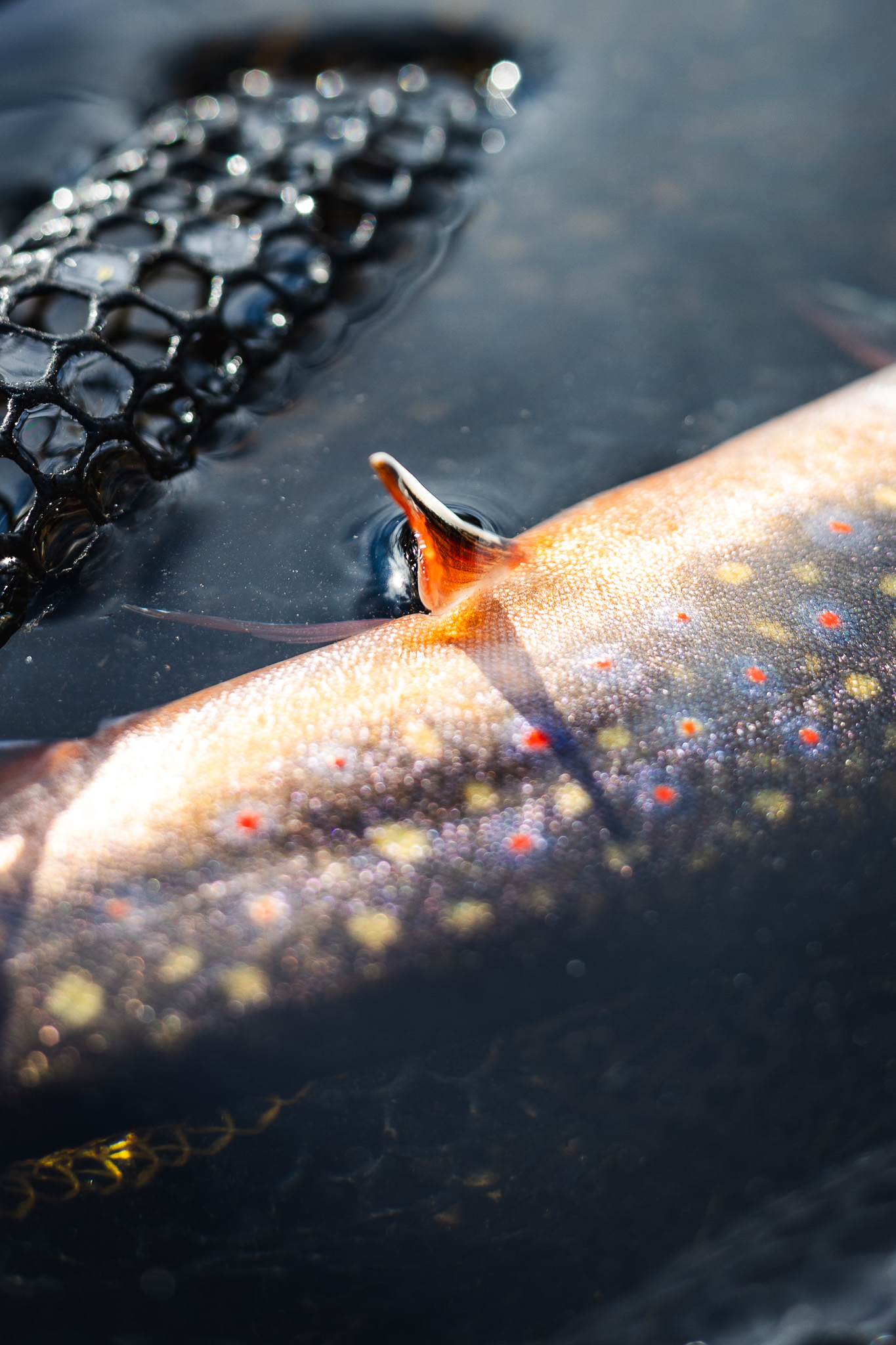
While trout are pound-for-pound one of the greatest fighters in the fish community, they are particularly susceptible to harm. Trout species are covered in a slime coating that protects the fish from disease and infection. It’s important to handle fish with wet hands, as this will help prevent the removal of this protective coating. Also keep the fish in the water as much as possible. If you plan to take a picture, have a camera and hook remover handy so you can release the fish as quickly as possible. Less handling is always better—especially for trout.
An important reminder: A trout stamp is required in order fish for trout in designated streams and lakes.
The State of Wisconsin is blessed with some fantastic trout fisheries, thanks to the efforts of agencies and conservation groups. To find more information about trout fishing in the Badger State, visit the Wisconsin DNR website, which includes everything from stocking data and fishing regulations to designated waters and stream maps.

Did you enjoy this post?
You can be among the first to get the latest info on where to go, what to use and how to use it!
