
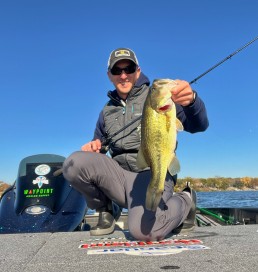
Carolina Rigging Basics for Bass
The Carolina rig is a great technique to employ when targeting bass relating to offshore structure. This is especially true during spring when pre-spawn bass are setting up on points, humps, and other offshore areas outside of their spawning grounds, feeding as they prepare to spawn in the coming weeks.
A Carolina rig allows you to cover a vast amount of water in a short time; you can quickly fish offshore structure to confirm what the bottom content is, and to see if there are any bass willing to eat. If not, then you are on your way to the next potential spring honey hole.
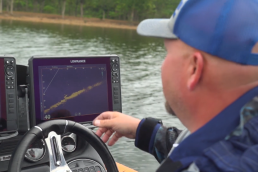
In spring, there are times when I can see bass on my MEGA Live imaging but can’t get them to bite other offshore offerings like a crankbait or a spinnerbait. But cast out with my Carolina rig and slowly drag it over or through the cover, and bam, the school has been turned on!
Let’s examine each tackle item that makes up a Carolina rig and how you can adapt them this spring fishing season. Here are the common components of a Carolina rig:
Line
I prefer 15-pound Seaguar TATSU Fluorocarbon for my main line; for my leader, I use 12- or 15-pound-test Gold Label Leader Fluorocarbon. If I’m fishing around laydowns or stumps where my hook may frequently get hung up, I’ll go down to a 12-pound-test leader, so I can break just that part off and not my whole Carolina rig.
The length of my leader primarily depends on the clarity of water. For stained water, I use a leader that is 12 to 18 inches, compared to gin-clear water, which requires a 24- to 36-inch leader. The type and density of the cover you are fishing also dictates the length of your leader. If you are dragging your rig through emergent grass, you want a leader long enough so your soft plastic bait suspends above the grass. On the other side of the coin, if you are dragging your rig over hard-bottom areas and bass are tight to the bottom, you want a shorter leader.
Terminal tackle
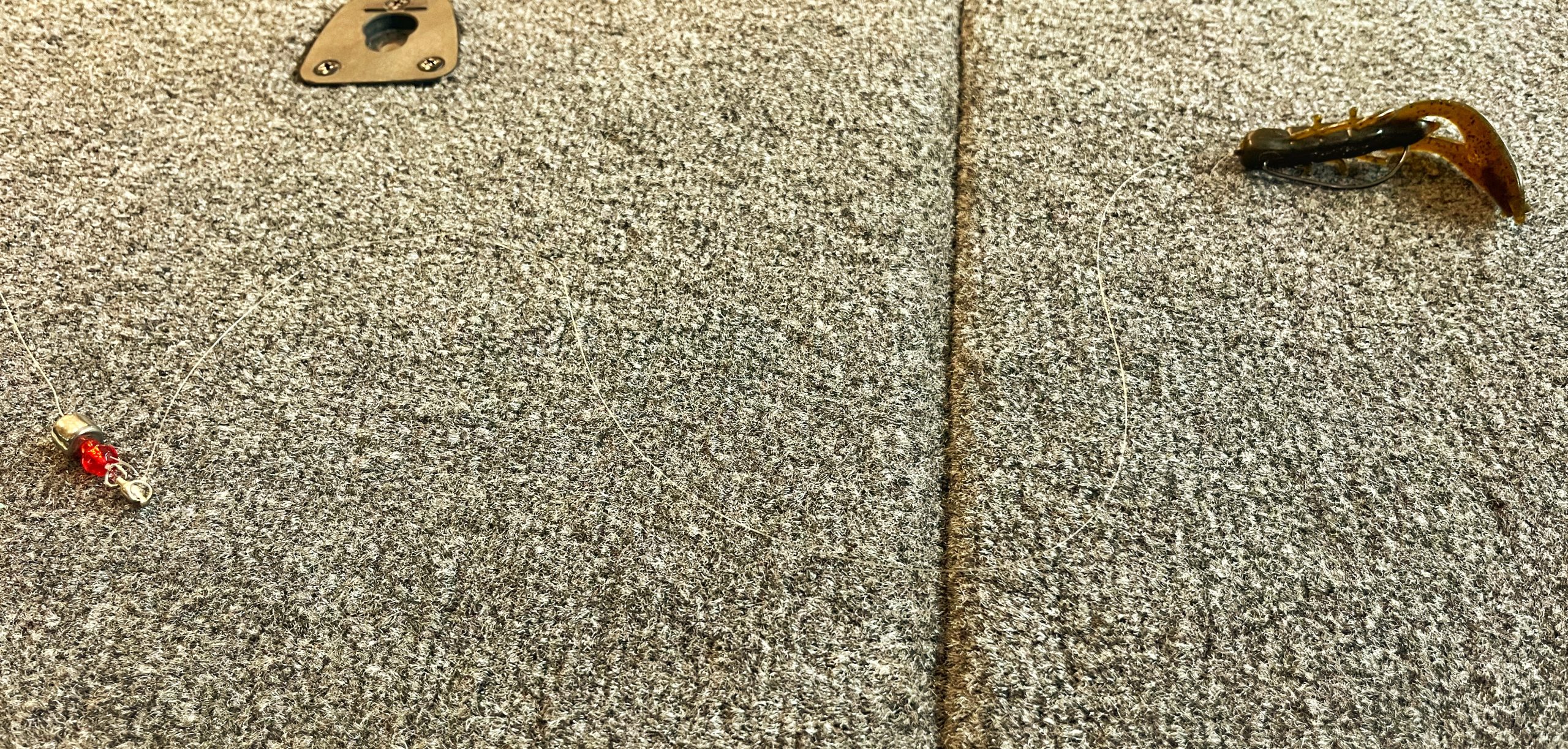
A premium ball bearing swivel is the key connection between your main line and the leader. This helps prevent line twist and ensure that a hookset results in a bass on the end of your line. I put two beads in between the sinker and the swivel to make more noise and protect the knot from damage.
Weight
My personal choice is a brass sinker because of the noise it makes when bouncing off the beads. Depending on the depth and current I’m fishing, my weight ranges 1/4 all the way up to 1 ounce. I go to a tungsten weight—either a bullet or a barrel sinker—when dragging my rig in sand or mud, as I think this weight design kicks up more silt, attracting bass.
A tungsten weight is also helpful to use if you need to use a heavier weight and the water is either super-clear or you are fishing shallow water. A tungsten weight is about half the size of a lead or brass weight. So, for example, if I’m fishing a grass line and it’s only 8 feet deep, I may need to use a 3/4-ounce weight to get to the bottom through the grass. But since the water is on the shallower side, the smaller profile of the tungsten won’t spook the fish and will slide through the grass easier.
Hook
I use two hook styles when fishing a Carolina rig: an extra-wide-gap hook like the Lazer TroKar TK120, or a standard worm hook like the TK105. If the soft plastic bait is on the bulkier side, the extra-wide gap is my choice, as there is plenty of room on the hook for the soft plastic to slide out of the way. If the soft plastic I’m using is longer, and I want the hook point near the back of the bait, the Pro V Worm hook (TK105) is my choice. The size of the hook depends on the size of the soft plastic, typically a 3/0 to 5/0 hook.
You can be among the first to get the latest info on where to go, what to use and how to use it!
Plastic baits
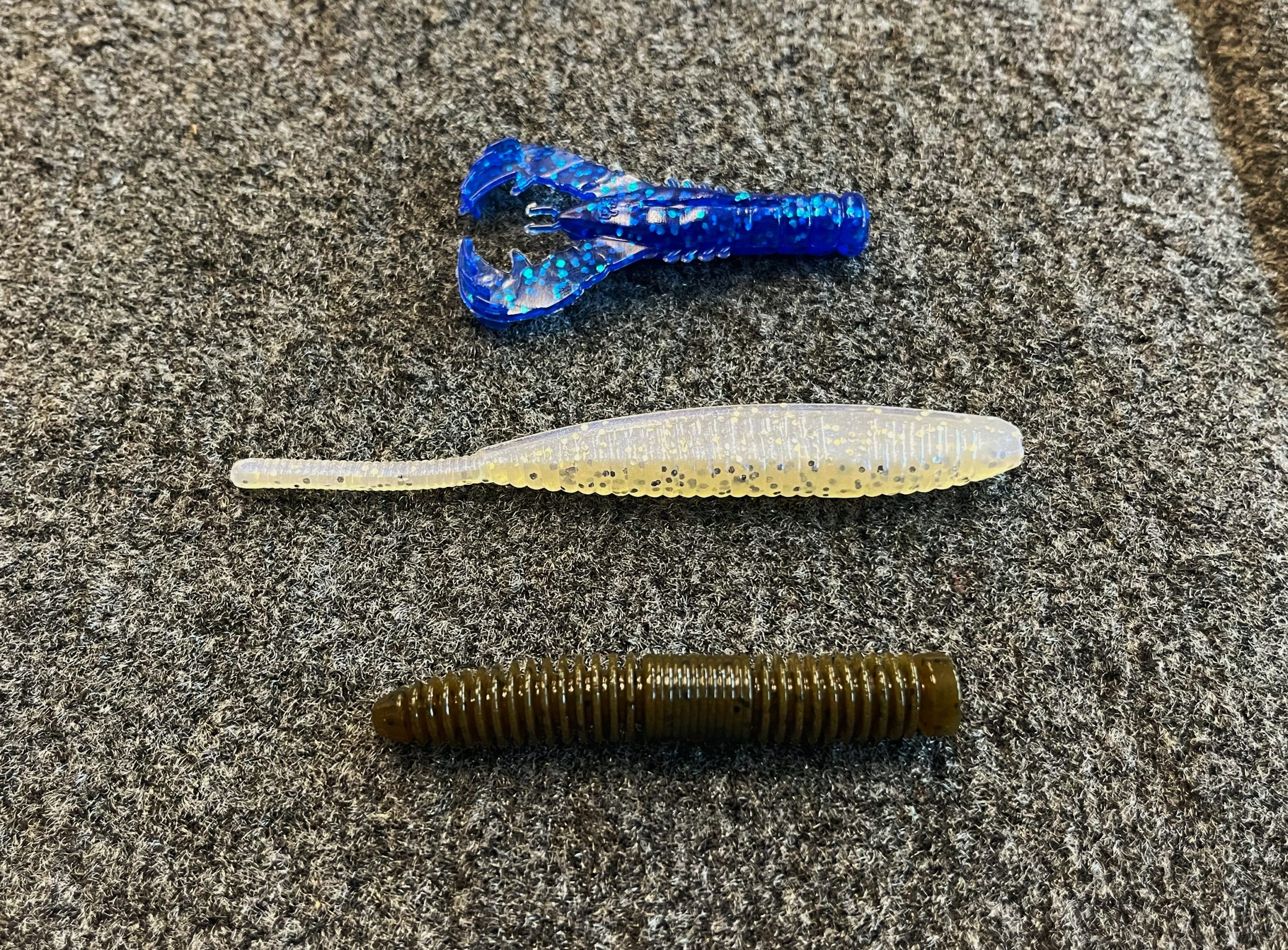
There are countless soft plastic bait options to use on Carolina rigs. What the bass are feeding on typically dictates what I rig up, but my usual bait is a creature bait that mimics a crawfish or sunfish, so it can cater to whatever the bass are eating on that body of water. My go-to is a 3-inch Yamacraw. If I’m throwing a Carolina Rig to an inactive school of bass feeding on bait, then shad-imitating baits like the 5-inch Yamamoto Baits Shad Shape Floater is a good option.
The last category of plastic baits is soft plastic stickbaits for when the bite is tough or bass have been heavily pressured. I like a 4-inch Senko or the 3.25-inch Slinko, which are very compact baits for bass to key in on. They also come through grass or other forms of cover without getting hung up.
Rod and reel
The proper gear for Carolina rigging enhances your ability to fish it properly, detect bites and get bass into the boat. A long rod helps you make long casts and then pick up slack in your line after a bass hits. An extra-soft tip ensures that you can feel everything that your weight is dragged over on the bottom of the lake. My go-to Carolina rigging rod is a 7’6” MH rod, which has the length to make long casts, thus keeping my bait in the strike zone for as long as possible.
Use a reel that picks up a lot of line with each turn of the handle; this allows you remove slack in your line prior to setting the hook. I use a Trika TI100 7:1 reel which brings in 28 inches of line with each turn of the reel handle. It only weighs 5.5 ounces so I can keep it in my hand all day and not get fatigued.
Fishing the rig
To fish a Carolina rig, basically just cast it out and drag it across the bottom. But there are several things you can do to alter your retrieve and that you can focus on to help improve your catch.
I start off by moving my rig along the bottom by sweeping the rod in a sideways motion. This keeps the sinker in constant contact with the bottom and allows it to disturb the sand or mud. This could resemble a crawfish or sunfish fleeing from a predator and attract bass to your lure. When fishing around rocks, though, your sinker will get hung up less if you move your rod in a vertical motion.
This may sound like a broken record, but pay close attention when you get your strikes. Many times, a strike occurs when your sinker bangs off a large rock or when your bait is ripped through vegetation. If this is the case, be sure to have visual reference points on shore, a marker buoy handy, or better yet, hit the Spot-Lock button on a Quest trolling motor to keep your boat in position to repeat that cast and hit the cover in the same way.
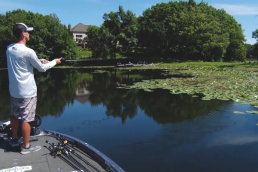
During spring, a Carolina rig shines on offshore structures like underwater humps or points, isolated boulders, or flats with either emergent vegetation or isolated, hard-bottom spots. I target bass on these areas when bass first move out of the wintering areas and start to move toward their spawning grounds.
Identifying offshore structure spots located either just outside of, or adjacent to, a bass spawning area is likely to produce a great day on the lake. The depth of water for this structure depends on the lake you are fishing, and more specifically, its proximity to bass spawning areas. If you are fishing during early spring and bass are just starting their migration, then deeper-water, offshore spots are likely best, whereas if you are out on the lake during a warming trend, a shallow-water point (2 to 3 feet on top and dropping to 5 feet) may be the ticket.
When fishing a Carolina rig on river systems, the main benefit is that you can use a big weight to fish the bait in the current, yet the bass won’t feel that weight, since the soft plastic bait is on a leader. Prime river areas for fishing a Carolina rig include sandbars or drops, along riprap banks, on wing dams, or dragging river ledges lined with laydowns and stumps.
Notice that throughout this article I never used the word deep in terms of the depth of water for fishing a Carolina rig in. A modified Carolina rig can be used to target shallow-water structures that are off the bank, as well in rivers.
As you are looking at your bass fishing gear for this season, be sure to have the tackle needed to rig up a Carolina rig for your bass fishing trips; especially this spring, so you can be ready to fish offshore structures and catch big, pre-spawn bass.
Did you enjoy this post?
You can be among the first to get the latest info on where to go, what to use and how to use it!
