How to Jig for Walleyes on Lake of the Woods
Lake of the Woods sits on the border of Minnesota and Canada. It is one of the best places in the Midwest to catch walleyes. But like any good fishing spot, it has its own tricks. Once you learn those tricks, you will catch a lot more fish. This guide will walk you through everything you need to know to start jigging for walleyes on Lake of the Woods.
Why do boats anchor of Spot-Lock instead of drift?
If you have never fished Lake of the Woods before, you might be surprised to see charter boats sitting still in the middle of nowhere. Most anglers think that you need to move around to find fish. Not here.
On Lake of the Woods, boats anchor in one spot and jig vertically. This works for a few reasons:
• The smell of bait, the flashing scales of minnows, and the movement of your jig all attract fish from a distance.
• Fish that are already in the area are attracted to the action under your boat.
• Walleyes on the mud flats are always moving around. If you set up in a good area, they will come to you.
Tip: Many charter captains say that fishing gets better the longer they sit in one spot. Give it at least 30 minutes before you move.
What gear do you need?
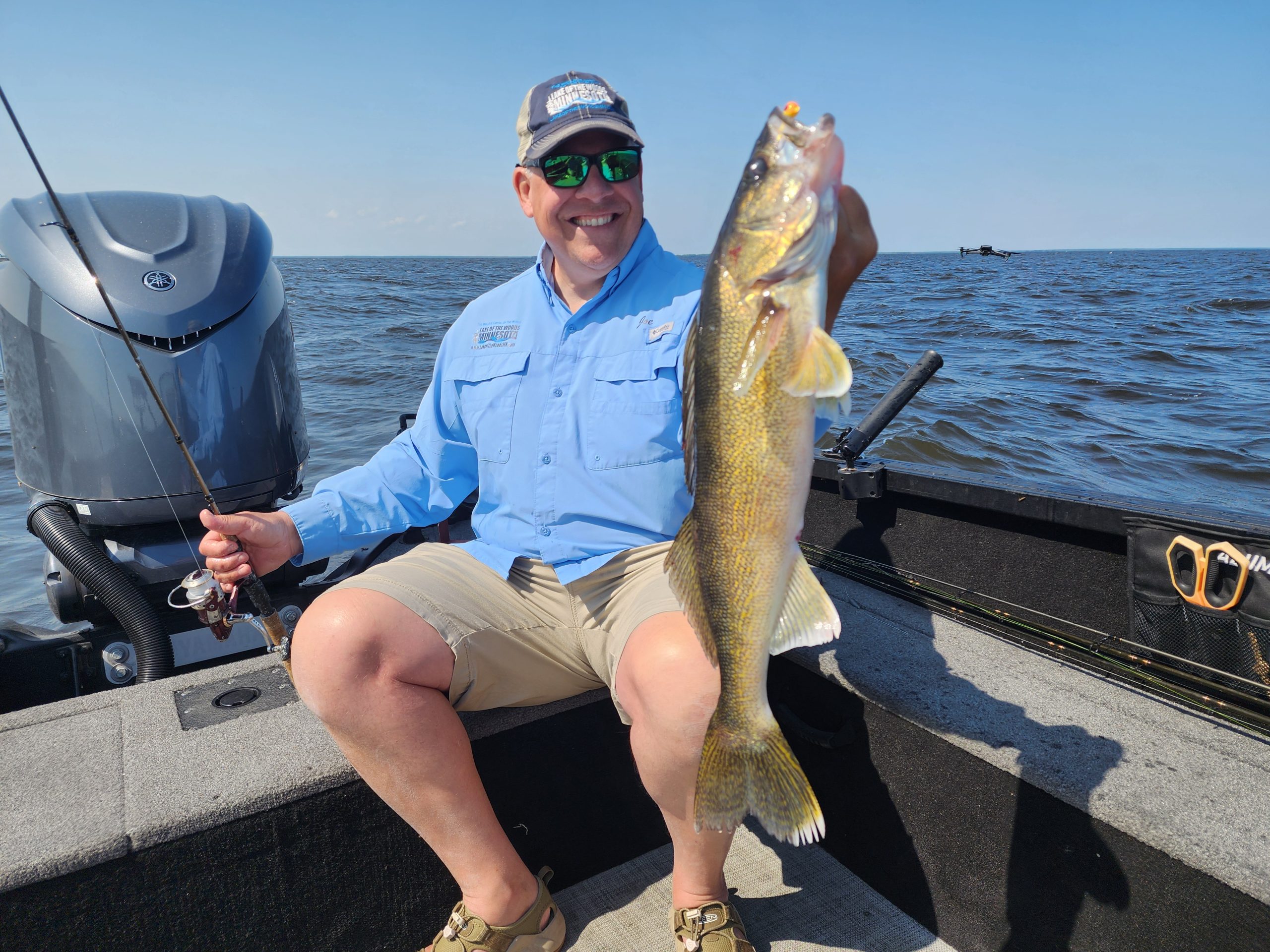
You do not need anything fancy to jig for walleyes. Here is a simple setup that works:
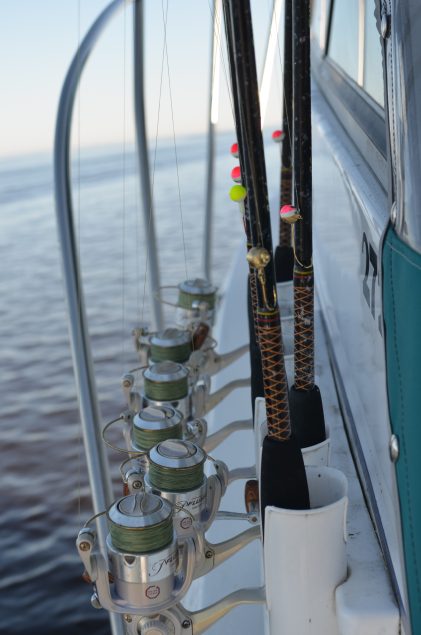
• A medium-action spinning rod and reel.
• Superline (braided line) with no stretch—this helps you feel every little bite.
• Tie your line right to the jig — no fluorocarbon leader is needed in the stained water of Lake of the Woods, although some anglers still use one.
Tip: If you ever fish clear water, swap to a fluorocarbon leader. On Lake of the Woods, you can skip it.
The most important thing is sensitivity. When fish are biting light, you need to feel even the softest tap. Braided line with no stretch gives you that feel.
Picking the right jig
As a rule in many bodies of water, use the lightest jig you can for the conditions. On Lake of the Woods, go a little heavier. A 1/4- to 1/2-ounce jig works best for a few reasons:
• The bigger jig is easier for fish to see in murky water.
• When the jig hits the muddy bottom, it kicks up a small cloud of silt. Walleyes often think that means food.
• A heavier jig is easier to control in deep water or when the wind is blowing.
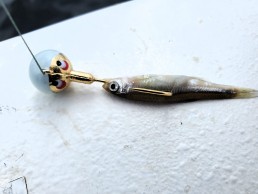
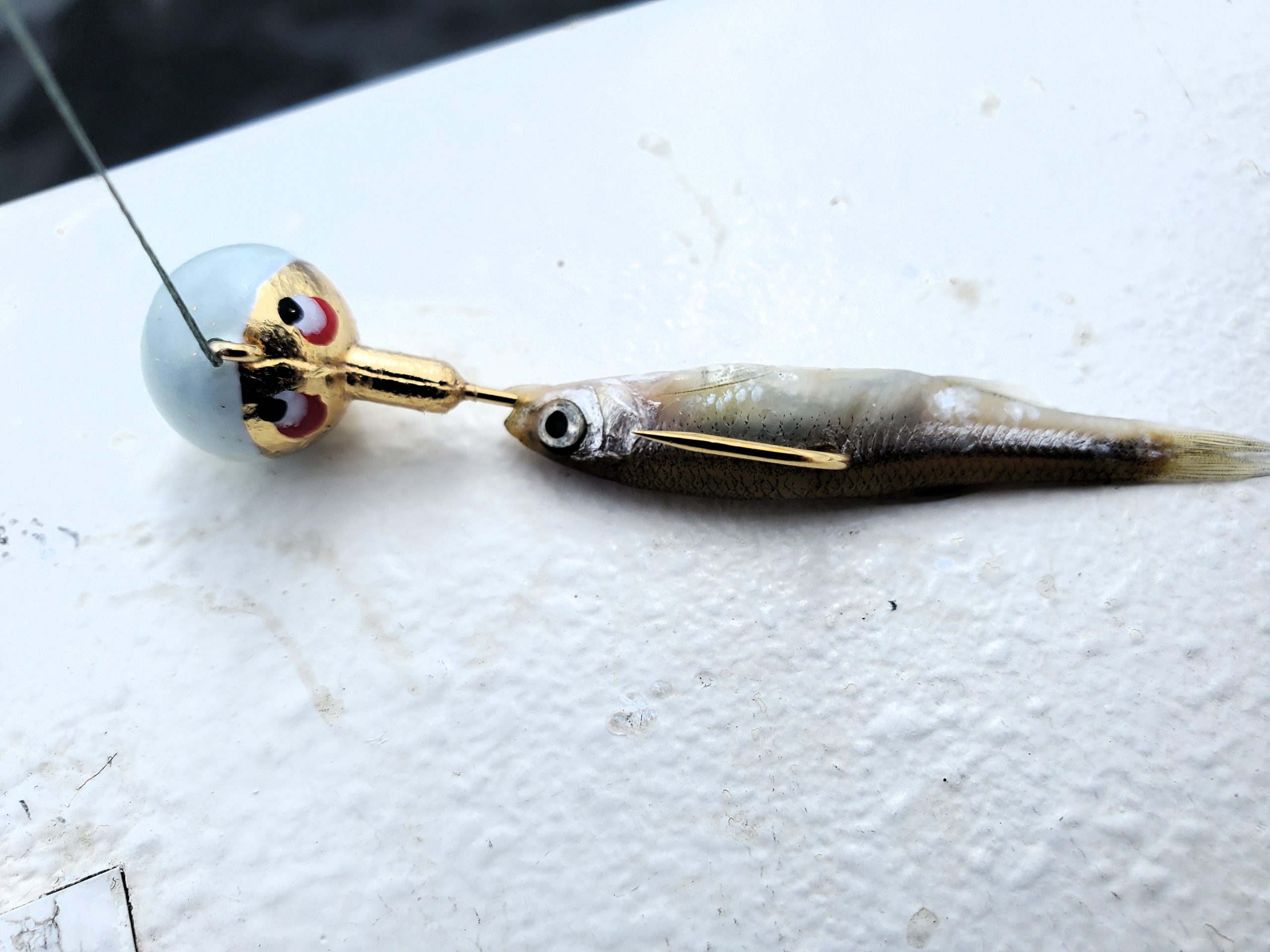
As for color, gold is the top pick on Lake of the Woods. You can also try gold mixed with glow white, pink, orange or chartreuse. On some days, plain chartreuse, orange, or bright pink will out-fish everything else. Bring a few different colors and see what works that day.
Tip: Some days, walleyes want a jig that makes noise. Try a jig with a small rattle or a spinner blade. It can make a big difference in stained water.
The best bait: frozen emerald shiners
Frozen emerald shiners are the number one bait on Lake of the Woods. Here is why they work so well:
• They give off a strong smell that attracts walleyes from far away.
• Their shiny scales fall off when you jig, and those little flakes float in the water and catch the eyes of nearby fish.
• Walleyes and sauger eat emerald shiners naturally, so they are a familiar food.
Fatheads, rainbow minnows, and chubs also work. But if you can get frozen emerald shiners, certainly give them a shot.
In summer, nightcrawlers and leeches are great, too. A leech gives constant wiggle and scent, which walleyes love.
How to keep the shiner on your jig
Frozen shiners can be mushy and fall off the jig easily. Here are two ways to keep them on:
Method 1:
• Push the hook of the jig through both eyes of the minnow.
• Slide the minnow up onto the jighead.
• Hook the minnow again through the middle of the body.
• The bait will be sideways, but that is okay. Fish don’t care, and the hook will be placed farther back for better hooksets.
Method 2:
• Push the hook of the jig through the mouth and out through the gill.
• Thread the minnow as far up on the jig as it will go.
You can be among the first to get the latest info on where to go, what to use and how to use it!
• Hook the minnow again in the side.
• This keeps the bait on well and puts the hook closer to the tail, which means more fish stay hooked.
Tip: Some anglers put two minnows on one jig. The extra smell and bigger profile can get more bites in murky water.
Use a stinger hook
A stinger hook is a small treble hook attached to the jig with a short piece of line. You hook the tail end of the minnow with it.
Walleyes often bite short, meaning they grab the tail of the minnow instead of the whole thing. Without a stinger hook, you will miss those fish. With one, you will catch them. It is one of the best tools for hooking more walleyes per bite.
The full meal deal setup
This is a tournament-proven rig that catches a lot of fish:
• Start with a gold, glow, and pink jig.
• Slide a soft plastic minnow imitation onto the jig hook.
• Add a stinger hook.
• Add a frozen shiner and a small piece of nightcrawler to the jig hook.
• On the stinger hook, add a small piece of ‘crawler and half a frozen shiner.
Why use the plastic? If a fish bites and you miss it, the plastic is still on the hook. Often, the bait will be gone, but the fish is hot. You can keep the jig in front of that walleye without stopping to re-bait.
How to jig
There is no one right way to jig, but here are a few nuances that catch fish:
The basic lift and hold:
• Drop the jig to the bottom.
• Pound the bottom a couple times to stir up mud.
• Lift the jig 6 to 12 inches off the bottom.
• Hold it still. Many bites happen right here.
Feeling for light biters:
• Slowly lift your rod tip.
• If it feels even just a little heavier than normal, set the hook. A light biter might be holding on without tapping.
The rod tap:
• Tap the bottom of your rod handle with your fingers.
• The vibration travels down the braided line and makes the jig quiver.
• This action can trigger bites when nothing else works.
Tip: Pay attention to how your jig and bait normally feel. When something feels different—even just a little—set the hook. You never know if it is a small fish or the biggest walleye of your life.
Where to start fishing
Not sure where to drop your anchor or Spot-Lock? Here are some simple tips:
• Check weekly fishing reports from Lake of the Woods Tourism or local bait shops. They will tell you what depths are producing.
• Watch your sonar on your boat for baitfish, walleyes, or any sign of life near the bottom.
• Look for groups of other boats anchored together. That usually means fish are there.
• On the mud flats of Big Traverse Bay or Little Traverse Bay near the Northwest Angle, look for depths where fish are showing up on your electronics.
Give each spot at least 30 minutes. If you are not getting bites, try a new area. Walleyes move around on the flats, so sometimes it just takes a school to slide in.
Jigging also works great on rock reefs and other underwater structure. On windy days, fish may move to the top of a reef. On calm days, they might hang in the mud right off the edge.
Get out there and get jigging
Jigging for walleyes on Lake of the Woods is one of the most enjoyable ways to fish in the Midwest. Almost anyone can learn to do it, and there is nothing like feeling a big fish hit your jig and setting the hook.
Every day on the water is different. Pay attention to what the fish are telling you—what depth, what color, what action, what bait. Once you dial in those small details, you will be setting the hook on more fish and enjoy your trip even more.

Did you enjoy this post?
You can be among the first to get the latest info on where to go, what to use and how to use it!