

Catching Catfish from Shore
The air feels clean in my lungs and is thick with anticipation. The morning sun glints off the river. There is still a slight chill in the air from the night. It is catfish time.
Bank fishing for catfish is one of life’s most basic angling experiences. Most people have done it at one time or another, and some are returning. It is peaceful and rewarding. Gone are daily stresses, and besides, you can catch a meal for the family.
An abundance of threadfin shad probably contributes to the excellent growth that catfish are enjoying. Coupled with warm-water conditions, the small fish assist catfish to attain nice size.
Bank fishing takes several forms. Casting toward islands and stumps. If hung up, the next time, just cast short of that point. On windy days, wave action causes mud to churn up downwind, near the shore. The action stirs up crayfish and insects upon which catfish feed. Cast into that water.
Anglers often fish for large channel catfish after work on warm, summer days.
Knowing where the stumps are located is helpful for catching larger fish. You must fish hard and move around a lot.
Catfish move up to shallower water in summer to feed at night. During the day, they are usually in deeper water, but as the evening approaches and the water cools, they move into the flats to feed. In the morning, they sometimes stay under lily pads in the shade until the water warms. Then they are back to the holes.
For tackle, a dip worm with a hollow core and holes to allow the bait to seep out, is often best for channel catfish. Substitute a #4 hook for the #6 that usually comes with it. Check the points of the treble hooks by sliding your fingers down the worm. You should be able to feel all three hooks the same time. Sometimes, one of the hooks protrudes more than the others. Just adjust it with a pair of pliers.
Place a 1-ounce sliding weight above a swivel at the end of your main line. Also placing plastic bead between the swivel and the weight protects the knot where the line and swivel come together. Below the swivel, attach your plastic worm, dipbait rig. The worms usually come with a leader of 18 to 22 inches, holding your weights that far or more above the bait.
Because worms come pre-rigged, you can disconnect the worm rig at the swivel and attach another one in minutes. This is helpful when a cat takes the lure deep and time it takes time to get it unhooked. While you are working to get the hook out, put the line with a new rig out in the water, perhaps tempting another fish.
You can be among the first to get the latest info on where to go, what to use and how to use it!
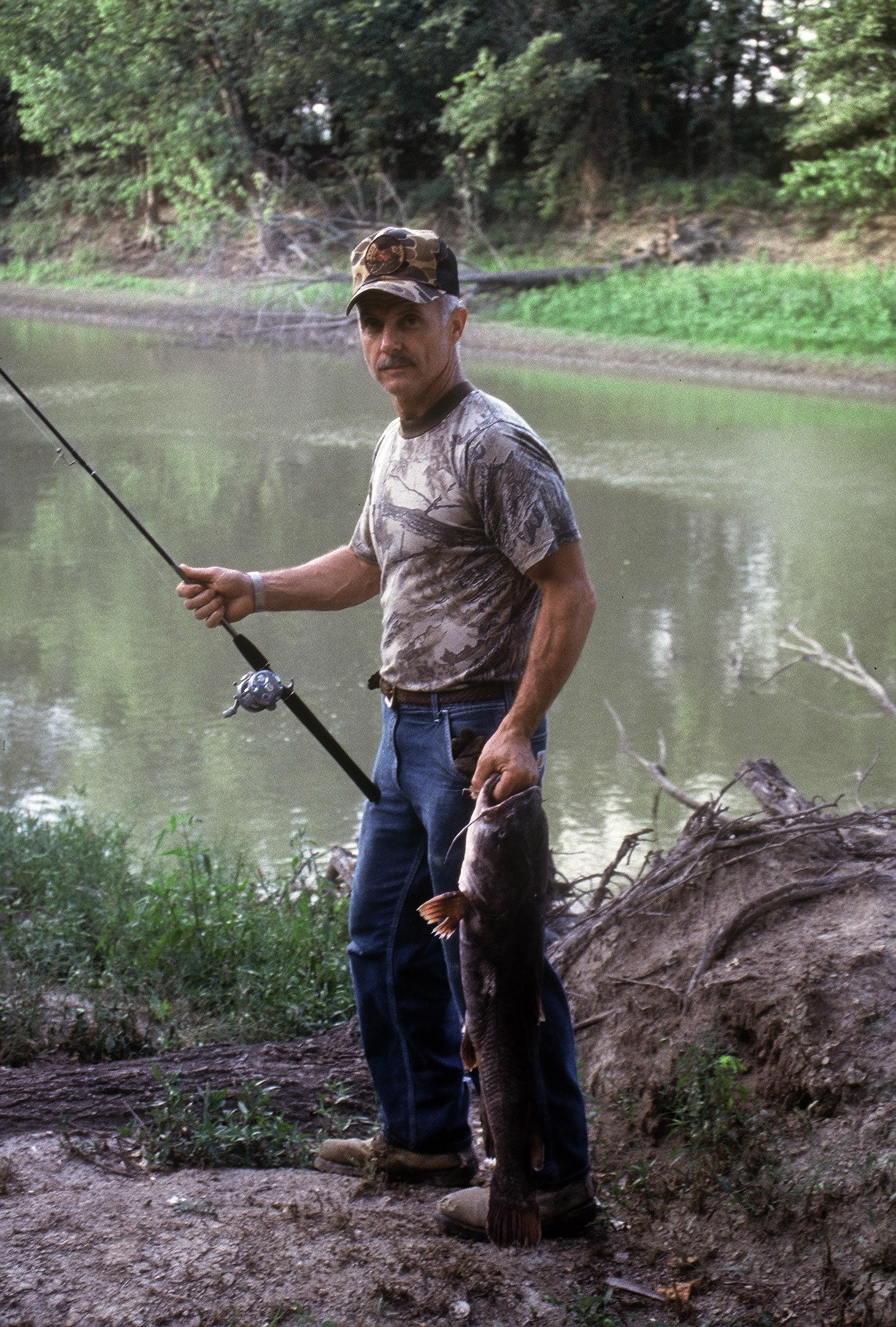
Clear monofilament line in the 25-pound test is a popular choice for sizeable catfish.
Choose a rod that will handle at least a 2-ounce weight. Rods rated from 3/4 to 3 ounces are best. The combination of bait and sinker requires the heavier rod. For reels, I prefer spinning reels. They, too, must be larger and heavier to handle the long cast of a heavy bait.
Generally, loosen the drag on the reel so that the lure falls quickly when released. In windy conditions, tighten the drag so that the lure falls more slowly. This procedure helps avoid birds’ nests.
When first approaching the water, look for shady spots where you can enjoy yourself and anchor for your pole. It should be open enough, foliage-wise, to enable you to cast well out into the water.
Cast as far out as possible. Then check your watch for the time. Hold onto the rod securely for 15 minutes. If there is no bite in that time, retrieve the bait and clean it off. After drying the worm with a towel, re-bait and cast again.
Repeat the process three times. If you there is no bite, move to another location and begin again. Keep trying.
In still water, use large floats called “cigar floats. First, probe the bottom area of a hole. If the fish are not biting there, put a smaller slip float on and fish the upper water column of the same hole until you find the right depth for the fish. Fish are usually either on the bottom or just about a foot below the surface.
The secret to catfishing is to cast, watch the clock, and move if no fish are present. Eventually, you’ll find fish.

Did you enjoy this post?
You can be among the first to get the latest info on where to go, what to use and how to use it!