
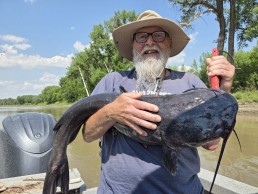
Fishing the Spawn
Most catfish anglers skip fishing during the spawn, but as a guide, I don’t have that luxury. Some years, I do see a downturn in catch rates, but I have learned some tricks to dealing with a rough spawn.
Not all catfish spawn at the same time—almost. Weather and water conditions are usually not so perfect that every fish in the lake or river suddenly says, “Today is the day we spawn.” The spawn is usually stretched out over three to six weeks, depending on how conditions come into play, and how stable the weather and water conditions are. Some years, you will barely even notice the spawn is going on, but every now and again, there is that one year that nearly all the fish seem to go together.
Most years (say three out of five years), the water conditions set up spawning, slowly reaching that magic 70 to 72 degrees that triggers the spawn. Some fish move to the nest early, and if the weather does not get hot fast, the rest will slowly follow. If there is no major cold front, the best way to catch fish is to just do what you were doing during pre-spawn. With not all fish spawning at the same time, you might see numbers dwindle some, but you will continue to catch pre-spawn fish until one day, when the last of them go to the nest, and the first of the post-spawn fish come off. You will only notice the fish get skinnier.
Some years (I have seen this two times), we get into a hot weather pattern that quickly drives the water temperatures up to the mid- to high 70s, and it stays hot. This pattern that stays hot can drive all the fish to spawn at the same time. During these times, things get sketchy to stay consistent. The good news is, these spawns tend to be very short—ten to fourteen days—and the fish back to business with the post-spawn.
How to deal with the spawn
During this bite, one trick to catch fish is fishing faster water in the morning and evening, targeting and hoping for anything. You can almost always catch smaller fish that are still immature and not spawning. You can also fish sections of river below dams where large concentrations of fish that are not spawning that year still continue to go through pre-spawn motions, even though they are not going to nest.
You can be among the first to get the latest info on where to go, what to use and how to use it!
When the fish are set up into the spawn, a good strategy is to fish off current, out of the current near thick, heavy structure. Part of the reason this could be overlooked is because many anglers do not fully understand how to read off current. Simply put, off current is where the current pulls away from the structure, rather than flowing to it or ripping over it.
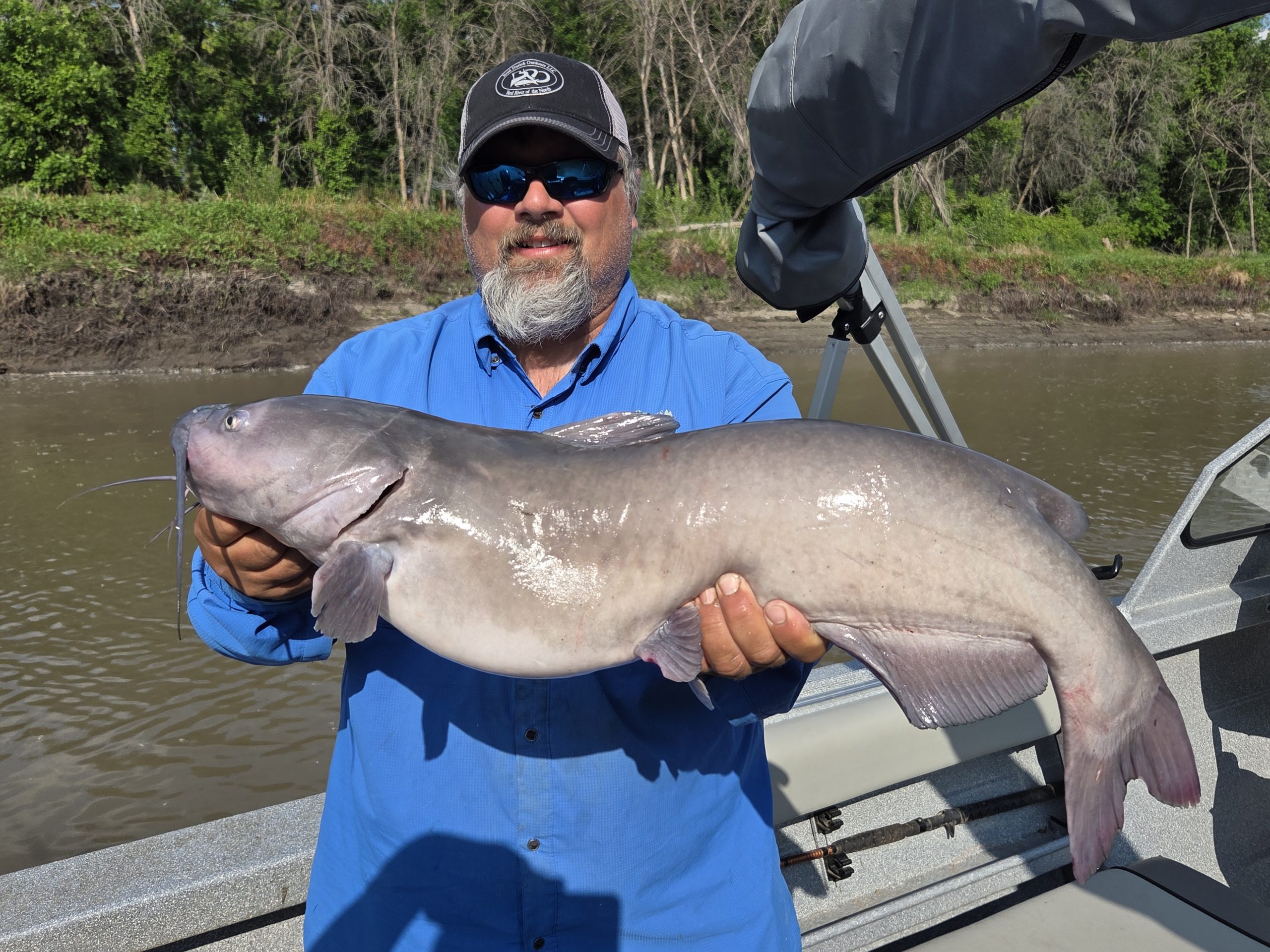
Catfish know where to find these spots of least resistance, and during a lower activity time such as the spawn, they provide great places to rest when fish are less active. Of course, during the spawn, look where the catfish actually spawn. Using today’s high-end technology, you can identify holes and high-percentage places for catfish to have a nest. Put a bait in front of the nest and let the fish move to it. If you do this, however, please release the fish so it can tend to the nest. They will go back, and can be caught from the nest multiple times as they are protecting the nest and not eating.
Some changes in gear can also help catch fish during the spawn. Lighten up your rods to see more of the subtle bites, so you know when fish pick up the baits. It’s a good idea to use smaller bait that fit on the hook better, leaving as little meat below the hook for fish to pick up without getting the hook. You can also upsize your hooks to help prevent this and force fish to eat the hook.
If catfish are protecting the nest, they will move the bait, not eat it. Because of this, you either need to hold rods in your hands to feel the, or watch the line so you know if the fish is moving it. You will also have to set the hook, because the fish will not do it for you, as they are protecting the nest, not eating.
One very important thing helps a lot during the spawn, especially if you know you are on fish: Fish slower. We all have been brought up to fish fast for active fish by giving them 15 to 20 minutes and then moving. This is fine most of the time, but during a rough spawn, the fish are sluggish or not really eating at all. Give them extra time to come out and find the bait, move the bait, or just decide to eat the bait. A good rule is spending 25 to 40 minutes on a spot to let the fish come to the bait.
Spawn can be a tough time of year to catch catfish. The good news is, all fish do not typically spawn at the same time. It happens during about 20 percent of years. When it does, be prepared to lower expectations, sit on spots more, and make some simple adjustments to be successful. It only lasts a short part of the season, so learn to deal with it and catch fish when others don’t.
Conservation note
Many anglers are against fishing during the spawn so as to not hurt the fish. If you are fishing near nests, and targeting big males that are guarding the nest, it is imperative to bring them in and release them immediately. They will go right back to the nest and continue. I have caught the same male of the same nest many days in a row, not because he was eating, but because he was protecting the nest. By letting him go right away, he went back to the nest to keep fanning the nest.



Did you enjoy this post?
You can be among the first to get the latest info on where to go, what to use and how to use it!