
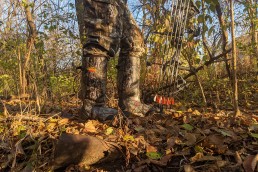
Facilitating Fall Footwear
Outdoor expert Tom Watson says proper boots and socks are essential for fall hunting comfort.
Tromping through the backcountry as summer slips into autumn warrants footwear that will keep you dry, warm and comfortable. Whether you’ll be challenging your feet scrambling across creeks, through rough terrain while tracking down game, or waiting in chilled silence in a lofty tree stand, appropriate, good quality footwear is among the most important and critical pieces of gear you need as winter approaches.
Just like your rifle, your boots need to be kept clean and dry. Grit can work its way down into minute cracks in the leather or synthetic outer shell, grinding away at that material like sandpaper, weakening it against support and comfort. Likewise, proper waterproofing assures you of dry, healthy feet. Unfortunately, some boots are either improperly waterproofed or their inherent waterproofing is compromised by improper care.
Manufacturers typically provide initial moisture barrier to their boots, either via waterproofing the material or incorporating a membrane such as Gore-Tex into the inner boot’s lining layers. In the case of that initial coating/treatment, water that doesn’t bead up and run off the surface is a sign that your boots need help.
A mild soap (but not bar soap or detergent), water and a scrub brush will usually clean away dirt and other particles encrusting your boots. It’s important that your leather boots are completely moist before applying the waterproofing. Merely hosing them down isn’t enough. Usually, if you do a good, thorough job of washing your boots, you’ll get them adequately wet to then apply the waterproofing. The moisture within the boot helps draw the waterproofing solution deep throughout the leather.
One trick to moisten footwear is to wrap it in a moist towel and let boots sit until the water is absorbed throughout the boot. Also, be sure to remove any insoles and inserted boot liners before washing.
Once washed and treated, do not set your boots next to the fireplace, campfire or other concentrated heat source. It’s better to let them dry slowly in a warm, low-humidity environment. Some folks stuff crumbled, dry newspaper into wet boots and let the paper draw out the moisture.
Membrane/Gore-Tex boots don’t need to be treated beyond just a good washing. However, it’s important not to breach the membrane layer by piercing or abrading it.
You can be among the first to get the latest info on where to go, what to use and how to use it!
Different types of footwear (hiking shoes, leather field boots, rubber, etc.) can all be cleaned pretty much the same way, with some considerations for the material. It’s always best to check with the manufacturer before applying any chemicals or treatments to your boots (or any gear).
When selecting new footwear for the field, make sure you match the anticipated conditions/terrain in which this gear will be worn. Different uses require different methods of construction and protection—all of which can affect the fit, comfort and utility of footwear.
Between washings, consider a conditioner (again, check with the manufacturer before applying to specific footwear materials). Conditioners revitalize and soften old, stiff leather. They can also be used to hasten the breaking in of new boots. Some conditioning oils can make the boot too soft for the intended support for which it was intended, however.
One last note: Don’t forget to wash away debris on the outer sole of the footwear. This will not only keep traction at its best but keep you from transporting tiny invasive plants and perhaps even minute critters into other areas.
Today’s footwear is designed to function best when worn for a particular activity in a particular environment. Maintaining your boots and incorporating their wear with proper socks can make a critical difference in the life of that boot, and more importantly, in the comfort and appreciation of your own two feet.
If you want to learn more about the tools and gear that can help improve your hunting this fall, read the fall issues of MidWest Outdoors, available by subscribing on our website.
MWO
SHARE THIS POST
Did you enjoy this post?
You can be among the first to get the latest info on where to go, what to use and how to use it!