
To clean and brighten fishing lures, put them in a small container of water and add one or two denture-cleaning tablets and soak them overnight. This works well for plastics, too.
– Jack Stander, Orange City, Iowa
Biting flies can tear into the ears, nose and even the backside of your dog. Deer flies and black flies may feed on the open wounds. Petroleum jelly applied on the wounds can keep flies off, aid in healing and is waterproof, lasting up to three days.
–Frank Lazarski, New Lenox, Ill.
Use corn chips to help bring up the fire in your wood stove, fireplace or campfire. They are oily, so they burn fast and hot. Build a fire and toss a few corn chips on top. Light the corn chips, add kindling, and in no time you will have a solid fire burning.
—Mitch McNeil, Atkinson, Ill.
In an aluminum boat, I got tired of hanging lures—ones I anticipated using—on the stowed paddle or the seat beside me (potential safety issue). My solution: I attached a screwdriver holder, that’s intended for pegboards, to a wide piece of wood to create a portable lure holder. I align the wood just below the lip of the gunnel and secure it to the side of the boat with a spring clamp or C-clamp. I hang the lures I’m using on the portable holder.
–Michael C. Molay, Des Plaines, Ill.
The quickest way I have found to remove old line from a fishing reel is to use a dowel rod and a cordless drill. — Paul Swanson, Gilberts, Ill.
If you’re setting up a trail camera in an area you can’t mount the camera to a tree, use an older 35mm camera-style tripod. This gives a hunter access to marshes and fields where one wouldn’t normally be able to mount equipment. — Jerry Strand, Dousman, Wis.
Making an ice block in a plastic bucket can result in the side of the bucket splitting. Take a foam pool noodle and cut it to the height of the bucket. Then weight the noodle with a 2-ounce sinker and place it in the center of the bucket. Fill the bucket with water and place it in the freezer. As the ice forms, it compresses the foam noodle and does not break the bucket’s sides.
— Bill Fett
Cascade, Mont.
To bee or not to bee: Beekeeping is a popular business, whether it “bee” for profit or pleasure. A typical beehive can harbor over 200,000 of these busy guys. The northern winters can be tough on some hives though, with as high as a 50 percent kill rate. Many honeybees are shipped from California and Hawaii.
LONGEAR THAN YOU THINK: One of the more beautiful panfish, longear sunfish are not one of the fastest growing fish. It takes five years for one to grow 4 inches. In the North, they spawn June through August. Their food usually consists of small insects and minnows.
CLEAN IT UP: For a fast clean up in the field or when water is not available after cleaning game or fish, use a wet wipe. The small, pre-moistened, packaged wipes are convenient. Remember to dispose of them properly. —Dwayne Podborny, Rockford, Ill.
Fishing basics: You can have the most expensive equipment, but if you haven’t developed a basic understanding of the fish you’re after, good luck. Experiment with various methods, talk with experienced anglers and use trial and error to make you better.
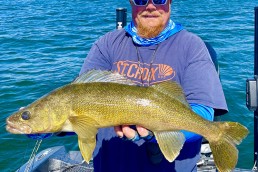
Walleyes can be choosers: Lure choice for walleyes comes down to value and effectiveness. Spinnerbaits, spoons, crankbaits, minnows, tube baits, etc., are good, but my go-to lure is a simple jig and minnow or a grub, and a leech tipped on a colored jig. Effective spinner-type lures have three prongs. — Leroy Henge, Montello, Wis.
Spring, especially April, is time for channel cats and bass. Harsh winters kill shad, and I’ve never known a catfish that doesn’t enjoy an easy shad dinner. Hook shad parts on your triple hook. Largemouth bass are now searching for food in shallower areas and structure.
SPRING TURKEY SEASON: Decoys for these birds come in various sizes for a reason. Don’t set up more than five. Turkeys are smart, their eyesight is amazing and even the slightest movement can send them heading in the wrong direction.
One can greatly improve an ability to catch fish with this small modification to a casting bubble: Before putting water into the casting bubble, add some small buckshot first. The rattling mimics the vibration of a school of minnows. This works great when fishing for crappies. — Bill Jones, Chicago, Ill.
BIRDS use well-developed vision and hearing. While vision is used for predators and food, hearing is important for communication. However, most birds are relatively weak when it comes to touch, smell and taste. Birds don’t have a great vocabulary, but can interpret signals from one another.
FISH VISION: Gamefish rely on vision for food and finding predators. Sunfish and bass have better color vision than deep-water fish, like catfish. Scientists have found fish in shallower water see same colors as humans. Color vision doesn’t mean much in deep water, as some colors are filtered out. Fish with color vision cannot see well at night.
After ice fishing season, I look forward to the steelhead spawn run and the aggressive brown trout bite. Knowing when spawn occurs is critical for timing. The best steelhead action comes after ice-out in rivers and streams out of Lake Michigan and Lake Superior. Also, the walleye spawn is on in the Wolf, Mississippi and Wisconsin rivers.
—Tom Fischer, Hatley, Wis.
As you venture out to fish, don’t forget to take your kids. It’s important to pass along our outdoor heritage to the next generation. Go to a small pond or creek and teach basics. Often, they’ll be distracted by wildlife; the fishing becomes secondary. Still, answer questions and encourage curiosity. — Steve Turnis, Dubuque, Iowa
Take some yarn, twine or string and cut into sections of 3 or 4 inches, then unravel it. Stuff the string into a wire suet holder and hang it in a tree in your yard. Birds building their new spring nests will really appreciate this supply of building materials.
— Jerry Wagner, Mineral Point, Wis.
Anglers on the first trip of the season use WD-40 or other lubricants to clean off tackle. It works, but leaves odors on the lure fish don’t like. Mayonnaise performs as well as the lubricant, and attracts fish. Rub it on unbaited hooks or use on a small mustache comb to detangle bucktail muskie lures. — Paul Swanson, Gilberts, Ill.
There are two types of volcanic lava: “pahoehoe,” which has a smooth surface, is fluid and moves quickly, and “a’a’,” which is thick and moves slowly. Hawaii consists of cooled lava. Areas once covered with lava become farmland. Lava can reach over 2,000 degrees. I wonder where Lava soap plays into all of this?
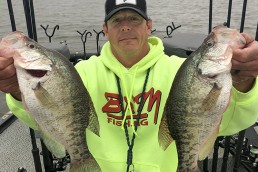
The crappie spawn won’t occur until a month after ice-out, as they need water temperatures in the 60s. Track ice-out dates and plan for the body of water. Start looking for deep-water, shallow-feeding areas or flats. Crappies require stability of the deeper water, as it helps them function during inclement weather.
— Leroy Hengen, Montello, Wis.
This is the time of year when boat ramps may be slippery from the weather. Bring along a bag of sand to sprinkle on your path to and from the ramp, as the added traction helps.
Check your Personal Flotation Device (PFD) for tears and holes. Check older styles for waterlogging, mildew or shrinkage of buoyant materials. If it looks ratty, dispose of it—a life is more important than the cost of a new PFD. Never dry your PFDs on a radiator, heater or other direct heat source. If wet, drip-dry it thoroughly before putting it into a well-ventilated place. Newer, self-inflatable PFDs are ideal. Though more expensive than traditional PFDs, they’re less constricting. Make sure children’s PFDs fit correctly so they don’t slide out of it in the water.
I live near the Illinois River and go there to catch Asian carp to use as bait. I cut the carp into pieces about the size of my thumb—catfish really like it. It’s a good use for an invasive, nuisance fish. –David Saylor, Lincoln, Ill.
A quick, easy way to build an extra table when out camping or fishing is to get a folding sawhorse and a piece of plywood, approximately 4 feet by 4 feet, and 1/2 an inch thick. Balance one end of the plywood on the back bumper of your vehicle and the other end on the sawhorse. — Richard Carlson, Chilton, Wis.
Keep a can of expanding insulating foam sealant on hand. You can patch leaks in a boat, canoe, minnow bucket, cabin or camper roof, waders and hip boots; plug a mouse or insect hole; patch a window or screen; fix a squeaky deer stand. All for only $10!
― Mike Winkel, Marshfield, Wis.
Why are underspin spinning reels so hard to find? True, an open-faced reel can hold more line, but rarely is more than 25 to 50 yards of line needed when battling an 8-inch bluegill or a big northern. An open-faced reel casts farther, but does an extra 5 or 10 yards distance matter much? With underspins, you always know right where the line is whether you’re casting or reeling in. If you get a chance, try one.
To remove the algae and moss that grow on the carpeted bunks of a boat trailer, clean the bunks with carpet cleaner and let them dry. Then, spray them with WD40. You may also use WD40 to wipe down your boat cover. ― Tim Rinowski, Golden Valley, Minn.
TRASH TALK: Whether you are fishing or at the gun range, when you leave, remember to take any trash with you, like sandwich bags, plastic or Styrofoam bait containers, old line, bottles, spent cartridge cases, used paper targets, etc. All of us need to work together
for a cleaner environment.
Before cooking over an open fire, coat the entire outside surface of your aluminum pot or pan with liquid dish soap and allow it to dry. This old Boy Scout trick will make cleaning the outside of the pans a lot easier. ―Mike Casapini, Zanesville, Ohio
When taking kids fishing, focus on catching a lot of little fish, rather than a few big ones. Silly=fun: Name each fish or have prizes for the smallest fish caught, etc. Bring plenty of snacks and drinks. Call it a day when the kids lose interest.
―Steve Sedlacek, Naperville, Ill.
Was there ever a time when Canada geese didn’t squawk? Ugh! They are especially annoying during the spring when looking for a mate. Oh, how I would love to make an even louder noise with my Winchester double-barrel.
Continued exposure to the sun can result in small blemishes that can become cancerous. To help avoid this, apply liberal amounts of SPF 40 sunscreen before going outdoors. When fishing, reapply sunscreen every few hours. Wearing a hat helps, but don’t forget to slather your ears. ― Dave Faulhaber, Gurnee, Ill.
TRASH TALK: Whether you are fishing or at the gun range, when you leave, remember to take any trash with you, like sandwich bags, plastic or Styrofoam bait containers, old line, bottles, spent cartridge cases, used paper targets, etc. All of us need to work together
for a cleaner environment.
Real pork bait jar lids corrode easily, making them hard to open. Coating the inside rim of the lid with petroleum jelly will help prevent corrosion and make the lid easier to open. But be careful when transporting it and place the jar inside a zipped plastic bag.
―Tom Adams, Anderson, Ind
Different fish species prefer certain water temperatures: trout like water temperatures in the 50s; muskies, walleyes and perch, in the 60s; and bass, crappies and catfish find relaxation at 70 to 80 degrees. But all species will leave their comfort zone for a meal.
The decline in bee populations is attributed to the thus-far-incurable Colony Collapse Disorder, or CCD. Planting sunflowers or other type flowers that smell sweet may be of help. Not that we should give up on bees, but other pollinators include butterflies, hummingbirds, bats, moths, flies, beetles and wasps. Planting flower gardens, providing butterfly houses, and feeding hummingbirds are a few examples one can do to help our flying friends.
GIMME SHELTER: Most gamefish seek shelter if they live in current waters. Fishing eddies below logjams, bridge piers, and big boulders can produce big fish.
HAPPY HOOKER: Buy fishing hooks made by a reputable manufacturer. Cheap hooks can have poor points and may be made of a metal that breaks or rusts quickly. While you might save a dollar or two, is it not worth losing fish. When fishing for crappies where snags are inevitable, try a size 6 hook that is thin and bends easily.
A LITTLE COM-MIT-TEE: How many politicians does it take to screw in a light bulb? Seven—one to screw it in and six to screw it up!
MOSQUITOES fly at an estimated 1 to 1.5 miles per hour. Bigger people and active or fidgety people get bitten more often, as they produce more mosquito attractants, namely CO2 and lactic acid. Dark clothing attracts mosquitoes more than lighter colored clothing, and movement may increase bites by 50 percent.