
Warm Weather Squirrel Calling
As the sun filters through the oak trees on this crisp fall morning, the woods smell of pine and wood smoke. You can hear birds singing. Then there is the chatter of a couple of squirrels.
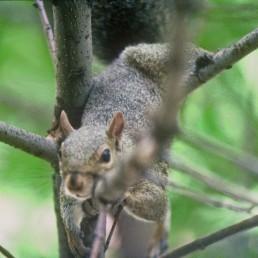
Vocalizations play a factor in squirrel hunting. The animals are difficult to spot in the treetop canopy. Often, they must move to spot them. But they are suckers for vocalizations.
A vocal squirrel is an aggravated one. He sounds off and displays a flickering tail as a threat to potential enemies. The noise and tail movement give away his position. Getting a squirrel to give away his position often requires a call.
Calling squirrels is not to get the animal to come to the hunter. Squirrel calling is to aggravate the animal and get him to expose his position. Then it is your problem to get an angle for a shot.
Squirrels are notorious for moving around to the opposite side of a tree trunk or limb when avoiding a hunter. They like to put something between themselves and perceived danger. The only exception is when they are angry.
There are two basic types of squirrels calls on the market. Both work in their own way. The most common one is the reed call with a small rubber bellows attached. Strike the bellows against the body or some other solid object and make a clucking sound. This imitates the sound of another squirrel trespassing on the territory of the resident quarry. The resident then responds in anger giving away his position.
Another call is the squirrel whistle which imitates the distress call of a young squirrel. It is a small metal whistle placed on the lips and you suck air through it making a whistling sound. Coupled with rattling of branches or swatting of branches against the ground imitates the sound of a hawk catching a squirrel. This sound of a hawk striking and the squirrel crying out in fear is more that most bushytails can stand.
The exact routine is five whistles with the first whistle longer than the following four. The first whistle is about three‑quarters of a second and the rest about one‑half of a second. Combine it with it with hitting a bush or branch against the ground during the first three whistles then continues with the last two whistles. A green, leafy limb is best.
You can be among the first to get the latest info on where to go, what to use and how to use it!
The technique works best in the morning after the squirrels have fed and are dozing. It also works on alarmed animals. It makes them come out of their nests or dens. The little rascals become very excited and run all around giving away their locations. They seem to respond in anger and will bark toward the location of the call.
In full camo you can move around and get a good location for a shot. It is best to move slowly when the squirrel is barking. He does not seem to fear hunters as his mind seems to be on locating the attacking predator.
Besides the heat, summer early season hunters must also consider the problem of insects. There are several good insect repellents on the market. Some are unscented and they are best. Scented varieties do not repel squirrels. The only problem with the scented products is that they attract mosquitoes.
There are also summer insect proof camo suits on the market which work well.
Moderately priced they come as whole suits or in parts as pants, headnet, jacket, and gloves. For squirrel and turkey hunters they could be a good investment. The suits are available from most sporting goods stores or by mail order from the well-known outfitters like Cabela’s or Bass Pro Shops.
Squirrel hunting is a great way to tune up for fall hunting seasons. It is fun and squirrels are great eating in a slow cooker.
If you enjoy spending time in the outdoors, check out the articles in every issue of MidWest Outdoors. Subscribe on our website.
MWO
SHARE THIS POST
Did you enjoy this post?
You can be among the first to get the latest info on where to go, what to use and how to use it!