
The Importance of Catch-and-Release
Fishing purely for fun is a significant shift from the attitudes of our forefathers, who historically spent their fishing time working to fill limits. In today’s world, a growing segment of anglers are more concerned with preserving catchable fish populations than filling a freezer with fillets.
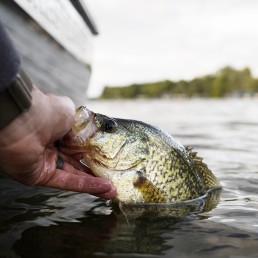
While many anglers can grasp how important it is to release large walleyes, bass, or other gamefish, panfish are often of major concern. Unfortunately, panfish species like crappies, bluegills, and perch are often looked at as a readily renewable resource. It’s not uncommon for fishermen to keep limits of panfish day after day. Furthermore, anglers often underestimate the importance of large panfish, such as bluegills and crappies, and how their removal can negatively impact a fishery.
Most areas of the country do not have size limits that protect larger panfish. It is often up to the discretion of anglers, and as a result can have some adverse effects. The removal of large bluegills or crappies from a population has the potential to be far more detrimental than removing a larger amount of small panfish. Catching trophy panfish is getting more and more difficult with each season.
If catch-and-release is important to you, follow some simple steps to ensure that fish are released unharmed.
1. Use the proper gear for the target species. You don’t want to end up in a high stake’s poker game with a handful of pennies. If you plan to target larger fish, then make sure you’re properly equipped. The goal is to land the fish as quickly as possible and not leave them over-exhausted.
2. Keep the fish in the water as much as possible. Rely on nets, livewells, ice wells, or other tools in order to prevent fish from being out of water too long.
3. Wet your hands prior to handling fish. This is a good practice for all fish species, but it’s particularly important with species like trout. Handling fish with dry hands or gloves can remove their protective slime coating—and in turn, make them susceptible to harm.
You can be among the first to get the latest info on where to go, what to use and how to use it!
4. If necessary, cut your line. Often, you’re better off cutting the line on a deeply hooked fish rather than overhandling or causing damage just to get a hook out.
5. If you plan to take pictures, have your camera gear handy. Don’t keep it stashed away where you can’t access it quickly when you need it. You want to release fish as quickly as possible.
6. Last, but definitely not least, remember to use a gentle release. We’ve all seen way too many videos of fish being tossed in the air only to come down crashing on the water. Let’s change that.
Things are starting to change. Attitudes surrounding catch-and-release are starting to shift for the better—and that’s great. Additionally, state agencies are modifying regulations year by year to protect important fish populations. In Minnesota, the Department of Natural Resources is doing great work with preserving trophy panfish populations by implementing lake-specific size and quantity restrictions. These changes are ensuring that fish populations exist for future generations. We can only hope that other agencies across the Midwest and United States implement similar regulations. If you want to make a difference in your area, contact your local natural resources office or legislator and let them know your concerns.
Be a good steward to our outdoor resources, find out how by checking out the articles in every issue of MidWest Outdoors. Subscribe on our website.
MWO
SHARE THIS POST
Did you enjoy this post?
You can be among the first to get the latest info on where to go, what to use and how to use it!
