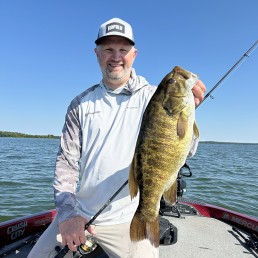
Smallmouth Bass, Out and About
Smallmouth bass are opportunistic feeders that take advantage of a bug hatch, minnow schools, or even crawfish. During fall, a switch definitely happens, and they tend to gear their diet more towards minnows. Many anglers have experienced fishing a wind-pounded shoreline where the bite was on fire in the fall. So good, in fact, that many anglers dreamt of the days when the wind would blow once again. Windy shores cause minnows to be disoriented, and create easy meals for gamefish, including bass, but that feeding window doesn’t just happen then and there.
Forward facing sonar has taught anglers an amazing amount of information in the short time that it has been in existence. It really has confirmed some theories, but it has also squashed some. The one we absolutely know to be true is that a lot of fish feed offshore, and that they are not afraid to use the entire water column to do so. Smallmouth bass quickly adapt to roaming baitfish and make easy meals by ambushing the schools with precision. It’s truly amazing how good the fish are at finding these food sources.
You can’t go out into the middle of the lake, drop the trolling motor, and expect to catch fish. Sure, you could get lucky, but odds are that you will need to spend some time scanning around to find a significant amount of bait. Some anglers are very skilled at running the trolling motor on high and constantly scanning the area, to not only to cover water, but to also look for bait and fish. Anglers who are proficient with side scanning can do this much more effectively by covering water using the big motor.
One of the quickest ways to dial in parts of the lake is to start near a key piece of structure. Bass often use structure to their advantage. In other words, they can at times position on top of a deeper hump or point and constantly scan above, looking for an unsuspecting school of baitfish to swim by above, and then launch an all-out attack on their meal.
Other times, they will be off the structure, suspending out in the water column, actively on the prowl to intercept roaming schools of bait. These fish don’t sit still; they’re constantly on the move, searching. These bass are the ones to find, because they are ready to eat.
As you pull up onto a spot, be sure to scan not only the structure, but out to the sides, into deeper water. There is no telling where these fish could be, but be sure to look for them. Not every area will have fish, so plan to look at other structure in the area, as well as in other parts of the lake.
Tactics are not too complicated because the fish are ready to eat. The fish are likely keyed on the local bait supply, but they are most certainly opportunistic to any minnow meal. Minnow-profile baits rigged on a jig head are the number one technique. Ideally, use the lightest jig head possible to be able to make a long cast and get the bait down into the strike zone. Too heavy a jig, and you will blow right past them in the water column, and it will look unnatural.
You can be among the first to get the latest info on where to go, what to use and how to use it!
Minnow baits from 3 to up to 6 inches in length are commonly used for smallmouth bass. Tullibees, ciscoes, and smelt can all get to that size, so it is not uncommon for them to be on the menu of bass. Soft plastic minnow baits made of TPE, such as the Rapala Mooch Minnow or Jerk, are usually a good choice, as they will hold up after a lot of catches.
Simply make long casts and keep the bait above the fish. In clear water, the fish will easily see the bait from a long distance away, and often come up to attack the bait. When this happens, other fish nearby recognize the commotion and usually come up to investigate as well. This can make for a quick flurry of action for all anglers in the boat.
Also, pay attention to the surface around you; at times, bass push bait to the surface, and you will see the swirls as they attack baitfish. If you can get a cast into the area right away, you are likely to get rewarded with a hungry fish.
Early fall is a great time for smallmouth bass fishing. Don’t limit yourself to just fishing the bank, as there is a lot going on out in deeper water.
For more fishing insight from the pros who know, check out the next issue of MidWest Outdoors, available by subscribing on our website.
MWO
SHARE THIS POST
Did you enjoy this post?
You can be among the first to get the latest info on where to go, what to use and how to use it!