
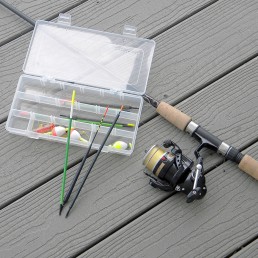
Slip Bobbers for Early Spring Fishing
The sound of the waves is drowning everything else. The early spring air still holds a chill. I watch the world wake up as the sun rises bright and clear. My attention focuses on the small balsa float quivering in the waves.
The versatility of slip bobber (slip-float) fishing is ideal for the early season action. It allows the angler to adapt to conditions and the species of fish.
Sitting in the boat or on shore and staring at the bobber dancing on the surface may be good for the Zen consciousness. But it does nothing to put fish in the cooler. Staring may be all I get to do.
Changing temperatures and winds make early spring fishing a challenging experience for even the best of anglers. Movements of fronts through an area cause changes in the feeding activities of fish as do changes in water temperature. Because fish move to find their comfort level, they are often in different locations at different times of the day. They move up and down in the water column in response to water temperature.
Where should we seek out early spring fish activity?
A good location is in the back waters. Here water starts to warm sooner than the deeper water of the main body of the lake or river. A plain kitchen thermometer can take water temperature readings in various areas. Look for warming trends and begin to fish there first.
Warmer water is closest to shore in the spring. The sun shining on rocks, or a mud bottom warms them and in turn holds the heat longer. Any structure warms the water surrounding it. It is important to approach such areas quietly. Fish in shallow water, especially clear water, spook easily.
In spring, fish are generally interested in locating spawning sites. They will often be in areas near where such activity later occurs.
For walleye, areas of hard bottom structure are where to begin. Look to areas of creeks feeding into a larger body of water. The water is warmer there by a degree to two encouraging fish presence.
Riprap is a good location, as are most rocky areas. If the wind blows toward the riprap, the warmer water blows there, too. This in turn attracts baitfish and the predator fish.
In rivers, look for eddies just off the current. Fish locate these places, waiting next to the faster current in hopes of a hapless baitfish passing by in the current.
You can be among the first to get the latest info on where to go, what to use and how to use it!
Once you choose the area, it is time to seek the right depth to fish. All fish seek their comfort level when it comes to temperature. On warmer early season days, it is the shallower water.
A slip bobber allows an angler to place his lure or bait at precisely the same depth as the fish. He can easily change depths by moving the line stop up and down the line. Electronics help locate the depth the fish are feeding or suspended. But it is the slip bobber that gets the bait in the right location. Slip bobber systems allow anglers to move back from the fish and cast to them in the targeted area.
A slip bobber rig is a line freely passing through the bobber with a hook and bait below and a slip knot stop above. The line slides through the bobber and stops at the slip knot. The slip knot can pass through the rod guides during casting and retrieving. Slip knots are set at the depth the angler wishes the bait to suspend. If the bait is not heavy enough, then add a split shot to the line beneath the bobber.
A small hook suspended below a slip bobber can suspend a minnow or other live bait. One simply casts the rig to the shoreline, allows it to sit for a bit, and then retrieves it slowly. Slow seems to be the key in this type of fishing, as the fish are still sluggish from the cold water temperature.
A good idea is to work the entire area; be it riprap or culvert drainage. On rocky or sandy shorelines, try working the bait along the bottom. Allow it to just bump the bottom and then jig it along with a lifting motion of the rod.
For those who insist on using artificial lures, the small to medium size minnow imitations are good. Twitch them on the surface or just below. Some people get good results with the rattling crankbaits. Floating crankbaits suspend in the water when you stop the retrieve. They work well because they represent an easy meal to the fish.
The two keys to recall are: fish slowly and look for water that is warmer than that around it. Early spring fishing is often a haphazard prospect, but with a slip bobber, one’s chances increase.
You’ll find plenty of helpful spring fishing tips in the April and May issues of MidWest Outdoors. Subscribe on our website.
MWO
SHARE THIS POST
Did you enjoy this post?
You can be among the first to get the latest info on where to go, what to use and how to use it!