
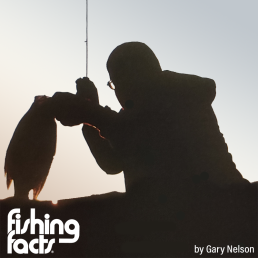
Simple Tips for Ice-Water Crappies
Ever-popular crappies often bite readily, even when there’s a thick roof of ice overhead. In many a fisherman’s mind, there’s no better way to spend a winter’s day than to ice a bucketful of these panfish for hot, delicious fillets.
All you really need is a small spool of line, a hook and sinker, and a few minnows. However, you will enjoy the sport much more with a little refinement.
You’ll often need monofilament that’s tough, yet thin. Ice-water crappies can be extra finicky and suspicious. Once, while fishing on a deep natural lake, I covered the window of my shanty so I could see underwater through the hole. The water was much clearer than I’d expected. I also noted several 1- to 1 1/2-pound crappies swimming around. I had on a lively crappie minnow, a small hook, and 4-pound line, but in this case, I wished I’d had 1- or 2-pound line. The 4-pound was highly visible in the water! I wanted to catch a mess of these nice-sized fish, but the crappies kept their distance, and only occasionally did one come over and take the bait. Four-pound monofilament would be fine for stained water, and you might even choose 6-pound or more if there’s a good chance of hooking into a larger species. However, lighter line seems best for clear-water crappies.
Crappies often eat small foods in winter, so tiny baits work well. A minnow of not more than 1 1/2 inches long, usually hooked above the backbone, satisfies the taste of crappies under the ice, just as in warm weather. However, don’t be afraid to use small insect larva baits if the fish seem fussy. Add a split shot above the bait and use a bobber—as small as you can get by with—set at the desired depth, and you’re ready.
The hook can be a plain No. 6 or 8 bait hook (or a No. 10 for larva), or a hook with a little spinner above it for extra appeal. You might also experiment with a colorful teardrop hook. If the crappies are active, what you offer them might not make much difference, but sometimes a certain lure style or color excels. I’ve often experimented with color, and minnows hooked with yellow or chartreuse teardrops often fare the best. If the water is clear, it pays to peer into nature’s big aquarium below you and watch the crappies’ reactions to your offerings firsthand.
Besides hanging the bait below a bobber, also consider jigging. A slow-falling lure may prompt fish strikes. I’ve tried jigging marabou jigs (not tipped with bait) below the ice, but not with great results. A jig, teardrop, or other ice lure appears to produce better when tipped with an odor-releasing, tasty bait—a tiny minnow, a sliver of fish meat, worm, maggot, salmon egg, or a squirt of bottled fish attractant.
When jigging, because you won’t have a bobber to detect the often-light bite, you may want to put your bare finger under the line if it’s not too cold out. Otherwise, attach a short length of springy wire to your pole’s end to form a rod tip guide at the end (aka a spring bobber). The wire will easily bend with a bite. You can jig with a regular open-water rod and reel, but what may be handier is a rod about a yard long with a simple reel or line holder.
Rods aren’t needed at all for bobber fishing. You can simply rig up with the line still on the plastic spool on which it came. Set on the snow by your ice hole, and the spool will revolve freely when a fish pulls out line. If you’re in a shanty, simply hang the spool on a nail on the wall above your hole.
You can be among the first to get the latest info on where to go, what to use and how to use it!
Other very helpful gear includes a minnow bucket, minnow scoop, and an ice scoop. You’ll need at least a sharp-ended ice chisel; however, a crappie fisherman often needs to be more mobile than other anglers and many holes might need to be opened during the outing. Hand-powered or gas- or electric-powered augers and drills make hole-cutting more of a snap.
A permanent type of fishing hut made of plywood or insulated board is fine, but a portable canvas hut may serve a crappie angler better, considering that you often need to move to find or keep on top of fish. If the ice is plenty thick, you can, of course, drive out and pull in Mr. Crappie from the comfortable front seat of the ol’ pickup truck.
Where do you find crappies under all those acres of ice? The easiest way is to spot a group of anglers pulling in fish. Just join them or fish nearby. If no one’s around, think deep, no matter what kind of water you’re fishing. In shallow, murky water, this might mean just a few feet down. In extra-clear lakes, crappies may be lurking at 30 to 50 feet or more. The depth would be somewhere in between for stained water.
At these depths, look for crappies at or near underwater islands or humps, steep points, inside turns, and drop-offs in large waters. In bays and in big ponds, just check the middle of these waters. On small natural lakes, the fish often swim near or in deep holes in the middle of these lakes.
To further narrow down the choices, check these areas for weeds, rock piles, or possibly woody cover. Before ice-up, scout out these areas. You may also be able to see these objects through the ice hole in clear water, or you might feel for them with a weighted line. If available, a lake map can, of course, help you find the desired structure. Once the ice is on, you can use a hand line or, easier yet, a depth finder, to search out right depths.
Yes, fishermen by the thousands will be out on the snowy frozen lakes again this winter. If you see some anglers pulling in the crappies, join them. Those parka-clad minnow dunkers are usually a likeable lot. And so are the tasty ice-water crappies.
Looking for more ways to increase your catch rate? You’ll find plenty of suggestions in every issue of MidWest Outdoors. Subscribe on our website.
MWO
SHARE THIS POST
Did you enjoy this post?
You can be among the first to get the latest info on where to go, what to use and how to use it!
