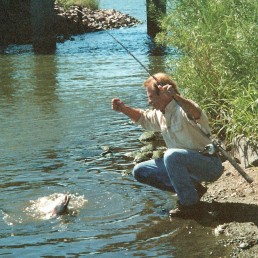
Shore Fishing in Fall Picks Up as Fish Move
The lake stretches blue and vast. After a few hours of casting line and reeling in nothing, the first gray tendrils of dawn are gone. The pressure of anticipation is wearing me down. All too quickly the trees have turned orange and gold. Then the autumn breeze begins robbing the trees of their leaves. It is time to change tactics.
An excellent adjunct to the fall hunting seasons is fall shore fishing. Anglers do not have to be in boats to enjoy some great fishing.
The key factor is finding an area with abundant shoreline access. Scout the area for clues as to promising locations of fish. Natural vegetation, man-made structures, and natural structure are often keys to good fish habitat.
Most bodies of water have some forage fish. They can be minnows, shad, shiners or any number of other fish and crustaceans. The big predator fish movement follows the aquatic forage. In early fall, both tend to move into the shallows and coves to find warmer water. The action seems to move best near the bank.
Promising locations include such areas as may be windblown and those areas near the entrance to bays and coves. A good location is one made for an ambush. Landbound fishers obtain maps of the areas they plan to fish. On the maps they mark the location of structure, vegetation, and depths of water as waypoints. They search for natural situations such as overhanging branches, fallen trees, submerged timber, and flooded brush.
Manmade structures also provide fish habitat. This includes marinas, docks, diving platforms, riprap, spillways, and dams. One angler once told me he has an old refrigerator marked on his map. He claims to have taken some big bass off that appliance year after year.
Areas where streams and rivers enter or exit lakes and ponds attract predator fish. They use the adjacent structure for concealment and then move to the faster water to feed. Eddies in rivers and streams serve a similar purpose.
Before embarking on a fishing trip along one of these shorelines, be sure to have the landowner’s permission. Assure him that you will respect his property, not litter, close gates and not break fences.
You can be among the first to get the latest info on where to go, what to use and how to use it!
Be sure to carry all your trash out with you. It helps to carry a plastic garbage bag for this purpose. Pick up any other litter you might find along the way. Leave the land better than you found it, and you will be welcomed back next time.
Insect repellent is a good idea for those remaining mosquitos and ticks. A pocket sized first aid kit or at least a couple of Band‑Aids can come in handy.
Rig your equipment to match the targeted fish species. As for the tackle, the lighter the better. A small backpacking rod and reel is good. There are several on the market. Most are ultra-light spinning rod-and-reel set‑ups. Bank anglers prefer a rod stiff enough and line heavy enough to control a cast in the shoreline environment.
A variety of jigs, spoons, crankbaits, topwater lures and live bait rigs cover most situations. A small tackle box is good to maintain mobility. A selection of lures smaller than 1/4-ounce are a good choice. Light color jigs are representative of several bait species.
Chest waders can be beneficial to bank anglers. Using waders allows the angler more flexibility as to where he can venture along the shoreline. Bank anglers are usually most successful if they can quietly and efficiently cast to key locations for feeding fish.
Patience and persistence are important elements in bank fishing. The angler must usually wait for the fish to come to him. The good thing about fall fishing is the fish are hungry and one does not have to wait too long to be in feeding fish.
If you enjoy spending time in the outdoors, check out the articles in every issue of MidWest Outdoors. Subscribe on our website.
MWO
SHARE THIS POST
Did you enjoy this post?
You can be among the first to get the latest info on where to go, what to use and how to use it!