
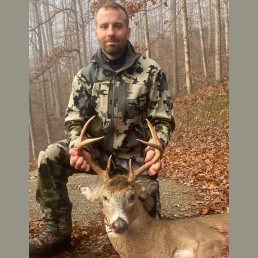
Setting Up a Small, Deer Hunting Parcel
Hunting small parcels is the most common way that both beginners and veteran’s hunt. Small parcels are often passed down from generation to generation, or can be the most affordable land purchases or hunting leases. Private land in rugged areas sells relatively cheap because of the lack of prospects for commercial use, and can be very attractive when looking for a small parcel.
Additionally, many Americans lease lands from private property owners, which is a great strategy without requiring a big commitment for private land ownership. Men and women who start hunting as adults can often be at a disadvantage and become overwhelmed at the prospect of successfully and consistently harvesting an animal. This article will teach you some of the strategies and tactics that can be implemented by beginners and experienced hunters alike.
Scouting, wind, and game trails
Scouting is one of the most important aspects of hunting. In the Midwest and on the East Coast, there are certain signs to look for when setting up your parcels. Every deer hunter should be able to identify an oak tree; these trees are easily identifiable by their leaves and are a good food source for whitetail deer.
Furthermore, when scouting on your hunting plot, your eyes should be fixed on the ground. Look for game trails, deer droppings, and tracks. Even if deer are not using your property for food and water, if you can spot a game trail and set up on it, it is a high-percentage spot to hang a stand or place a blind.
It is important to discern which way the wind predominately blows on your parcel; this is one of the most important aspects when deciding where to hunt. A deer’s nose is its only extraordinary sense and rivals that of a blood hound.
Trail camera technology has developed significantly in the last few years and can be an excellent tool when scouting. Once you have identified trails, water sources, food sources, or droppings, put up a camera to see what animals are using it or coming through your property.
Drawing deer onto your property
To be a successful whitetail hunter, you need to draw deer onto your property. There are many options, with the most traditional being food, water, and bedding areas. Food is probably the number one resource that hunters focus on. Some states allow you to bait, whereas others only allow you to grow food plots, which is not considered baiting in these states. Whether you bait or have food plots will depend on state laws and the geography of your area.
The goal that I had when getting into hunting on a small 40-acre parcel that was all hard woods was to bait does in and capitalize during the rut. If your small parcel is in “big woods,” I recommend that you use either use corn for bait, or plant a food plot that can grow in shaded areas. This can be a backwoods food plot of less than an acre where deer feel safe to eat.
You can be among the first to get the latest info on where to go, what to use and how to use it!
Depending on how much shade you are getting on your food plot, consider planting brassicas, cereal rye, or clover. If your property is more open to sunlight, you have a lot more options.
Baiting is a controversial topic in hunting and is not allowed in many states. I have found one of the best baits to be corn; deer love it, and it is very cost effective.
Most people start baiting in late summer or early fall, in advance of deer season. I ran a feeder year-round until bears tore it up, then switched to putting 40 to 50 pounds out, every two weeks to a month, to get a decent amount of deer traffic on my parcel. Baiting can be supplemented with crushed mineral such as Lucky Buck or a salt block, especially in the summer months.
A natural water source can be a great hunting spot if the wind is right. You do not want to hunt a water source or anything else in a hollow, because the wind swirls and you will get busted by deer and other wildlife.
As an ethical hunter, you have to be careful about building small ponds or water sources that will have stagnant water because of EHD and CWD, two of the most catastrophic deer diseases. Water sources can be a great tool, especially if they are scarce in your area.
If you find bedding areas on your property, they can be higher-percentage spots for a morning sit. Deer travel early mornings back to their bedding areas, and in the evening to food sources; plan your hunt accordingly. Whichever method you choose to set up on your parcel, it is important to create a sanctuary for deer. Never go on to some parts of your property; this enables deer to have a safe place to go to with little to no human interaction, or your scent being spread.
Be a good steward to our outdoor resources, find out how by checking out the articles in every issue of MidWest Outdoors. Subscribe on our website.
MWO
SHARE THIS POST
Did you enjoy this post?
You can be among the first to get the latest info on where to go, what to use and how to use it!
