
Pigeon Hunting: A Cure for Off-Season Blues
Missing scouting, setting the stool, eyes to the sky, and a mouth full of feathers? With waterfowl seasons in the rear-view window, spring and late-summer pigeon hunting is the cure for the off-season blues. Pigeons are plentiful and can be found across the United States. Often classified as pests, providing “no limit, no season” shooting opportunities. These acrobats of the sky willingly decoy, have erratic flight patterns, and can accelerate at a moment’s notice, providing challenging shooting opportunities that will improve your scattergun skills and keep your barrel hot.
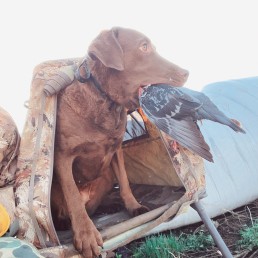
For retrievers, there is no better training day. It is not uncommon for your pup to pick up as many birds in one hunt, as some may retrieve throughout the entire waterfowl season. Dogs will learn to watch and mark birds in the distance as they circle and glide into the spread. They will learn to track a gun barrel as you mount and swing… up, down, and side-to-side, on the rapidly dipping and diving grey ghosts. Steadiness will be challenged, as many birds will fall in close range. Dogs will have opportunities to remember and pick up multiple downed birds, chase cripples, and execute blind retrieves. This is also a perfect time to work them from a stand or blind, and a chance for them to navigate decoy spreads that feature motion decoys.
Scouting
Similar to waterfowl hunting, some windshield time spent through the countryside with binoculars is your best bet. Try to target large dairy or cattle farms. The waste grain used for feed and left in the nearby agricultural fields attracts pigeons, as does manure piled up and spread across fields. Add a gravel driveway or nearby roadside for gizzard grit, a few low spots that hold rainwater for drinking, and combine this habitat with an ancient barn or rusted-out silo for roosting/rearing space, and you will find the flock.
Sit for a while in early morning or late afternoon as they emerge from the top of the silo. Witness singles, doubles and large groups taking a leap of faith and gliding toward the feed. Most farmers are thrilled to have the “sky rats” eliminated, as their droppings spread disease, constantly foul water troughs and stored hay/grain, and make a mess of barns.
Similar to duck and goose hunting, take note of the exact location they are feeding at and set up there the next day. Make sure to secure permission to hunt and discuss with the landowner your blind location. Set up and shoot away from all buildings, livestock, and roadways. Be sure to clear the area of all spent hulls and use ammunition featuring paper wads, as plastic wads can become a problem for grazing livestock.
The gear
While you can hunt flight lines and pass shoot, the real magic happens over decoys. A large spread is not needed; a mix of 10 to 15 full bodies and silhouettes works perfectly. While a few companies specifically manufacture and sell pigeon decoys, many a pigeon has been taken over homemade silhouettes. Crafted, using online stencils, and cut from cardboard, wood or thick plastic. The imposters are painted shades of grey with distinguishing black tail bands and white nasal accents. Full-bodied dove decoys painted in the same fashion work as well. To bring the spread to life, motion is key. Add a flapper dove or a dove/teal spinner and your spread will come alive.
Pack decoys in a 5-gallon bucket, which is easy to carry and doubles as a seat. Wear camouflage clothing and add a brushed blind, as pigeons have good eyesight and key on movement. A covered dog stand is a great addition to keep a young dog steady and hidden from prying eyes.
Pigeon shooting is a wonderful opportunity to not only improve your shooting skills, but to try out your new duck gun. I suggest removing the plug as multiple shots are not uncommon. Twenty-, 16-, and 12-gauges are all effective and great options, providing the necessary reach and knock-down power. As far as ammo, trap loads of 7.5 or 8 shot are perfect for decoying birds, providing a large spread and room for error as you swing and follow these aerial acrobats. Six shot is also a good choice for passing shots and longer distances.
You can be among the first to get the latest info on where to go, what to use and how to use it!
The setup
Once you have found the “X,” keep an eye on the weather forecast. Unlike waterfowling, get out on a day with relatively clear, calm skies. While sunny days and a light breeze are best, cloudy days are fine as well. Pigeons tend to hole up in rainy, wet weather. It is best to avoid those days and wait for the weather to pass. Pay attention to incoming fronts, as the birds will increase their activity and feed heavily the day preceding a storm.
Plan to arrive before first light or a few hours before an afternoon shoot. Place your decoys in the exact spot where you saw birds the day before. Spread them out, providing lots of landing space. Position with your back to the wind; as with ducks, the birds will look to land into the wind and present the best shooting opportunities. Look to work out of a wooded hedge row, behind a manure pile, hay bale, or out of a brushed panel or layout blind.
The hunt
As moonlight becomes daylight, the top of the silo is a buzz of activity. Roosting birds wake up hungry. The sky comes alive as they take a leap of faith, gliding towards your spread. Catching the sun’s beams, iridescent green and purple necks zip past, rapidly accelerating toward the heavens. Seated beside you, your dog’s ears are perked, head tilting, and eyes tracking their every move. Be patient. Many times, like ducks, they will eye the spread a few times before committing. Keep your head on a swivel; it is not uncommon for birds to come from all angles and directions.
Dipping and diving, they are back in a moment’s notice hovering, seemingly motionless above the stool. Focus on one bird at a time and be ready to keep shooting. Reload quickly; many times, the shooting is fast and furious, with groups that have been shot at circling back and descending upon the actors for another go of it. With laser beam focus, the retriever has marked the downed bird. The mere mention of his name and he is off, a waggy, happy tail returning as you accept the prize.
When those off-season blues kick in, pigeons are the cure. You will develop better shooting skills, a sharper retriever, and those early teal won’t seem so quick come fall.
For more insight and tips on how to make the most of the time you spend hunting, check out the articles in every issue of MidWest Outdoors, available by subscribing on our website.
MWO
SHARE THIS POST
Did you enjoy this post?
You can be among the first to get the latest info on where to go, what to use and how to use it!
