
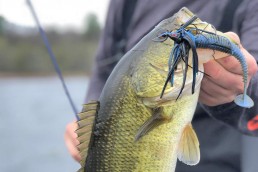
Northwoods Backwaters for Big Largemouth Bass
When it comes to fishing backwaters for largemouth bass, Andrew Ragas finds “the juice is worth the squeeze.”
From shallow sloughs and oxbows winding off the Upper Mississippi River and Wisconsin River systems, to the slop-choked bays and flood plains of lowland flowages, and the ditches and small creeks feeding into drainage lakes, backwaters offer unreachable populations of big fish that are least pursued.
Often a hassle to reach, with much energy and careful navigation involved, the juice is worth the squeeze at these obscure, second-fiddle fisheries.
Getting into them is no problem. I’m equipped with four boats in various sizes, plus a utility kayak. I’ll do whatever it takes to get back into some I’ve discovered. For fear of getting stuck, dirty or pure laziness, most other anglers wouldn’t dare access them.
Whether guiding or fishing for fun, we’re always looking for the best habitat that differs from the rest of the fishery. Across many of the flowages and drainage lake systems of Wisconsin, one of the best explorations and fishing efforts is finding a backwater area that nobody else is fishing.
Backwater benefits
Spring through summer, backwaters attract and concentrate big bass. Their habitats can be thick and rich with diverse emergent and submergent plant species. Often, there’s an abundance of timber and wood cover, and the element of protection from fishing pressure on the rest of the lake or river system. In high-water years, they are home to virgin bass fisheries.
The greatest benefit to fishing backwaters is unpressured fish. Boat landings don’t get built on swamp land, or in the middle of nowhere. Also, it could take several minutes or hours reaching them by boat from where you launched. They can be very difficult to access. During drought conditions and low-water seasons, they might become unreachable and non-navigable.
Characteristics
Northwoods backwaters are far different from the massive drainages and bayous of America’s southern fisheries. In the North, they are often associated with creeks and inflows, flowage flood plains, river oxbows, shallow bays located long distances away from the main lake, and any nooks and crannies that spill into marshland and tamarack swamp.
Habitats are very shallow—often 5 feet or less. Fish only use them seasonally. The best systems contain a few ditches and deeper holes formed by old channels. These locations almost always have stained, brown water, and a few sources providing current. And there is no shortage of fish cover, plant life and submerged wood.
You can be among the first to get the latest info on where to go, what to use and how to use it!
Too much cover creates challenging fishing. Isolated spots and openings have the best attraction. Largemouths love edges. Grass bed areas are always beneficial if you know how its diverse plant varieties benefit largemouths. An overabundance of lily pads, eel grass and cattails can choke out the area, rendering it useless to bass. Identifying potential fish-holding targets will increase your catch rates.
Of all their relevant features, depth defines whether it’s worth fishing or not. A stagnant, lifeless slough full of mud puddles you’ll bottom out on merits less time than a system that has a consistently navigable channel, access for fish passage, and lots of fish-attracting cover and depth variances. Adding to the intrigue, all of these places are unmapped. It’s one of the rare instances nowadays where you will strictly rely on your own eyes and observations to navigate, identify and locate fish.
Across many flowages and drainage lake systems, backwater areas are often located near their headwater regions. Conditions can closely resemble flood plains and ditches, more than a reservoir. When most anglers speak of backwaters, for example, they might think of floods and deltas. On northern fisheries, backwaters are usually narrow and serpentine-shaped, loaded with submerged navigational hazards.
Growing up fishing the Minocqua Chain of Lakes, I learned the values of fishing the most remote sections and difficult-to-access areas of this expansive, high-pressured system. Most boats weren’t able to penetrate through to them like I did with smaller watercraft. It’s helped me to apply the same thought processes and strategies on other largemouth bass fisheries throughout the region.
By late summer, migrations back into the lake or river are underway, and only a small percentage of largemouths will remain thereafter. By fall and winter, many backwaters will be devoid of life. Repeat this same process again the next year.
For their characteristics, habitats and accessibility challenges, backwaters are unique largemouth bass locations. Their seclusion and terrain make backwaters difficult and challenging to access by boat. When successfully reached, fishing can turn into catching. If you’re looking to tap into virgin fisheries for some seasonal largemouth bass fishing opportunities, seek the protected backwaters of your favorite drainage systems to experience some of the best fishing they offer.
Make plans to try some new fishing areas or techniques this spring. You’ll find plenty of suggestions in every issue of MidWest Outdoors, available by subscribing on our website.
MWO
SHARE THIS POST
Did you enjoy this post?
You can be among the first to get the latest info on where to go, what to use and how to use it!