
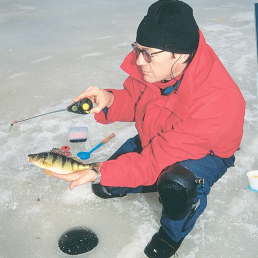
Ice Fishing, One Notch Up
As waters chill, fishing ratchets up a notch. For beginners and intermediate fishers, hitting the hard water means moving your game up one notch—or even two.
The challenges include conditions like wind and safety, and then there are fish. Start with safety, because safety is always the number one consideration on ice. Conditions change, and hazards lurk, hidden beneath unforgiving weakened ice.
Knowledge of your water might include a guide for newer fishers. There’s no margin for error when crossing or entering frozen lakes or ponds. Dangers are hidden overnight, and conditions can shift quickly, making the ice you already traveled now deadly. Guides know these conditions and get out more often. Seriously, hire a guide the first few times you go, preferably on your local water or targeted lake. Don’t fish new waters when you begin.
Insulated, quality boots will make your fishing far more comfortable. Getting your feet comfortable gives you added time to explore and more time to fish bite windows. Once your feet go—the trip is done.
Safety gear—part two—is essential. Ice cleats prevent slip-and-fall trips to the ER. The first purchase you make should be these unexciting additions to your boot. They strap on, are inexpensive at $20 to $50, and are far less expensive than missed work and surgery. Without cleats, you will be like a newborn baby deer with vertigo walking on a cliff edge. Never go without cleats at early ice. Add ice picks to wear for safety, and you are on your way.
If you plan on fishing more ice with a partner in upcoming winters, a float suit is the final part of your safety gear.
Back to the fish. Ice fishing often requires learning your water. You may need a couple of scout missions to learn the depths and where the fish are. These patterns change from early ice to late winter. Fish may be schooling early, and then later, spread out across basins.
Ice fishing can be like a battle. You need to get your gear ready, get in the right place and sit in wait to ambush the fish. Hot bite windows are scattered through your fishing day. You need to be in the spot, prepared for the action.
The battle in winter is that fish are chilled and slower. They can take time to react. The water is crystal clear at times, and your presentation needs to be raised up a notch.
Check the weather forecast before you go and stay safe. High winds could be a problem; winter storms might get you stuck. You might choose a sheltered bay out of the wind or avoid extreme cold when you are new to the game. Below-zero temperatures can destroy a new ice fisher’s day in many ways.
First thing: improve your line. This leads your attack into battle. Spend the most on the last 12 inches of line as it is where you will be rewarded. Crystal-clear water exposes cheap leader line and fish will swim in reverse away from your hook. P-Line Co-Polymer Fluorocarbon, with a silicon fluorocarbon coating, stays flexible and is invisible. Fish aren’t stupid, and they know their food does not have a straight line coming off the top.
Make fish focus on your hooked bait. Buy quality line, and use it in summer, too. Match the line to your fish and go lighter than you think on ice. Increased line flex means more hook-ups. Your ice weapons should include 2- and 3-pound-test and add 5- or 6-pound for bigger fish. Fish don’t fight as hard in cold water, so you can get by with lighter line than when fishing during summer.
You can be among the first to get the latest info on where to go, what to use and how to use it!
That said, fish don’t bite as hard in the winter, either. Fish are vacuums, and in winter, that vacuum is stuffed full of garbage, jammed and barely working. Your struggle during the war in chilly water is putting a hook in that low-power vacuum. Premium line also features flex. All ice anglers reduce the weight of their jigs. This helps on the light vacuum.
I go light on my jig and choose Mr. Waxy ice jigs from Gapen fishing. These are made of tin and move more and travel further for fish bites. Tip them with a premium plastic or live bait for a weapon to catch more fish in tough bites.
The second reason I love this jig is the UV paint. The third reason is their big profile. This jig is visible from a greater distance, and that calls in more fish for more bites.
Electronics should be a last priority for you. If you hire guides, they will supply this. Casual ice anglers don’t need electronics on their favorite pond. Once you know your spots and the safety required, you can predict where the fish are and the depths.
Fish with a friend and share electronics. Inexpensive electronics like the Lowrance Hook 5 All Season come with both summer and winter setups. The portable pack converts to summer fishing, but also works great on ice. Expect to pay around $549 for this setup.
The initial expense of ice fishing is most expensive in the early ice season. Instead of purchasing all the items at once, pick up pieces and assemble your total ice package starting at the end of the season. All ice gear goes on sale as the ice melts.
Do not stare at electronics. Use them as a guide, get your depth right and pay attention to the rod tip! Electronics are slow; the bite is quick, and if you are not on it, you will miss it. The typical bite is so light in winter. Fish are cold-blooded, so their bodies are the temperature of the water. You will need to learn that bite.
In top ice fishing competitions, we don’t use reels. The rods are about 1 foot long and the tip shows a “tick”. There really is no bite in winter; it is a “tap.” If you spend the money, forget the reel and focus on the rod. You may want a spring bobber at the end of the rod to help see the “tick.” A fish taking the bait in winter can be so light that it appears as the rod losing tension or the tip lifting. That is it.
Remember, all you need with a guide are boots and a jacket. While getting started in ice fishing can be intimidating, guides like me are available to take you out for two or four hours to show you tips and tricks along with gear. A guide will save you hundreds of dollars in wasted purchases, some of which you will greatly regret. Reach out and work with local fishing clubs or guides to get on the ice safely and in a much smarter way.
For more fishing insight from the pros who know, check out the next issue of MidWest Outdoors, available by subscribing on our website.
MWO
SHARE THIS POST
Did you enjoy this post?
You can be among the first to get the latest info on where to go, what to use and how to use it!