
What Hunters Are Seeing with Chronic Wasting Disease
Hunters are often the first to notice when something isn’t right in the woods. Long before a lab result or a population study, a moment in the field raises questions: A deer that doesn’t react normally, moves awkwardly, or behaves in a way that doesn’t fit the season or setting.
With Chronic Wasting Disease (CWD), those observations matter. While much of the public conversation focuses on regulations, testing requirements, and long-term population impacts, the disease often reveals itself first through subtle behavioral and neurological changes that hunters encounter firsthand.
Understanding what hunters are seeing and why helps replace rumor with clarity.
Subtle changes, not sudden collapse
One common misconception about CWD is that infected deer immediately appear sick. CWD progresses slowly. A deer can carry the disease for months or even years before obvious physical symptoms appear.
Early signs are often behavioral:
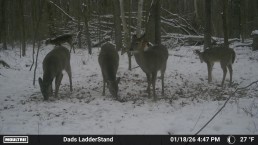
• Lingering in the open longer than expected
• Delayed reactions to sound or movement
• Reduced alertness where wariness is usually automatic
To a hunter, these behaviors can feel unsettling or confusing. From a biological perspective, they often reflect early neurological disruption rather than conscious choice.
What’s happening beneath the surface
CWD is caused by prions which are misfolded proteins that accumulate in nervous tissue. Unlike bacteria or viruses, prions don’t trigger a normal immune response, and the body has no effective way to eliminate them.
As prions build up in the brain, they damage neural pathways responsible for coordination, perception, and response to stimuli. Over time, communication between neurons breaks down. The result is a gradual loss of motor control, situational awareness, and normal behavioral patterns.
This helps explain why CWD-positive deer are sometimes described as “tame” or “confused.” The animal may still perceive its environment, but its ability to process and respond appropriately is compromised.
Field signs that hunters commonly report
As the disease progresses, changes become more noticeable. Hunters and landowners frequently report:
• An unsteady or stiff gait
• Excessive salivation or drooling
• Repetitive or aimless movement
You can be among the first to get the latest info on where to go, what to use and how to use it!
• Separation from normal social groups
• Progressive weight loss despite available food
These signs are not poor survival instincts. They are outward expressions of physical damage occurring inside the brain.
Recognizing this distinction does matter, especially when hunters are faced with difficult harvest decisions.
Ethical decisions in real time
Encountering a deer that appears neurologically impaired can raise ethical questions. Understanding the biological reality of CWD reframes those decisions.
A deer showing signs of advanced neurological decline is unlikely to recover or behave normally. When legal and appropriate, harvesting such an animal may be the most responsible outcome, furthermore particularly when paired with proper reporting and testing.
Ethical hunting has always extended beyond shot placement or fair chase. It includes stewardship, awareness, and a willingness to engage with uncomfortable realities when they arise in the field.
Why hunter observations matter
Because CWD has a long incubation period, infected deer may appear healthy while still contributing to environmental contamination and disease spread. This makes early detection difficult.
Hunters play a critical role by:
• Reporting abnormal behavior
• Participating in voluntary testing programs
• Sharing accurate information within their communities
In many regions, hunter participation provides wildlife agencies with data they would otherwise never obtain.
Knowledge over assumptions
CWD is unsettling because it affects something fundamental: the brain. But fear and speculation don’t help hunters or wildlife managers respond effectively. Clear understanding does.
By recognizing the neurological root behavior that hunters see in the field, conversations around CWD become more grounded and productive. Hunters have always been close observers of wildlife. In the case of CWD, that perspective is not just valuable; it’s essential.

Did you enjoy this post?
You can be among the first to get the latest info on where to go, what to use and how to use it!
