
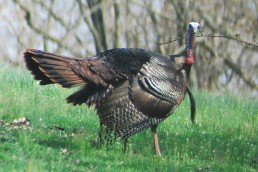
Treetop-to-Ground-Level Gobblers
What a tremendous turkey hunting morning! It was 53 degrees, with no wind, and the sun glowed across the eastern horizon. Gobblers were yelling aggressively. I was already sitting at my favorite spot on a hilltop beside an open meadow. It was a “hunter’s utopia.” During several minutes of the morning, treetop-roosted turkeys excited me with every vocal they normally create. Although the gobblers I heard were not close, I was certain that there would soon be toms on the ground. I was right!
Within minutes, I heard spine-tingling gobbles below me, to my right. I didn’t call, waiting to see if the tom was with hens. He moved circular, gobbling aggressively. I was overly confident that he was in the bag. Suddenly, it sounded as if there were two gobblers. A jake and mature tom approached me. I’ve often wondered why older toms hang out with jakes. Warrior gobblers learn to avoid hunters and use various tricks. Possibly, mature toms rely on a jake as a pawn, so they are void from predators and human hunters. Fortunately, I tagged the mature gobbler.
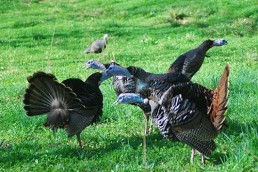
Turkeys are very social birds, except for during the intense weeks of breeding. As birds begin to break up from concentrated numbers before spring mating, they often socialize for days. Then, hens and toms begin mingling as gobblers compete for receptive hens. But, competition for mating can alienate flock members. In many cases, reproduction often creates conflict and produces fighting activities.
When wild turkey mating rituals begin to escalate, we become excited whenever we see more turkeys dispersing from winter flocks. Almost overnight, birds will begin leaving their secretive winter habitats and flock densities. More frequently, you’ll glimpse smaller groups, then individual birds. You’ll begin to see them with more frequency over larger landscape areas, too. Before you know it, warmer days will activate rebellious full-strutting gobblers. But you might have to wait a little longer!
There are logical reasons that turkeys flock up. And there are also beliefs as to why and when turkeys break up and roam the woodland landscapes as loners. So, how are these facts relevant to hunters? If hunters delve into inter-flock turkey activities, they will better be able to capitalize on methods of tagging a spring gobbler. There’s an ol’ theory: “To tag him is to know him.”
Dense pine groves are frequented for security from predators and foul weather. These habitats provide protection from cold winds and supply concealing cover from aerial predators like hawks and owls. These wind breaks create favorable roosting conditions. Turkeys sometimes roost within trees for an entire day during extremely cruel winter weather. And can still survive because their fat reserves are vital. Importantly, snow-covered habitats enable turkeys to spot predators much quicker, too.
For wild turkeys, roost trees to eventual ground level activities are their lifelines. Trees are important to their survival. Roost trees provide shade, off-the-ground safety from most predators, and food sources (nuts, bugs, green foliage). Unfortunately for hunters, the epitome of frustration is a mature gobbler ambling on the ground between trees, making it difficult to take a shot. Thankfully, turkeys don’t live in trees like squirrels, or they would be almost impossible to tag!
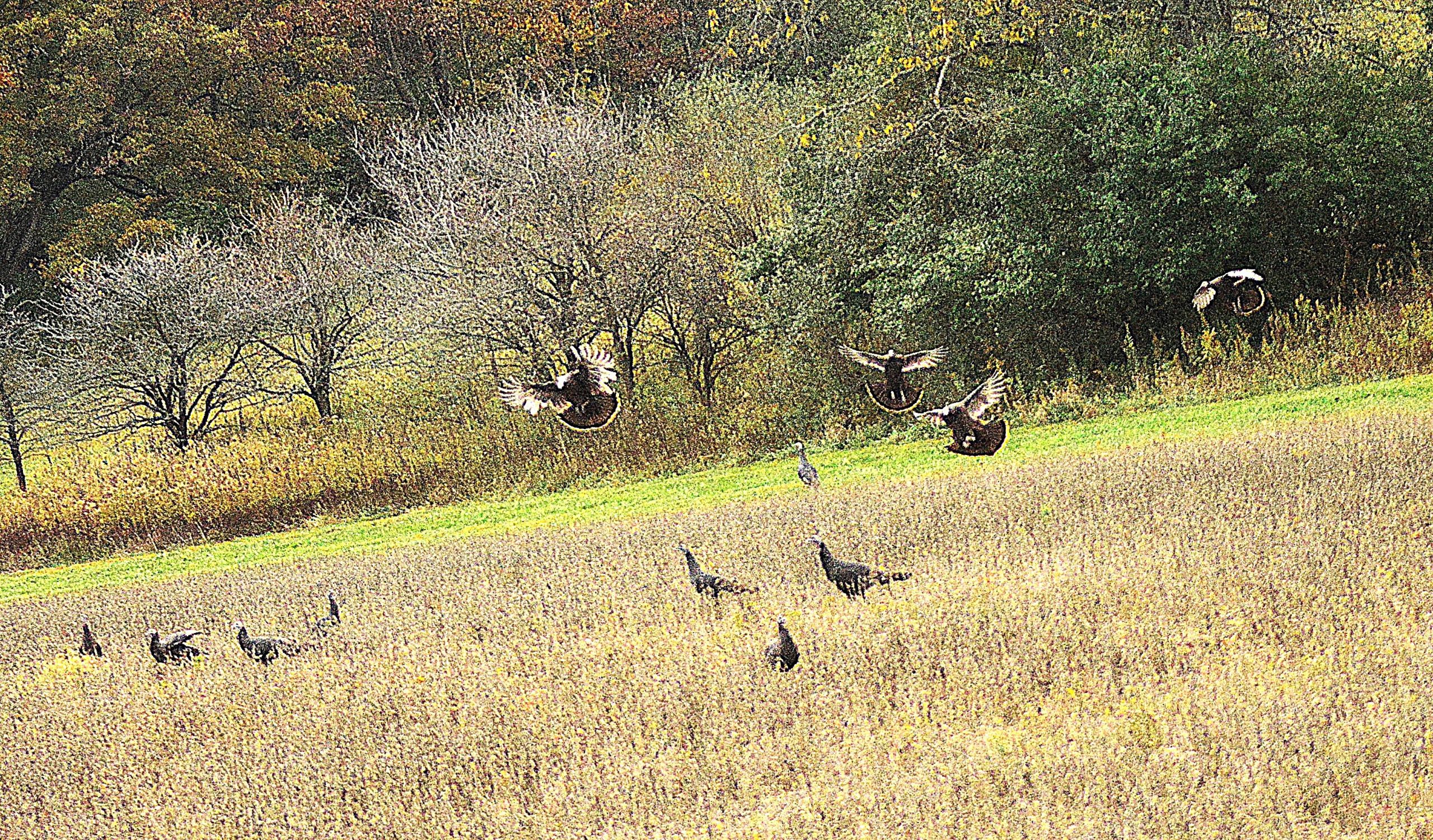
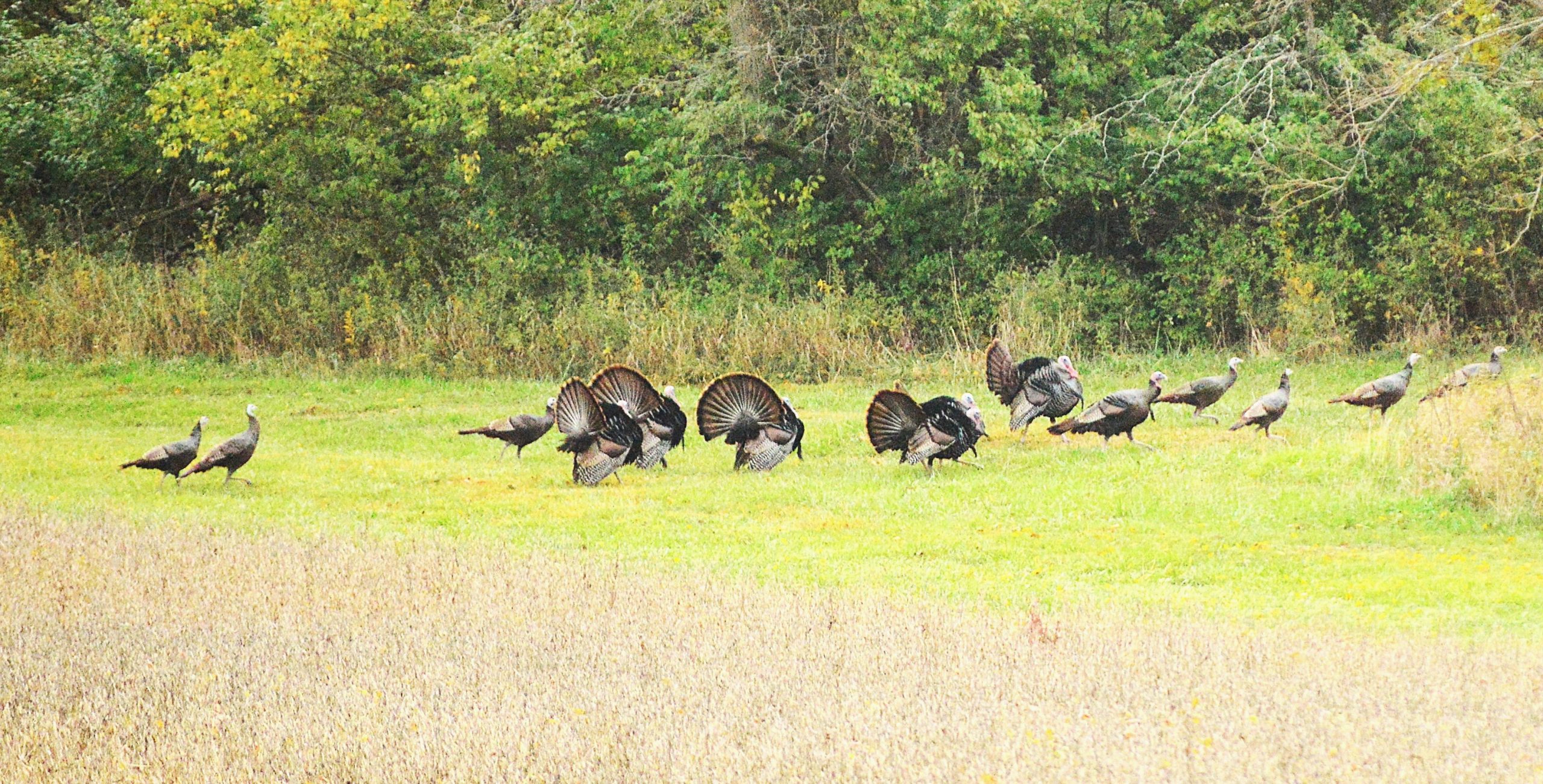
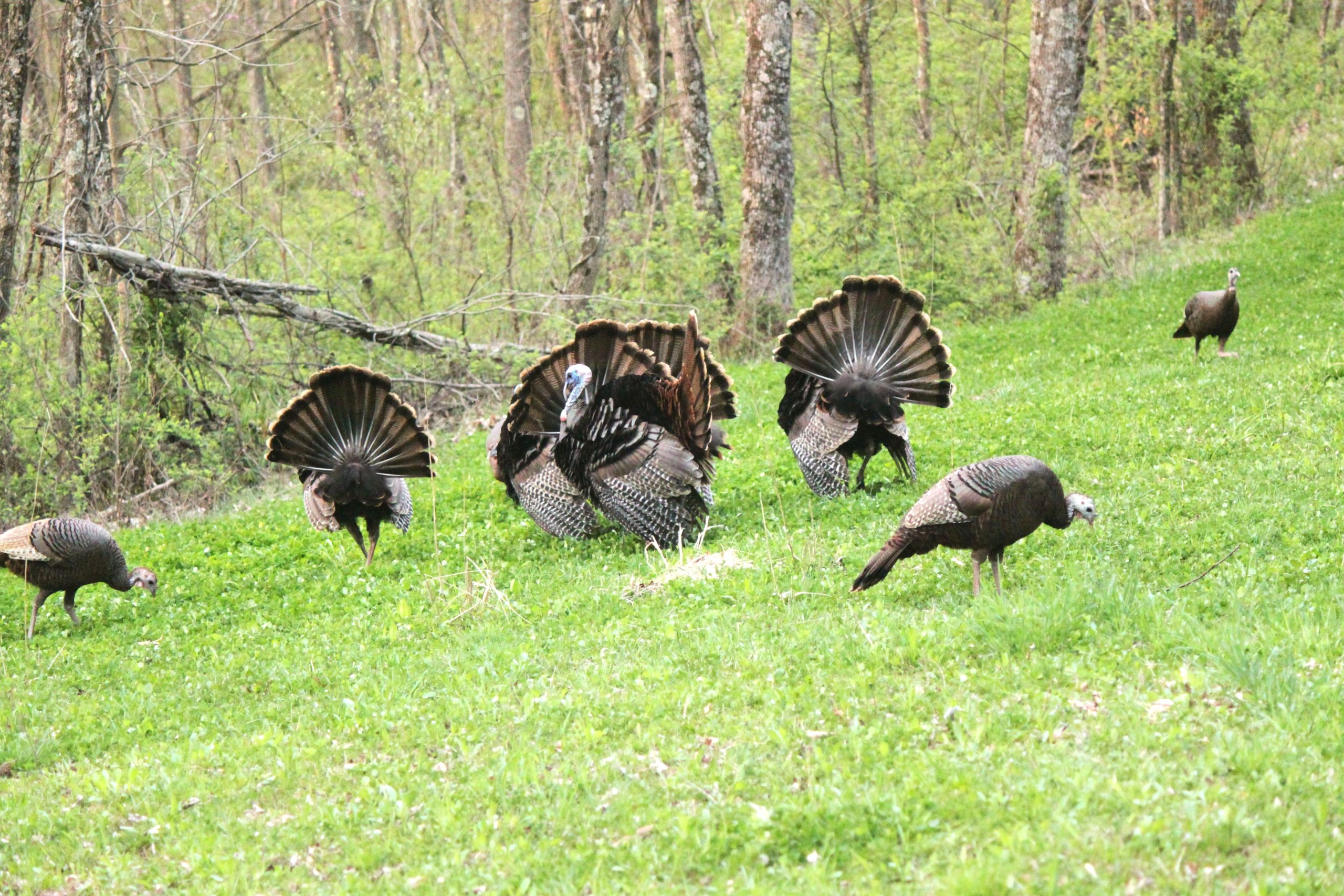
Even when you don’t hear roosted gobblers, that doesn’t mean toms aren’t present. We need to assess the intensity of the breeding cycle. Maybe he’s still with hens? Maybe he’s learned to keep quiet? Don’t hesitate to change call types or calling cadences, either. Start with low-tone, sporadic calls. Purr, cluck and hen yelp. If he won’t respond, try aggressive, louder calling. Or, challenge him with gobbler yelps.
You can be among the first to get the latest info on where to go, what to use and how to use it!
Suddenly, he appeared to be in a deep hollow, but didn’t gobble with intensity. I moved to the top ofa partially wooded ridge line and sat down. I waited for several minutes before he gobbled withcertainty. I hen yelped between wind gusts and he answered back. Within seconds, the tom was closer.
Then, nothing. I ceased calling after I heard him walking in the leaves behind me, spitting anddrumming. He circled my backside. I didn’t move or call because I was facing an open pasture andcouldn’t turn for a shot without him seeing my movement. The gobbler passed to my right, gobblingone more time. Then, silence. It became a patience game. I was certain that he was going to circle and appear in front of me. So, I called sparingly.
Roost trees are important for turkeys, as well as hunters. Here’s a scenario. You’ve encountered a roosted gobbler at first light. More than likely, he is roosted with hens Therefore, is it wise to think that all you need do is wait until one bird, or the entire flock, pitches to the ground before calling. Looks like he will be an easy mark. But wary toms can adapt in different ways to avoid hunters.
After turkeys fly down from their roosts, their survival instincts aid in their success. Hungry turkeys often go to great lengths to forage on multiple food sources during adverse weather, especially when they feed across sun-drenched hillsides, where green foliage begins growing earlier. But if snow covers the woodland floor, it’s easier to spot turkey tracks and rake-marked scratchings where they search for loose nuts, vegetations, insects and worms. During extreme weather, many foods sources offer turkeys feeding opportunities.
There’s no doubt that spring gobblers don’t play fair. They can take more turns than a merry-go-round. Their actions often cause hunters to ponder, “If only I could do it again, I wouldn’t make the same mistakes.” But if hunting spring gobblers was easy, hunters could slay a bird every time. Certainly, hunting wild toms can be frustrating. But that’s what makes hunting gobblers so addictive. If we shot every gobbler that we hunted, turkey hunting might lose its zest.
I saw him, visible at the edge of a greenbriar tangle. He studied the open field for several minutes. The show began. He strutted back and forth along the edge of the open field. His gobbling picked up frequency as he tried to get me to make a move. I cut and yelped. The gobbler responded with “come-to-me” gobbles. I stopped calling. When his patience wore thin, he strutted toward me. After he committed, he strutted within 15 yards. I putted. When he stood up like an ostrich, I shot this goofy gobbler. Fortunately, he was by himself. If he had been with another tom, it’s not always that easy.
During another hunt, I stood at the edge of a dense woods before daybreak. No turkey vocals. I waited for 15 minutes. Nothing! Just intensity. I made my move, sliding down a steep slope into a grassy ravine. I walked until I guessed that I was 80 yards from his gobbling. I found a cluster of trees and planted myself.
I was hiding along a hardwoods hillside, hoping for a gobbler to approach my calling. Although a gobbler didn’t appear until late morning, after he did, he cruised across the top of an open ridge, gobbling like a fool. He was mate-ready.
The tom gobbled frequently. Then, silence. Patiently, I waited until the tom was vocal again. When he gobbled, he was closer, on my left. I waited. Then, I heard a jake, with his weak gobbles. The two birds appeared to be together, with no hens. So, I clucked. They both gobbled. Tucked in between two trees. The jake appeared first. It was an easy shot. But mature toms are notorious for letting jakes check out potential hens. The jake was hot, gobbling as young toms do, circling me, looking everywhere. I didn’t call and let the young tom walk past before I shot the mature tom.
I was tucked into a weathered downfall of a massive oak tree. I was positive that resident turkeys were familiar with its appearance. When a strutting, gobbling, pacing tom finally seemed interested, I turned my back to him because I was sure that he would approach, walking downhill. He was working a ridge top 80 yards above me. After his last gobbles, he yelped several times on my left side. As he was descending the leafy hillside, he yelped with arrogance, working his way down the hill on my left. He was mine.
Hunters devise many methods of hunting turkeys. But when gobblers get really tough, adjust your hunting scheme. Try roosting a gobbler just before darkness. Cautiously listen from a distance close to known turkey roosting woods. (Without a gun, only binoculars.) Sit down and relax where toms usually roost. After toms fly up close to dark, they often gobble as they settle in for the night. If they aren’t disturbed during darkness, you will have a prime location to begin your hunt the following morning because you roosted a gobbler. You will have chosen a high-percentage starting point, as long as you hunt abiding by legal hunting hours.
Did you enjoy this post?
You can be among the first to get the latest info on where to go, what to use and how to use it!
