
Shotgunning Through the Looking Glass
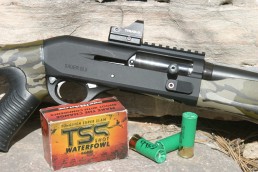
Times are changing. Today, the modern shotgun is being moved into the role of a very flexible field and service tool. As such, sighting systems are changing fast. Back in the day, any type of glass sight mounts on a shotgun was considered a bit strange, save for deer hunting slug shotguns. The smooth bore today carries with it a whole different story in the operational sight systems department.
I first observed glass sights in the form of an old Weaver 4X mounted on a Remington 1100, as it pushed special long-range buckshot loads up and out against geese as passing targets. The hunter was reasonably successful, being the birds were far enough away so as to allow the small sight picture enough forward lead to make effective hits. The goose hunter was not a novice, in that I knew of him as a pass shooting shotgunner in the previous decade or so.
In those days, the giant Canada goose was just rediscovered at Silver Lake in Rochester, Minn. The state of Minnesota allowed a goose hunter one tag per season when hunting the birds. Whit the successful return of the massive, 20-plus-pound monsters, over time, additional gimmicks were tried when making attempts at developing better sighting systems. But for the most part, iron sights, as in a muzzle bead, remained the primary sighting systems of the day.
After living through that period regarding water fowling history, it is clear that those early years marked the beginning of the advancement of the ultra-modern hunting shotgun. As such, sights were included in the race for a better, long-range, high-performance gunning system.
During my sixty years of searching for the perfect, advanced sight system when taking a smooth-bore firearm afield, is that there simply is not one to be found. Every gunning task retains its own set of requirements and problems in the field.
One thing needs to be addressed: For the most part, we are exploring the use on modern sighting technology as applied to shotgunning from static, or fixed positions. Jump shooting, or other forms of field gunning on the move, do not apply. Turkey hunting from a fixed blind, or run-and-gun style hunting when shooting off shooting sticks, fit the bill nicely.
Scope sights
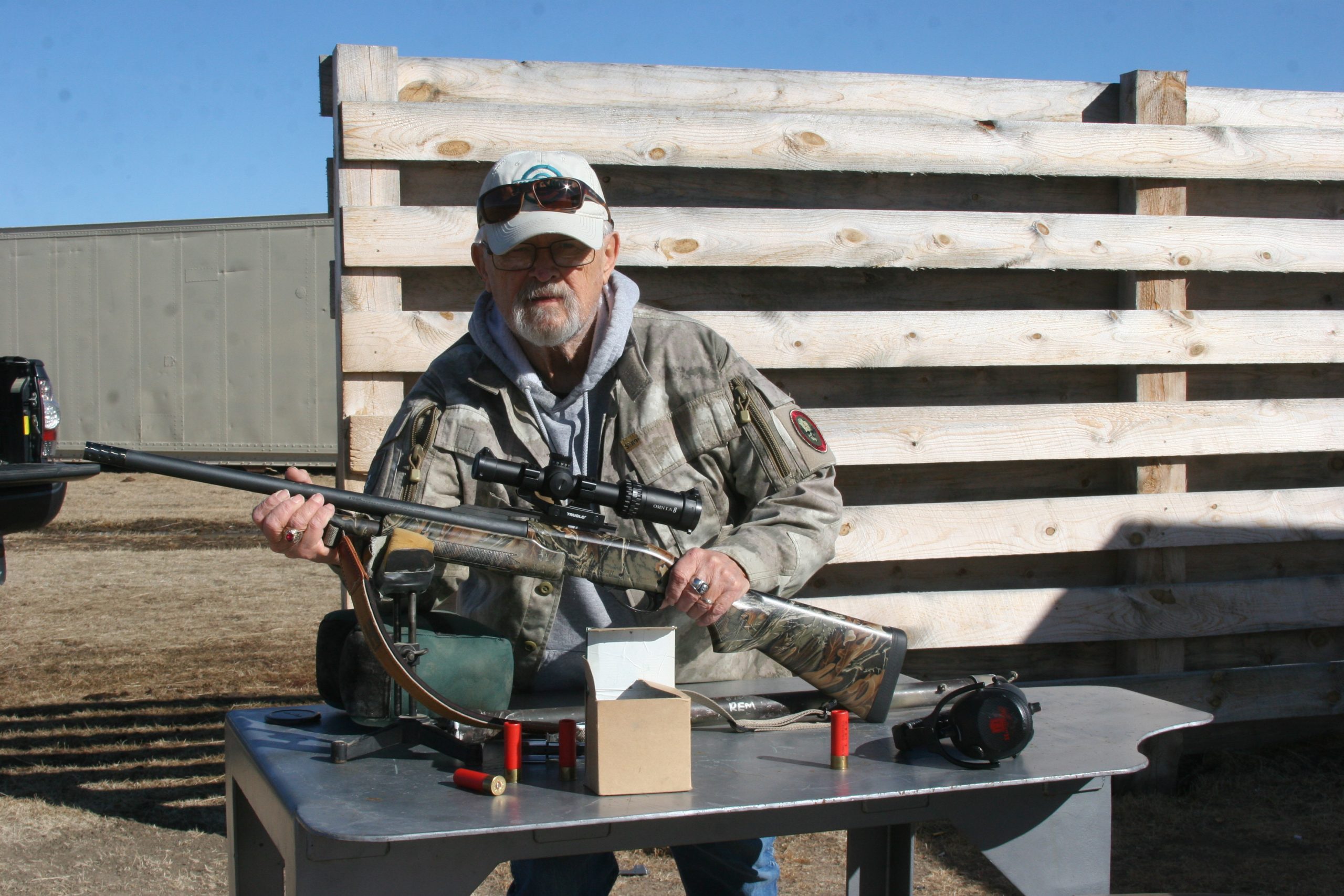
Scope sights on shotguns are nothing new. Hunting turkeys across the USA has generated many projects where the glass sight mounted on a scattergun saved the day. Glass sights need not be ultra-high-grade, and a simple 4x, fixed tube will do the job much of the time. In general, slide actions and autoloaders are a good fit for scope sighting systems. Scopes can make a full moon night on a field of snow the last place Mr. Coyote wants to cross the muzzle of an 870m Remington.
Modern ammo has increased accuracy at longer ranges, making iron sights or bead sights almost useless at times. Shooting a scope-mounted, 12-gauge I have made 70-yard head shots on gobblers, as well as long-range hits on coyotes, coon, and skunks.
Even as far back as the early 1970s, matching up a Remington pump gun receiver to Hastings rifled Paradox barrel allowed a hunter to put five slugs into a human-hand-size target at 100 yards.
Today, with all the advanced optics available, as in night vision, optics ranging systems, and star light units mounting a Weaver style scope rail on a hunting model shotgun, is just good planning. I change out both standard scopes and night vision systems all the time on the same gun, depending on the task at hand.
Rang finding reticles on scopes take guesswork out, whether it’s point-to-shoot on an advancing gobbler, or a raccoon crossing an opening in heavy cover. I have an old Bushnell that makes use of a diamond shape that is set up dead center to hold the head of the bird at 40 yards inside the diamond shape. About the only disadvantage when shooting with the glass sight is against moving or flying targets. Not that it cannot be done, but the event can be considered a bit out of the working realm of a smooth-bore firearm.
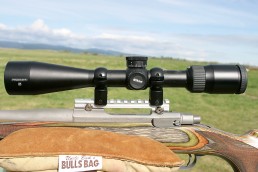
Static hunting is always the best way to go when employing scope sights. Examples of scopes I have turned to often include Riton 1x8x24 tactical, a TruGlo Opti-speed crossbow scope (low-recoil, sub-gauge shotguns), and several Bushnell tactical-style tubes. Staying with lighter-weight, short-tube scopes allows less reduction in swing speed, or just getting up and on target with speed and accuracy.
You can be among the first to get the latest info on where to go, what to use and how to use it!
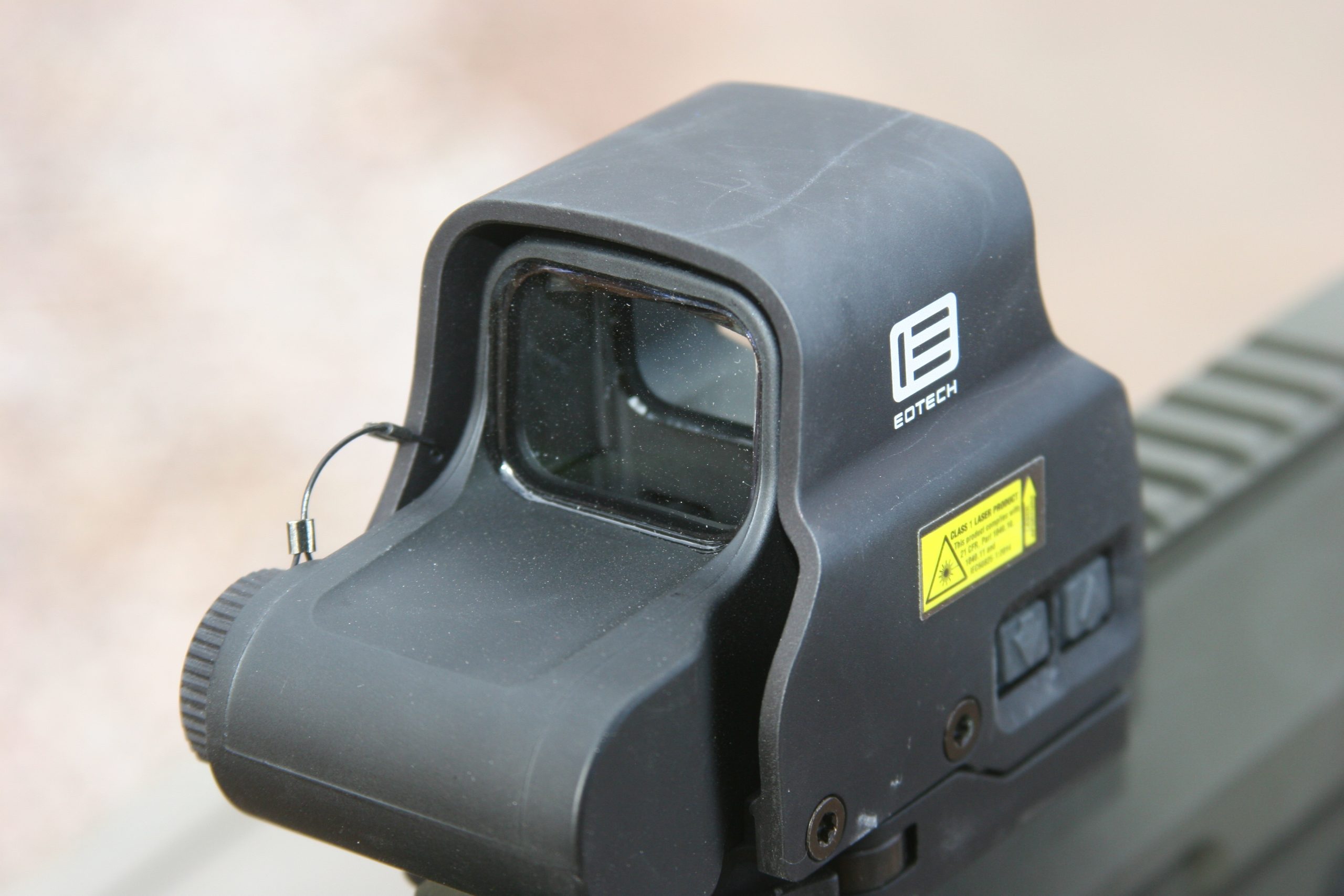
HUD, or heads up red dot sighting systems, are very popular of late, and the number of options in this sighting camp are almost limitless. Everything from a small handgun sight to large-window, military-class sighting systems are fair game when selecting a sighting system. I shoot Sight Mark unit as well as EOTECH models in red dot target acquisitioning systems. My Gen-12, anti-drown gun, coupled with a Metro Gun TM sub-sound barrel, is a deadly unit against everything from raccoon to coyotes, as well as spring turkeys. The EOTOCH sight window is massive—even large enough to allow tracking a target with enough lead or forward allowance to take out a running gobbler, or an incoming goose to the decoy spread. Different? For sure. But in the age of modern advancements in both firearms and munitions, the setup is not at all unusual.
Smaller, red dot systems are workable, but don’t allow for much sighting area, save for the direct placement of a round over a narrow viewing space. I have made successful hits on game and varmints with these micro-type red dots, but again, the extra area in the viewing window is always a nice backup when Mr. Coyote, Deer, or Turkey decides it is time to get out of Dodge City fast.
I believe that the new generation of scope and red dot sighting systems can keep an older shooter on geese or ducks for a great deal of extended time. When shooting iron sight back in the ‘40s, my grandad had to give up shooting because he could not work with a buckhorn sight, which was once a common sighting system of the day for rifles, as well as bead-style, muzzle sights on shotguns that were also no better.
Getting onto scope sights for shotguns or red dot HUD systems need not break the family budget. Yes, some glass sights are off the charts. But when upgrading sighting systems on shotguns due to low extended range requirements, lower-priced systems do the job just fine in most situations.
A good, light-weight, shorter-tube glass scope sight in 4X, or something in that area, can be squired for under $200. HUD, or heads up display red dot systems, start at $150, and even a lower-priced sight will produce good results. In most cases, the shooter has the option of red or green sight posts as viewed through the glass screen. And many sights retain the ability to dim or increase brightness, which helps in both low- and bright-light conditions in the field.
What you want for a shotgun is a sight that can take recoil. The 12-gauge tends to recoil a good bit, and poorly-constructed scopes or red dots will fail just about the time you need them most.
While not trying to overcook the subject here for readers who think that glass sights are a bit over the top, please be advised as the following: For the past two years, I have been involved with developing both military drone buster rounds and gunning platforms. All of this work has been by way of the basic starting point: the modern, 12-gauge shotgun. In all cases, the sight selection applied to sub-size, tactical drone termination has been by way of Holographic HUD style, red dot sighting systems. Currently, I have an EOTECH sight mounted on an M-10 GEN-12 lower receiver, by way of a Benelli-style, recoil blow back, auto-loading system that is built to engage battlefield tactical drones at 100 yards as the target is closing. Now, this is neither duck hunting nor sporting clays, but it is life-and-death at the fingertips of the gunner in the field during combat. As such, I rest my case regarding the selection of glass versus beads for ultra-accurate shotgunning, regardless of the target.
Postscript: Currently, work in ballistics and gun design is underway that will change how we view the modern, smooth-bore firearm for all time to come. Muzzle velocities will reach 2,700 f.ps., as payloads will engage targets at 300 yards as a starting point. And shotshells will be upgraded using far stronger and better material.
We covered the age of the black powder shotgunning, and then moved to smokeless powder and better barrel steel, which has covered the basic use of a shotgun for the past several hundred years. Now it is time to roll into the age of hyper-performance loads and guns. Stand by, shooters, because a new day is dawning in smooth-bore shooting sports.
How can this be a fact? Because at my right hand is a prototype example of exactly what I have indicated as the smooth-bore load of the future. With the use of these loads and shotguns, will come the need for advanced sighting systems as well.


Did you enjoy this post?
You can be among the first to get the latest info on where to go, what to use and how to use it!