
Introduction to Wild Turkeys
Why was I focused on turkeys during late February? A close-knit flock that I was observing would soon split up. It wouldn’t be long before hens and toms would have different objectives because their internal breeding intentions were on hold, but would soon thereafter inspire their intent of renewing their species. Why would their activities change? When would their habits change?
Don’t be discouraged if you aren’t seeing turkeys early, because the weather will ercertainly improve lat. Food sources increase, too. And turkey mating urges will intensify. Birds become more active, more visual. You’ll begin to see an increase of turkey tracks, droppings, feed-mark scratching, sudden glimpses of several birds, and individuals feeding across larger areas.
Then, get ready! When you hear those familiar yelps, clucks, and spine-tingling “gobbles” echo across the landscape, you can be certain that rambunctious turkeys are back in action. Until then, it’s never too early to evaluate your 2026 hunting options, because it’s simply a matter of weeks before we will be able to tease an elusive gobbler into shooting range.
Understanding winter turkey activities explains why they appear to be reclusive. Every wildlife species adjusts their needs to survive weather cruelties and predator confrontations. Any turkey’s main goal is to stay alive. Therefore, their disappearing acts are subsidized by their innate survival senses. Challenges such as a heavy snowpack can force them to linger within dense habitats for days, much like whitetails “yard up.” Thus, they are more reliant upon flocking into larger groups. It’s not uncommon for 20 turkeys to gang-up in secure flocks within dense timber.
Wintering turkeys display a split-personality from their easy-going spring attitudes. But hunger can be a crucial motivator during the “pounding” wind, rain, snow, ice and cold. That’s why birds favor roost sites along the sides of ravines and steep valleys, especially if the trees are adjacent to food and water sources, which helps expose edible invertebrates and plants.
Turkeys usually winter in private locations if habitat features haven’t been altered by commercial development, logging, or human intrusions; birds will continue to frequent the same parcels of land each spring because they are comfortable. If you’ve hunted specific lands previously, you’ll have a better idea of where birds will hangout. Now’s the time to carry binoculars so you can scan distant landscapes for birds without disturbing their activities.
Birds travel little throughout the weather-restrictive winter months, especially since mating desires haven’t united both sexes. Turkeys can be more difficult to find because they are seldom vocal. Yelps, clucks, purrs, and even subtle gobbling are restrained to inner-flock social communications. Their limited appearances can cause us to believe that there are fewer numbers. So, where have they been? Why haven’t we seen many turkeys? Obviously, Nature withholds many secrets from us.
If you anticipate tagging a wild turkey gobbler this spring, it’s important to know what makes him tick. The most flagrant errors that hunters fail to understand are the personalities of spring gobbler behaviors. A gobbler’s intentions become more focused during mating. And, they behave differently than at any other time of the year. If a hunter has optimum chances of tagging a spring gobbler, they must distinguish between hen and tom activities. Before you enter the woods for a spring turkey hunt, get to know what a gobbler is doing before and during their breeding cycle, because gobblers act and react differently than hens.
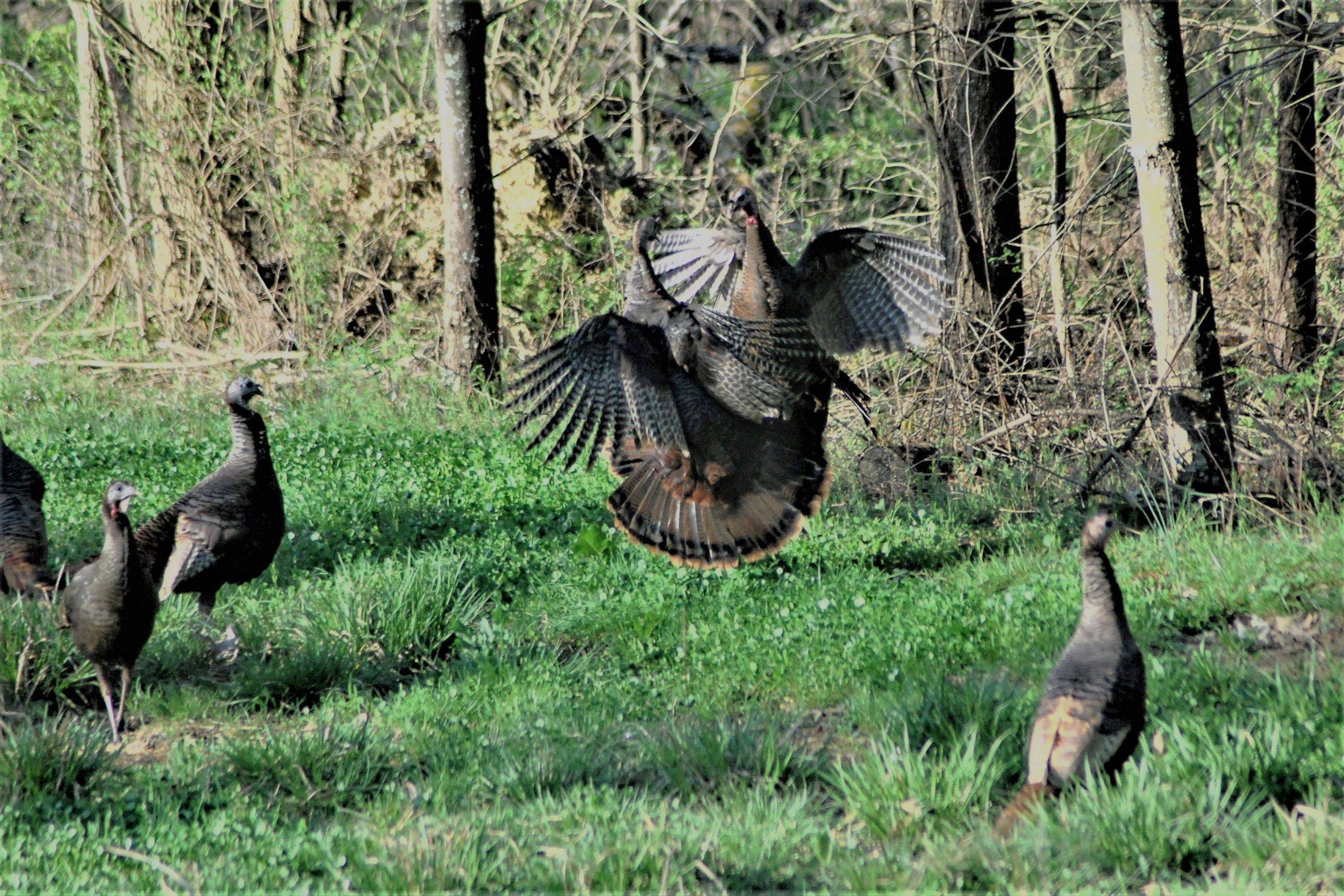
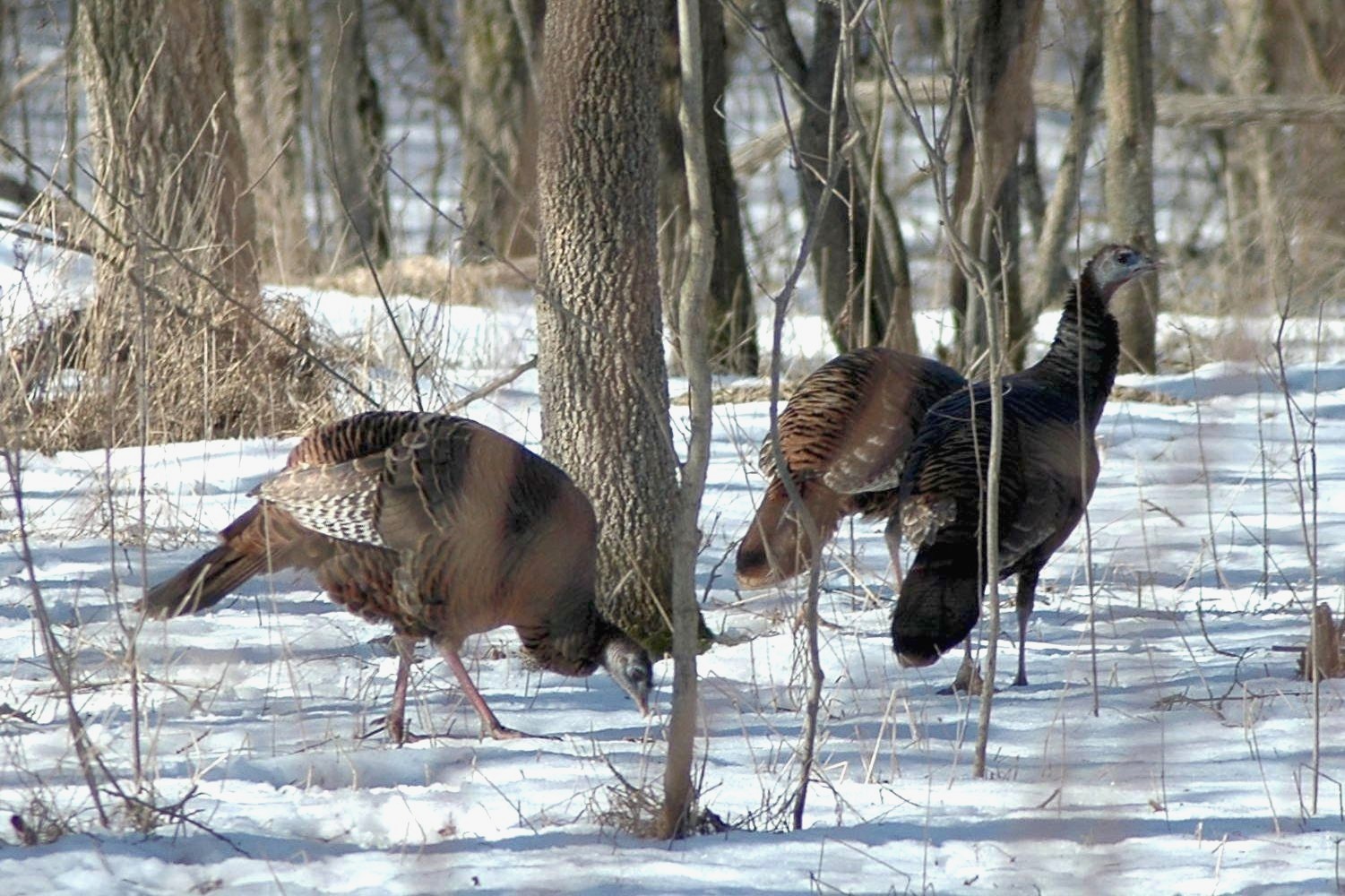
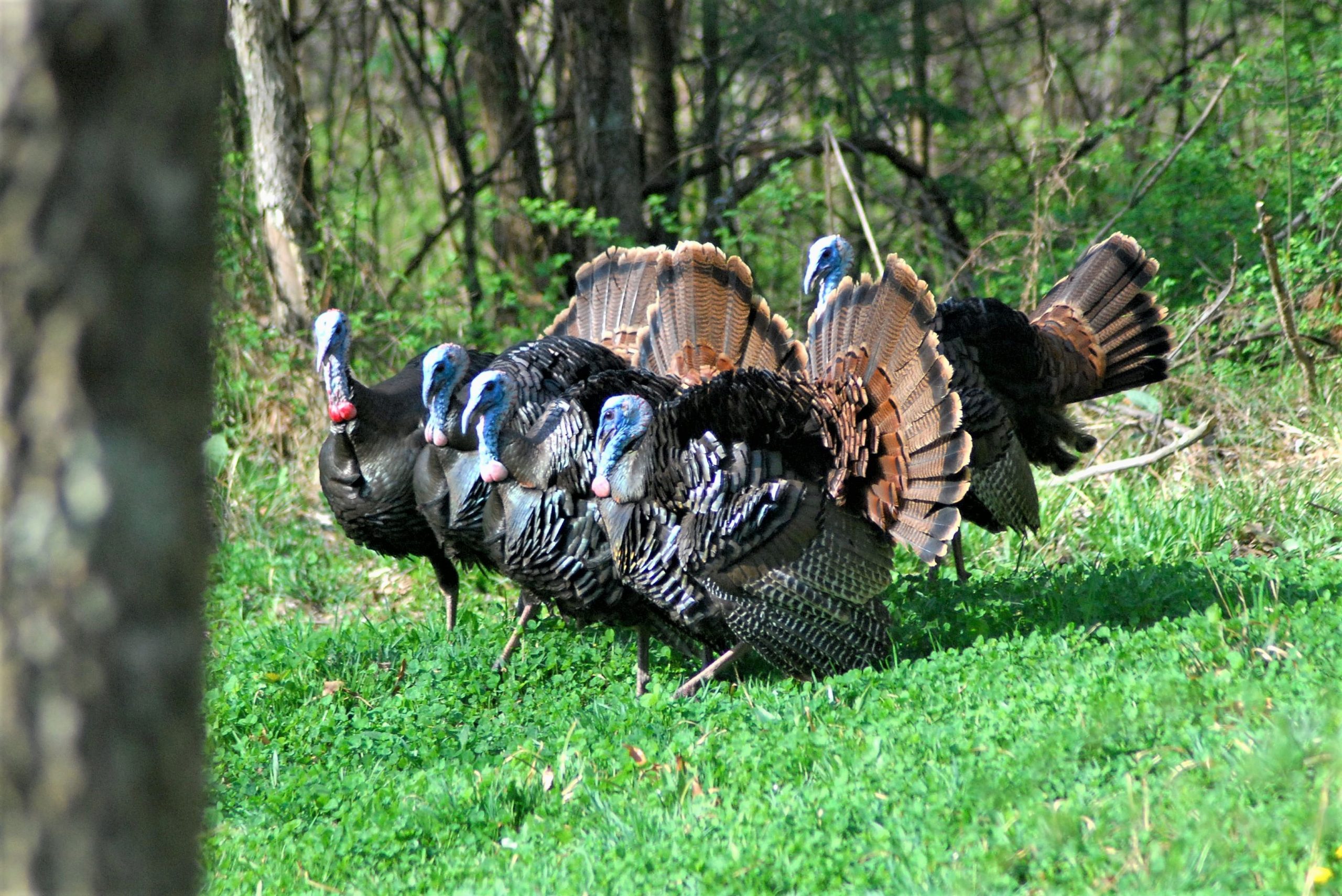
Before turkeys shift to spring activities, they prefer forest landscapes and limit their usage of open fields. Woodland-structured windbreaks protect birds as they aggressively scratch for pine seeds, acorns, berries, and just about any green foliage that’s available. Their fat reserves are vital. Also, snow-covered landscapes help turkeys spot predator threats quicker. Turkeys seek the companionship of other birds throughout winter. Except for during the intense weeks of breeding, they favor company. If there is one logical reason turkeys go on their own, it’s to develop a social pecking order. It’s every bird for itself.
You can be among the first to get the latest info on where to go, what to use and how to use it!
The most exciting trait with spring gobblers is when they gobble and strut. These visual and vocal actions make hunters’ blood boil! A summer and winter tom shows little interest towards breeding because hens aren’t breed-ready. Then, when hens begin to open their breeding door, toms gobble to attract hens. Typically, they expect hens to come to them.
So, when we call to a spring gobbler, we’re trying to make him do the opposite of what he’s genetically programmed to do. He might stand in the middle of an open pasture strutting and gobbling at your calls. He wants you to go to him. Not every tom will react this way. But an interested tom believes he’s the boss and likes to control hens. Turkeys certainly don’t react the same every day. So, be patient. because toms can undermine your intentions before hunting season.
Wild turkeys are considered loafers throughout the year. They feed, dust, socialize, and roost in trees every night. Unless they are pressured by human hunters and predators, they live a somewhat relaxed life. But a short time before and during spring mating, their lives become topsy-turvy! Normal, daily routines are fine-tuned to accommodate the intricacies of social mating intensity.
When a mate-ready hen approaches a tom and teases him with soft vocals and body rubs, she submits and crouches into a breeding posture. But not all hens perform the same. Gobblers often learn that they must go to a hen. Toms are usually patient and tolerate a hen’s evasiveness. Mimicking hunters can capitalize and coax a tom into a slow approach, close enough for a shot. Therefore, hunters must learn as much as they can about the mechanics of spring turkey breeding behaviors.
Hens can be the leverage that hunters need to tag a tom during spring because they definitely set the pace of action. Their conduct inspires toms. Fickle hens often circle and tease a tom as he gobbles and struts. A gobbler will try every trick he can conjure to position a hen into a breeding posture. But, if a hen is not ready to breed, a tom might fade away and look for other hens. This is why hunters must focus constantly on hen activities during the spring breeding cycle.
Wild turkeys are tenacious birds that often face daily unpredictability. Turkey objectives now aren’t mating; it’s survival, finding food and safe, protective roost trees. It’s often difficult to find turkeys before spring breeding interactions because they prefer to flock in numbers. Why not? Many sets of eyes provide more chances of survival because each bird uses less energy and to be alerted of hungry predators.
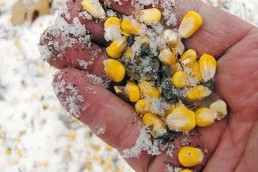
Turkeys are opportunistic feeders with diverse diets. Turkeys often go to great lengths to forage on diverse food sources during adverse weather, especially when they feed across sun drenched hillsides, where green foliage begins growing earlier. But if snow covers the woodland floor, it’s easier to spot turkey tracks and rake-marked scratching where they search for loose nuts, vegetations, insects and worms. During extreme weather, if you locate an abundant food source, you’ll see turkeys frequently. What an inspiring sight for any turkey hunter!
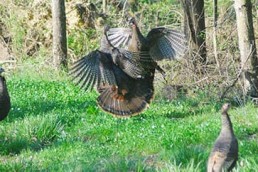
Spring gobbler activities frequently change, as well as their locations. They are intent upon one purpose: breeding as many hens as possible. Dominant spring gobblers are breeding machines. They pursue their roles with zest and intention. Gobblers aren’t selective of hens and will mate with any hen that accepts their advances. They often cover hundreds of acres of landscapes searching for breed-ready hens. They will fight with interloping males, feed, rest, and travel like vagabonds as they look for and gobble to attract hens. Logic tells us that if a gobbler has hens available, he has no reason to move on. But, if he can’t find hens, a gobbler can become more susceptible.
Be a pre-planner before spring turkey season. Survey previous and new hunting areas. If you hunt public acreage, choose several locations so you can switch hunting spots if you encounter other hunters, or if gobbler responses become sporadic. Those are additional reasons to scout before spring opener.

Did you enjoy this post?
You can be among the first to get the latest info on where to go, what to use and how to use it!
