
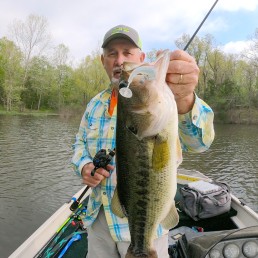
Hooks are Important… Ask Any Fisherman
Are fishing hooks important? Yes, as any fisherman will tell you, fishing hooks are essential tools for any angler, and choosing the right type can make a huge difference in your fishing success. Here, I delve into the world of fishing hooks, exploring the various types available, and their unique features. Whether you are a beginner angler or a seasoned pro, this guide will help you understand the different types of fishing hooks and how to select the best ones for your personal fishing needs.
Fishing hooks are among the most critical pieces of equipment in an angler’s arsenal, since they are what captures the fish. These small but mighty tools are designed to catch fish by piercing their mouths or bodies. Fishing hooks come in a variety of shapes, sizes, and materials, each serving a specific purpose. Understanding the different types of fishing hooks and their uses is essential for success.
A typical fishing hook consists of several key components:
Point
The point of the hook is the sharp tip that penetrates the fish’s mouth when it bites. Hook points come in various styles, including needlepoint, knife edge, and rolled point. A sharp and well-maintained point is crucial for successful hook sets and landing fish effectively. Many fishermen have wept after losing big fish because of dull hooks.
Barb
The barb is a small protrusion located just below the point on the inside of the hook bend. The barb helps secure the hook in the fish’s mouth. However, barbed hooks can cause more damage to fish and are sometimes prohibited in certain fishing areas or for specific species, so check your local regulations and rules.
Shank
The shank is the straight, elongated portion of the hook that connects the eye to the bend. The length and thickness of the shank can vary depending on the hook’s intended use. Longer shanks are often used for live bait fishing to prevent fish from swallowing the hook, while shorter shanks are preferred for artificial bait fishing for better hooksets.
Bend
The bend of the hook is the curved portion that angles back towards the shank. The shape of the bend influences how well the hook sets in a fish’s mouth when it bites. There are several types of bends, including J-hooks, circle hooks and offset hooks, each designed for specific fishing techniques and bait presentations.
Eye
The eye of the fishing hook is the small loop at the top where the fishing line is attached. There are two main types of eyes: closed eye and open eye. Closed-eye hooks are permanently closed, while open-eye hooks allow for easier attachment of the fishing line. The eye plays a crucial role in how the hook is secured to the line, affecting the hook’s movement in the water and hooking efficiency.
Gap
The gap, also known as the gape, is the distance between the point and the shank of the hook when viewed from the side. The size of the gap can vary greatly between hook styles and determines how well the hook can penetrate and hold onto a fish’s mouth. Wide-gap hooks are popular hook designs. Fishing hooks come in a variety of designs, each tailored to different fishing scenarios and target species.
You can be among the first to get the latest info on where to go, what to use and how to use it!
Single hooks
Single hooks rely on the power of simplicity to make a statement. Single hooks are the most common type of fishing hook and are used for a wide range of fishing applications. They consist of a single point and are available in various sizes, from small trout hooks to large saltwater hooks. Single hooks are versatile and can be used with live bait, artificial lures, and for various fishing techniques such as trolling, bottom fishing, and casting.
Treble hooks
Treble hooks consist of three hooks joined at a single eye, forming a triangle shape. These hooks are often used on lures, such as crankbaits and spoons, to increase the chances of hooking a fish when it strikes. Treble hooks are effective for species with small mouths or when targeting fast-moving fish that strike aggressively. Treble hooks are popular in freshwater and saltwater fishing for species like bass, pike, and walleyes.
Circle hooks
Circle hooks are known for their unique shape, which forms a circular shape and inward-pointing tip. These hooks are designed to hook fish in the corner of the mouth, reducing the chances of gut-hooking and improving fish survival rates upon release. These hooks are popular among catch-and-release anglers. Circle hooks are commonly used for live bait fishing.
J-hooks
J-hooks are perhaps the most common type of fishing hook. They feature a classic J-shaped design with a pointed end and a curved shank. Also known as Octopus hooks, they are versatile for various fishing applications. They are suitable for both live bait and artificial lures and are popular among anglers targeting bass, trout, and panfish.
Bait hooks
Bait hooks are specifically designed for presenting natural baits like worms, minnows, and cut bait. They come in various sizes and styles, including bait-holder barbs to secure bait in place. The barbs prevent the bait from sliding down the hook and improve hookup rates when a fish takes the bait.
Fly hooks
Fly hooks are unique in design and are primarily used in fly fishing to imitate insects, baitfish, and other prey species. They come in different shapes and sizes, including dry fly hooks, nymph hooks, and streamer hooks. Fly hooks are typically lightweight and made from thin wire to ensure proper, delicate presentations, making them ideal for targeting trout, salmon, and other freshwater species.
This list is by no means all there is to know about hooks, but I think you get the point.
For more fishing insight from the pros who know, check out the next issue of MidWest Outdoors, available by subscribing on our website.
MWO
SHARE THIS POST
Did you enjoy this post?
You can be among the first to get the latest info on where to go, what to use and how to use it!
