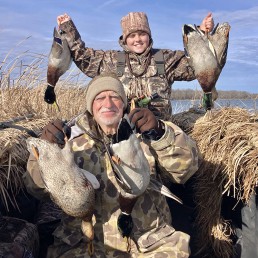
Thanksgiving Migrating Waterfowl
Hunting for waterfowl in late November in the upper Midwest can bring some challenges, mostly caused by weather. It can be cold—very cold! You need to have the best in all-weather hunting clothing. Dress in layers to stay warm and make sure the outer layer is wind- and waterproof. Wear good-quality boots or waders at this time of year to keep your feet warm and dry. If your feet get wet or cold in late November weather, you are done hunting.
A propane heater in your boat or blind can be very helpful if you plan to stay out hunting all day; we use one or two to not only stay warm but also warm up breakfast sandwiches so we don’t get hungry while waiting for migrating birds. There is no shame in doing what is necessary to stay comfortable.
Cold weather can be tough on shotguns, especially autoloaders. Keep your gun clean and dry at this time of year. Keep your gun in the truck or garage overnight, as to prevent a warm gun from building up condensation when it goes out into the cold morning air.
Also keep some gun de-icer in your hunting bag for late-season hunts. A stuck gun can end a good hunt.
Wind can be another weather factor in late November. The first Canadian and Arctic weather fronts of the year can bring north and northwest winds of 20 to 40 mph. If you are going out in a boat, wear your lifejacket. Too many hunters have drowned while their lifejacket, legally sitting on the floor of the boat, floated away after large waves capsized or swamped their boat. Lightweight, non-restricting PFDs are available in several camouflage patterns, so there is no excuse for not wearing your lifejacket in a duck boat in 40-degree water… in 30 mph winds… in the dark!
Field hunting in such windy conditions requires the ability to stake down your shells or full bodies, so as to prevent chasing them across the field, which is always when the birds decide to show up! Strong winds change the way you shoot, as well. With gusty winds, you need to be patient enough to let the birds get in close. Ducks cupped into a strong wind can get out of range in a hurry. The second they turn slightly, a strong wind blows them away from you at an incredible rate. Get ‘em in close, forget about doubles, and focus on one bird, putting it down quickly.
Ice can be another problem. While smaller bodies of water can ice up quickly with a cold snap, larger bodies of water that are still open often have a public boat launch. Don’t forget about rivers and even small streams. Moving water stays open later, and ducks and geese find these spots to stay put in an area if there is ample food.
You can be among the first to get the latest info on where to go, what to use and how to use it!
If you are going to boat out into cold water and break ice, carry a cell phone, and make sure that someone knows where you are and when to expect you back. Many duck hunters have motored out, breaking thin ice, only to have the temperature drop and the ice thicken before the trip back to the boat launch.
If too much icing occurs, don’t neglect hunting big mallards and geese in grain fields, if you can get permission. When it gets cold, mallards and geese need to feed on corn or soybeans for energy, and they make daily or twice-daily trips to grain fields. The best situation would be getting permission for a field that you have scouted birds using, but this is not always possible. Find the roost—a large lake, river, or warm-water discharge pond that is open for the birds—and then get permission to hunt a field nearby; you should have some action.
If you are hunting from an A-frame blind on a field edge, bring a propane heater to help stay warm. If you are hunting from a layout blind, dress warmly to counteract the frozen ground temperature.
Don’t be saddened by the nearing of the end of the waterfowl season in the Midwest. Embrace it and take advantage of the opportunities for some of the best duck and goose hunting of the season. At Thanksgiving dinner, remember to give thanks for migrating ducks and geese on November winds.
For more insight and tips on how to make the most of the time you spend hunting, check out the articles in every issue of MidWest Outdoors, available by subscribing on our website.
MWO
SHARE THIS POST
Did you enjoy this post?
You can be among the first to get the latest info on where to go, what to use and how to use it!