
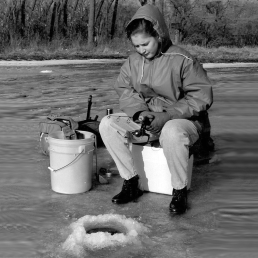
Forest Preserve Ice Fishing
The cold air rushes into my lungs mingling with the warm suffocating air inside. The Hawk bites through my snowmobile suit.
Chicagoans speak of “The Hawk” with a kind of reverence and dread in the same breath. The hawk is the wind that blows off Lake Michigan during the winter months. It brings a chill to the northeastern part of Illinois. But it also brings temperatures low enough to provide safe ice to the area Forest Preserves. It brings great ice fishing.
Most of the area preserves post signs when it is not safe to walk on the ice. They also post alerts on their websites. But, it’s still a good idea to exercise great care as conditions are constantly changing.
There are several publications and websites available from various forest preserve districts to help you in deciding where to fish. For instance, the Cook County Forest Preserve District has one that is very good. It is the annual Fishing Guide that is available on the website (www.ccfpd.com) contains maps of the various bodies of water, including topographical features. It lists site-specific fishing regulations applicable to the areas. A printed version of the guide is available from the district’s office at 536 N. Harlem Ave, River Forest, IL 60305 or from any of the district’s nature centers.
A tip for anglers venturing forth on hard water is to record the same trips made in summer. Would you fish these same locations in winter? No? Be willing to move when conditions dictate. Fish will move around. It is a good idea to drill several holes and move around the structure.
The basic equipment for ice fishing the forest preserves is the same as most ponds and sloughs. What you need is a fish locator, ice auger, rods and reels, some ice fishing jigs and bait. Placed on a child’s sled, you can tow them around with ease. Sometimes 5-gallon buckets hold tackle. They also double as seats when the action slows, or to bring home the fish you catch.
You can be among the first to get the latest info on where to go, what to use and how to use it!
Another tip is to ask those you know who do this kind of fishing for help. Even out on the ice, other anglers will help with advice. When the action slows, they are extremely anxious to share knowledge.
Ask other anglers about good locations on the lake you plan to fish. It helps to ask at local bait shops. They usually are knowledgeable as to where the fish are biting this week.
Good locations often stand out because of the number of people located there. Remember your manners and do not set-up to close to someone else. Ask permission to fish close to someone or find your own place. This is public water, but courtesy goes a long way toward a pleasant fishing experience.
Finally, when looking for fish, look where you would normally find them in summer. Structure—be it brush piles, ledges or rock piles—are good prospects. Pay attention to current flow. Once on the ice, cut holes and look around. In an area with several holes previously drilled, it may turn out to be a popular place for fish. Being popular with ice anglers often indicates that it is a good place to fish.
Interested in fishing a different location this season? You’ll find plenty of suggestions in every issue of MidWest Outdoors. Subscribe on our website.
MWO
SHARE THIS POST
Did you enjoy this post?
You can be among the first to get the latest info on where to go, what to use and how to use it!