

Working A Pond
There are many places with excellent fishing that have no possible way to get a boat on. Farm ponds first come to mind in this discussion. Many high-quality ponds and small lakes have no boat access. Some ponds are too small for boats and others just do not offer a good place to slide in even a small Jon-boat. And quite often, anglers just do not have access to a boat. None of these conditions should constrict you from fishing these fantastically fun spots.
When you arrive at a pond, make a quick but thorough survey. This is especially true about ponds you have never fished before. Valuable knowledge can be attained by talking with the owner of the pond. While getting permission to fish, ask about the pond’s depth. Find out the age of the pond. Also find out if it has been stocked, and if so, when and with what species. Find out the depth, structure and location of man-made brushpiles. Knowing these things can save you time… and lures.
Even if this pond is one of your regular fishin’ holes, many things can change since you were there last. Be aware of current water conditions. Check the water level. When was the last significant rainfall? Is the water color uniform throughout the pond, or is one end murkier than the other? Has the aquatic vegetation changed? Are there more weeds, less weeds, new weeds? Has the structure changed? Has wind dropped a tree into the pond? Have muskrats erected a “home dome” in your pond? All these changes can affect the way you fish a body of water. Be aware of the subtle changes and know how to benefit from them.
Of those mentioned, water color may be the most critical. Most ponds are fed by either run-off or a single, small feeder branch. After rains, these little creeks will flush not only dirt and silt into the pond, but food sources for fish as well. Be sure to fish the color break heavily. Find where the normal-colored pond water meets the cloudy, chocolate milk of the incoming runoff. Also be sure to fish this area from both banks. Fish will stage around this color change to feed.
Most ponds have at least a partial dam. The ends of the dam often form corners. These spots hold fish and should be fished several times each trip. Always fish parallel to the bank when possible. I sometimes wear rubber hip boots. This allows me to stay close to the water, or even take a step or two out, to improve my casting angle.
The most common mistake when fishing a pond is not being able to fish the best areas first. Often, a pond has a finger of land that sticks out into the water. The first inclination for most fishermen is to walk right out to the end of the point to begin casting. The natural assumption is that you can cover more water from out there. That thought is a good one but should not take precedence over the fact that the point itself is probably holding fish.
Begin by fishing both sides of the point, in a parallel fashion. As you fish out toward the end, be sure to make several casts beyond the point. This allows you to retrieve right through the prime water. Repeat the process several times from the other side of the point as well.
A good example of bank fishing a pond happened just this past April. I always have a Jon-boat in my truck during turkey season. We all know that spring not only means gobbling toms and mushrooms, but great fishing as well. You just never know when a good-looking farm pond may appear before you.
At 7:15 a.m. I was finished turkey hunting. A 23-pound gobbler had cut my hunt short and extended my fishing all at once. After I made quick call to check-in my bird, I was off to the pond. “I should be fishin’ by 8 o’clock,” I said to myself. But my plans got changed again.
The road leading to the pond crossed a small field. I should say, the road that used to lead to the pond. My friend’s chisel plow had erased the possibility of me driving to the pond. This meant that I had to walk, with no boat. This minor turn of events did not, however, dampen my spirits. Many big bass have been “lipped” from the bank instead of a boat.
You can be among the first to get the latest info on where to go, what to use and how to use it!
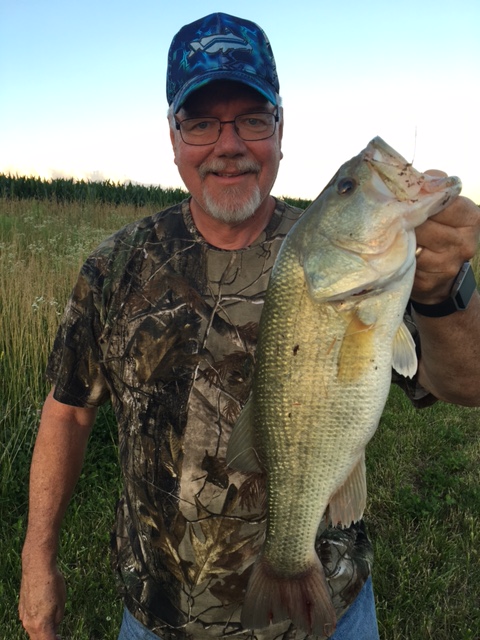
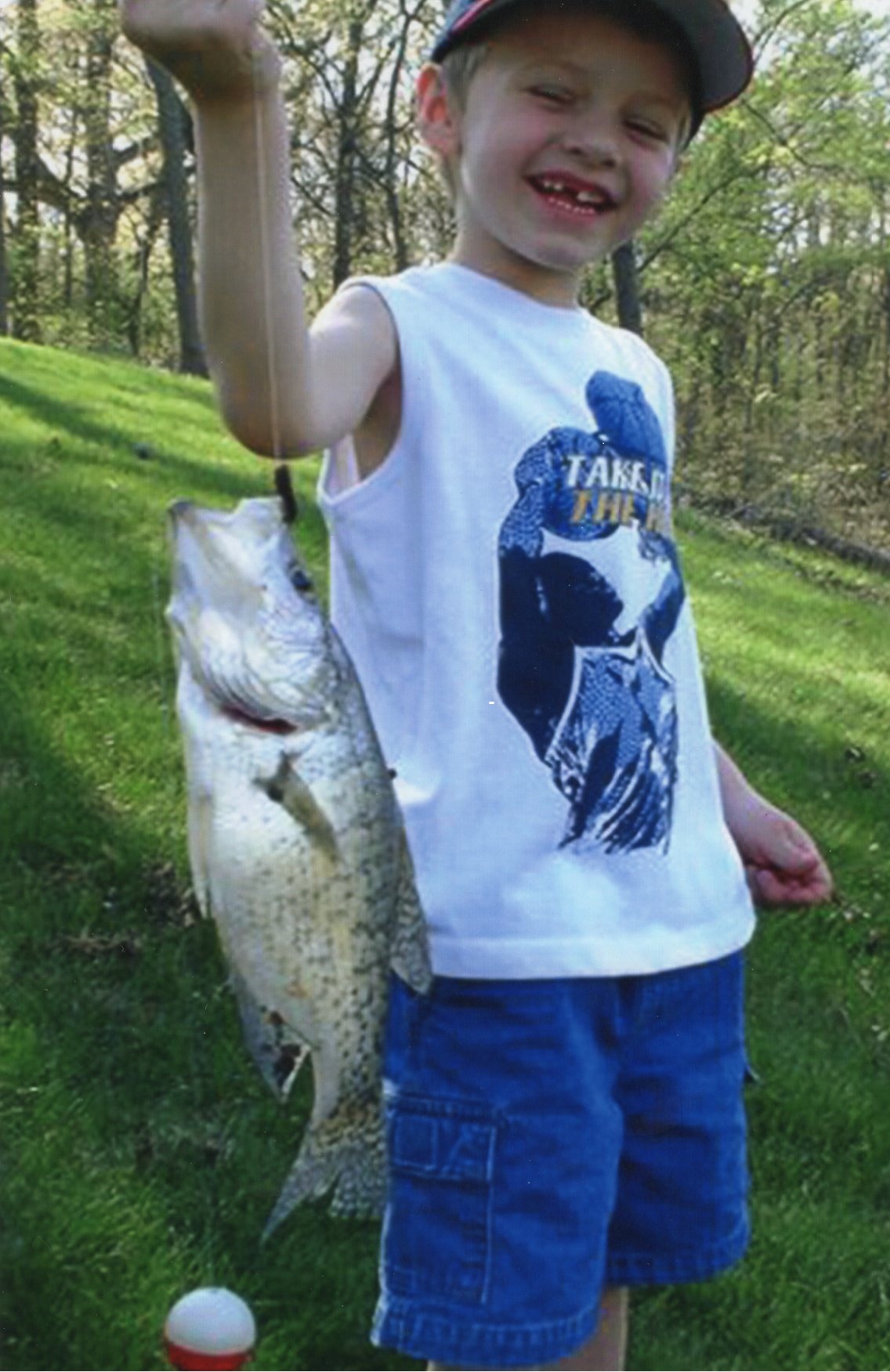
I got to the pond and gave a quick look around. About 90 percent of the water was still in the morning shade. Not much had changed since my last visit. The water color was constant, like iced tea. I sat down and put on my hip boots. Carrying them across the plowed field was much easier than wearing them. After tying on a white spinnerbait, I headed for the south end of the pond.
This hole is oval-shaped, so I was going to fish the two “small” ends first. There is an old fence through the south end, about 20 feet out in the water. In the past, it had kept cattle out of the rest on the water. This fence and its posts are great structure to fish around. It would be a bit tricky from the bank, but certainly not impossible.
My first several casts were to the inside, parallel to the fence. No luck. “Maybe deeper,” I thought. A large, multi-flora rose hampered my casting on the outside of the fence. I waded in several yards from the fence and slowly worked my way back to it. I wanted to maintain my parallel casting without disturbing too much water underfoot. I connected with a 15-inch largemouth on my third cast outside the fence.
I circled the pond and repeated the process from the other bank, with similar results. This told me that the bass were holding in about 4 feet of water. I adjusted my casting method to compensate. Instead of casting parallel to and very close to the bank, I opened-up the angle a bit to keep my bait in the strike zone as long as possible on each cast.
I did not make a trip to the taxidermist that day, but I did manage to catch a dozen nice bass. I really do not think a boat would have given me any advantage that day. The fish I took from the bank came from being able to read the pond and find the pattern.
Remember the points I have covered here today and you will be more successful the next time you try to make a bass withdrawal from the bank of a pond.
Did you enjoy this post?
You can be among the first to get the latest info on where to go, what to use and how to use it!