
Tips for Purchasing a Fishing Boat
As winter turns toward spring, many anglers think about a boat purchase. Often, it becomes an emotional purchase. It should not. Boats are expensive, and a purchase requires patience and persistence. Especially when considering a larger boat with a higher horsepower engine.
There was a time when anglers just bought an aluminum boat with an outboard engine, seat cushions, and tackle. Boy, have times changed. With the advent of competitive fishing and new materials for crafting boats, fishing is a lot more sophisticated—and expensive. A vital part of that sophistication comes in the form of boat and motor packages offered by manufacturers.
Nowadays, boat hulls are often specialized, because the basic purpose of the boat is different than others. If it is a bass boat, it will primarily be used as a casting platform to maneuver along while presenting baits with a rod and reel. If it is a versatile, multi-species boat, chances are that much of your angling time will be spent trolling.
Anglers fishing modest to larger waters usually begin with an 18-foot boat and a four-stroke engine. Hold off on a kicker motor, unless it is part of the package, until you see how the engine meets your needs.
Four-strokes tend to be more reliable than the two-strokes both in fuel economy and maintenance. Four-stroke engines also enhance versatility. For instance, being able to use a large, four-stroke engine allows walleye anglers to backtroll for better boat control. Larger four-stroke motors perform well at low trolling speeds and the quietness of the engine is a bonus.
The lack of noise from four strokes can cause anglers to think they are going slower, but realistically, large engines only troll down so far, speedwise. Smaller waters and trolling speeds under a mile per hour may require the use of a kicker motor. On larger waters, you can probably troll with just the larger motor.
For backtrolling, or slow forward trolling, some anglers prefer to use a drift bag trailing off the bow. This setup allows you to slow the boat and completely control its movements with a large, 4-stroke engine.
Rod holders are often necessary for trolling and drifting applications. An anchor is sometimes important to hold the boat in position, particularly when fishing in river current.
Most packages come with a good trolling motor on the front. Do not fudge on the cost and quality of a trolling motor. Buy the best you can afford. A long shaft on the motor is a recommended for deeper V hulls and use in large waves. You can always lift the motor but you cannot add to the shaft.
High-thrust trolling motors provide nearly the same amount of boat control as backtrolling with a tiller motor. A 24-volt electrical system is best, with 36-volt an option for larger hulls. They cost more but are reliable for fishing in windy conditions.
Electronics, sidescan and GPS systems are important. If you can purchase a unit incorporating all three, so much the better. Split screen units allow you to use systems simultaneously. These units have capabilities for mapping and all the other features that come with GPS systems.
Then there is safety. Never skimp on safety equipment, such as flares, life vests, etc. You never know when you are going to need them and your life may depend upon it.
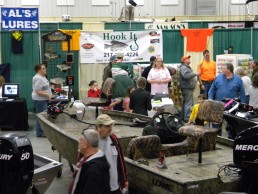
A basic boat is a big investment. Take time to make your decision and do so only after checking out as many makes and models as possible. Boat shows offer an excellent opportunity to compare costs and packages.
Further considerations
Weight makes your engine work harder as it moves your boat through the water. The heavier the boat, the slower it will move. By leaving some of your gear at home, or in your tow vehicle, you can cut down on the weight. This is particularly important if you have a smaller boat and lower-horsepower engine. It is not necessary to take all your rods and terminal tackle on every trip.
Over the course of the boating year, a poorly tuned motor can prove to be costly in terms of fuel costs and wear on the engine.
You can be among the first to get the latest info on where to go, what to use and how to use it!
If a boat has adjustable trim tabs, as do most bass boats, use them wisely. They allow the boat to move through the water more efficiently.
Distribution of weight in the boat affects the efficient performance. A properly trimmed boat uses less fuel. Subsequently, it costs less to use over the course of the season.
One of the lesser-understood aspects of a boat motor is the propeller. The key to selecting the right size is engine rpm. If the motor runs at its top rpm at full throttle with a normal load, then the prop is the right pitch and size. If it is not making it to the top recommended rpm, then the prop pitch is likely too large and the engine is struggling. If the engine is over-revving, the prop pitch may be too small, causing the engine to run at higher-than-recommended rpm. Make sure you load the boat as you would in normal use before trying this test. Better yet, at the time of purchase, tell your marine dealer how you intend to use the boat and they can recommend the proper pitch prop at the time of purchase.
Props come in a variety of metals and plastic. Plastic is for temporary use (spare prop) in case of an emergency. Stainless steel is the most expensive and delivers the most speed but is also more expensive than aluminum. Thin blades reduce drag. Manufacturers forge props into different configurations to optimize performance on different size/weight hulls. That converts into better fuel mileage.
Purchasing your new boat
Ideally, the best way to purchase a boat is to pay cash. There are no worries about monthly payments and the lack of interest payments make it cost less. But it is not always a realistic approach for most of us.
Most boat buyers finance their purchase. By knowing a little in advance about financing a boat, it might be possible to save some bucks and result in getting more boat for the money.
While shopping for a boat that meets your desire, also shop for the interest and payment schedule that meets you needs.
There are three basic financing situations: Through the dealer, your local banker, and a marine finance banker. Each has options that could be helpful. Lenders tend to view new boats as better risks than used ones.
For many buyers, the dealer is the only place they inquire about financing. There is nothing wrong with that, as favorable rates are often part of their incentive to get you in a boat through their dealership.
The dealer can also often get financing through local banks or credit unions at favorable rates. They do business with such financial institutions as part of their own financing packages for the dealership and/or marina.
A buyer with a good working relationship with their local financial institution can often negotiate a favorable loan rate as well, so it pays to shop around for financing.
The basic considerations for financing a new boat should are interest rate, the length of the loan, and the amount of monthly payment. Some loans carry early payment penalties and have limitations on refinancing, so make sure you’re comparing apples and apples when choosing between available loans.
After a season on the water, new boats depreciate an average of approximately 10 percent. Used boats can hold steady or even increase in value with a minimum of improvements.
Financing a boat purchase is not a simple thing. But it does not have to be a matter of mortgaging your first-born child. Investigate your options and choose one that meets your needs and desires.


Did you enjoy this post?
You can be among the first to get the latest info on where to go, what to use and how to use it!