
The Early Ice Fish Fest
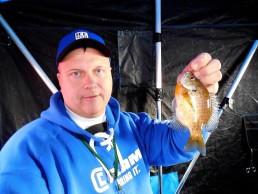
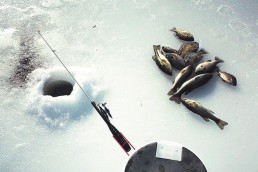
“Flag up!” my son yelled, as I was setting the hook on a nice crappie. I glanced out the window of my Fish Trap Voyageur Ice Team Edition to see a flag up on one of our tip-ups. My son unzipped the door to the Fish Trap and jogged over to the tip-up as I landed a 10-inch crappie. I released the crappie and stood to head out the door to see if any help was needed, but a quick glance at my Humminbird Helix Ice 7 showed fish all over the sonar. So, I sat back down, lowered my Roach Jig with a Gulp Fish Fry back down the hole, and glanced out the window.
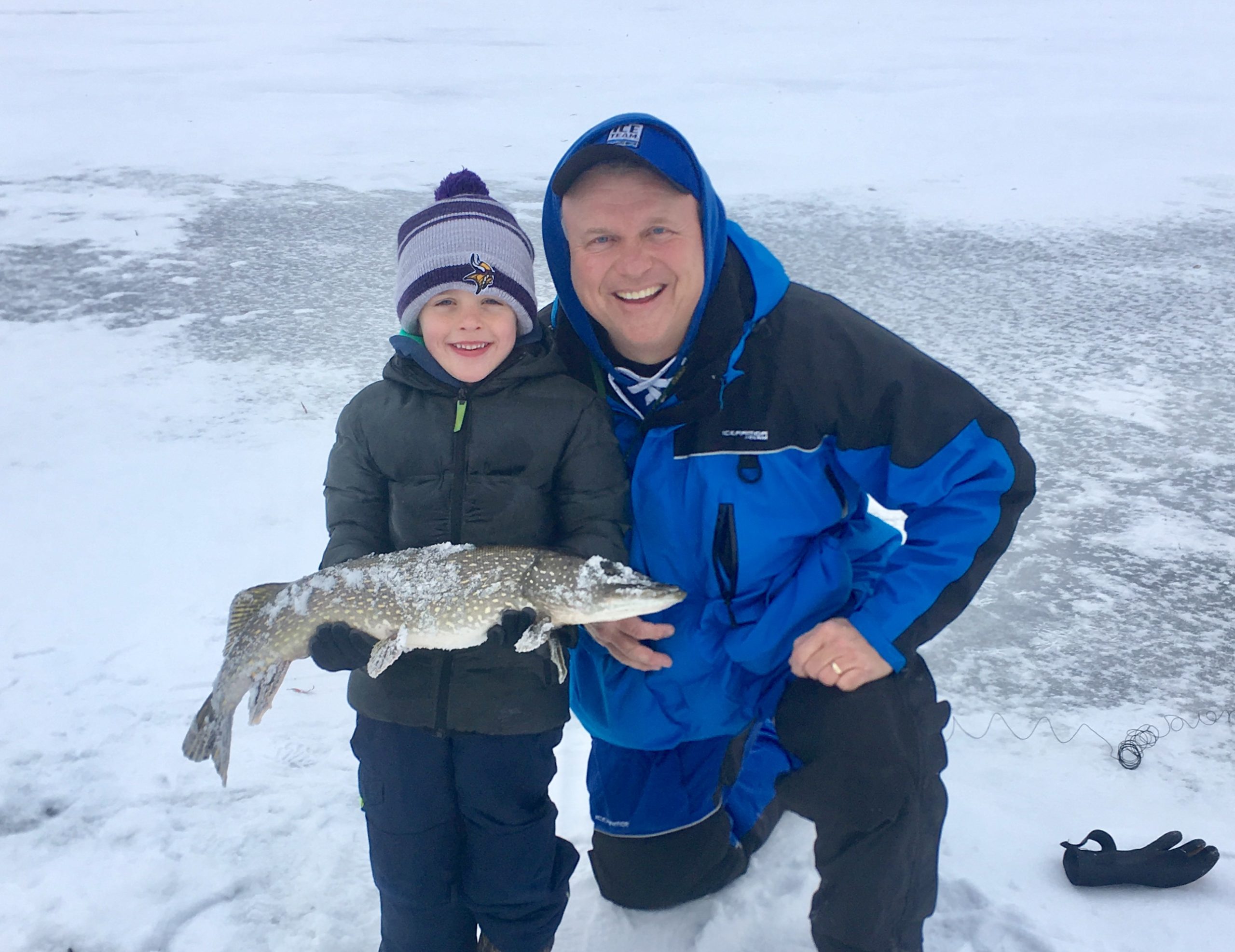
My son yell over, “Nice pike.” By the time he had reset the tip-up with another sucker minnow and returned to the shelter, I had landed two nice bluegills. Parker quickly lowered his jig down the hole and chuckled, “Gotta love early ice.” “Got one,” was my reply as I started bringing up another nice crappie.
That’s early-season ice fishing in the upper Midwest. As soon as the ice is safe to walk on, there are fish to be caught. In the outer portions of shallow bays, on the outside edge of weeds that are still green, fish of all species are roaming and are hungry.
This early-ice “feeding frenzy” can be some of the fastest ice fishing action of the season. The two keys to getting in on the action are caution and mobility. Depending on where you live, the type and sizes of waters, and your local weather conditions, ice can be safe to walk on in the upper Midwest as early as Thanksgiving and as late as New Year’s.
Use caution. Check ice conditions with bait shops, resorts, the DNR, local guides, and on fishing websites like fishingminnesota.com. From these sources, you should be able to figure out where you have safe ice to walk on—at least 4 inches for me. When venturing out onto early-season thin ice, it is a good idea to take some basic safety precautions. Never go out alone, and only walk a moderate distance from your partner(s); if one person would find a weak spot and fall through, there is help on the spot.
Invest in a pair of ice picks and hang them by their cord around your neck so you can use them to pull yourself out in case of an emergency. I like to wear a lightweight life vest when venturing out on early ice as an added safety precaution. Lots of companies make ice fishing float suits if you are interested in the investment. Carry a cell phone in a high coat pocket sealed in a plastic Zip-loc bag, along with a sounding device like a whistle or air horn.
Once you find ice that is safe to walk on, mobility is key to success. You often need to move around and drill lots of holes to find fish. Generally, start on outside weed edges in shallower bays, and then work the weed line to find where the fish are staging. Sunnies and crappies take advantage of the minnows that are using these green weeds that will begin to die off as the ice gets thicker and snow piles on top of it, cutting off sunlight. Once this happens, panfish will move to deeper soft bottom areas to feed on bloodworms, larvae, etc.
While panfish are working weed edges in relatively shallow water, pike and even bass will be in these same areas, feeding on the panfish. It can be fast action of multiple species with some big fish mixed in with numbers of smaller ones.
Equipment is simple for early-ice action. You can walk, pulling a sled or carrying a bucket with your equipment, but a portable “flip-over” shelter mounted on a sled is the ticket to stay mobile and comfortable. Clam set the industry standard with the Fish Trap, and I won’t walk onto the ice without my Voyageur Ice Team Edition.
You can be among the first to get the latest info on where to go, what to use and how to use it!
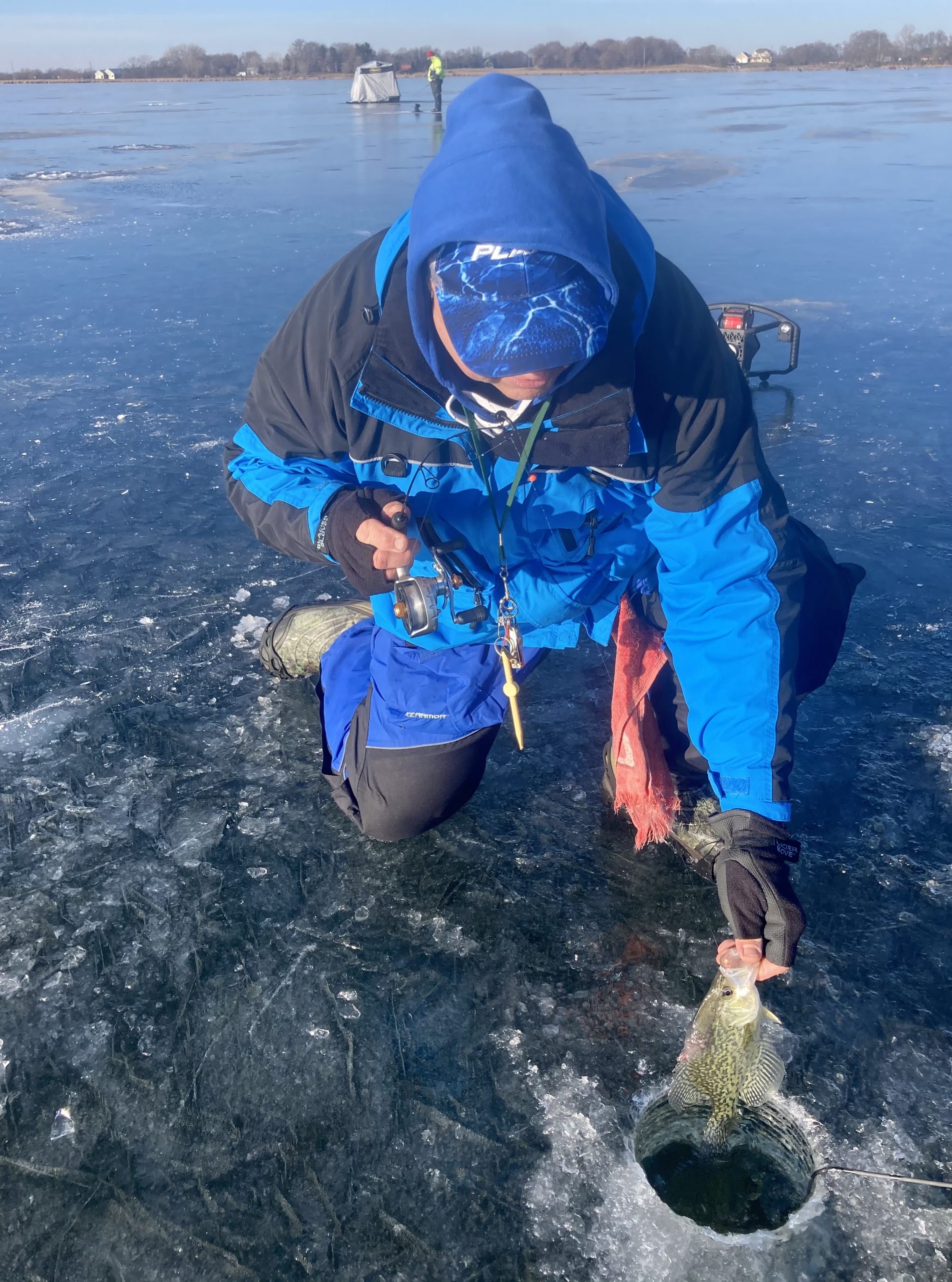
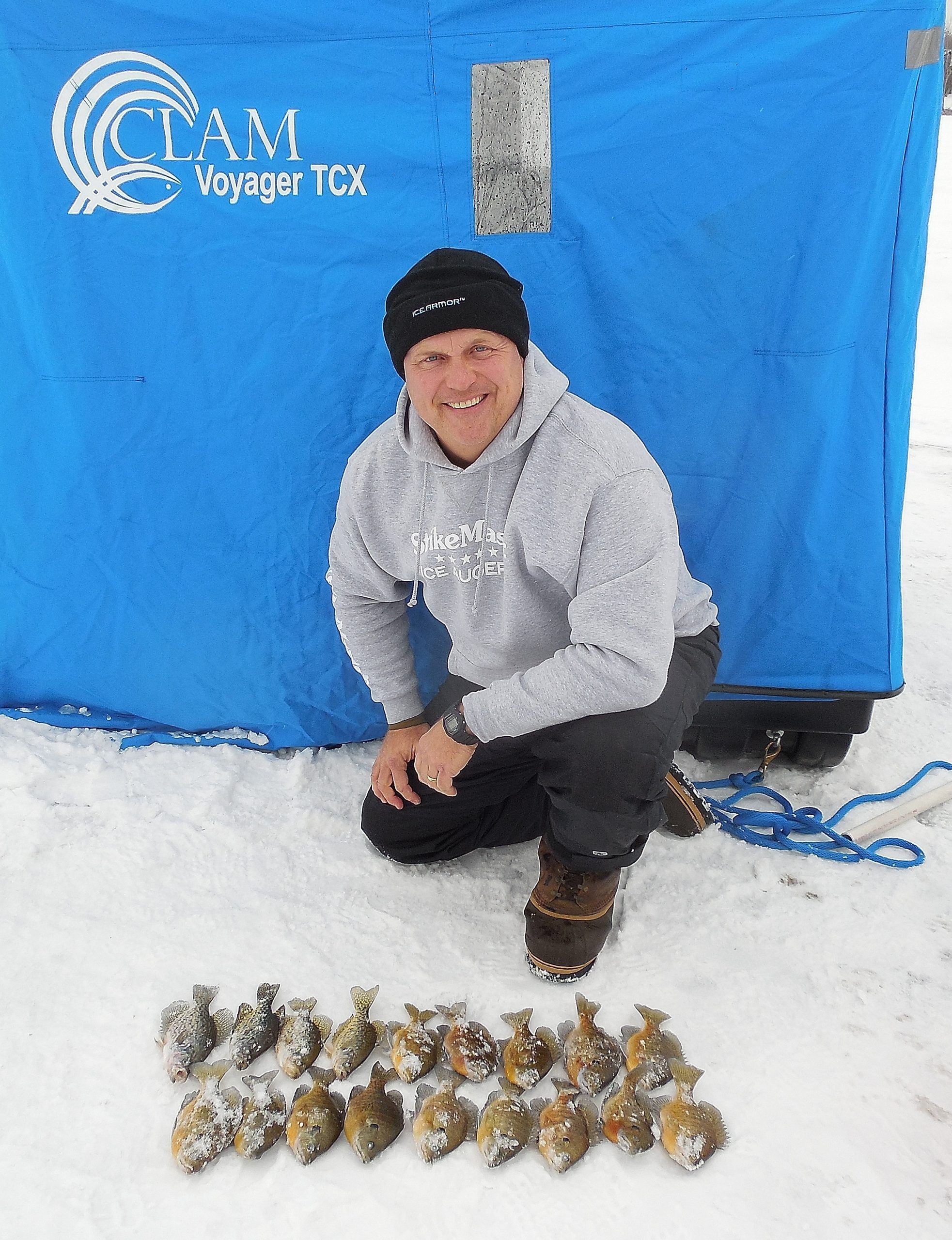
I like to jig for panfish from my Fish Trap and set a tip-up somewhere along the weed edge for cruising pike and even an occasional bass or walleye. In the shelter, I have one hole per angler, with a sonar like the Humminbird Helix Ice 7 or Ice 55, for each angler. The sonar tells you what depth the fish are at so you are efficiently fishing at all times.
I like to jig with a 2- to 2.5-foot ultralight spinning rod and inline ice reel combo with 2- to 4-pound-test line. I use fluorocarbon on the reel for stealth. Inline ice reels, like my Fish 13 Descent reels, prevent the line twist that happens with spinning reels. This eliminates a spinning jig that can spook finicky panfish.
I tie a small jig like a VMC Tungsten Tubby or Roach Jig, or a Custom Jigs and Spins Gill Pill, to the line. If the fish are very aggressive, as they usually are this time of year, tip the jig with a small soft plastic like a Gulp 1-inch Fish Fry and catch fish all day. If the fish are finicky, you may need some live bait like a waxworm or Eurolarvae.
For tip-ups, I like the I-Fish Pro. It is easy to use, insulates the hole so you do not have to clean the hole out regularly, and allows you to use a rod and reel combo to fight the fish once the flag is tripped. In early season, I like a medium, active, live sucker minnow under my tip-ups. Set it about a foot off the bottom and keep a close eye on it.
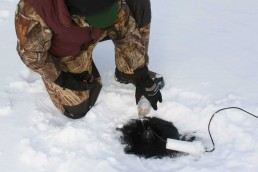
Panfish move around and often scatter if pike move into the area, so you will have peaks and lulls in your jigging for panfish. If the pannies leave for an extended period, pick up and use your auger and sonar or underwater camera to look for them. Pike will cruise the weed line, so action for them will have its ups and downs as well. The good news is that these are fish feeding while the feeding is still good in the shallows, before the leaner times spent in deeper water during mid-winter arrive. Fishing can be good all day, not just early and late.
Ice anglers all look forward to enough ice to venture out on for that first hard-water outing. It is not only exciting to get out for the first time of the season, but this time can be some of the best ice fishing action of the whole winter. Use caution, be mobile and versatile, and take advantage of this great ice fishing action. Remember, though, that no fish is worth your life. Make sure the ice is safe and take precautions to stay warm and dry.
Did you enjoy this post?
You can be among the first to get the latest info on where to go, what to use and how to use it!