
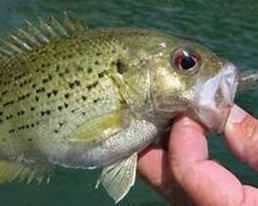
Sunnies in the Sunshine
The morning air is fresh and liberating. The trees are just beginning to bud. The wind rustles the weeds as I prepare for a great day on the water.
Whether fishing partially iced-up lakes and rivers, winter ice-out patterns are relatively the same due to water temperatures. Granted, some areas are warmer than others due to warm-water discharges or underwater springs which affect the temperature of the water surrounding therm. Slowly-meandering feeder creeks pickup warmth as they flow through open country and into lakes. But the warmer water is only a matter of degrees.
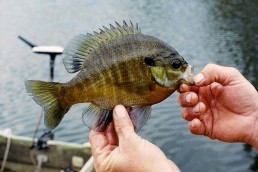
Sunfish are not as aggressive when the water temperature is below 55 degrees, but they still eat and take properly-presented bait.
Any current in a body of water increases the oxygen content, and fish relate to it. In general, fish will be in the 12- to 20-foot-deep range. In larger impoundments without warm-water discharges, the warmer water is in the section closest to a dam. On the main part of a lake, the combination of structure and current combine to form a good location for finding fish, just out of the current, around structure. Forage fish are there picking up small plankton flowing with the current. Others hang around such areas close to stumps, beneath bank undercuts, rock, or just on sharp breaklines.
Thaws increase river flow and current. A warming trend occurring signals a feeding frenzy. Often, I must fish hard, and it is a longtime between bites. Disruptions such as a sudden noise on shore or in the water makes fish shut down. Sunlight also seems to influence the fishing action. The brighter the day, the closer to the bottom fish seem to be located. If the water is darker, the sshallower you go due to the water filtering the sunlight.
Weedy areas, or those with dark bottoms, seem to warm sooner and are likely to harbor fish. Weeds and dark, muddy bottoms absorb what warmth is available on a sunny day. They hold warmth longer.
The best lures for ice-out fishing jigs are small presentations. Rods should be very sensitive with light-test line. Sensitivity is important. One-piece rods and poles are more sensitive than two-piece ones.
Bait is going to have to be placed right in front of the fish’s nose for it to react.
You can thoroughly cover the fishing zone with the jig. Fish will not be more than a foot off the bottom. You can do well with just about any type of jig or jigging spoon if it does not weigh more than an ounce. Again, present the jig slowly and right up against any structure.
The fish will not hold the bait for long. Any variation in the action of the line calls for a quick hookset. It is a game of total concentration.
Later, as rains begin to be a factor in creating runoff, the water muddies up a bit, giving visual evidence of current. With clear water next to muddy, the difference in water temperature attracts gamefish and forage alike. Sunfish like to hold on the edge of the muddy water, concealed from the forage, so they can ambush it. The silt attracts the forage as it presents new source of food.
Cold water fishing means for sluggish fish biting lightly. Be subtle with your actions and fish slowly.
Terrestrials are also effective baits for sunfish. They include worms, grubs, grasshoppers, and crickets. Grasshoppers and crickets are an important part of the fishing, scene even if not well known.
Crickets/grasshoppers have a hard exoskeleton, which is helpful in keeping them on a hook. They are plant eaters and destructive to agriculture. Usually thought of as good sunfish bait, both insects are available at bait shops or can be caught in the field.
Hooking is simple. If using a small wire hook, it is best to hook an insect through the collar area. Larger hooks require impaling the bug, with the head of the insect toward the line end of the hook. Hooks in the 6, 8, or 10 size are best.
You can be among the first to get the latest info on where to go, what to use and how to use it!
Fishing grasshoppers using a split shot and a small bobber works well for sunfish. If fishing deep, perhaps a slip sinker rig is better.
It is important to keep bait light and free from snags and weeds. Casting an unweighted insect into clear water near structure allows it to slowly sink near bottom. If it gets on the bottom, chances are it will entangle itself. Look for shoreline areas that provide cover. Cast beyond the cover, into open water. Look also for slow-water flow near structure to allow the bait to flow slowly.
Fishing with terrestrials is slow fishing. Allow bait to settle slowly. Then twitch very gingerly. Quick movement of an insect is unnatural in water. It spooks fish.
During sudden cold fronts or late-season heat waves, you may only catch a few fish.
I like to drop a culinary temptation down through submerged brush. Then I jig it slowly along. A piece of nightcrawler threaded on a small hook (#8) is a “garden hackle.” The pattern for fishing has become a combination of the techniques for the small terminal tackle fan. The techniques resemble those practiced by fly fishers but is applied to sunfish, live bait fishing.
Children of all ages can enjoy and handle garden hackle with skill and ease.
As I jig the lure vertically to attract sunfish, it suddenly streaks to the side. Success! Another panfish for the dinner tonight.
Regardless of advances in lure and bait development, “garden hackle” sometimes remains tops for panfishing. It does not matter if using a fly rod, ultra-light rod, standard casting rod, or a long crappie pole; a key to success for panfish is the garden hackle.
To make a garden hackle, cut a single nightcrawler into quarters or thirds to provide more bait for yur buck. Summer panfish tend to relate to shaded areas near submerged wood or brush. The wire hook is best in case it becomes imbedded. Eight-pound test line allows you to pull it straight up and out. Once retrieved, I reform the hook and add a new ‘crawler piece.
In areas of heavy vegetation, thread a bullet sinker onto the line with a barrel swivel just below it. Add a 12-inch leader to the swivel.
For those who like to fish with a slip float, suspend garden hackle in depths of 8 to 12 feet for sunfish. It all depends upon where the fish are on the day and time in question.
Locating sunfish is not difficult in spring. They are often visible from the surface as they prowl the shallows in search of food. Clear water with submerged vegetation is usually a good place to find them.
Later, after the spawning runs, panfish move to deeper water in their comfort zone. They take a bit of work to locate. Find a few fish and you will find the level where most are located. On sunny days they tend to seek shade.
Ponds are popular locations. Sunfish usually do best in waters without carp or shad. If bass in a pond are small, chances are the sunfish are large. Presence of large bass means they are feeding on the sunfish. Bass eat most of the small sunfish.
Sunfish often school up on the downwind side of a weedy point. Once disturbed, they sometimes move. You must do the same. Make several casts around the point and you might locate them again.
Stalking sunfish in the first half of the year is challenging and great fun.
Did you enjoy this post?
You can be among the first to get the latest info on where to go, what to use and how to use it!