
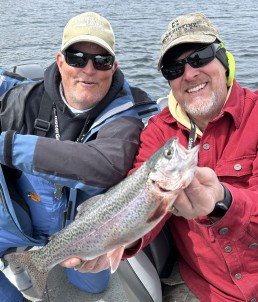
Spring Fling Stocked Trout
Five years ago, my younger brother Mark and I began taking annual, early-spring fishing trips around and into the Boundary Waters Canoe Area Wilderness of northeastern Minnesota. Last year, it evolved into a group of four, adding his brother-in-law Dan Jarzemsky from southern Wisconsin and good friend Troy Morris from central Illinois. Our goal is to enjoy excellent, multi-species fishing for walleyes, largemouths, smallmouths, pike, and panfish in a wilderness/semi-wilderness setting in the pristine Minnesota Northwoods.
Add to the four of us two other good friends from central Illinois, Paul Center and Dave Blume, who spend part of their season fishing and guiding out of Snowbank Lodge & Outfitters east of Ely, as well as back home in central Illinois. They provide smaller boats and outboards (25 hp max) required for entering the BWCAW (unless you prefer to canoe), tow vehicles, tackle if you need it, and veteran knowhow and experience on area waters. Plus, they’re loads of fun to hang around with. We’ve grown to be more like brothers than friends. And we do indeed catch lots of fish.
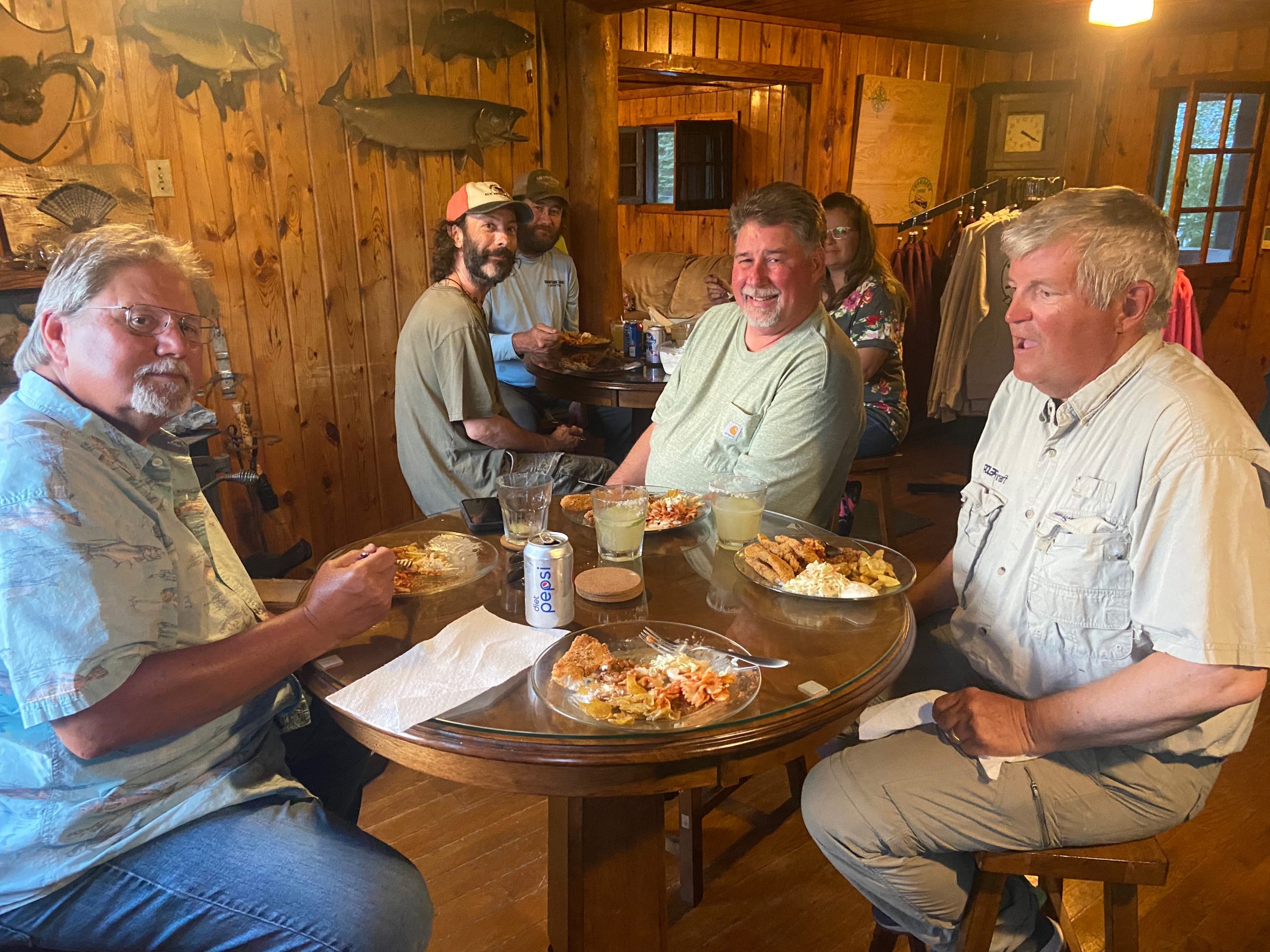
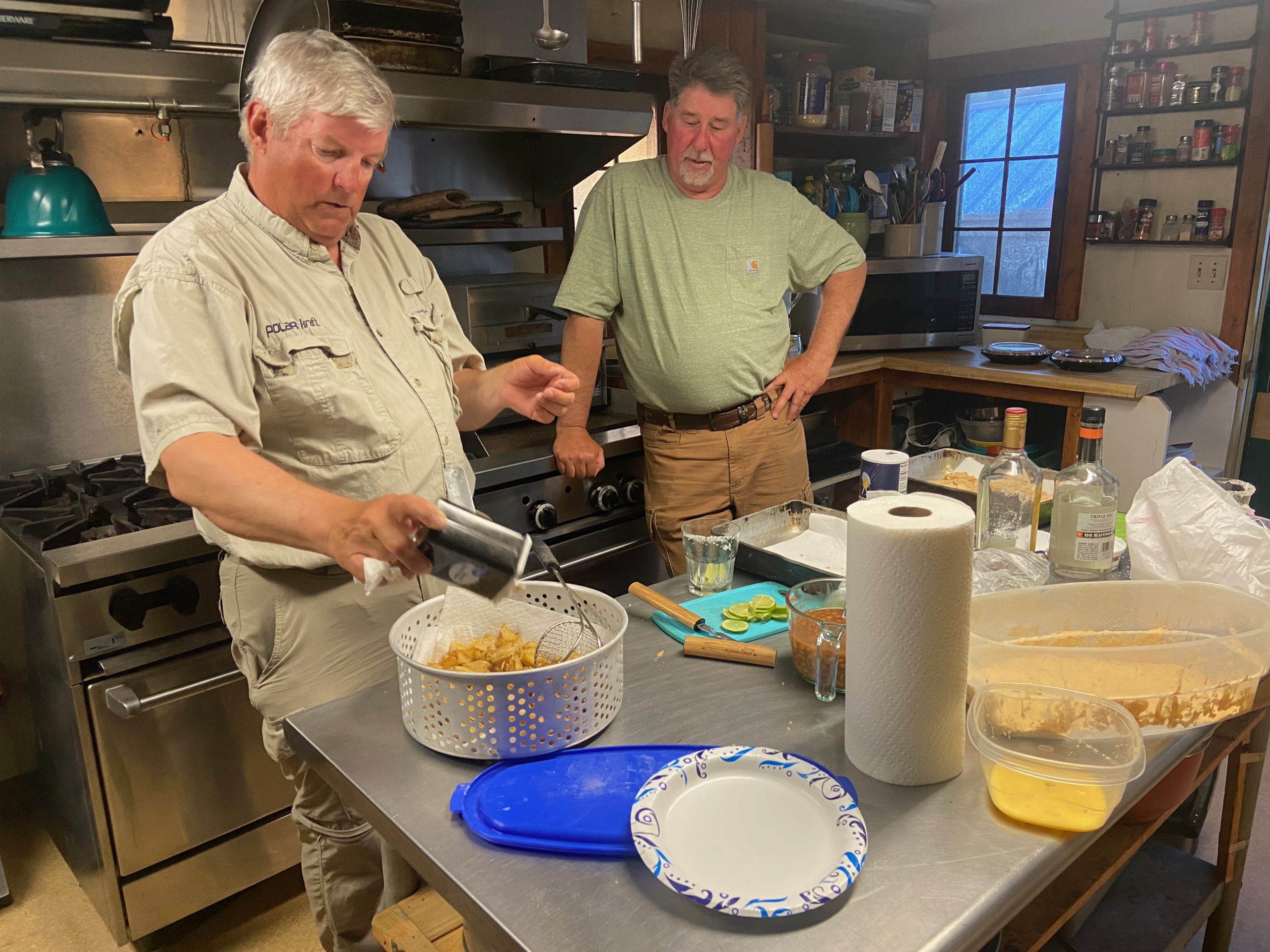
Every day, half-day, and sometimes even third-day, we rotate fishing partners between the two boats, making sure that everyone gets plenty of opportunity to enjoy different company without having to listen to the same jokes and fish stories. During evening or at night, depending on our daily fishing schedules, we head back to the cabin and cook our own meals, where everybody pitches in to share chores. Frankly, we run out of time trying to accomplish everything we want to experience. But we always have a great time, even if we run into weather, mosquitoes—or both.
The final night’s meal is always a fish fry of accumulated walleyes; a few small, non-releasable pike that swallowed crankbaits; a mix of crappies and bluegills… and trout. Not lakers—yet—although maybe this year. But rather stocked, put-and-take trout from a small, designated trout lake in the area. They’re mighty tasty, even if they’re not all that big.
You’d think that, with all the larger gamefish available, why would we “waste” any of our precious time fishing for panfish or stocked trout? The answer, as always, is because they all offer their own challenge, experience and reward. You can never get bored when there are too many options to choose from. I equate it with fishing for grayling at Far-North fly-in lodges. It’s part of the adventure.
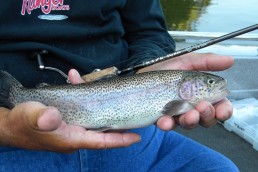
So, one morning during our journey, we pop over to a small lake that the DNR stocks with put-and-take rainbows, plus a sprinkling of splake. Truthfully, it seldom takes long to assemble our limits of 5 trout apiece. Maybe it’s because it’s early in the season, and the stocking truck only recently dumped a truckload of dumb, hatchery-raised biters off the boat ramp, into the lake. Maybe it’s because they’re usually not that difficult to catch—except for the survivors of several seasons who’ve grown larger and wiser, and often seem to jump and shake off our lures. Or maybe the boys just plain know what they’re doing. We’ve fished the lake in every condition from dead calm (with bugs) to roaring winds (no bugs!) and waves large enough to question our sanity for fishing there that day. But we’ve yet to be disappointed.
In modest to larger waves, all we usually need do is slow-troll small, diving crankbaits or spoons on 4-pound-test line. Cast out well behind the boat, let out some extra line, then close your spinning reel and simply hang on. Move just fast enough to wiggle your lures, watching your electronics for the presence of fish suspended out over the basin.
You can be among the first to get the latest info on where to go, what to use and how to use it!
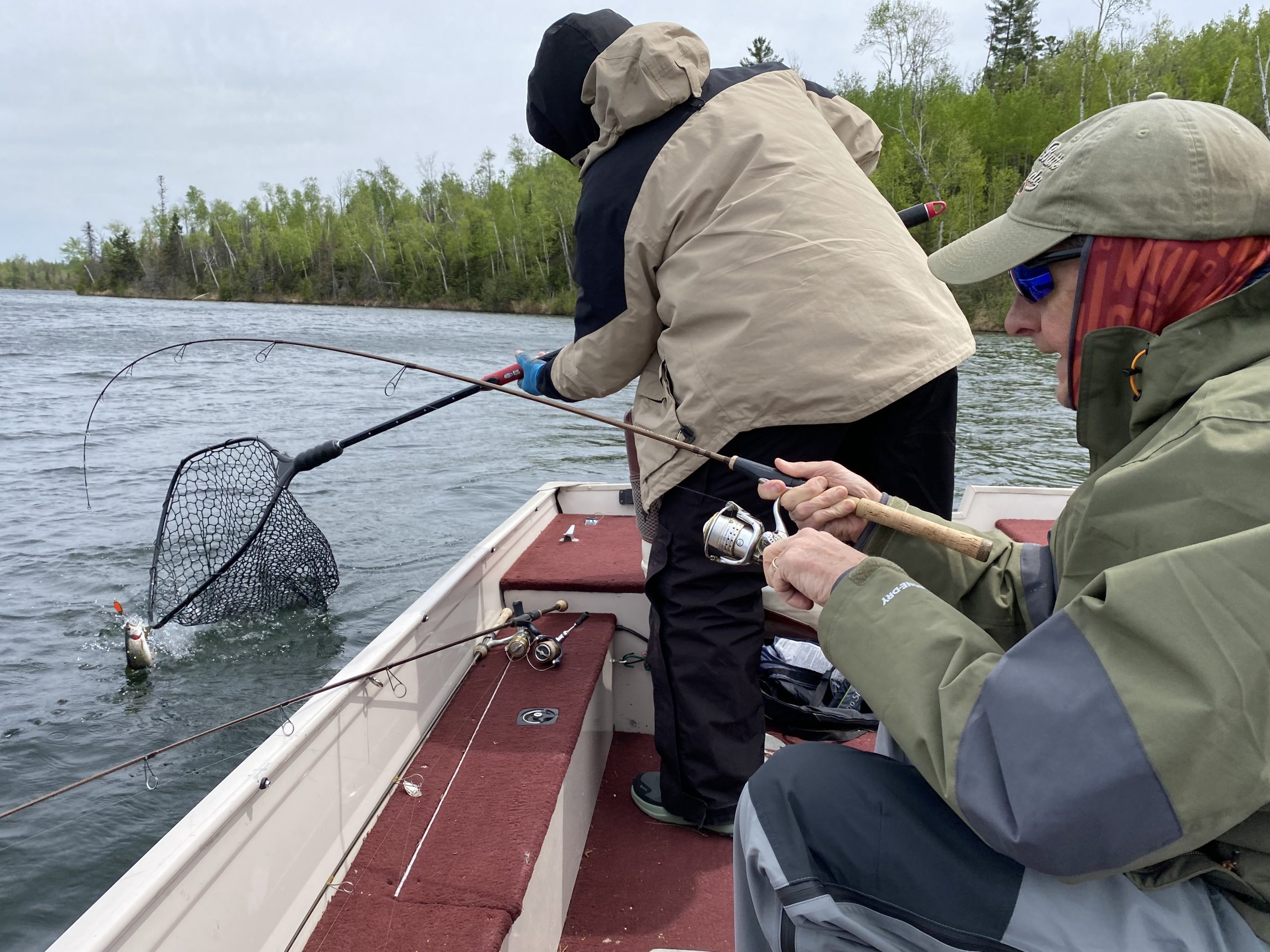
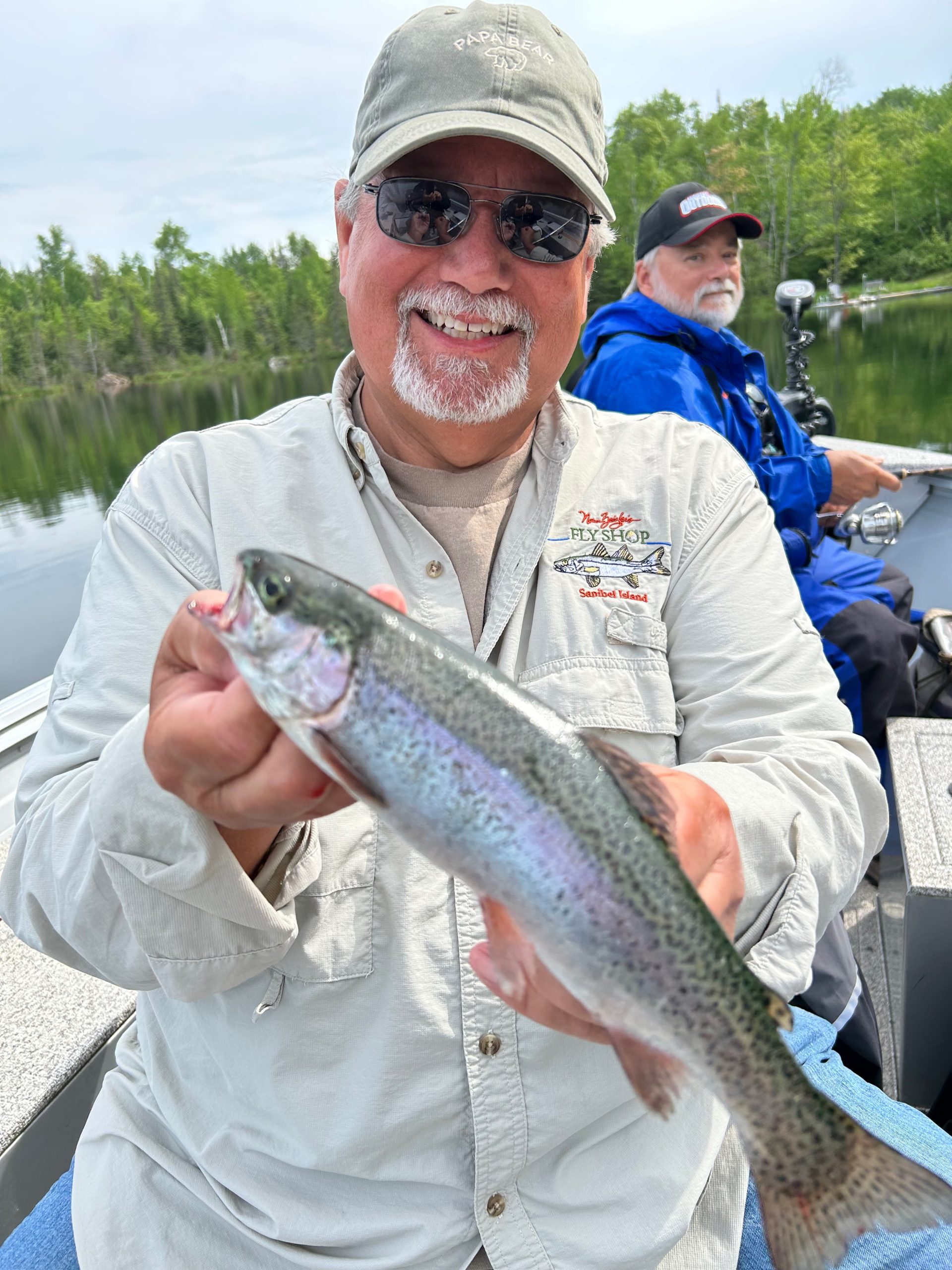
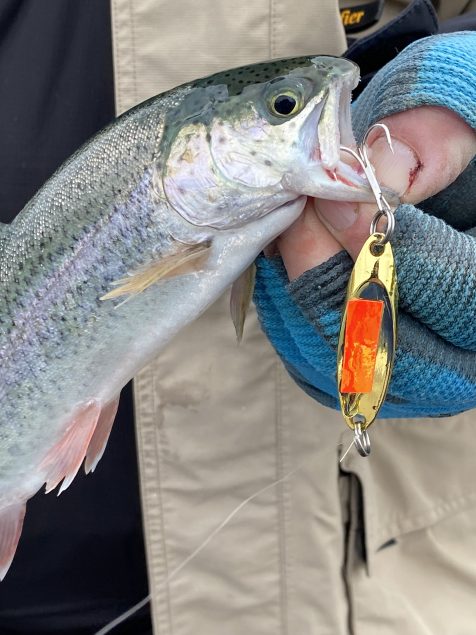
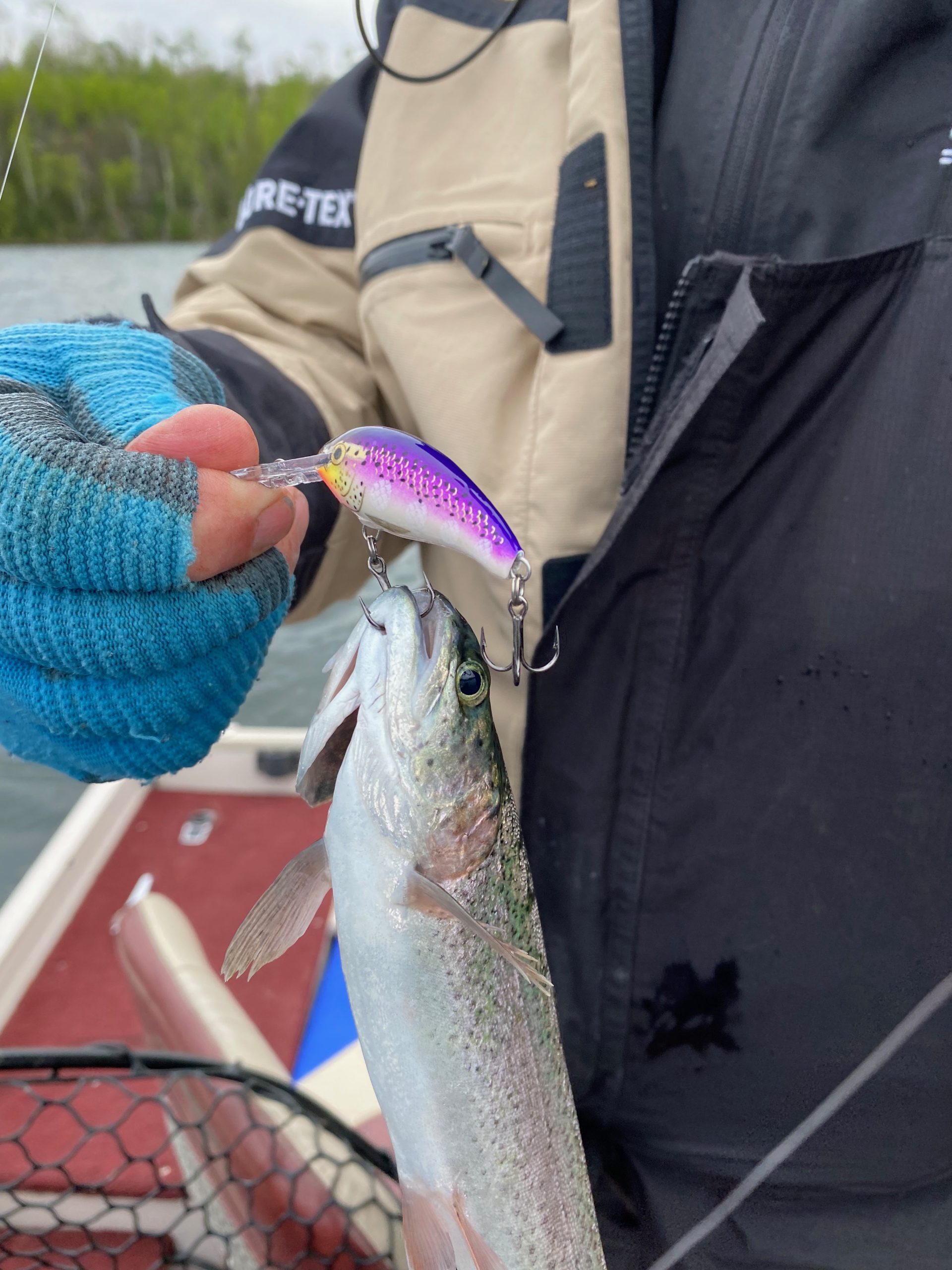
We typically find that the bulk of active fish are present in one or two areas of the lake, usually toward the downwind side. Trolling a 25 hp outboard doesn’t seem to spook ‘em to any degree if it’s windy. Once you locate an active pod of trout and catch one or two, circle back through them; or if it’s really windy, reel up lines, move back upwind and repeat your downwind trolling passes.
If it’s calm, however, trout can be spookier. You might need to troll with an electric motor instead. Or drop the trolling motor and make long casts with spoons, small spinners or jigs/plastic tails to reach out to fish that aren’t aware of your presence. Simply retrieve lures back at a slow to modest pace, just fast enough to achieve some action. Fish won’t be on the bottom; early in the year, they’re suspended in small, yet deep, stocked lakes, so you seldom need to fish more than 5 to 8 feet deep in spring. It’s fun catching them while casting, and trout fight like crazy on ultralight gear.
After dropping our trout off at the cabin fridge for eventual cleaning and cooking, we head out again to fish for other species on a broad array of local waters. So, in essence, trout fishing doesn’t really eat up much of a long day spent fishing in the Northwoods. You can still get your licks in on larger, stronger, though not necessarily tastier species. And if we decide to longline troll for walleyes after dark, it becomes a l-o-ng day on and off the water. When you’re “good tired,” you sleep better than you do back home.
The fact is, stocked trout are meant to be caught, kept and eaten—in moderation. Catch-and-release isn’t a factor. You can keep a few for a meal and retain a clean conscience, with a high success rate to ensure action and excitement for everyone in your group. Then go on to catch, photograph and release some bigger species later on a different body of water.
You don’t necessarily need to travel all the way to the Northwoods to enjoy catching stocked trout. Chances are that your home state stocks put-and-take trout in suitable small, deep, cold lakes or reclaimed strip pits somewhere near you.
Did you enjoy this post?
You can be among the first to get the latest info on where to go, what to use and how to use it!