
Sharpshooting Ontario Giants
MidWest Outdoors TV Producer Tim Pumper and I had just completed a fly-in fishing trip to Showalter’s Fly-in Outposts last September when we took a planned detour to enjoy a day on the water with Michael Showalter, a young, up-and-coming fishing guide in the Ear Falls, Ontario region. He’s been guiding on Pakwash Lake and Lac Seul for four years now, and has been fishing these lakes since he was old enough to operate a watercraft. His “home” lake is Pakwash Lake, connected by the Trout River to Showalter’s float plane base on adjacent Bruce Lake (the family’s base of operations, just north of Ear Falls). But he also fishes nearby Lac Seul—a famous fishery in its own right, especially for big walleyes and northern pike. Michael’s expertise is framed by his ability to consistently find and catch huge walleyes. It’s what his guide customers want to focus on, and likewise, our focus for filming a MWO TV segment.
Our mid-September timeframe was blessed with a great day of weather to fish on a big body of water like Pakwash. The morning started out with a crisp, overcast sky, with just a light west wind rippling the lake’s surface. In Michael’s 20-foot tiller Warrior boat, we scooted west to his preferred starting spot—one of many deep reefs that dot the basin of Pakwash Lake.
He has a refined strategy for targeting walleyes, similar to trophy buck hunting, in that he primarily seeks the biggest specimens in the system. A typical day involves hopping from reef to reef, as well as many shoreline points (especially early in the season), and dropping the Minn Kota to search for targets. Michael often has his Terrova on “10” as he efficiently scouts for big marks using his forward-facing sonar (FFS).
Forward-facing technology is paramount for this type of fishing, for several reasons. For one, these northwest Ontario lakes do not have schools of large walleyes congregated together; the trophy-class fish tend to run alone, or sometimes in packs of two, three, or four fish, loosely gathered on a spot-on-the-spot on structure. The game is not about catching the most walleyes in a day’s fishing; it’s about finding and catching individual giants.
Another reason to employ FFS is how dingy the water is on Pakwash Lake. The water has a very dark stain that really diminishes water clarity. If you drop a lure on top of a solitary, big fish that you see on sonar, it’s remarkable how that fish won’t be able to see the lure, even within 5 to 6 feet of the fish. You simply can’t fish effectively using traditional 2D sonar, idling over a fish and spotting it via a transducer mounted to the transom of a boat, expecting to effectively present a bait closely enough for the fish to see it. For most of the season, Michael fishes for walleyes in the 20- to 35-foot depths, often targeting suspended walleyes (especially in the deeper zones) that are 5 to 10 feet off bottom. There’s no more effective way to find and catch these walleyes than with FFS.
This technology also aids anglers in this scenario to gauge a fish’s reaction. Much like with ice fishing electronics, when you present a lure to these Ontario giants, you can instantly see the fish’s reaction: Whether it’s attracted to the lure in the first place (or spooks); whether your jigging cadence attracts or repels the fish; and how effectively you’re pulling the fish upward in the water column, which is widely considered to be a top method for triggering strikes from curious walleyes.
The first reef Michael stopped at was devoid of fish, determined after ten minutes by cruising around the perimeter of the structure, and then across the top, panning the FFS back and forth as we went. On spot #2, there were a couple of rogue marks, judged to be small fish that we chose to leave alone. Again, the trophy buck analogy of giving the smaller racks a pass.
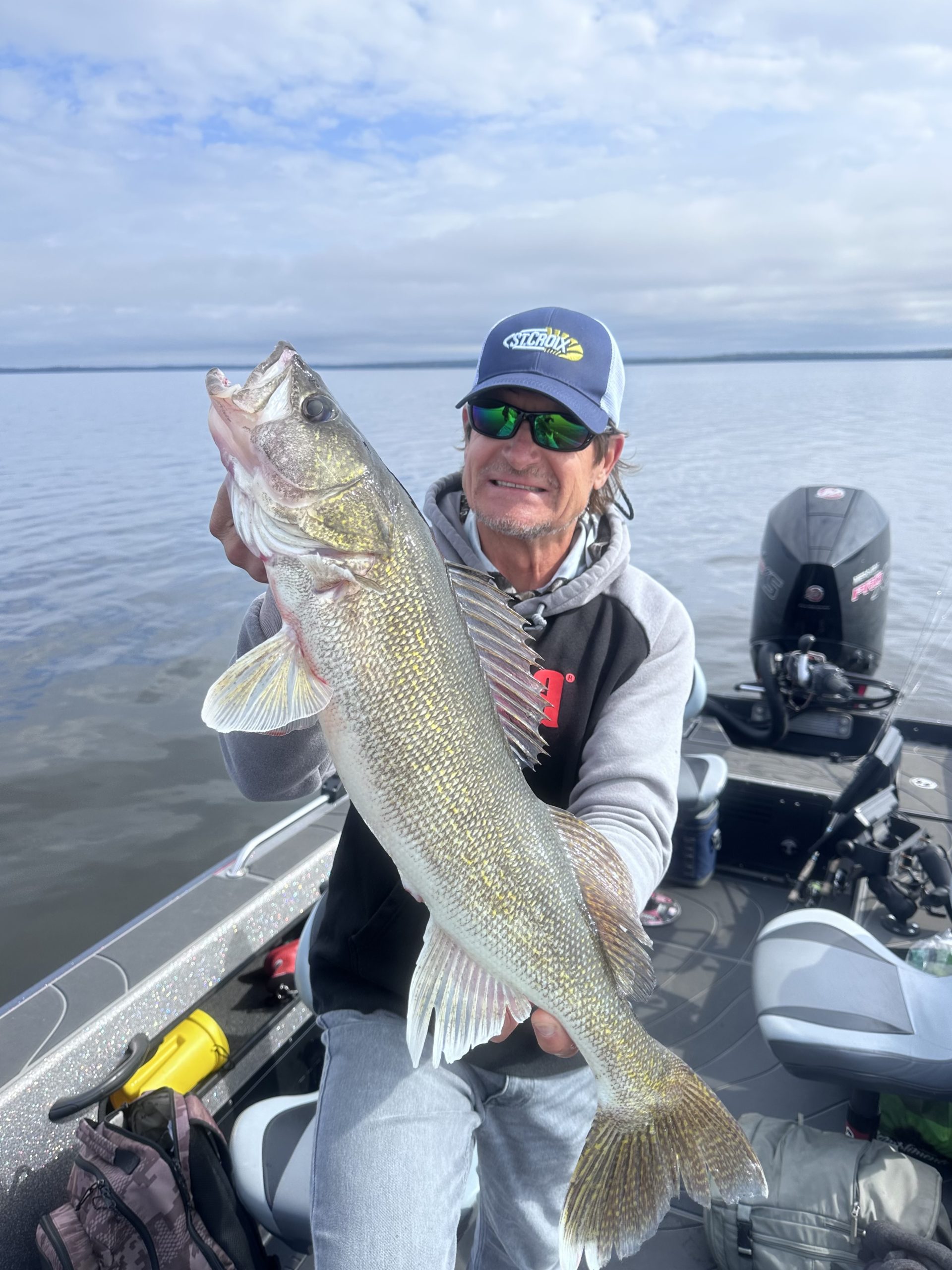
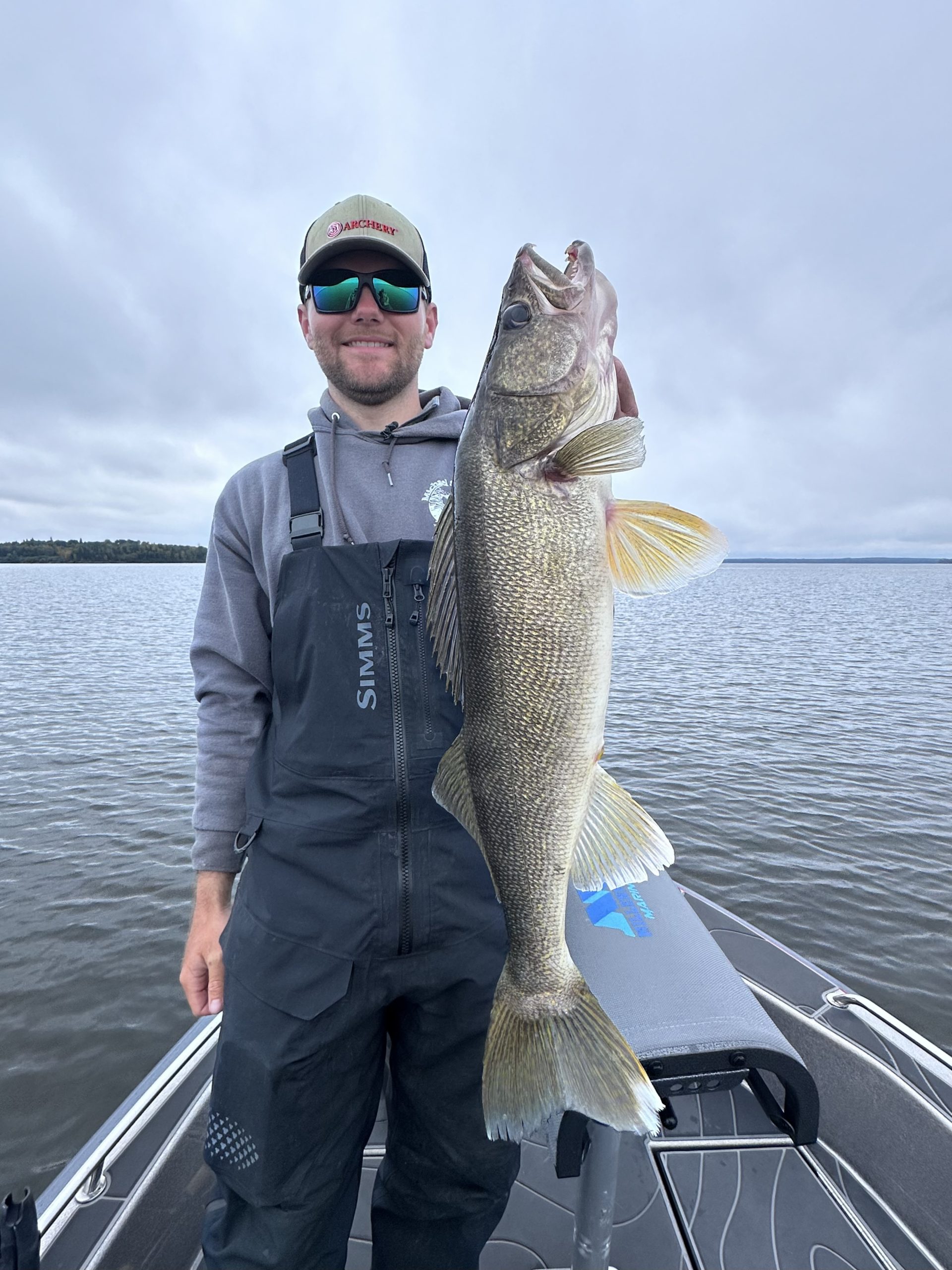
On spot #3, a big fish appeared on sonar, and further out on the cone, yet another. Michael instantly reversed the Terrova to halt our cruising speed, and each armed with a jigging rod, we positioned over the bow. Using this technique for fish in 30-ish feet of water, dropping our presentations as vertically as possible is key. Make a cast, have the lure fall to more than six feet from the fish, and you’ve just wasted a cast. The water is just too stained.
You can be among the first to get the latest info on where to go, what to use and how to use it!
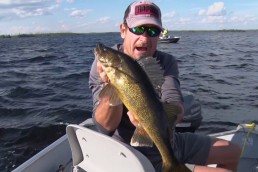
Once vertical, we both dropped close to the fish, slowing our drop speed as we got closer to the big fish and initiated our jigging cadences. Once aware of a potential meal, the big fish swam in a tight circle and immediately smashed Michael’s offering; soon, he had a fat, 26.5-inch walleye topside to start our TV segment. Then, we relocated the other big mark we’d seen, positioned the trolling motor above it, and just as quickly I hooked another 26-inch fish.
Michael’s daily guiding milk run of spots might consist of scouting 15 to 20 hotspots. Guests typically take turns dropping on the fish. It’s more effective to present one lure at a time, although giving one fish two different looks in tandem can be helpful at times as well. My choices for the day were a couple of #7 Jigging Raps, gold/black for a natural color and stealth, and a bit louder wondertiger pattern. Plus, Crush City Mooch Minnows and Freeloaders rigged on the Minnow Shaker Jig, a new VMC jighead featuring a 45-degree line tie specifically designed for presenting plastics via FFS.
My rod choice for this technique was easy: St. Croix’s 7’1” medium, moderate-fast “Jig-N-Rap” rod (EYS71MMF). I spooled my reels with either Sufix 10-pound-test neon lime Revolve (an ultra-thin finesse braid) or hi-vis yellow 832, paired with a 10-pound Advance Fluorocarbon leader. If you prefer to fish with your own gear, Michael has all the rods and lures you’ll need to catch these big walleyes.
The morning overcast soon gave way to slick, calm conditions and brilliant sunshine, with a backdrop of indigo blue skies. We continued to spot-hop, finding fish on some reefs but not on others. When we saw potential, quality targets on FFS, they invariably bit for us. With the fall feeding frenzy in full swing, all the fish were fat and healthy, with chunky bellies and thick, wide backs.
The walleyes in Pakwash Lake are healthy specimens, indeed! The fishery also boasts tremendous smallmouth bass fishing and is known for some huge northern pike as well. Being a smallmouth junkie, I could easily have detoured to some shallower spots for a fall jerkbait/topwater bass bite, but with the big walleyes on the chow, I kept my focus there.
As part of your guided fishing day, if you prefer to target these other species, you won’t be disappointed. These remote Ontario fisheries just don’t see the fishing pressure like popular U.S. lakes do, and the fishing is remarkably consistent from June through September. Ear Falls, Ontario is 140 miles north of International Falls, and Michael can arrange accommodations for you in cabins located on Lac Seul, just a short drive from Pakwash Lake. You also have the option of fishing with Michael on Lac Seul.
I’m sure many MWO readers are familiar with this stretch of northwest Ontario, traveling up Highway 502 or “the 105,” heading to destinations along the way from Dryden to Vermilion Bay and up to the end of the road in Red Lake. Just as we did, tacking on an extra day (or two) on the back end of your traditional fly-in or drive-in destination in this region is a great way to incorporate a day or two of guided fishing with Michael.
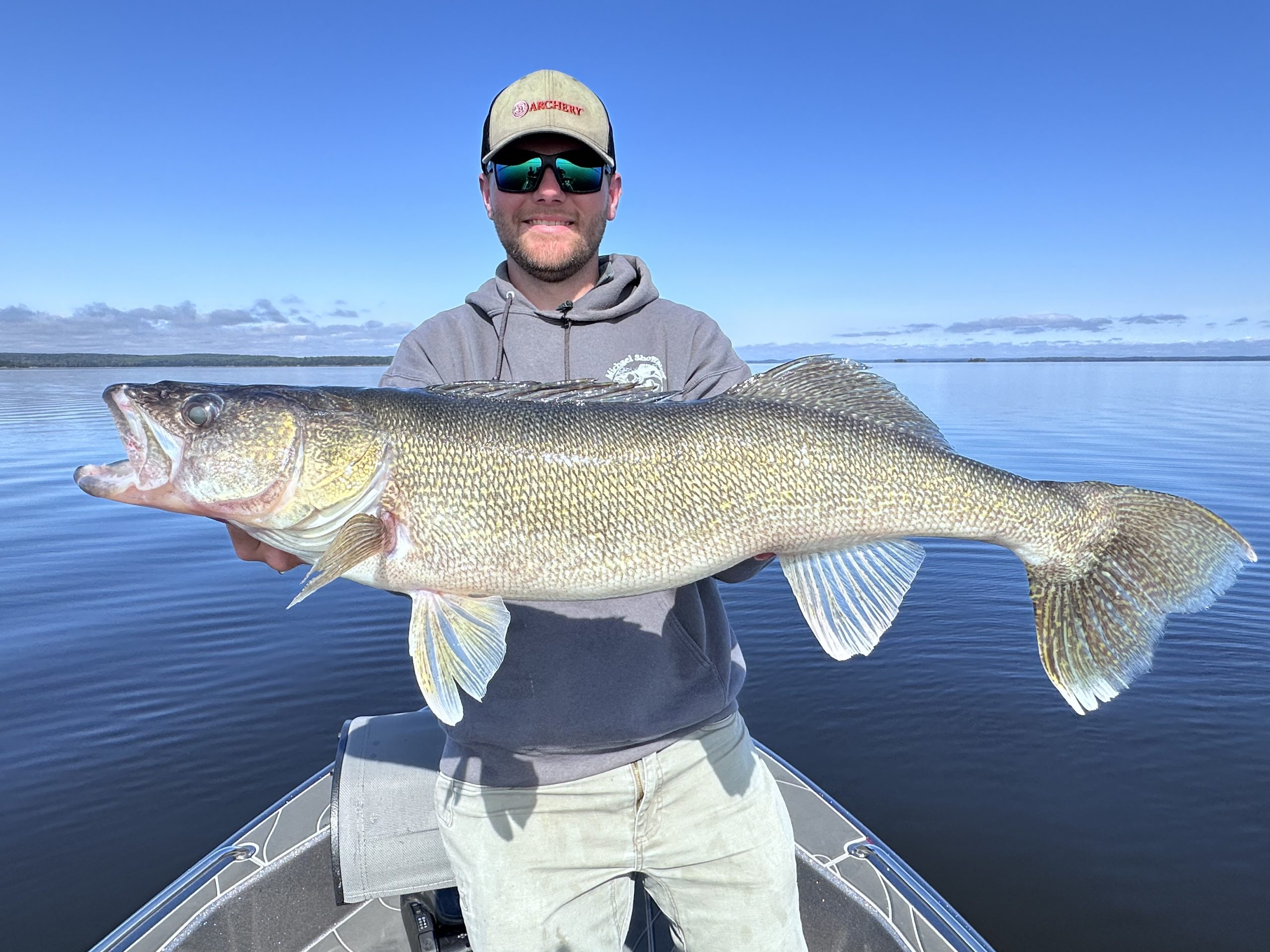
With a planned departure by mid-afternoon for the drive back to the border, it was time to wrap up our TV segment. “One more spot on the way in,” Michael said. As soon we deployed the Terrova, a huge mark appeared on FFS, about 40 feet away. We crept up on it and dropped lures directly over the fish. SLAM! Michael got the bite, and just like with the other big walleyes, the drag zinged, rod bent over double.
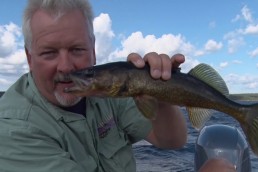
After an exciting battle, the fish surfaced—an absolute giant of a walleye! The three of us were in awe of a gorgeous, bright green walleye with a huge girth! “Wow!” “Oh my gosh!” We quickly snapped some photos. On the bump board, the fish was over 31 inches, and with such a huge belly easily topped the 12-pound mark. The fish joins the ranks amongst some of the biggest walleyes ever filmed on MidWest Outdoors TV!
Released back into the water, the huge fish swam away instantly, strong and ready to thrill another angler sometime. Maybe it will be you? For an awesome big fish experience, you can’t go wrong joining Michael Showalter for a day in his boat for some incredible Ontario fishing!

Did you enjoy this post?
You can be among the first to get the latest info on where to go, what to use and how to use it!