
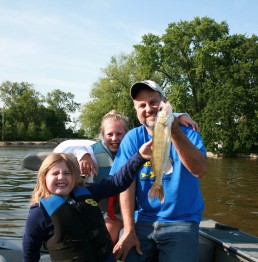
Mixing it Up for May Walleyes, Crappies and Bluegills… the Old Man Dozer Way!
I learned how to fish from Old Man Dozer. Mike Dozer was an old German janitor who lived in the building across from ours when Poppee got his first janitor job in Chicago on Irving Park Road. Old man Dozer and his wife Mutti loved to fish and loved to eat fish even more. Pan-fried in Crisco was the way to go! He taught me how to catch fish, and I’ve since modified his techniques for catching different species throughout the season.
When I was a kid, every spring I would be off to Old Man Dozer’s house for the crappie run on Pistakee Lake in northern Illinois. He had a Sears 12-foot boat, a 6 hp Sears outboard motor, some cane poles, and Pinky John jigs that he bought from Sears. Being a janitor in Chicago, the buildings he worked in had an account at the local Sears, where he bought tools and cleaning supplies while sneaking in a little bit of tackle here and ther—and maybe even a boat or outboard motor when nobody was checking.
Anyway, those crappies would be right up around the docks on Pistakee, and we would sneak up on them in the boat using the Sears oars, and our cane poles to present Pinky John Jigs under corks set about a foot down. The key was quiet; we never talked, and we had Sears bathmats under our feet to muffle the noise. I tried not to get excited as we flipped crappie over crappie in the boat and dumped them in the wire fish basket hanging off the side. Later, as the season progressed, we would drift across Pistakee Bay with those cane poles in rod holders—no corks—just letting those Pinky Jigs undulate 10 feet down until the crappies scarfed them up.
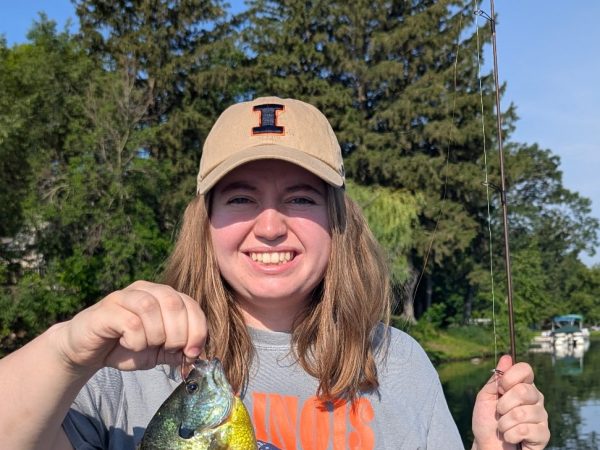
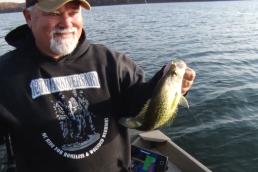
I still enjoy the crappie run. Crappies start off shallow after ice-out and can be caught around most docks and piers in channels, or right above the weeds in bays everywhere in the Midwest. I like to use 1/8-ounce Flu-Flu feathered jigs. Of course, the pink head/white body is ho,t as are orange and chartreuse patterns. Sometimes, I use a Rocket Bobber; sometimes, I just pitch them out and reel them slowly over the weeds. Minnows will sometimes add a few more fish—Rosey Reds if you can get them—but they are not necessary. A 7-foot, St. Croix Panfish series rod, 1000 series Okuma reel and 5-pound, orange Stren line replace the cane pole of the old days!
After the crappie run, we would go for walleyes. He had these Ted Williams steel fishing rods that weighed a ton, with level-wind casting reels that would not freespool, and always overran and backlashed. He would cast out a 1-ounce weight with a swivel and a gold, Eagle Claw snelled hook. He’d anchor the boat at the mouth of the Fox River that exited Pistakee, and we would pitch out those weights with ‘crawlers I dug up, or minnows seined from the creek. In all the times we tried, we never caught a walleye. We caught plenty of catfish, a few bass, and some carp, but never a walleye, I do not think there were many walleyes there back in the ‘60s.
You can be among the first to get the latest info on where to go, what to use and how to use it!
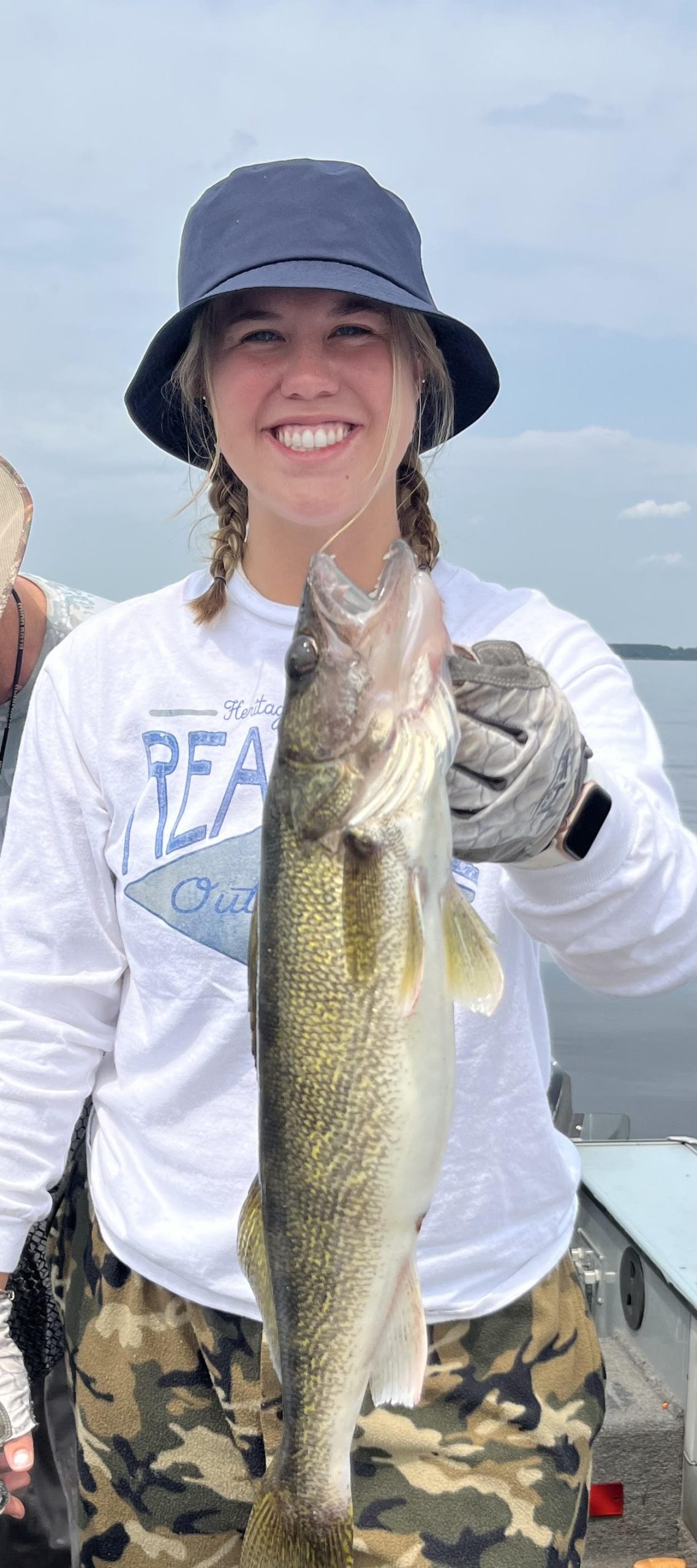
Funny thing… about 30 years later, Poppee and I won a little local walleye tournament by catching enough walleyes from that very spot. Old man Dozer must have been smiling on us. We used a weight, swivel, and a Custom Jigs & Spins size 4 Demon ice jig instead of a hook. That is when we started putting Demon ice jigs on the line when fishing current. Size 4 and 6 Demons are perfect for minnows, ‘crawlers and redworms, and they catch everything swimming. You can also cast them out and drag them back slowly in areas with less flow. A Demon will shimmy and undulate slightly off bottom when reeled slowly.
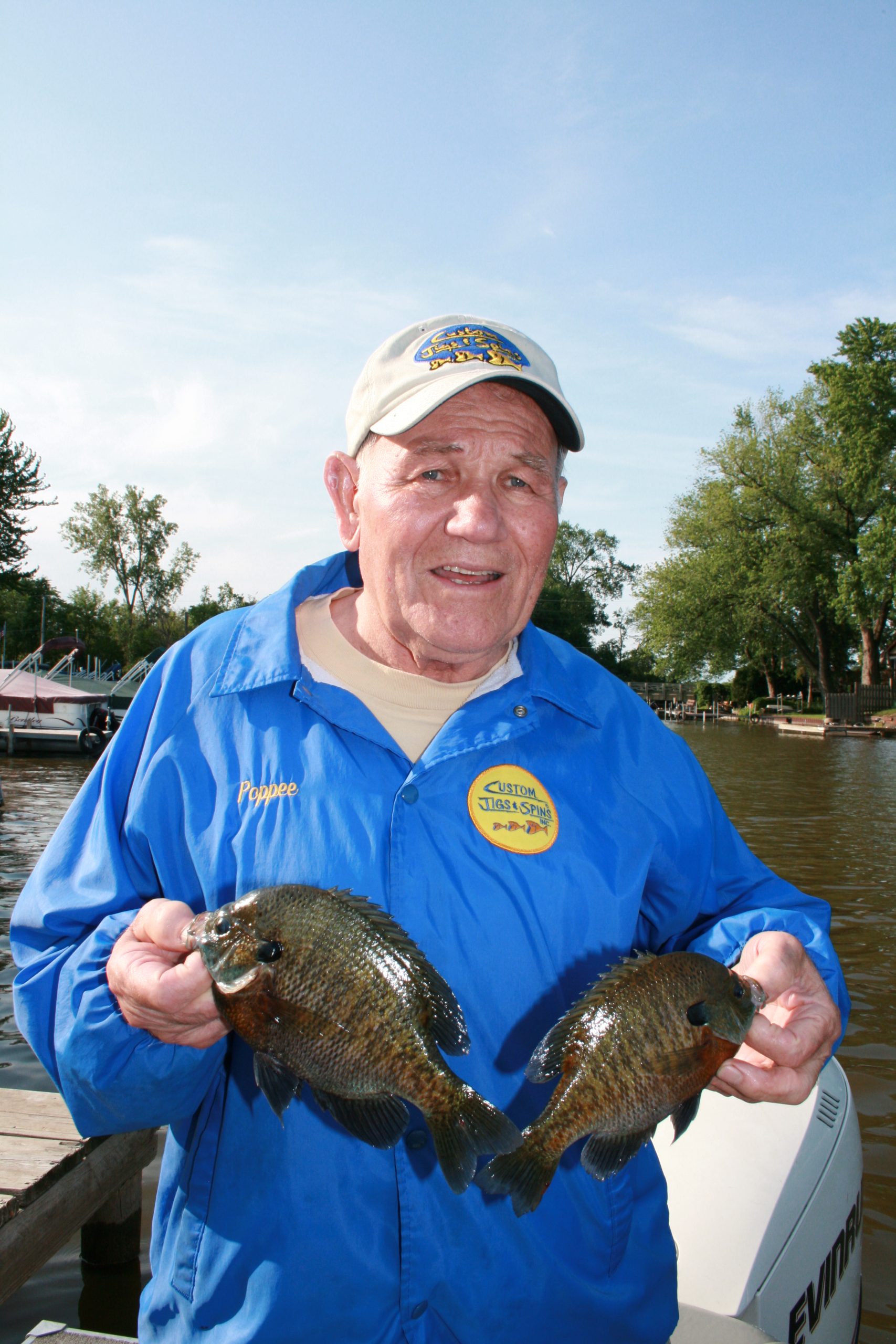
Bluegill action was always on the menu with Old Man Dozer. Since Eagle Claw did not make a size 8 snelled hook back in the day—or at least they did not stock it at Sears—Old Man Dozer had to improvise. He bought a small box of size 8 gold jig hooks and pinched a split shot on the crook of the hook to make a little jig that was the perfect size for redworms or small ‘crawlers that we dug up. Since the braided line on the cane poles was too thick to pass through the eye of the hook, he had to tie some leaders up with mono fishing line. It worked perfectly. We had set our corks about two feet from this homemade jig. We would bait up and swing it out around the weeds at the lower end of Pistakee, which was the only area that grew weeds.
While a guy still could use a split shot pinched on a number 8 gold hook and catch plenty of bluegills, using ice jigs like Custom Jigs & Spins’ Ratfinkee, Gill Pill and Diamond Jig make the catching more efficient. These lead jigs are light in weight, so panfish just suck them in. Tungsten jigs like the Glazba, Majmun and Wolfinkee work even better when cast and reeled or hopped in slowly over the weed tops.
Whether you use redworms, small minnows, waxworms or spikes, ice jigs are perfect for catching panfish all year ‘round. They are great for taking kids fishing since they are easy to use and extremely effective on all sizes and species. Give them a try; Old Man Dozer would approve!

Did you enjoy this post?
You can be among the first to get the latest info on where to go, what to use and how to use it!