
Mixed Creels and Those ‘Other’ Fish
For the most part, when I head out on my angling adventures, I’m pretty much a “target species angler.” I normally have a specific species in mind when visiting my intended target waters. I’ll take along baits and gear primarily designed or appropriate for certain species. But during this time of the season, I often struggle with which scaly adversary I want to put in my crosshairs.
In May—late spring—it seems like just about all species are moving and generally in the mood to devour any bait I put in front of them. Depending on the weather, most species are either moving shallow to let the “romance” begin, or coming out of their spawning rituals. Either way, their locations put them within easy reach for bank anglers.
Catching spawning fish is nothing new, and it depends on the waters also. But removing bass off the nest can disrupt the spawning process either by yanking big females off the bed, to which they might not return; or pulling off males guarding the nests, to which they might not return, leaving fry open game to become meals for other species.
I always want to promote strong fisheries. I just feel that it’s best let the fish do their part to rebuild their numbers through successful spawning; this just provides strong fisheries for the rest of the year. Large southern bodies of water often have extended spawning seasons, with waves of bass moving shallow over months, so catching and releasing a few spawners here or there doesn’t affect the overall spawn. But in the colder far North, fish spawning is often concentrated across a few weeks, making most of the fish population vulnerable to disruption. Smaller bodies of water are more prone to be affected by too much harvesting or the disturbing of spawning fish. That’s just my feeling on the issue; no hate email, please!
I’m not trying to sound like I’m talking both ways concerning fishing at this time of year, because I am enjoying this season as well. It’s just that when I see fish visibly protecting beds, I leave them alone. Okay, disclaimer aside, “May-ish” is a very productive time to be out on the water!
So, what do you load in your tackle box or bag to head out with multi-species on your mind? I’m probably a bad person to ask, considering most of the time, it looks like I could use a pack mule to haul my gear. But then again, I am writing this article, so I’ll give you a little input for some “normal” carry suggestions.
When getting prepped, it’s always best to know which species you might encounter. A general idea of what inhabits your water of choice makes for easier packing. With the mixed-creel mentality, I find it more efficient to narrow down my gear, not so much by exact species, but fish size. For example, I’ll bring along a rod and tackle designed for panfish, and also a rod and tackle geared more towards larger sportfish such as bass, stripers, walleyes, smaller pike, and catfish. This two-rod setup is a very bare minimum for me, but it’s certainly more than enough for entertaining most species that swim in your favorite waters. Basically, it’s an ultra-light to light setup for panfish, and a medium rig for the other larger species; don’t go any heavier unless you’re certain you’ll be tangling with large species of fish.
As far as the terminal end of your line, if you prefer live bait angling, you have it made; just fit the hook sizes, weights and floats appropriate to the species you’re after. You lure slingers, well, a bit more packing is required for you, so here are a few basics.
Panfish
I’m a jig guy, so I’ll normally lean toward small jigs and tiny swimbaits. Today, we’re overwhelmed with all types of jig bodies, so it’s not difficult to find a body style that fills your style of fishing. After the jigs, I find tiny spinners to be exceptional for just about all species of panfish—both inline and safety-pin types. Throw in a couple of micro crankbaits you’re ready to go!
Larger gamefish
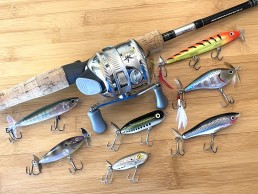
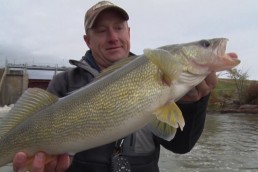
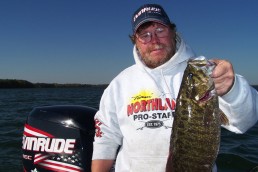
Once again, tailor your gear to the types of larger fish that inhabit your waters. Baits that appeal to multi-species make for easier packing. The ultimate choice is soft swimbaits; carry a few lengths and tail styles, various hook sizes or swim jig weights, and you can cover bass, walleyes, stripers and few pike as well. Your favorite topwaters and some shallow-running crankbaits are good bets, drawing strikes from various species of gamefish. Just keep it simple; otherwise, you’ll be looking for your own pack mule (like mine)!
This time of the year, just about all species can be anywhere, so it’s a search mission trying to locate active fish. Keep on the move and choose search type baits to develop a pattern.
You can be among the first to get the latest info on where to go, what to use and how to use it!
Since we’re exploring a mixed creel, I’ll make a suggestion concerning covering a topic that I haven’t touched on in a while.
Those other fish
I don’t quite understand the lack of interest from most of the angling public regarding freshwater drum; they’re “probably the most-caught fish while fishing for some other type of fish” that I know! I have never, since as far back as I can remember a pole in my hand, turned my nose up to any particular species. I’ve never been so die-hard for any one fish that I’ll ignore other species and miss a chance at tangling with a few other species, simply over public opinion.
Drum are a natural species to Illinois waters, found mostly in moving waters and some reservoirs that are dammed river systems. Locally, I’ve caught lots of big drum at Heidecke Lake because its water iss sourced from the Illinois River, but the Illinois River itself is loaded with them, as is the Fox. Lake Shelbyville has them, with my biggest drum ever coming while fishing a heavy jig in the current for muskies; it topped 30 pounds!
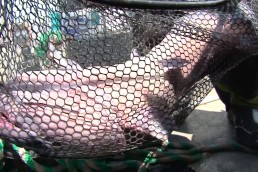
Drum generally inhabit the depths, on or near the bottom. Any type of live bait will produce regular catches. I’ve taken my share on artificial baits on many occasions, not really fishing for drum; but suddenly, there they are!
When you find local drum waters, fishing for them is relatively easy. Target them in the river systems, as they are usually near or in current. Hard bottoms with some rock draw drum, as they are big-time hunters of crawfish hiding within the rocks. But drum are willing to eat anything live; present ‘crawlers, minnows, shrimp, anything natural, and they’ll be all over your offering.
Live bait rigged on your favorite bottom setups work exceptional. These fish are not tackle-shy, so line and weights don’t bother them. The average-sized fish is in the 1- to 3-pound range, so use smaller hooks of your choice in the #4 to 1/0 range. But if you know that your waters have big drum over 10 pounds, you’ll need heavy hooks, line and tackle; they feel like you’re pulling on a freight train, and they will straighten light wire hooks in a heartbeat!
Rods, reels and line are similar to that used for catfishing; smaller drum are fine on light tackle, but once they start pushing 15 pounds and up, you’d better bring the heavy gear; they are not only powerful, but they use the current to their advantage as well.
If you prefer to pursue drum with artificial offerings, they are very active and will respond to very simple presentations. As I’ve mentioned, these fish are often caught on accident by anglers—especially smallmouth fishermen and walleye chasers. I caught a beautiful specimen over 15 pounds on Heidecke Lake in the middle of catching walleyes on deep-diving crankbaits; I thought I had the new state record walleye for sure! But while can target these bulls of the deep with some simple rigs, my main focus is on jigs.
One of the top forage choices for drums is crawfish, so a craw-imitating setup will draw their attention. Smaller- to average-sized drum will go after Ned-rig-type crawfish imitators. Z-Man has some awesome stand-up craws; I like the 3-inch TRD HogZ and the 2.5-inch TRD CrawZ, but any similar-sized bait worked down in the rocks will get their attention. Three- to 4-inch swimbaits will appeal to larger fish and are engulfed with ease, as are deeper-worked crankbaits; just get baits down, working along the bottom, to connect with these fish.
Drum have pretty voracious appetites, so they are not as picky as some species for sure; another reason to enjoy these underrated battlers. Their fight is incredible; between their bulldogging toward the bottom and using the current to their advantage, they become hard-battling opponents. All in all, they’re a great fish to target in my eyes, though certainly not receiving the respect they deserve from most angers. So, why do they fall into the category of, “those other fish?” Some say that they make great table fare; I’m not speaking from experience, so you’re on your own if you decide to bring a few home for the pan. But if they are, they’re a plus if you like to consume what you catch.
There are numerous angling options for the month of May. Hopefully, the weather stays a bit more consistent than early spring, and you’ll enjoy a mixed creel of angling opportunities!
Did you enjoy this post?
You can be among the first to get the latest info on where to go, what to use and how to use it!