

Matching the Depth Levels of Early-Spring Smallmouths
Smallmouth bass begin biting remarkably early in the season. On northern waters, a still-half-frozen body of water might already see the first signs of shallow fish activity in open-water portions of the lake.
Very early on, however, smallies can be remarkably fussy as to which lures and retrieves to which they might respond. To get them to bite, you might have to literally hit them on their noses. Or more correctly, present your lures at, or slightly above, their depth level. Once the water warms, they are more likely to rise well off bottom and chase baits. But when they’re not chasing, you need to zero in on their depth level and place your lure in their faces.
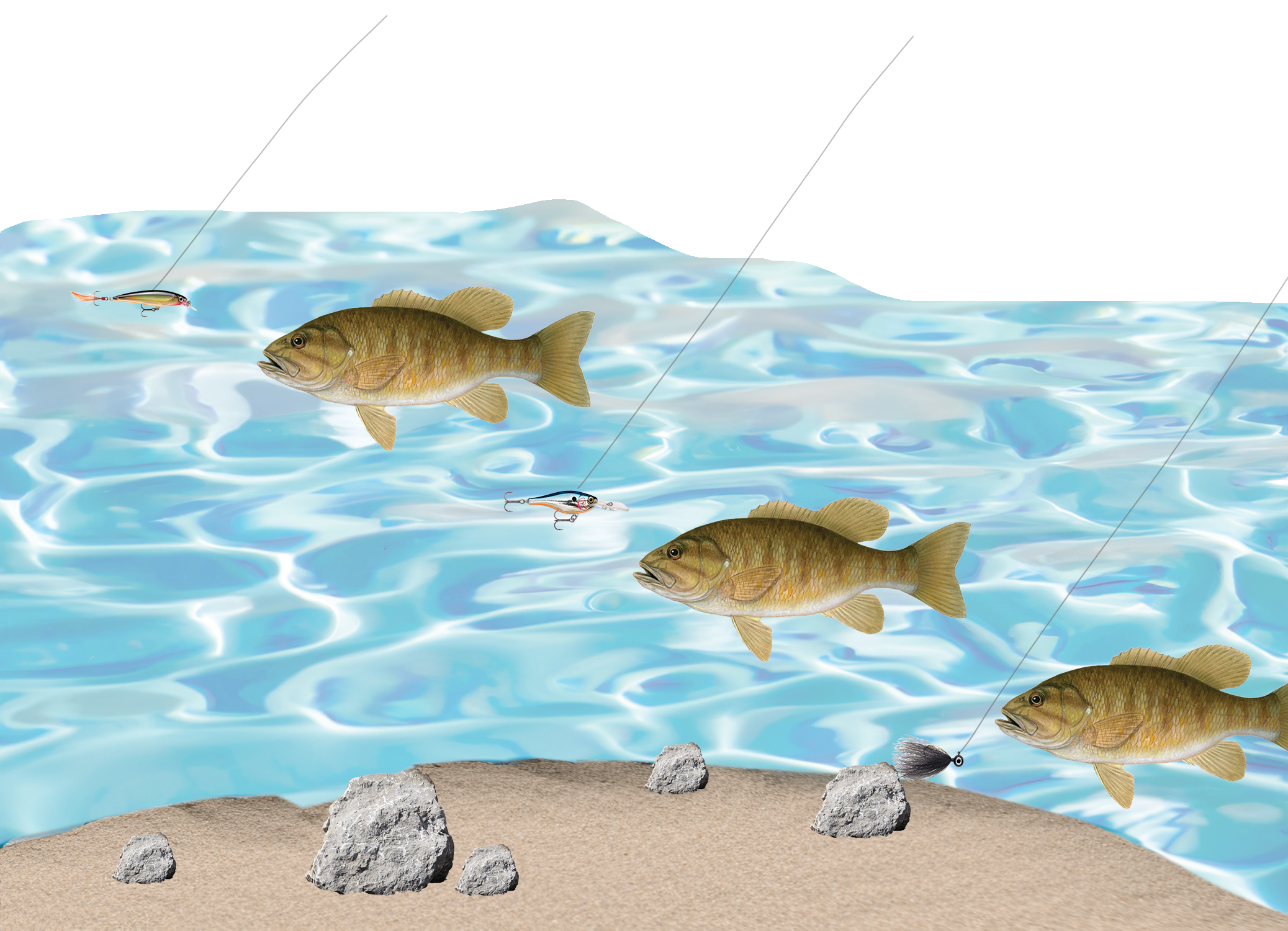
Let’s break this concept down into three categories of fish location and behavior: on the bottom, indicating limited fish activity; suspended slightly off bottom, meaning that they won’t chase, but will strike something presented and paused right before their eyes; and suspended well above bottom, indicating that fish are moving and active, willing to chase and bite a range of presentations.
Early-bird, ice-out smallies
You dodge ice fragments on your way out from the boat launch to fish proven spring smallmouth spots, and can hardly wait to start popping fish. You tie on a neutrally-buoyant, minnow-profile bait that dives about 2 to 3 feet deep when gently pulled with a sweep of your rod tip, and is then paused, suspending in place, to trigger nearby smallies into biting. But after an hour of casting and probing, there’s no response. You’re tempted to believe that bass haven’t moved shallower yet (4 to 8 feet) and simply aren’t present. But before you leave a known, productive spring area, switch up your presentation a bit.
If bass aren’t rising to the occasion, switch to a bottom-scraping technique like a hair jig or shaky-head worm. Cast out across 4- to 8-foot sand and boulder flats adjacent to the drop-off to deeper water, and let your jig sink to bottom. Pause after it settles. Then lift your rod tip to scratch and jiggle it back a foot or two. Pause again. Give bass time to examine your lure. When they do, you might only feel a hesitation or slight weight on your line. Set the hook!
Slightly after full ice-out, or during cold fronts
You can be among the first to get the latest info on where to go, what to use and how to use it!
So, a few days later, after ice has fully left the lake, you head back out, ready to slam fish on your suspending minnowbait. You fish the same areas where you caught a few fish on jigs a couple of days ago, and actually see a few appear behind your lure, but not quite respond to your paused bait as well as expected. This is actually a good sign, because it confirms that fish are present. You just haven’t convinced them to bite—yet.
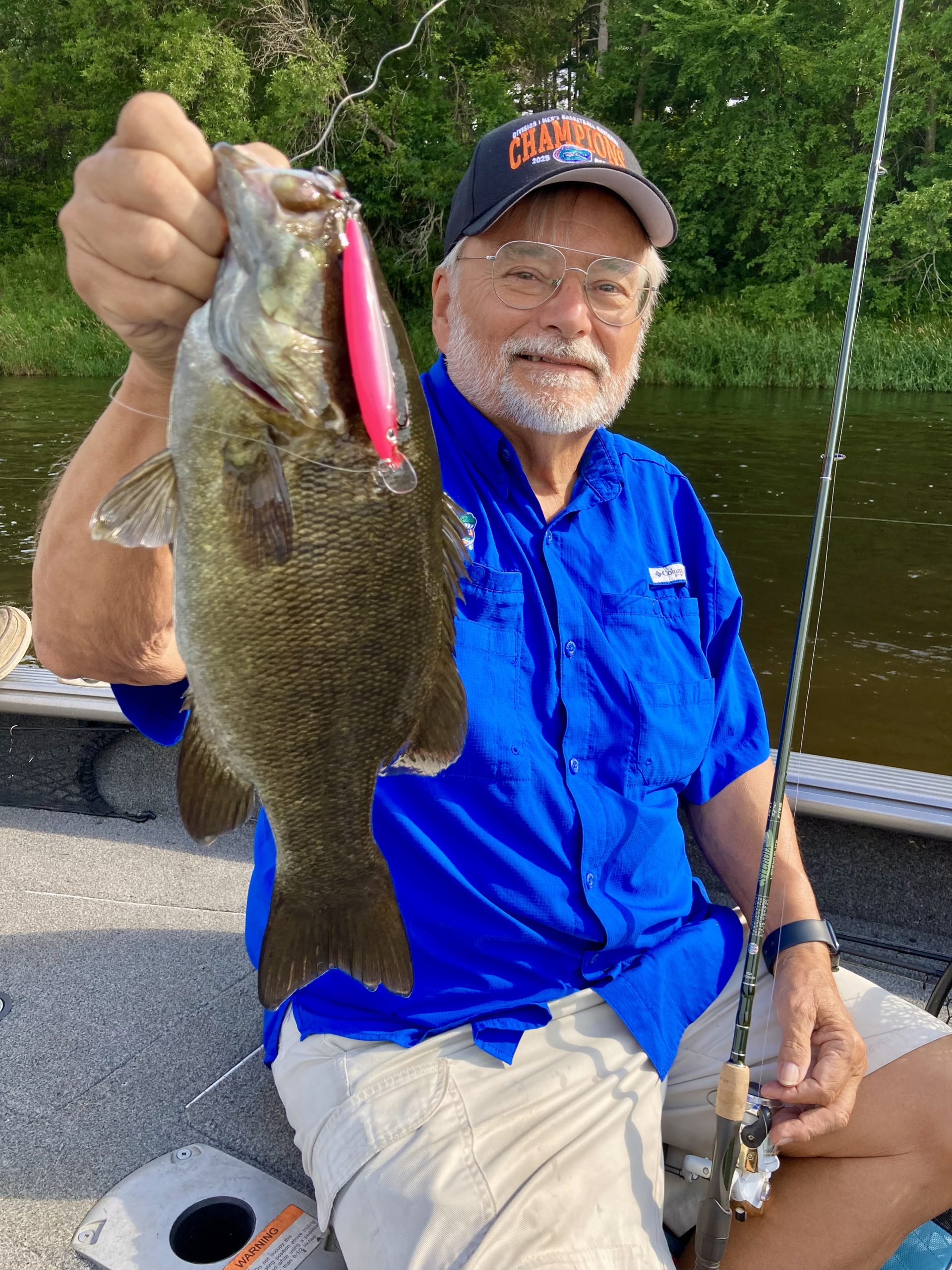
Adjust your technique. Rather than casting a shallow-diving, suspending jerkbait that runs 2 to 3 feet deep, switch to a deeper-diving, suspending lure like a #10 X-Rap Deep or Shad Rap RS (baitfish profile) crankbait. These dive one level deeper, like 4 to 8 feet, yet still act much like a regular X-Rap when gently moved with a sweep of the rod tip, then paused. The main difference is, the lure is now stopping and suspending just above bottom, and perhaps even scratching it occasionally. If you’re not seeing bass rise to a shallower lure, but suspect that they’re present and may respond to this presentation tweak, you’re suspending it right before their noses, a foot or two off bottom. Patience. Give bass time to examine your lure. Then boom!
Surprisingly, this might turn out to be your top method in the morning, until a few hours of sunlight penetration begins warming the water and encourages bass to begin rising off bottom, becoming more active. It’s also a good option to try in the next week or two if a cold front causes bass to retreat from the extreme shallows, back to these slightly-deeper areas.
Prime, pre-spawn action in the shallows
As the water begins to warm even slightly, either as late-morning sunlight penetration gets bass up and moving, or a few days later, when waves of smallmouths begin penetrating the extreme shallows, the mother lode of good fish suddenly become vulnerable in about 2 to 6 feet of water. Bass appear to be everywhere throughout shallow areas of good bottom content. Shallow-running, suspending minnowbaits become top producers; smallies just can’t resist their dive, wiggle, then p-a-u-s-e, infuriating following or fish eyeballing them to pounce—hard! Remember… when fishing suspending baits in spring, give bass time to examine your lure. It’s an amazing time to be on the water, with big catches of some of the largest smallmouths in the lake.
At some point, other lures may also come into play: spinnerbaits, straight-shaft spinners, jigheads dressed with swimming grubs or boot tails, shallow crankbaits, and eventually, even topwaters. It’s fun to shake things up a bit and show fish something different than you’re been tossing for the past few weeks. Just don’t rush to switch to these options; they may eventually become viable, even occasionally preferred. But early on, lures that either scratch bottom, or suspend at the right depth level, are top choices for spring smallmouths penetrating the shallows.
You can pretty much take all of this to the bank… until the water temperature nears 60 degrees, when pre-spawn bass switch from aggressively chasing and feeding, to beginning to build nests for spawning. That’s when everything suddenly changes. But that’s another story for another day.

Did you enjoy this post?
You can be among the first to get the latest info on where to go, what to use and how to use it!