
March Pike Fishing: Lake of the Woods’ Best-Kept Secret
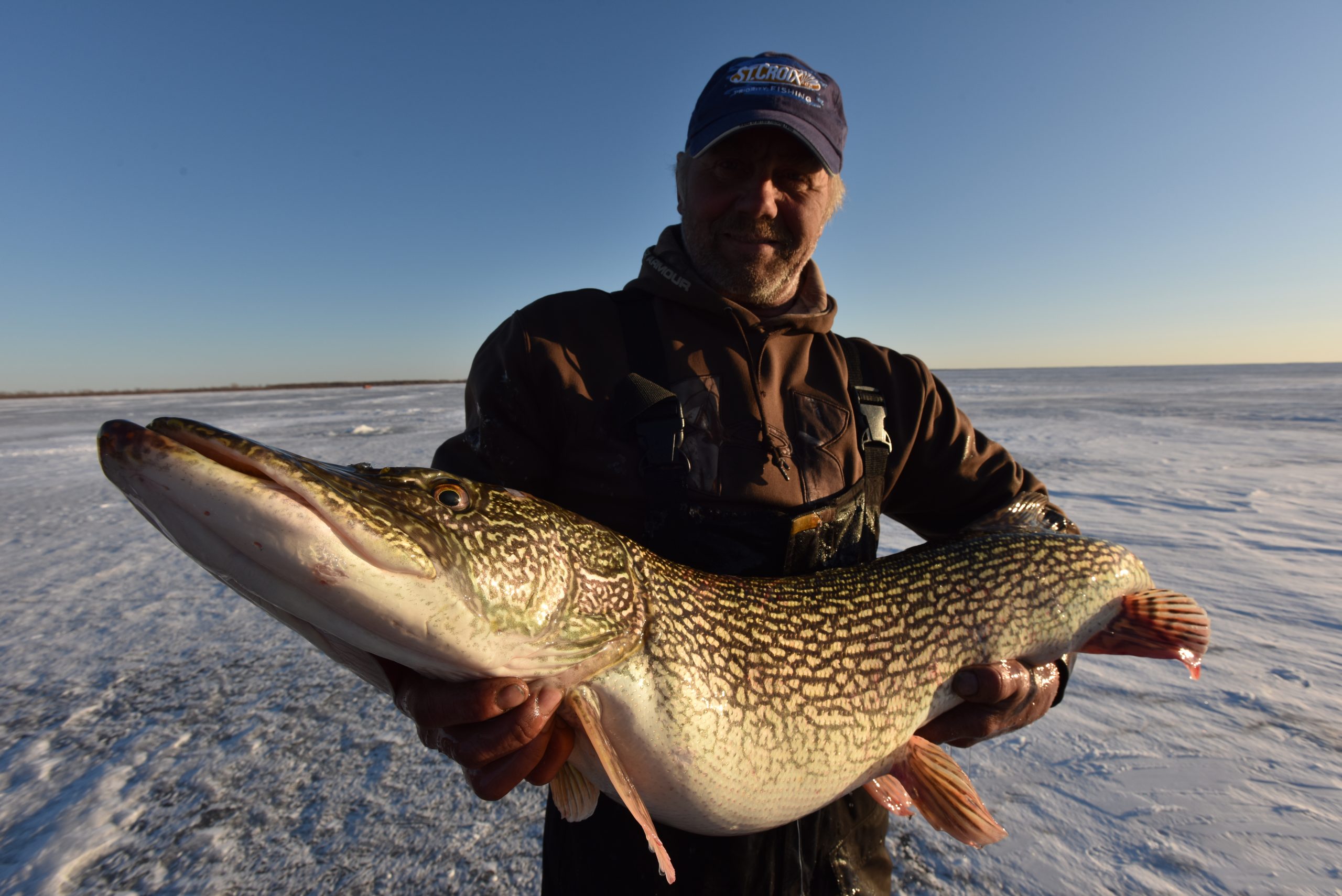
Minnesota has plenty of lakes with northern pike. But when you start talking about trophy pike—fish over 40 inches—the list gets short in a hurry. Lake of the Woods gets most of its fame from walleyes, but year after year, it proves it’s also home to big numbers of monster pike. Just scroll through the Facebook pages of local pike anglers and resorts, and you’ll see what we’re talking about.
What makes a trophy pike lake?
For a body of water to consistently produce trophy pike, several things need to line up.
Good genetics: It’s easier to keep good genetics in a lake than to lose them and try to rebuild from scratch. When a pike makes it to 30 inches, it has beaten the odds and has a much better chance of hitting the 40-inch mark. It’s a survivor with genes that you want in the system for years to come.
That’s why Lake of the Woods has a protective slot limit: All pike between 30 and 40 inches must be immediately released. You can keep three pike per day, but only one can be over 40 inches. This regulation, combined with catch-and-release efforts from anglers, helps sustain this incredible fishery.
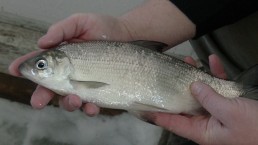
Plenty of food: Another key is abundant forage. Lake of the Woods has a variety of food sources, but the real game-changer is a strong population of high-protein tullibees (also called ciscoes). Back in the early 1990s, a DNR study found a clear connection: Lakes with big pike had tullibees.
Every fall, when the Minnesota DNR does test netting and catches a big pike, there’s often a tullibee in its stomach. Interesting side note: These big pike typically don’t have those black spots you see on smaller pike. The thinking is that smaller pike spend more time in shallow water where they pick up parasites, while big pike are feeding on tullibees in deeper water.
Beyond tullibees, there’s also a huge population of walleyes, saugers, perch, various minnows, and invertebrates to keep multiple year classes of pike well fed.
Good spawning habitat: Big water with lots of spawning options helps create a successful fishery. Lake of the Woods has spawning areas everywhere—rivers, tributaries, bays, and swampy areas.
Pike prefer to spawn on newly flooded vegetation rather than old vegetation covered in slippery algae. The eggs stick better, and pike love this habitat, especially when it’s paired with a mud bottom. Having spawning areas scattered all around the lake helps buffer against spring storms, drastic water level changes, and temperature swings.
When to target big pike
The pike season on Minnesota’s Lake of the Woods is open year-round. Trophy pike are caught all year, but if you had to pick one time period, it would be March. Here’s why.
These big pike have a lot of water to roam. As March approaches, the angle of the sun changes and the rays get stronger. Days get longer. Melting water starts to infiltrate the system. These are all signals to the pike that spawn is coming. They start feeding heavily and staging near spawning areas.
Pike aren’t schooling fish, but they do congregate in the best spawning areas. This makes them vulnerable to tip-up anglers and creates those memorable days with flags popping all over the place.
Where to find pike in late winter
This is a complex question that depends on the time of year. Let’s focus on late February through ice-out, when pike move to pre-spawn areas just adjacent to where they’ll actually lay their eggs.
On the south end of Lake of the Woods, Four Mile Bay, Bostic Bay, and Zippel Bay all hold big pike. Large numbers of pike also stage across the shoreline area adjacent to Morris Point Gap, on the main lake adjacent to Zippel Bay, around the Twin Islands and throughout Muskeg Bay—including in front of Swift Ditch and the Warroad River. These areas offer the combination of spawning habitat, warming mud flats, and sand and rubble transitions that draw pre-spawn pike like a magnet.
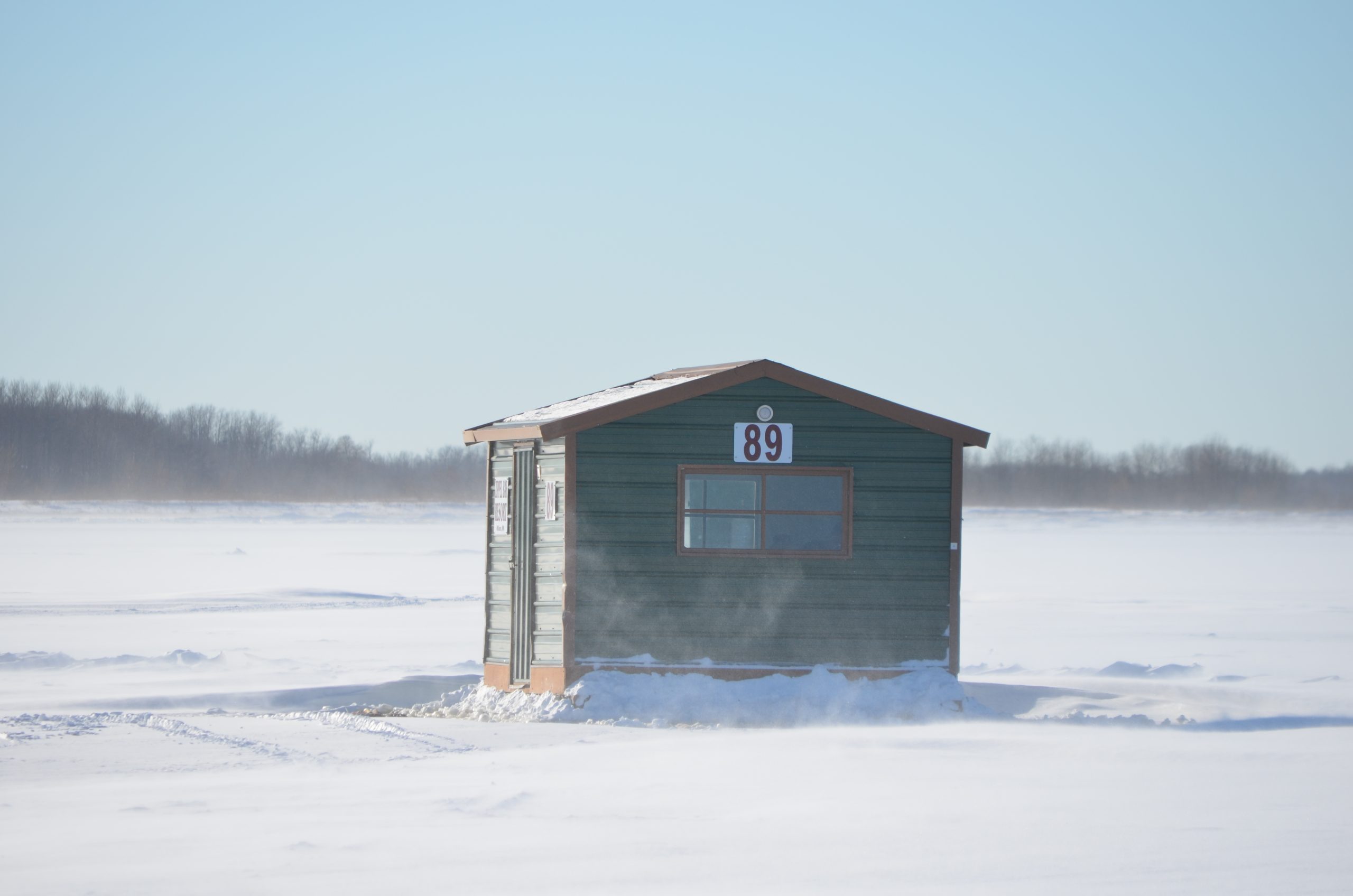
Your best bet is to work through a resort or local bait shop. They can give you current ice conditions and steer you toward areas where pike are hanging out. Some resorts even place fish houses in key pike areas with large windows so you can watch your tip-up flags. Having a warm home base in the middle of the action is pretty nice.
Another area that holds a strong number of big pike, but often gets overlooked, is the Northwest Angle. While most anglers up there focus on walleyes, pike fishing can be exceptional for those willing to target them. Pike at the Angle tend to use rocky structure to feed just prior to the spawn. Focus on underwater rock points and sunken rock reefs with your tip-ups. Dead ciscoes or dead suckers on a quick-strike rig are typically the most effective presentations. Because pike fishing pressure at the Angle is so light, there are some real monsters swimming around up there just waiting to be caught.
Setting up for success
The most common way to catch a monster pike is to present something they’re used to eating. That typically means the bait needs to be big—think live suckers or frozen ciscoes.
Quick-strike rig: This is the most popular setup. It uses two treble hooks on leader material. You present a big minnow horizontally with one treble just behind the head and the other in front of the tail. It’s a great presentation, and you can set the hook quickly after the flag goes up. This increases your hook-up percentage and creates less mortality since most pike don’t have time to swallow the hooks.
Circle hooks: These are gaining popularity. With circle hooks, you don’t “set” the hook like you would with a quick-strike rig. You just start pulling in line. By design, the circle hook finds its way to the corner of the pike’s mouth and gets lodged there.
You can be among the first to get the latest info on where to go, what to use and how to use it!
Be prepared—these fish are beasts
Use caution when battling a big pike. Be ready to let the fish run a couple times before working it up the hole. It’s also important to be prepared when that fish comes up.
Essential equipment:
• Gloves
• Camera
• Ruler or tape measure
• Long needle-nose pliers
• Jaw spreaders
• Good pair of hook cutters
Have your equipment ready, because things happen fast. If a hook gets caught deep, don’t rip it out; cut it off with hook cutters. Save the fish.
Proper handling: Don’t hold the fish vertically. The sheer weight can tear organs and tissues. Instead, carefully grab the pike with one hand slid up inside the gill plate toward the hard membrane under its jaw, and support the weight horizontally under its belly with your other hand.
Never grab the pike in the gills or by the eyes; this causes mortality. If you’re taking a picture, do it quickly and get the fish back in the water. If handled correctly, this fish will live to fight another day.
Strategies that work
Live bait or dead bait? It depends on the day. Some days, fish hone in on live suckers. Other days, they prefer the easy, stinky meal of dead bait. Try both and adapt.
Three depth strategies:
1. Two to three feet off bottom: This is probably the most common setup and targets pike swimming along the bottom. With your bait well off the bottom, it’s easy for pike—with eyes on top of their heads—to see the offering and take action.
2. Right on the mud: Big pike will grab dead bait lying right on the bottom. Pike are opportunistic. They’re also used to grabbing hibernating frogs from shallow mud by taking a mouthful of mud and frog, then shooting the mud through their gills. On certain days, this method is deadly. These fish will scavenge and often can’t turn down an easy meal.
3. Right below the ice: If you talk to walleye anglers, you’ll often hear about sightings of big pike swimming right below the ice. Smaller fish caught by walleye anglers that don’t make it float up to the bottom of the ice and make an easy meal for a big pike. Plus, there are lots of suspended fish that pull pike off the bottom. This technique should be part of your initial spread.
Once a few flags fly, hopefully you can recognize a pattern and adjust accordingly.
A world-class pike fishery
For many years, people thought catching a pike of a lifetime meant traveling hundreds of miles by plane far north of the border. Thanks to smart management, forward-thinking anglers, and the right environmental factors, Lake of the Woods has become a go-to destination for monster pike.

Did you enjoy this post?
You can be among the first to get the latest info on where to go, what to use and how to use it!