
March Kicks Off Open-Water Fishing in Lake Erie; Area Rivers Provide Additional Opportunities
On Western Lake Erie, near the islands, the first half of January provided only a couple of days to tiptoe out on the ice.
During the first short period of ice cover near the Catawba-to-Mouse-Island shoreline, and off South Bass Island’s West Shore, anglers walked out for a few days before a thaw, accompanied with gale force winds, replaced the thin ice with open water where they had stood the previous day.
At the time of this writing, Lake Erie is back on the cusp of likely re-freezing, with a series of Polar Vortex events lined up to drop into the region to end the final two weeks of January.
Even if ice forms and people get a chance to fish through it, the trend of no or briefer periods of ice cover on the lake will still likely lead to boats being launched as soon as the drifting slush clears this month.
Anglers catch walleyes in the Michigan waters of Lake Erie close to the Sterling State Park launching ramps, with massive parades of fish crisscrossing as they swim from Lake Erie to spawn in the Detroit River, or down from Lake Huron to spawn in the Maumee River. Non-residents are charged $10 per day or $76 for an annual fishing license in Michigan.
With fewer families choosing outdoor recreational pursuits over various kids’ sporting events and sedentary indoor activities, the numbers of anglers purchasing fishing licenses has declined, forcing Ohio to make up lost revenue by raising non-resident fishing license prices for 2026.
They went from $13 to $26 for a daily permit, and from $49 to $74 for an annual license, plus a writing/processing fee of approximately $1 to $2, depending on method of purchase.
Resident license prices remained unchanged. Multi-year options offer modest savings compared to making annual purchases.
Nonetheless, harvests of walleyes in Ohio waters of Lake Erie have been in the 2 million fish range for the past 7 years. With Ohio’s Total Allowable Catch of over 5.8 million walleyes allotted in 2025, raising the daily limit could be biologically supported.
However, leaving it at 6 year-round is not expected to be changed by the Ohio Division of Wildlife because: It is backed by charter captains; satisfies most anglers who were surveyed; provides consistency for following regulations; and affords a cushion for years when poor spawning occurs.
A multitude of public boat ramps and private marinas will be crowded as soon as they are usable, with a 12-month boat angling season frequently the case during the mild winters that have become more frequent.
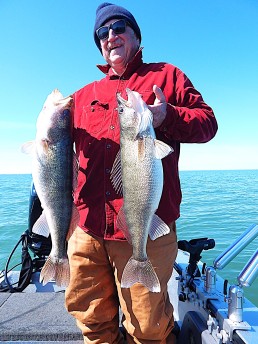
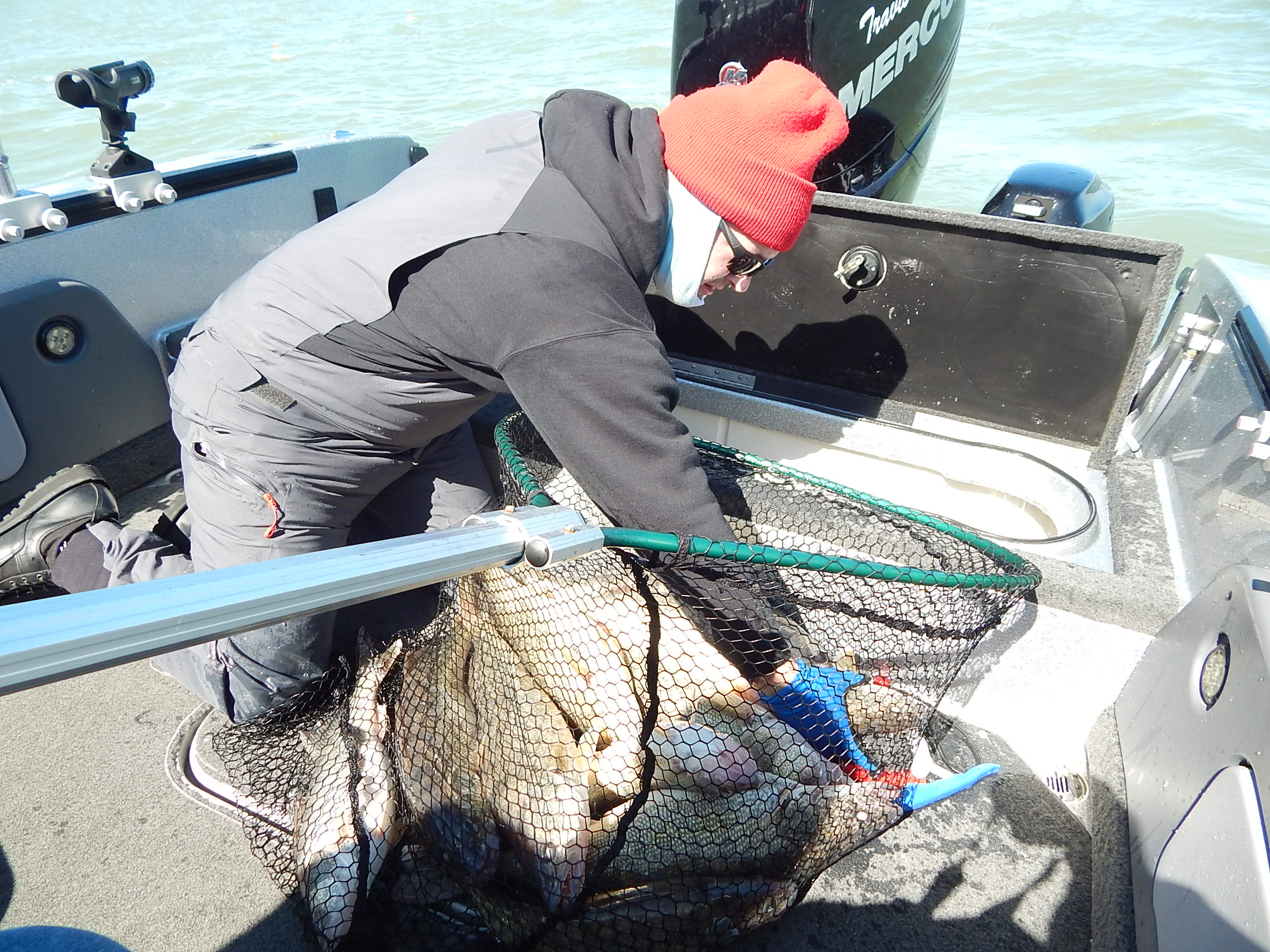
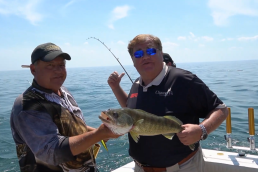
Trollers will reap limits of walleyes from the adjacent deep water near these structures and between the islands, just as they do the rest of the year, with these being predominantly mature hens that pull down their spring scales to double digits, at least until they drop their eggs.
Yet, a dedicated cadre of anglers relish the period when smaller males (jacks) can be pulled off shallow water reefs in front of the Davis Besse Power Plant, island shoals, and the sand ridges and dredge humps in Maumee Bay, chiefly using jigs.
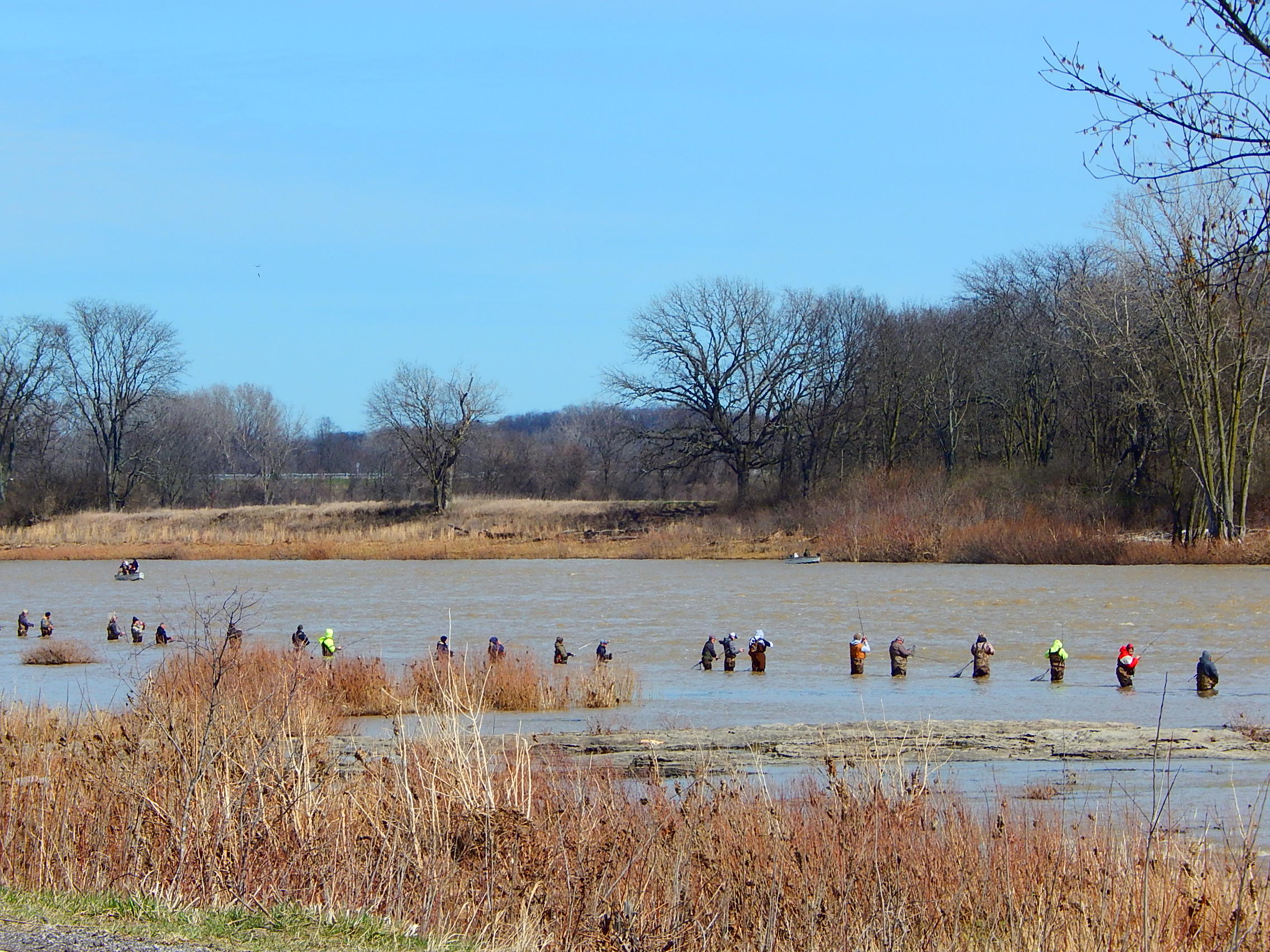
Meanwhile, anxious anglers will be testing their luck in waders, hoping that they do not detect any new leaks, while being worn during their first trips into icy tributary streams.
The Sandusky River at Fremont provides the earliest runs, since it is shallower and warms up about a week before the larger Maumee River.
The removal of the Ballville Dam in Fremont in 2017 now allows spawning runs to migrate more than 20 miles upriver, and new places are being discovered where small schools of adventurous fish roam upstream of the crowds.
In the Maumee River, thousands of people from dozens of states return to numerous productive fishing access locations within the towns of Maumee and Perrysburg. The odds of fishing success at any given spot fluctuate with the water levels.
You can be among the first to get the latest info on where to go, what to use and how to use it!
The Portage and Mahoning Rivers can provide some local anglers who have learned where to pinpoint walleyes more room there to fish away from the ever-present, daily crowds in more popular streams.
Central Basin anglers will continue to land steelhead trout at chosen streams where the Ohio Division of Wildlife stocks over 450,000 smolts annually.
However, since a portion of these fish fail to properly imprint on the stream where they were stocked, the first deep hole upstream of the lake can hold steelhead in virtually every river, creek, or ditch, miles from any release location.
A few of my fishing pals have discovered small streams where the pools found under the closest bridge to the lake sometimes contain mature steelhead. They can take advantage of these secret spots without the aggravation that others can create by casting over their lines, spooking the fish, or otherwise spoiling an otherwise relaxing fishing experience.
In Pennsylvania and New York, Eastern Basin anglers are also in hot pursuit of these acrobatic silver bullets that have spent their winter accumulating in many of their Lake Erie tributaries.
Pennsylvania stocks about a 1,000,000 steelhead and modest numbers of brown trout annually, and has many streams that routinely support good returns.
Walleye fishing is also good during the summer months, with 46 percent of the boats returning with their six-fish limits that averaged 20 inches long in 2024, according to the Pennsylvania Fish and Boat Commission.
They charge non-residents $31.97 for a three-day permit, or $60.97 for an annual license—plus a Lake Erie and/or Trout Permit of $9.97, $14.97 or $20.97 (combined).
New York charges non-residents $50 for an annual license, with $10 for a daily license that can be applied as a “downpayment” toward upgrading to an annual license.
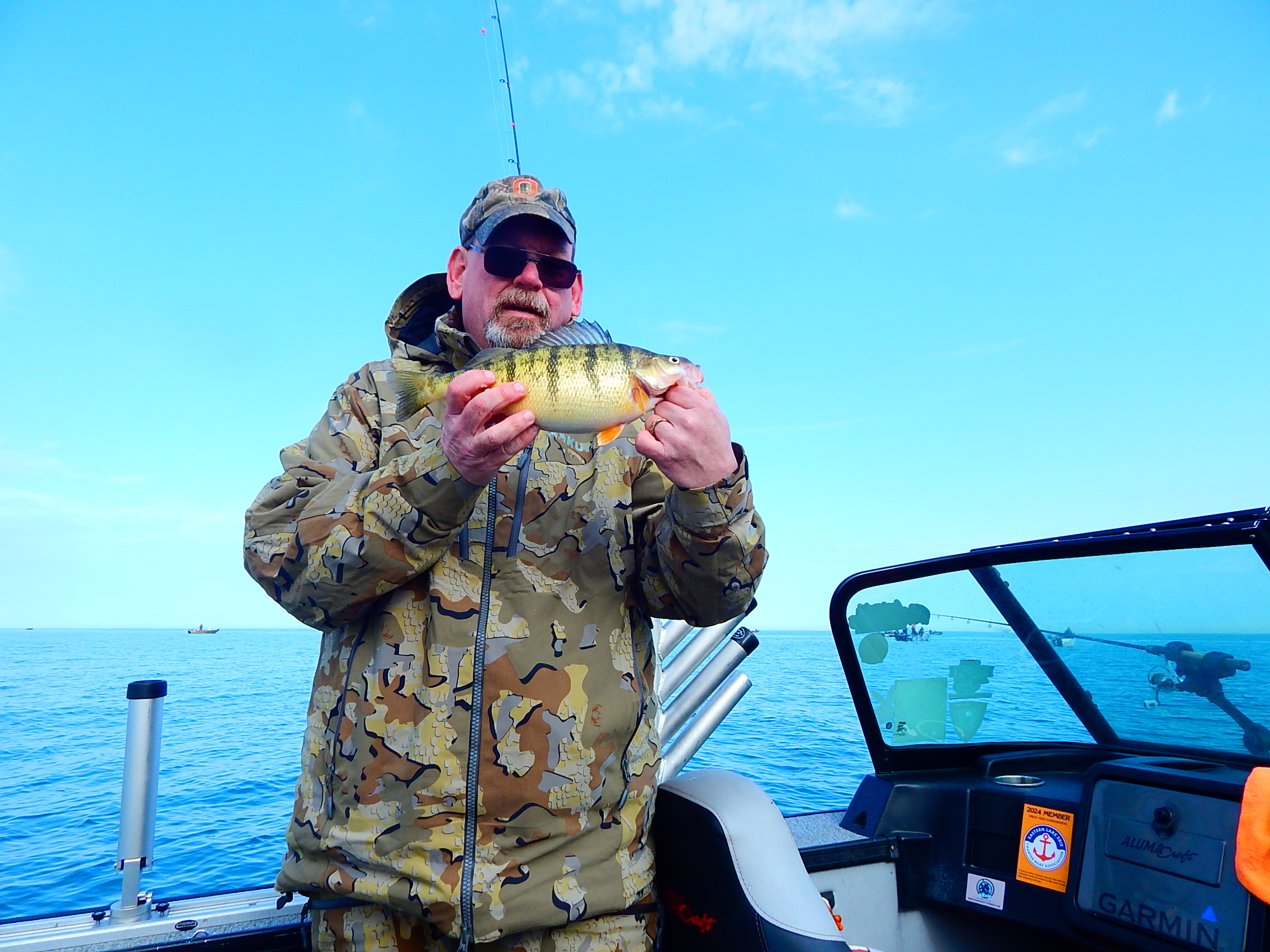
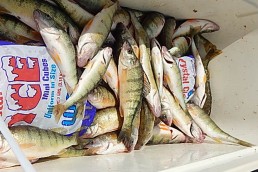
As soon as the ice clears from the nearshore areas from Dunkirk to Buffalo, fat perch that have moved inward toward the warming water to spawn draw the attention of those who locate an available boat launch from which to reach the lake.
Until the walleye season opens on May 1, a generous 50-fish daily limit can scratch the itch of any veteran perch jerker looking to enjoy the simple joy of winding in the main entrée of traditional midwestern fish fries ahead of the Lenten season.
In their January 9 newsletter, the New York Department of Environmental Conservation summarized the 2025 fishing on Lake Erie with the following perch catch statistics and walleye highlights.
The yellow perch catch rate of 35 perch per trip, and average size of 11.5 inches, for harvested yellow perch in these New York waters remains the highest in Lake Erie.
Lake Erie anglers experienced a banner year of walleye fishing in Lake Erie—the best year on record. An average of 11 walleyes were caught per boat trip, and two in five walleye trips returned with their full six-fish limit.
Even though fishing occurs all year, March has long been the month when the fishing season is considered to be starting, using the wide variety of methods that can be employed to land some of our favorite species.
Did you enjoy this post?
You can be among the first to get the latest info on where to go, what to use and how to use it!