
March Fishing Options: Open Water or Ice, Long Rods or Short
March of 2025 brought interesting weather in the upper Midwest. The month started out very cold, following a cold winter with less-than-average snow. Then a switch flipped the last week, and spring arrived in a hurry. This new pattern seems to be the new norm, and it brings multiple options for northern anglers. During this particular month, we went from fishing crappies through 16 inches of ice to fishing walleyes in open water in just a week.
My son and I started this extreme transition by heading out ice fishing on a West Metro area lake in our home state of Minnesota. We got to the boat launch in late afternoon/early evening, with a temperature of 15 degrees and light winds. It was the third weekend in March, and I am reluctant to drive on ice this time of year, regardless of the prevailing weather. There was little to no snow on the lake, so we walked out about 3/4 mile, pulling my Clam Fish Trap Voyageur to a deep basin area right at the bottom of the drop from a shallow, weedy reef. Wheel houses had been gone for a couple weeks per Minnesota state law, and we saw only two other fishing parties on this large lake on a Saturday afternoon.
We popped three holes through 15 inches of okay ice—I was glad we didn’t drive out—over 22 feet of water. We were betting on a night crappie bite, so we put a crappie minnow on a vertical Creep Worm jig under a slip float in the middle hole, suspended 8 feet above bottom. The we both sent down different horizontal jigs tipped with red Eurolarvae (spikes) on the outside two holes in front of our seats. Just after sunset, our Humminbirds started lighting up with fish from 2 to 10 feet above bottom—crappies for sure!
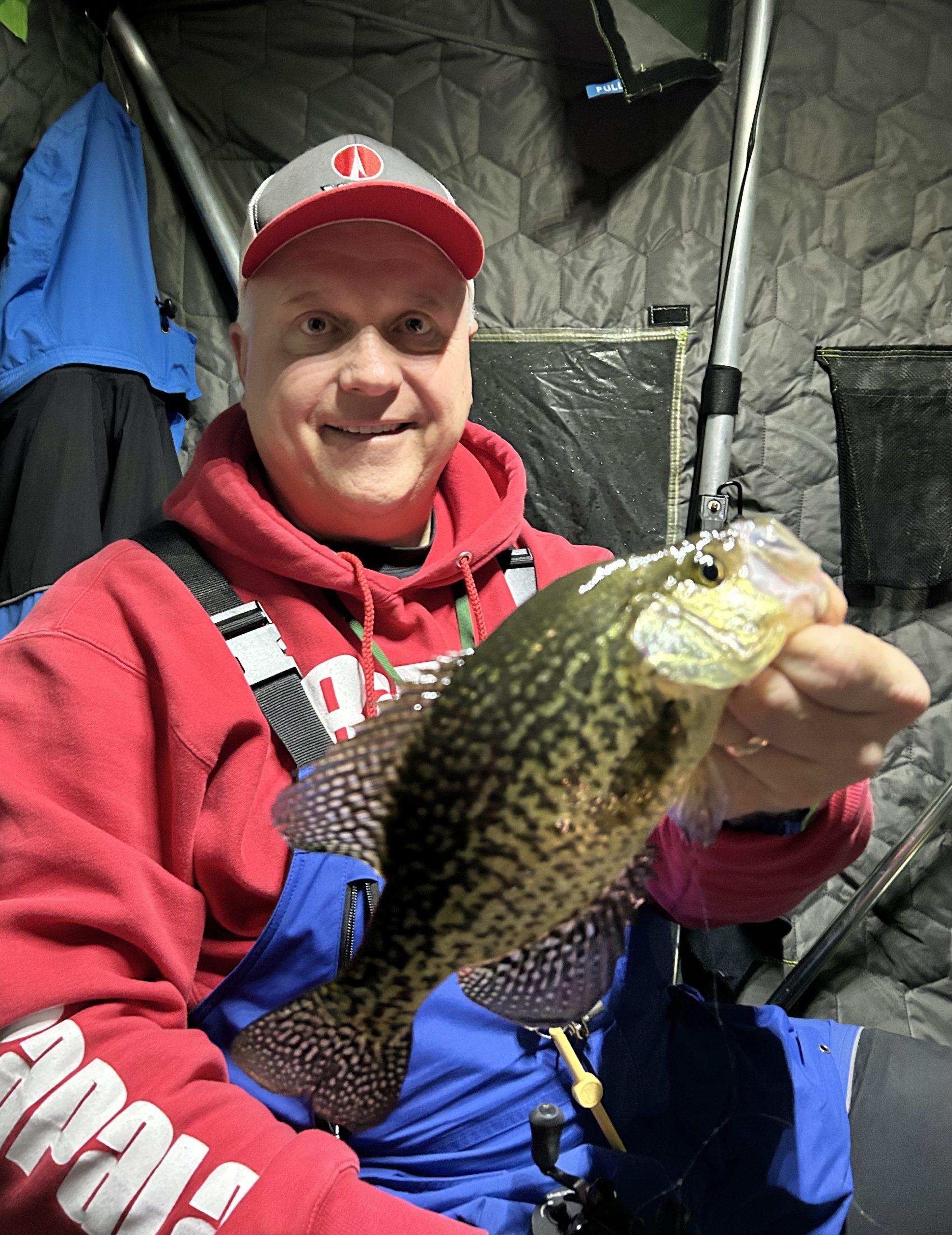
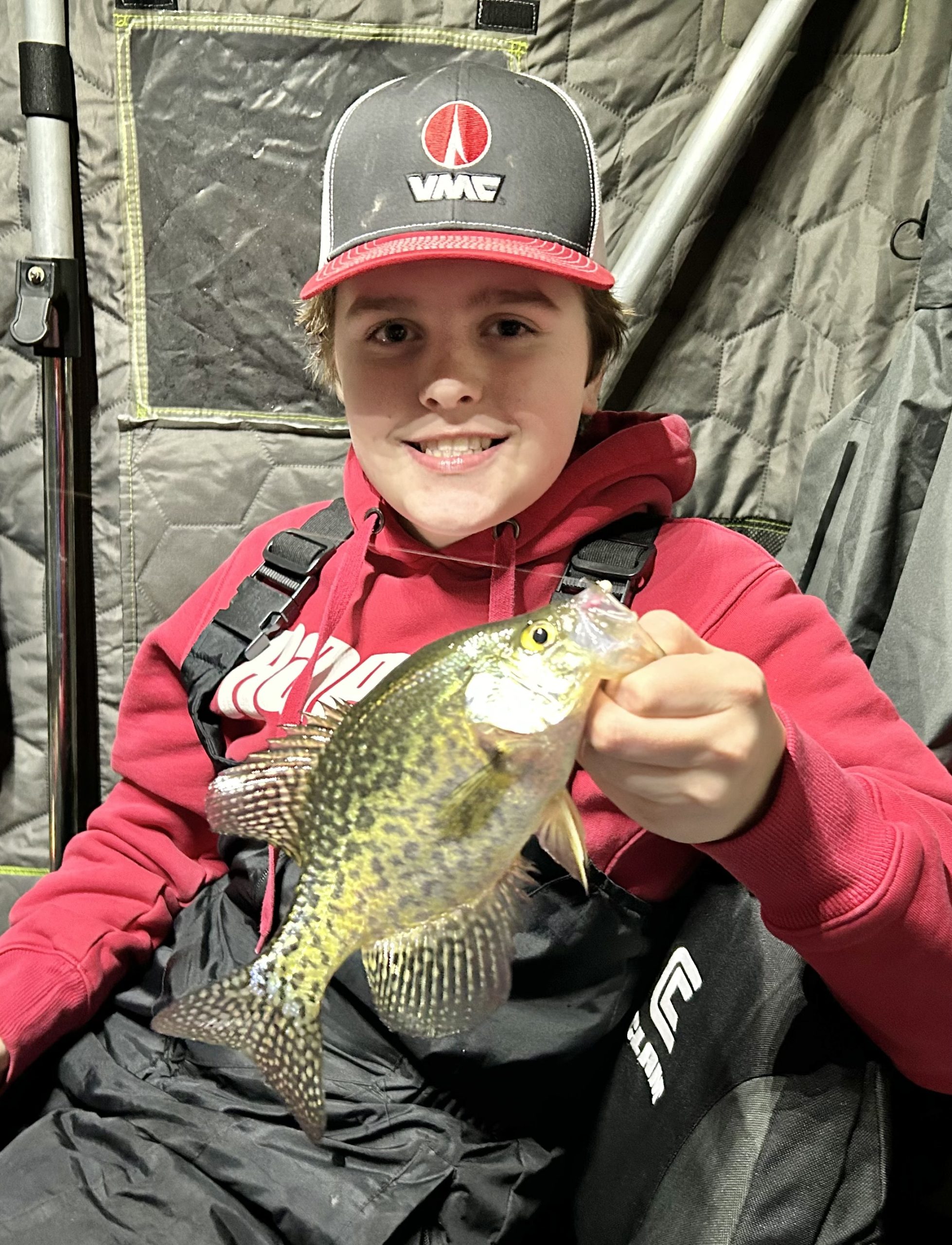
I got our first crappie, a nice 10-incher, jigging a VMC Tungsten Tubby tipped with three red spikes. Then our screens went blank for a while. Ten minutes later, fish showed up again on our sonar units, and the float on the crappie minnow deadstick headed down the hole. “Get him,” I said to my son, who replied, “Can’t, got one on my jig!” as he set the hook. We managed to get both crappies up at the same time without tangling them, then releasing the two, 9- to 10-inch fish. Hustling to get a new minnow on the deadstick and get both lines back down, there were fish all over our sonar screens. So it went until we had put a nice meal of crappies in the bucket, and were getting hungry for a late dinner. We caught maybe thirty to 35 crappies in a couple hours, keeping ten (half of our limit) for lunch the next day.
Our fish ranged from 8 to 12 inches. Most were caught between 3 and 8 feet off of bottom, chasing larvae rising up from the soft bottom. We did get one of the 12-inchers only 6 feet below the ice!
We were using St. Croix Legend Black Ice rods—ultralight, 28-inches long—with stainless steel strike indicators (spring bobbers) for jigging for crappies. These were paired with Fish 13 Descent inline ice reels spooled with 2-pound-test Berkley fluorocarbon line. VMC Tungsten Tubbies and Roach Jigs (basically a Tungsten Tubby with hair) were the best jigs that night. The heavier, denser tungsten allows you to use a small jig for finicky crappies and still get it down 20-plus feet in a hurry when the crappies are swimming through. We were tipping these jigs with two or three red spikes or a single waxworm. Our deadstick rod was a St. Croix Mojo Ice in medium light power, also 28 inches long.
You can be among the first to get the latest info on where to go, what to use and how to use it!
A Pflueger Trion ultralight spinning reel was spooled with 8-pound-test Berkley Fireline crystal tied to a small barrel swivel. From the swivel, a three-foot leader of 8-pound-test Berkley fluorocarbon was tied to a Creep Worm vertical jig tipped with a small crappie minnow. All of our jigs were in glow color combinations, and we were regularly charging them with a tazer to make them more visible in the dark.
We repeated this fun night crappie outing the next night as well, with similar results. A couple days later, a friend informed me that one of our favorite rivers for spring-run walleyes was finally opening up. With a forecast of temps in the 40s and 50s the last half of the week and the upcoming weekend, our favorite boat launch would be open, and we could get out for some big, spring-run walleyes. “We’re in!” I told him, and planning began.
This is March in the upper Midwest. We were going to switch from ice fishing for panfish with temps in the teens, to open-water fishing for walleyes with temps a little either side of 50.
A six-hour drive after work on that Friday had us at our rental cabin on the shore of a river flowing between two big lakes on the border of Minnesota and Ontario. After a short night’s sleep, we were in line for a nearby boat launch. There was some ice along the shoreline, and some ice flows floating around early, but we were able to launch our boat. The ice flows quickly disappeared as the temperature rose through the morning.
We found a sharp shoreline break down into the main river channel around a bend with less current. The four of us put down different colors and styles of 3/8-ounce jigs tipped with live rainbow minnows. We were using the electric trolling motor to slow the boat’s downstream drift to keep our jigs below the boat.
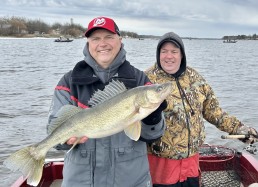
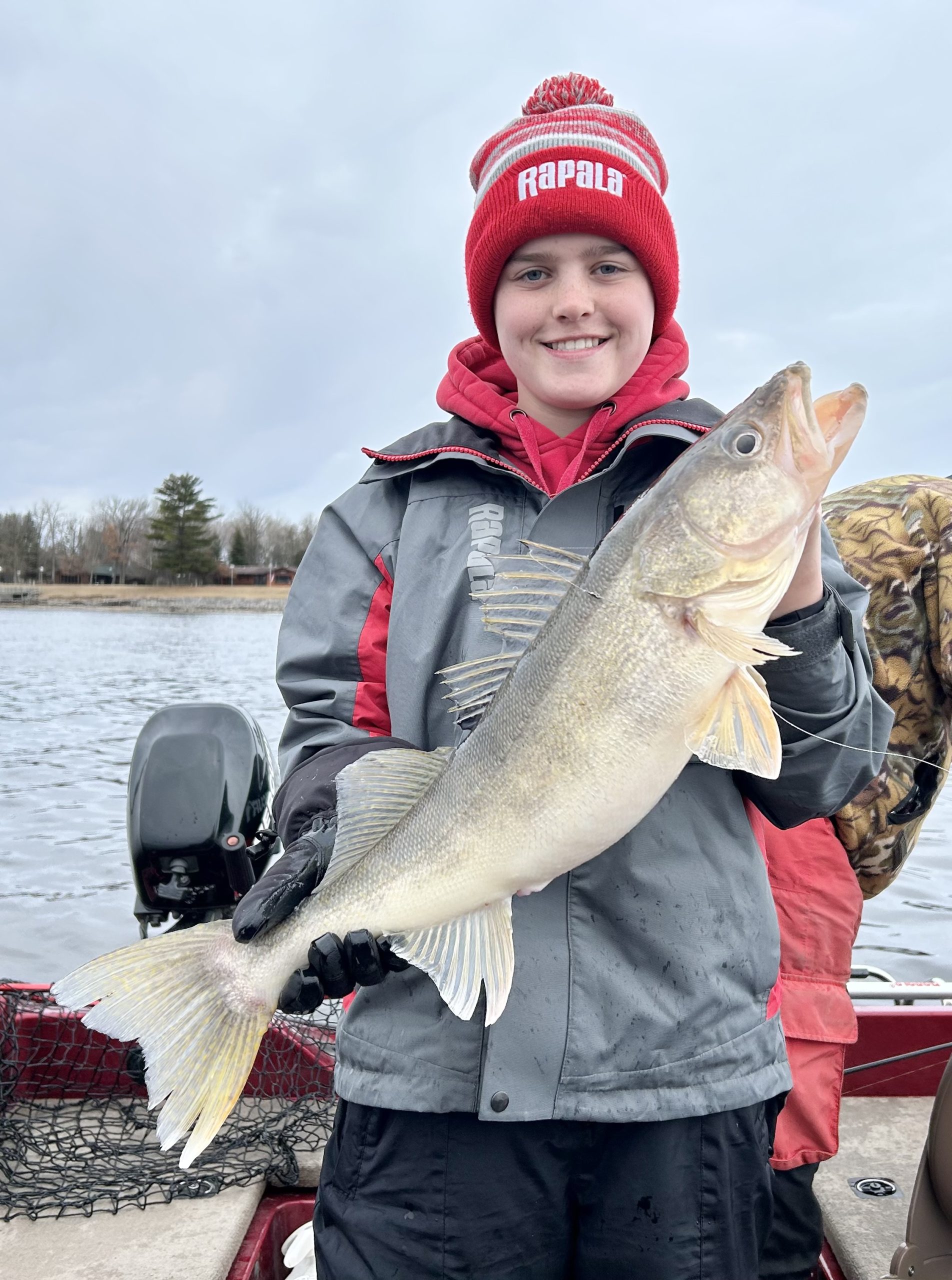
My son Parker got our first fish just a couple minutes into day one—a 5-pound, egg-laden fat female. Almost immediately after dropping back down, Parker laughed, “Got another one. Feels good, too.” A minute later, he was sliding a 4-pounder back into the cold, dark water. “We haven’t had a chance to film the opening yet,” I said, as we were recording an episode of our YouTube show Fishing and Hunting the North Country. As Parker and I were recording the opening, my friend Cory brought in a nice eater-sized walleye. “My turn!” said our friend Pat from the back of the boat, followed by me exclaiming, “What about me?” Everyone laughed a few seconds later as I set the hook into a chunky 6-pound ‘eye.
We were using 6-foot to 6-foot, 3-inch medium-power, fast-action St. Croix Premier and Eyecon spinning rods paired with Pflueger President spinning reels, spooled with 8-pound test Berkley Fireline Crystal. The Fireline was tied directly to the jigs; no fluorocarbon leader necessary for stealth in the murky March river water with a visibility of only 6 inches. Pink, chartreuse, glow white, or a combination of these colors were the best jig choices, and jigs with rattles or spinners rose above others for attracting the attention of walleyes in the dark water.
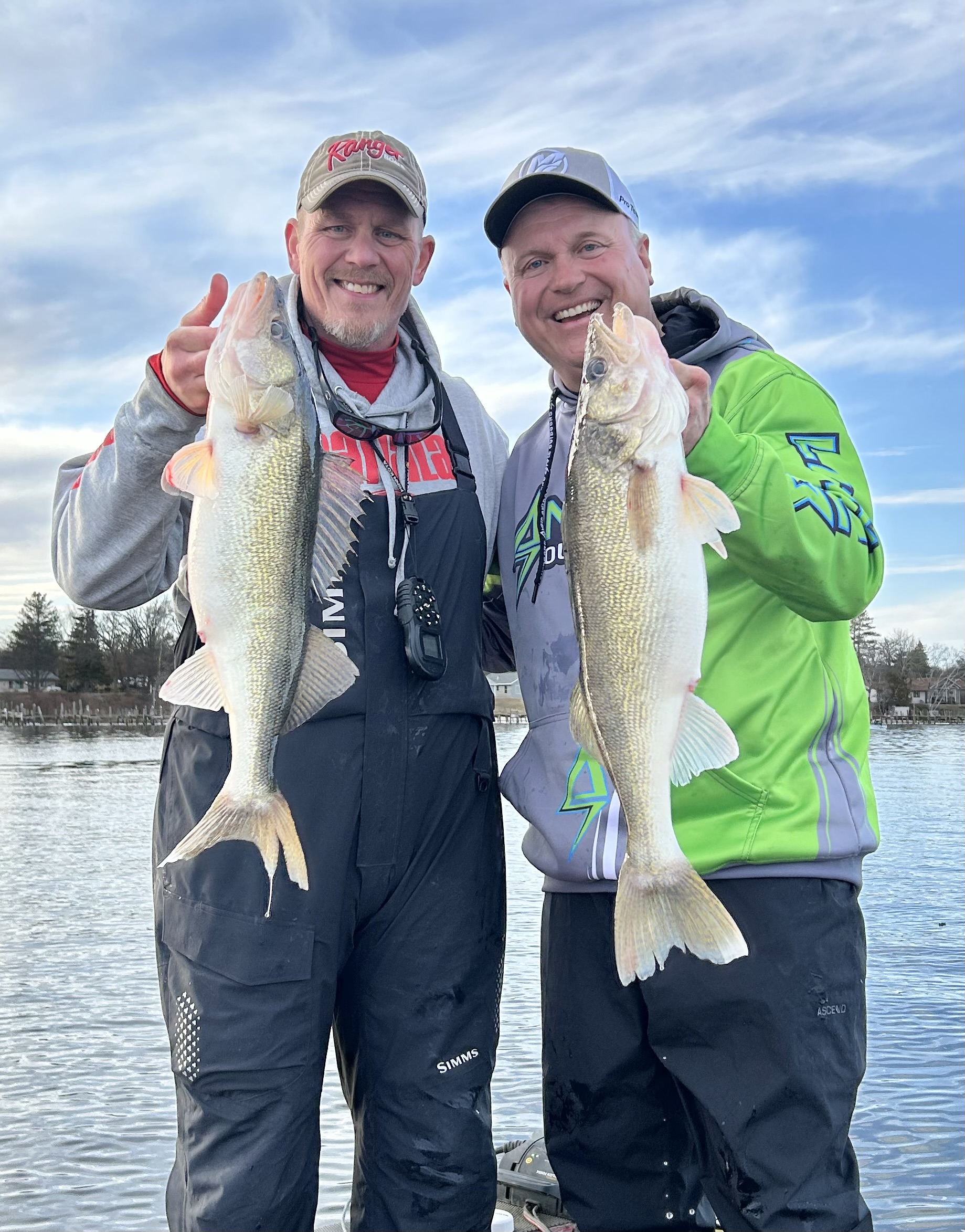
We fished ten hours that Saturday, catching 118 walleyes and sauger from 14 to 28 inches for four anglers. The biggest ones were between 9 and 10 pounds with their egg-laden girth. Sunday, we fished about five hours until it began to rain, before starting the long drive home. We caught 52 walleyes and sauger that morning, including two that around 10 pounds. We all had a good laugh remembering that Parker and I had been ice fishing a week earlier. We recorded a good episode of our YouTube show on Saturday.
March weather in the upper Midwest can be a roller coaster. While it can be frustrating at times, I am grateful for the opportunity to get in some final ice fishing, with relatively little competition and traffic, as well as some fantastic walleye fishing during the spring river spawning run. Even if you have a favorite between open water and ice fishing, take advantage of the opportunity to do both during this change of seasons. Be prepared for the conditions, make sure your equipment is working properly, and be safe on late-season ice or on cold, moving water. Enjoy some great fishing and fun times with family or friends.
Did you enjoy this post?
You can be among the first to get the latest info on where to go, what to use and how to use it!