
Lessons on Electric Knife Blades
I had a daunting task ahead of me. A few friends and I were headed out for a day of walleye fishing, along with even more friends on two other boats. All of us were expecting the captains/guides to put us on fish during the trip and to clean, or arrange for the fish to be cleaned, at day’s end.
The first assumption was right. Limit catches were made by all, and the walleyes caught were huge by any standard. Wow, what a day!
At the end of the day, we returned to the marina and found that the fish cleaning station was closed and the guy usually at the station cleaning walleyes for a fee was nowhere to be found.
“No problem,” I said. “I brought my fish cleaning tools, and there’s a picnic table out back of where we are staying that we can use. Anyone else bring their fish cleaning kit?”
Nope. Once I learned that, I cut a deal with them. “I’ll fillet the fish. You guys clean up the fish cleaning area, then rinse and package the fillets.”
By the time I was done with my part, I was glad that I had a spare battery for my rechargeable electric knife. I was also glad that I’d switched to a “power tool” a few years ago for cleaning some of the fish I catch. I used to think electric knives were for people who didn’t know how to sharpen a fillet knife. That’s probably right, but experience taught me that, just as carpenters work more efficiently with power tools, for some fish-cleaning chores, a power-knife is more efficient.
I have plenty of experience—and I was getting more. I was the designated “fish butcher” the second day of the trip as well. But that taught me another life lesson a few days later.
I learned how hard on the sharpness of the serrated blades of an electric knife that filleting multiple dozens of walleyes could be. It makes sense. Fillet knives are made to cut fish meat, and if they are only cutting meat, their sharpness will last a long time. It’s possible to cut through the rib bones of most fish with a regular fillet knife, but doing so quickly dulls them. Touching them up with a hone or sharpening steel after every two or three fish can keep them sharp.
You can be among the first to get the latest info on where to go, what to use and how to use it!
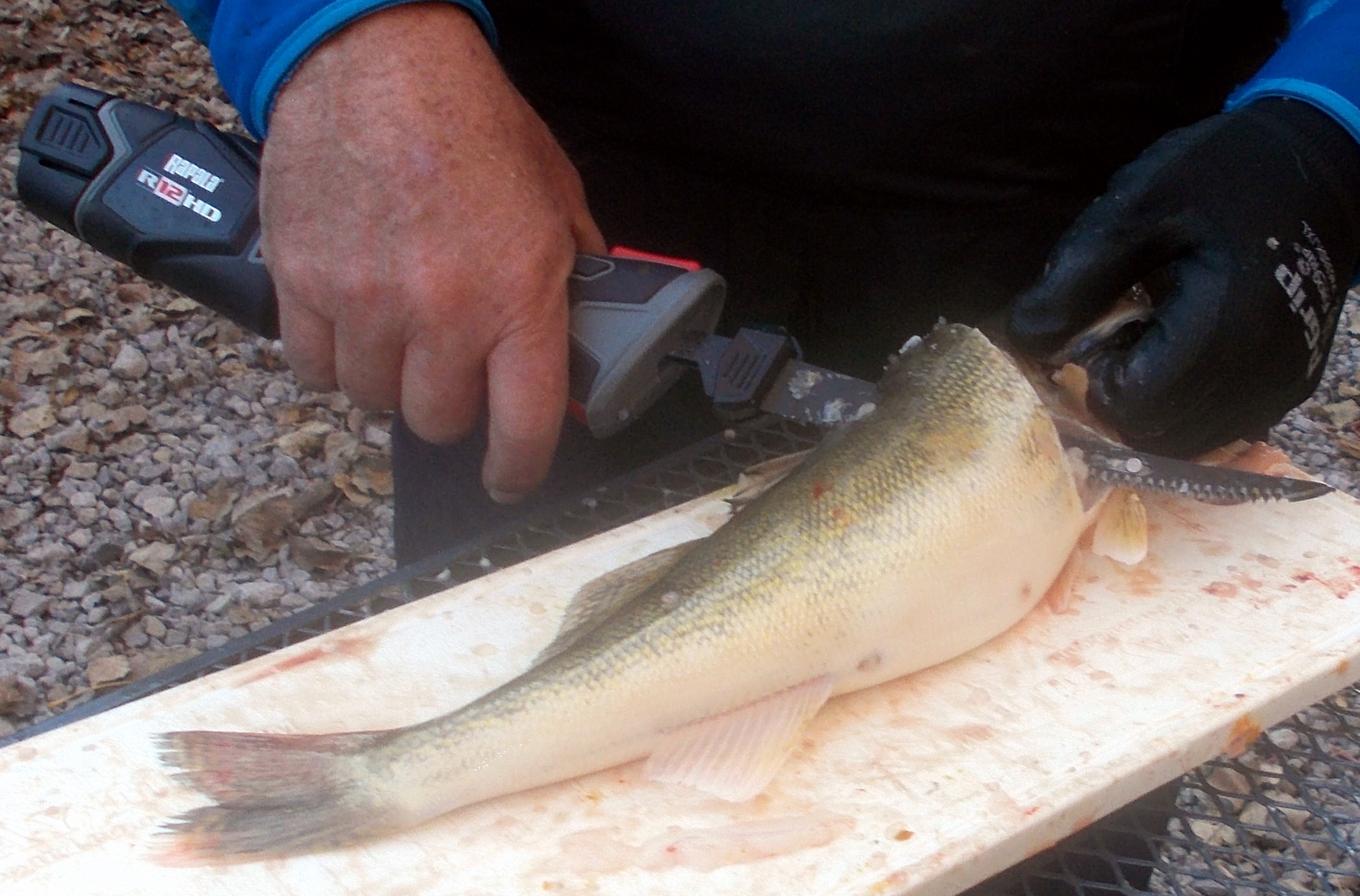
That can’t be done with the serrated blades on electric fillet knives. Eventually, those blades get dull.
I researched the possibility of sharpening dull, serrated blades by interviewing knife sharpening experts as well as the makers of knife sharpening tools. I learned that the steel used to make electric knife blades is extra hard and requires special tools and equipment to sharpen when they are manufactured. Resharpening to “like new” can’t be done by hand using sharpening stones or files. Extra-hard steel or not, by the end of my walleye filleting sessions, the strong motor on my Rapala R12 rechargeable knife was doing more of the work than the sharp blades.
The next time I used my electric knife was closer to home, when a large lake trout was caught. The walleye-dulled blades sliced easily through the trout’s skin and down to the spine, but when I rotated the knife 90 degrees to cut through the ribs, towards the tail, it wouldn’t cut through the “large gauge wires” of which laker ribs are seemingly made. No way, no how!
When I remembered the workout I’d given these blades, not only on walleyes at that last outing, but other fish, on other days previously, it was easy to deduce that the blades were just plain dull.
I finished the lake trout that day by switching the 7.5-inch blade to the 6-inch blade that came with my R12 kit. This blade set is just as stout and sharp—just shorter for filleting smaller fish. Not quite the perfect tool for the job, but it worked.
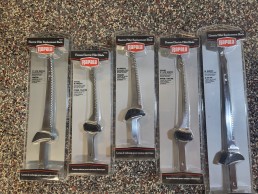
Later, I shopped for a replacement set of blades for my power-knife. I found that Rapala (as do most other electric knife makers) offers several other sizes and styles of blades that fit their handles, beyond the one or two that come with each knife. Most are longer or shorter, but some are thinner and/or more flexible for filleting various sizes of fish, or various species.
I ordered a couple more of the 7.5-inch blades (my favorite) and a collection of the other sizes. I want to be prepared for the next time I’m put in the role of “fish butcher” whenever that happens, or whatever kind of fish are on the chopping block.


Did you enjoy this post?
You can be among the first to get the latest info on where to go, what to use and how to use it!
