
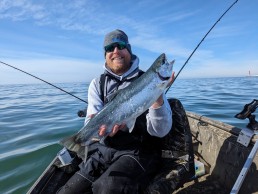
Lake Michigan Cold-Water Trolling
It may be cold on the big pond in winter, but the fishing can be absolutely on fire. Shallow water, small boats, and icy boat ramps are the game. The cold-water bite begins in October and carries through April if we have a mild enough winter. If weather allows, there is no bad month to get out. Opportunity exists lake wide, but I’m drawing from experience on the east side of Lake Michigan from the ports of Muskegon to South Haven. Keep that in mind as seasonal migrations and hot times may be different in other areas.
Often, whatever port you leave from is a great spot to start fishing. The rivers that flow into Lake Michigan often provide a clarity and temperature difference, in addition to a migration route into lakes or rivers. These places not only influence the fish but the forage. The primary baitfish changes as alewives move offshore for the winter. Gizzard shad, bloaters, smelt, and gobies become the primary forage. The salmon go deep and south with the alewives and the trout move in to take advantage of the feeding opportunities in the shallow, cold water. Locally, I feel that we have unique seasons to the cold-water period.
October-November
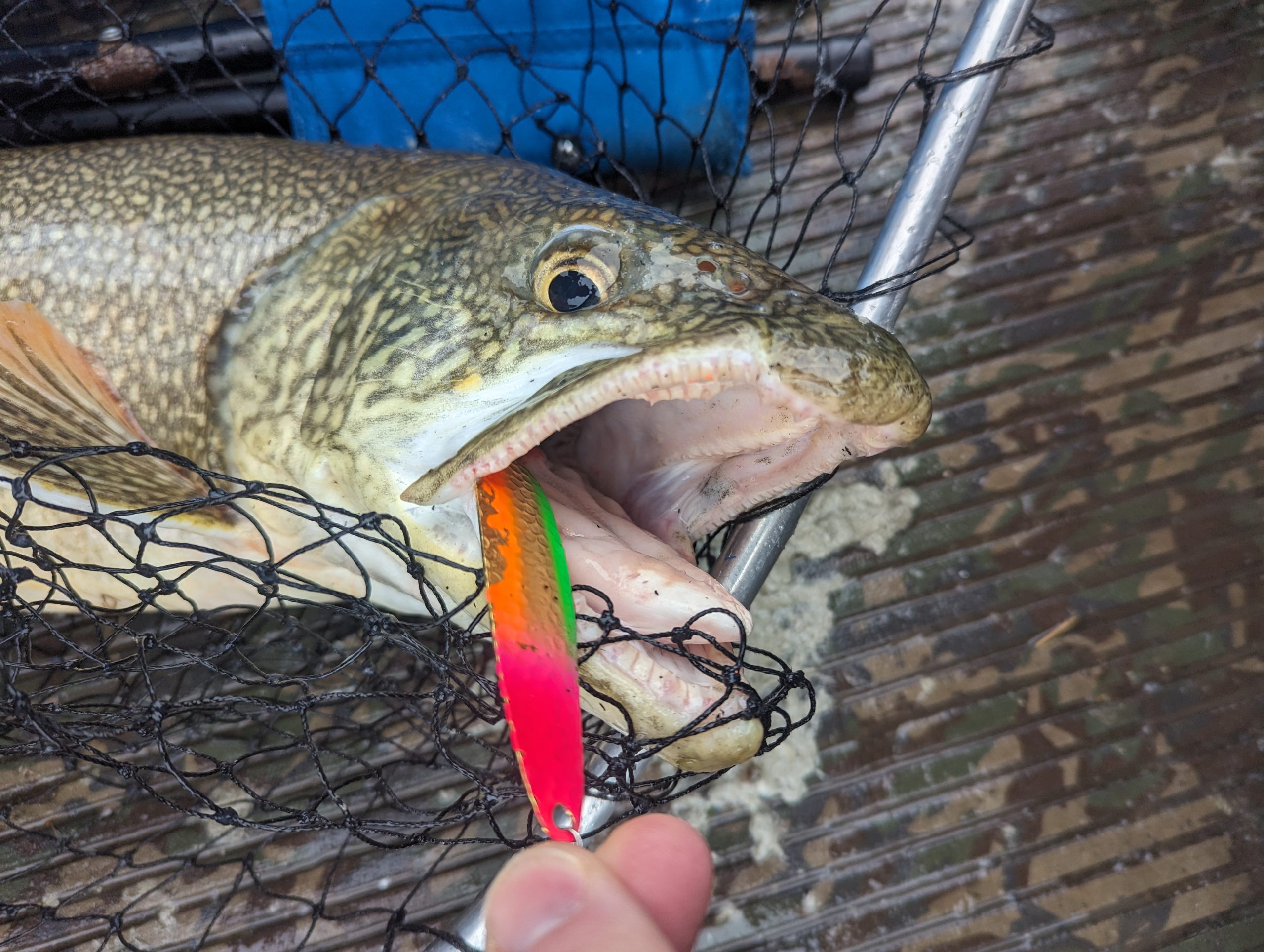
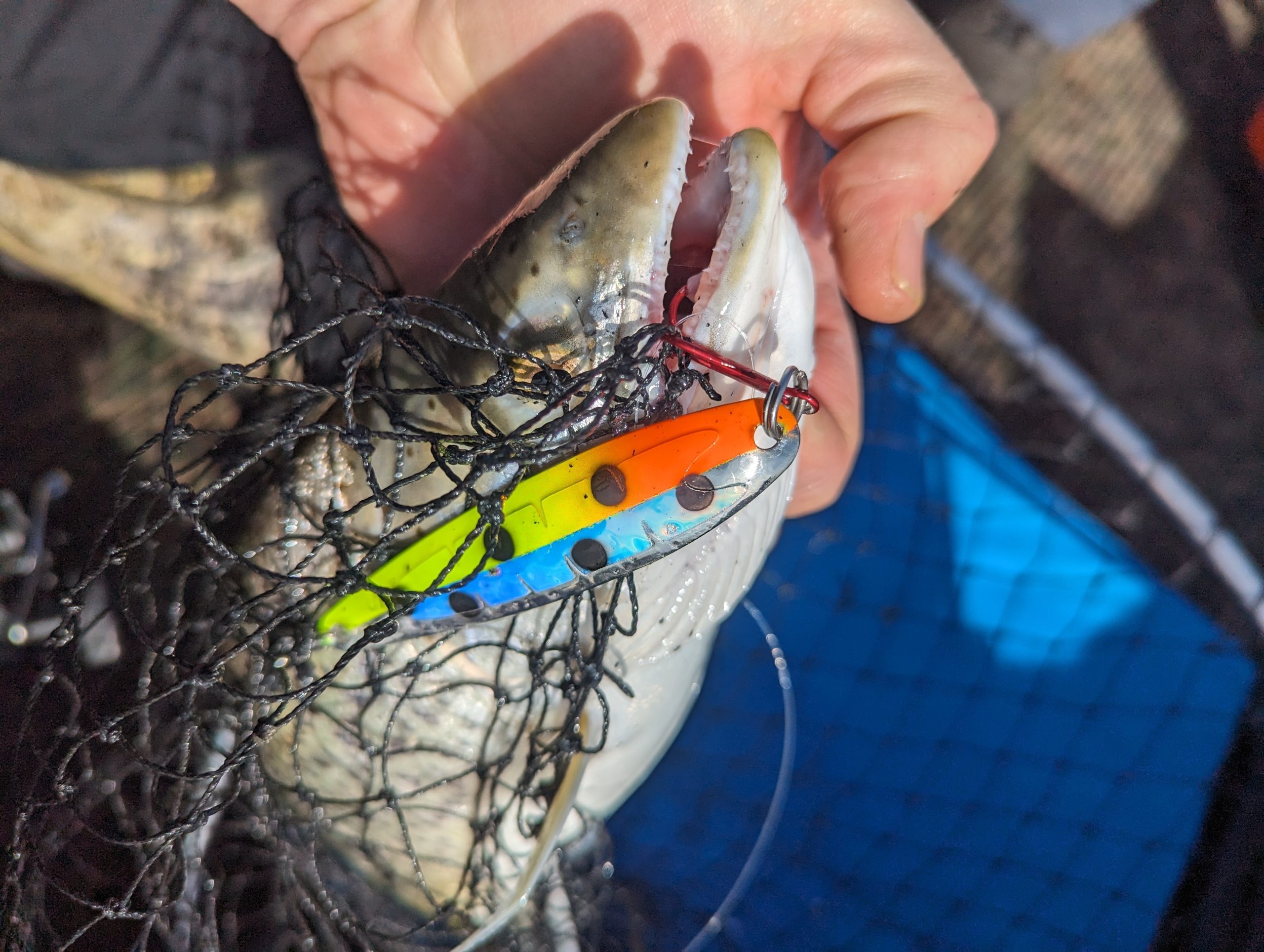
Mid- to late October is time to really start looking for a boost in steelhead bites. Concentrate on ports that are going to draw numbers of staging steelhead. Juvenile kings and cohos are going to be the other main target in the early going of cold-water fishing. This is also the time of year where you push furthest offshore, especially if you want to mix the salmon in. This is the only season where I’ll spend any time out past 50 feet. As time ticks on, there will be a push of mature lake trout inshore for spawning. The big laker bites are impressive as they will absolutely stop a longline or diver rod.
December to February
Lakers stay inshore after the spawn and eat whatever they can find. Lakers are usually thought of as a fish that is always hugging bottom. This time of year, the whole water column is in play. Oftentimes, lines that are fishing about halfway down in the water column are productive. Steelhead mix in and brown trout start to show up here on the Michigan side. Where they come back from is a mystery, but on the Michigan side of the lake, they are mostly a winter/spring fish. Some of my best trips for pure numbers have been in this time frame. One benefit to the shallow, cold water is that these fish are releasable. I prefer to release all the big lakers and big browns I catch.
March to April
The big numbers of lake trout start to disperse, but that may be partly because I spend more time trolling on the beach. The brown bite can be fantastic around sandbars and into the 15-foot zone. Early on, there are still some steelhead mixed with the browns. Michigan recently resumed stocking some browns south of Ludington, so expect that fishery to improve in both catches and popularity. As we get into April, coho are going to be making their way up the coast. The further south you go, the more likely limit catches will be.
You can be among the first to get the latest info on where to go, what to use and how to use it!
Tackle
When I first started my small boat adventure, I was using bass setups with planer boards. No line counters, no clickers, and no special trolling rods. That worked, but it made it hard to replicate what was working, and I really had to pay close attention to my boards. The equipment has gotten a little more advanced since then.
Those days got me very comfortable with running crankbaits and they still make up a lot of my cold-water spread. There is always at least one Brad’s Thinfish in the spread somewhere on a flatline. Bandit-style crankbaits, mag lips, and shallow-diving stickbaits are other baits always ready for action. Spoons are also a big part of the program—mostly smaller spoons like Michigan Stingers or Dreamweaver Super Slims.
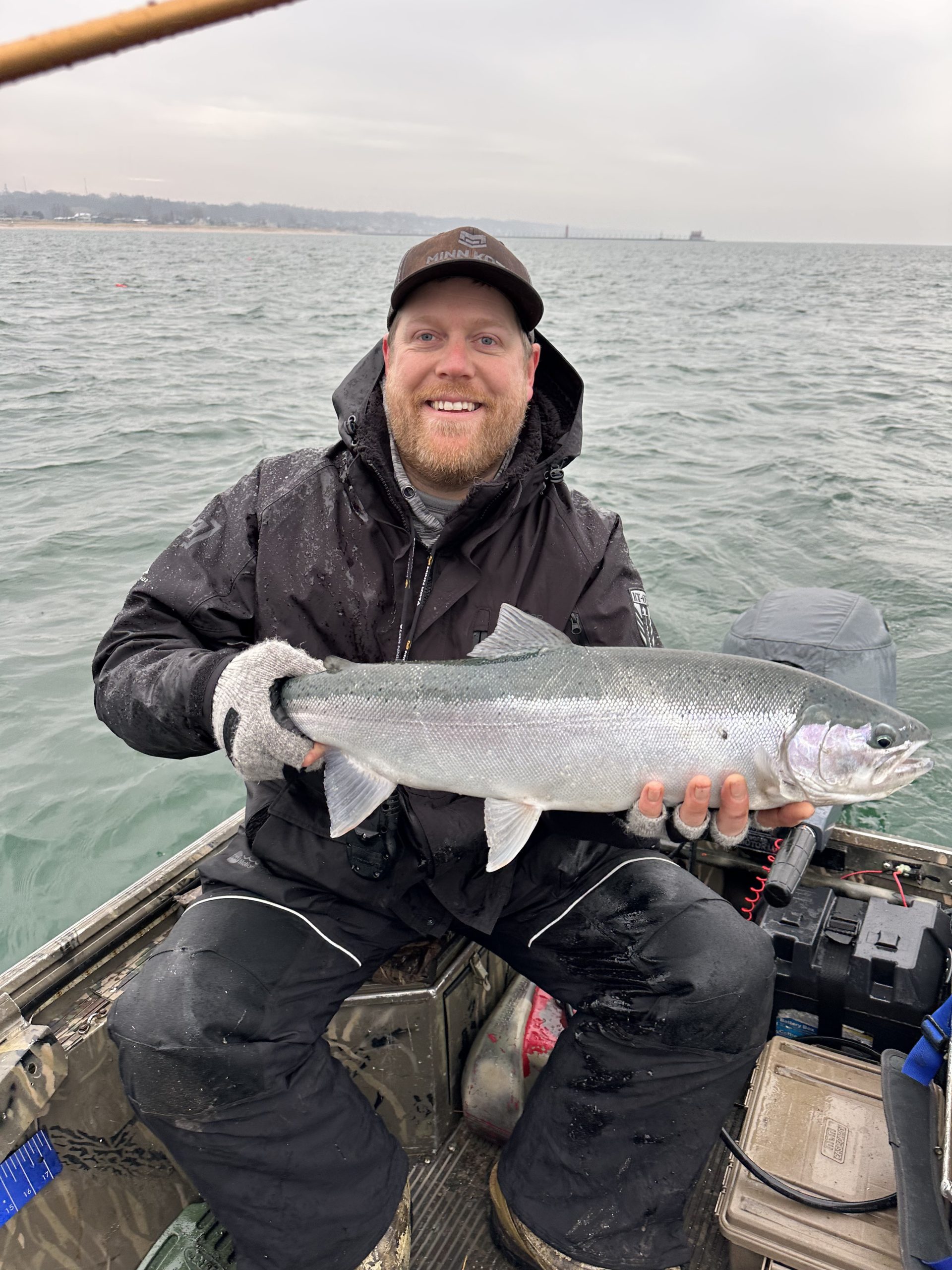
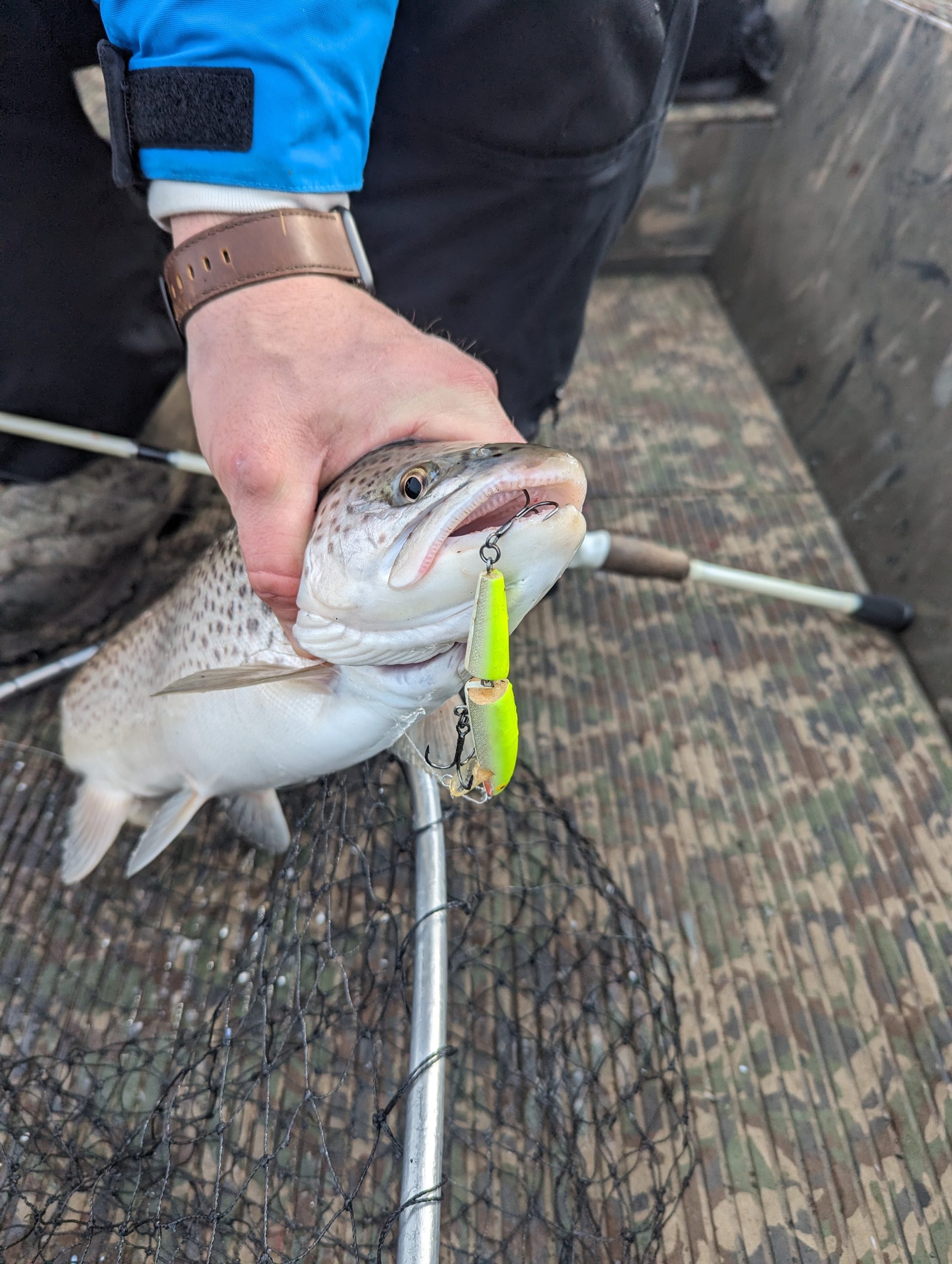
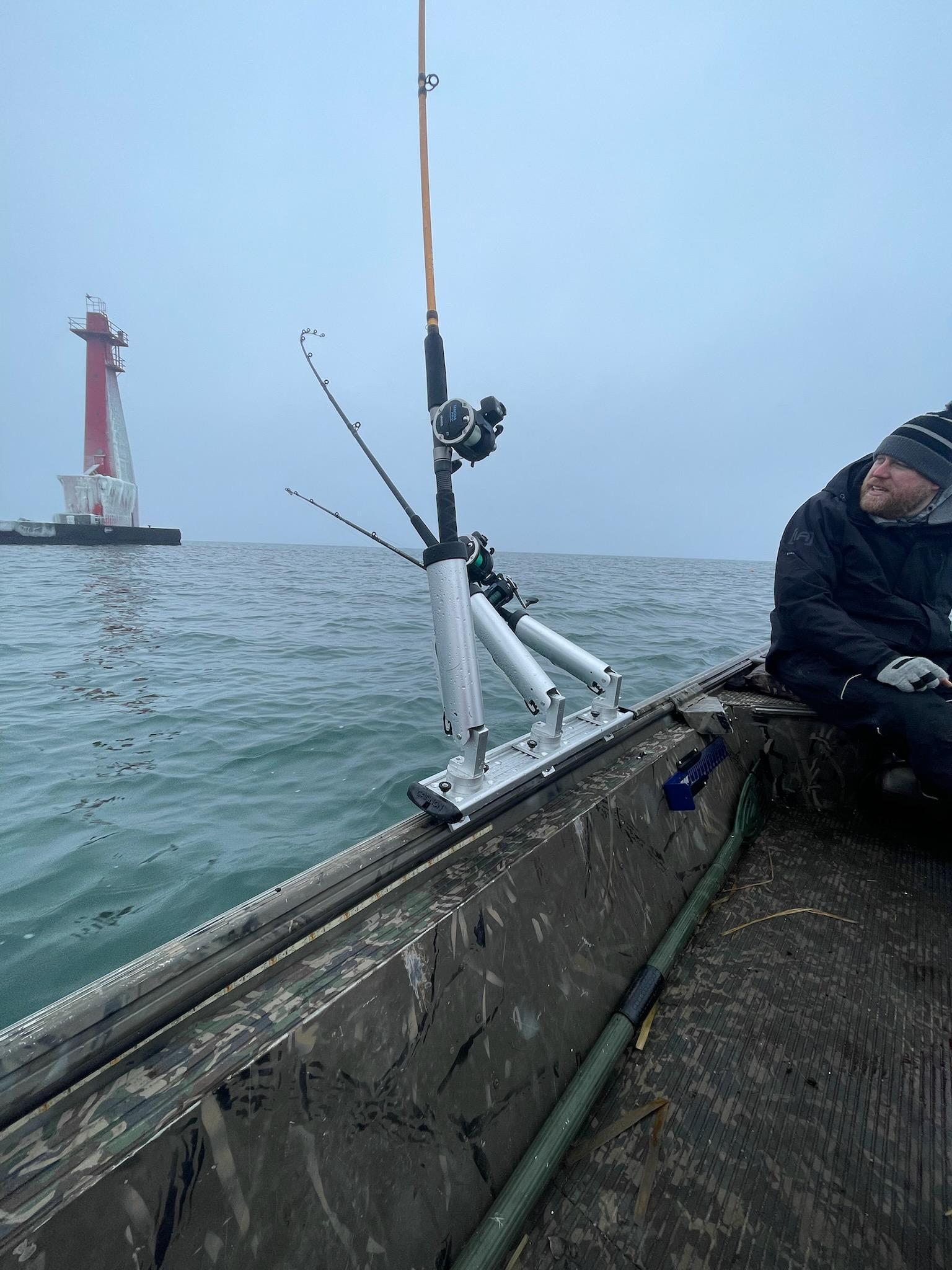
Short leadcore and copper lines are most productive here. I usually have up to a 200-copper packed as my deepest setup. Divers and riggers will also get bites, but I favor the long lines in the small boat. Usually there are just two or maybe three of us on board and I feel like I am covering more water with all boards if I am only using six rods. Keeping it simple with a few colors of spoons and crankbaits is enough to be dangerous. I do like to mix some walleye trolling rods in the spread and drop my leaders down to 15-pound-test fluorocarbon.
Speed
When it comes to trolling, I’m a big proponent of going as fast as the fish will let you go. More water covered equals more aggressive fish encountered. However, cold water doesn’t always allow for that. Generally, I am moving faster in early fall and slowing down as the season progresses; the colder the water, the slower I go. There are times when I have to ooze along at 1.8 mph to get bit, and others where I am getting a lot of bites at 2.5.
Safety
Cold water and little boat traffic make safety even more important at this time of year. It all starts with picking your days. Marginal conditions are not what you are looking for this time of year; this includes being blocked off at the pierheads with icebergs. There can be lots of ice floating around the lake in March. Going from bad to worse with things like ice buildup and just the general effects that cold weather has on equipment is not something that should be messed with. Float suits or inflatable life jackets should be part of the program.
In Michigan, our best days to get out there are often east-wind days. In case of mechanical failure, it is extra important with this wind direction to have a good anchor on board and plenty of line. The last thing you want is to be drifting to Milwaukee in bumpy conditions. Always have a shore contact who knows where you went, where you expect to be fishing, and what time you are expected to return. Lastly, the captain needs the experience to know what to do if something goes wrong and when to bail if conditions change.
Did you enjoy this post?
You can be among the first to get the latest info on where to go, what to use and how to use it!
